 How to resolve AdBlock issue?
News
- Details
- Written by: Elizabeth Larson
Dogs available for adoption this week include mixes of American bulldog, Anatolian shepherd, Catahoula leopard dog, German shepherd, mastiff, pit bull, plott hound, pointer and wirehaired terrier.
Dogs that are adopted from Lake County Animal Care and Control are either neutered or spayed, microchipped and, if old enough, given a rabies shot and county license before being released to their new owner. License fees do not apply to residents of the cities of Lakeport or Clearlake.
The following dogs at the Lake County Animal Care and Control shelter have been cleared for adoption.
Call Lake County Animal Care and Control at 707-263-0278 or visit the shelter online for information on visiting or adopting.
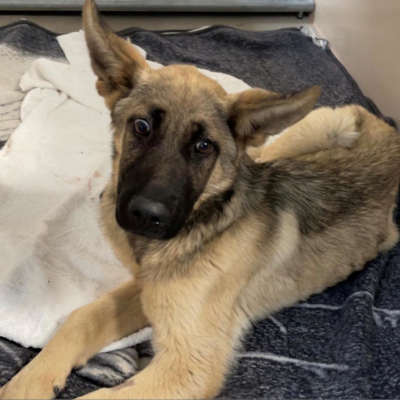
Male German shepherd puppy
This 6-month-old male German shepherd puppy has a black and tan coat.
He is in kennel No. 2, ID No. LCAC-A-5315.
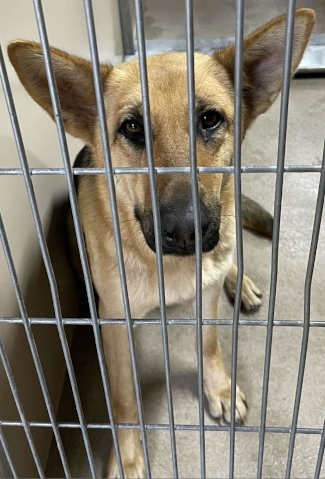
Female German shepherd
This 1 and a half year old female German shepherd has a black and tan coat.
She is in kennel No. 3, ID No. LCAC-A-5296.
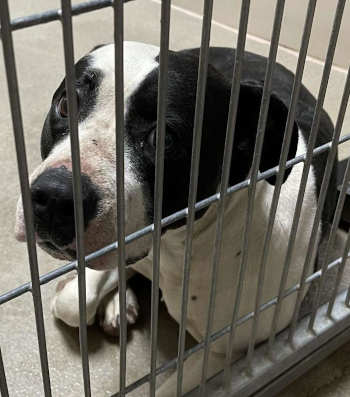
Female pit bull
This 2-year-old female pit bull has a short black and white coat.
She is in kennel No. 4, ID No. LCAC-A-5301.
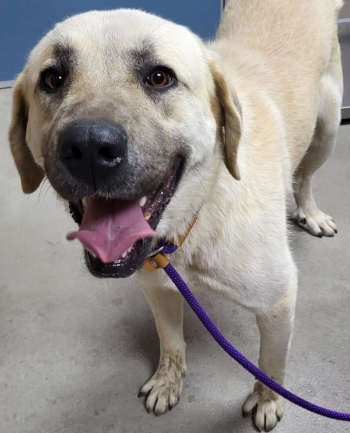
Anatolian shepherd-mastiff mix
This 3-year-old male Anatolian shepherd-mastiff mix has a short fawn coat.
He is in kennel No. 5, ID No. LCAC-A-5276.
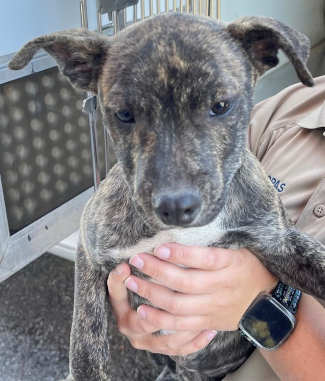
Male pit bull puppy
This 3-month-old male pit bull puppy has a short brindle coat.
He is in kennel No. 6, ID No. LCAC-A-5266.
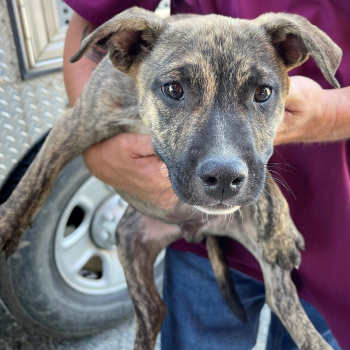
Male pit bull terrier
This 3-month-old male pit bull terrier has a short brindle coat.
He is in kennel No. 7, ID No. LCAC-A-5265.

Male pit bull
This 1-year-old male pit bull terrier has a short black coat.
He is in kennel No. 11, ID No. LCAC-A-5258.
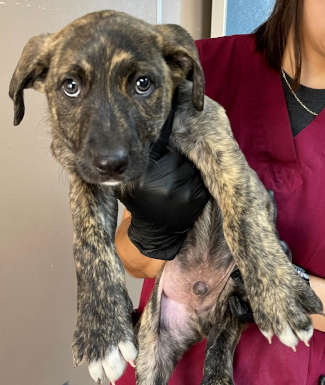
Male Catahoula leopard dog puppy
This 2-month-old male Catahoula leopard dog puppy has a short brindle coat with white markings.
He is in kennel No. 12b, ID No. LCAC-A-5245.
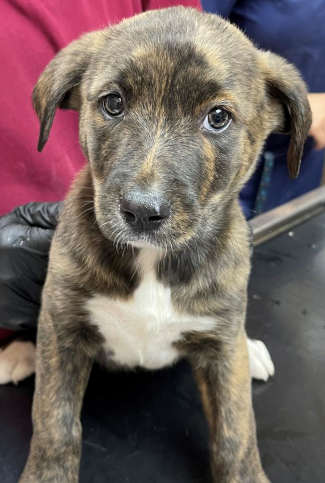
Female Catahoula leopard dog puppy
This 2-month-old female Catahoula leopard dog puppy has a short brindle coat with white markings.
She is in kennel No. 12c, ID No. LCAC-A-5246.

Female pit bull-pointer mix
This 8-month-old female pit bull-pointer mix has a brown brindle and white coat.
She is in kennel No. 14, ID No. LCAC-A-5230.
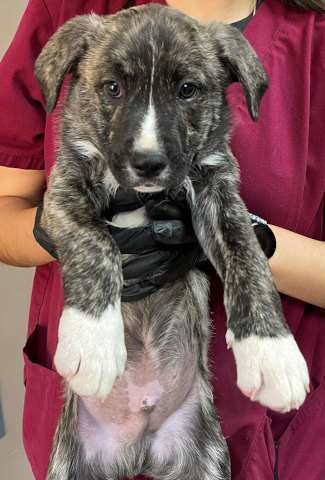
Male Catahoula leopard dog puppy
This 2-month-old male Catahoula leopard dog puppy has a short brown brindle coat with white markings.
He is in kennel No. 16a, ID No. LCAC-A-5244.
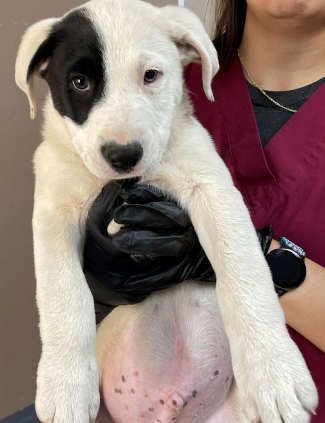
Male Catahoula leopard dog puppy
This 2-month-old male Catahoula leopard dog puppy has a short white coat with black markings.
He is in kennel No. 16b, ID No. LCAC-A-5247.
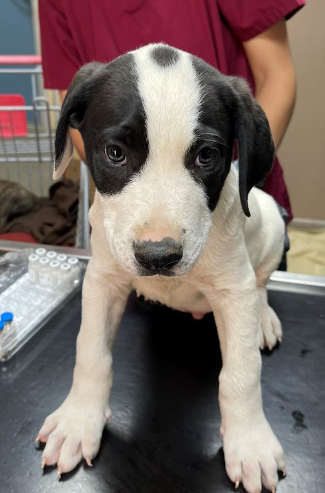
Female Catahoula leopard dog puppy
This 2-month-old female Catahoula leopard dog puppy has a short white coat with black markings.
She is in kennel No. 16d, ID No. LCAC-A-5249.
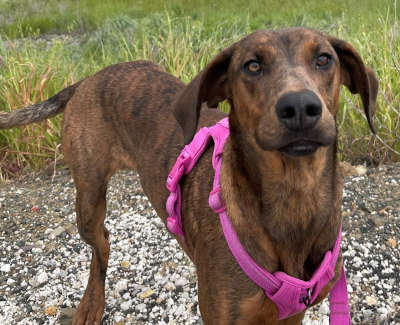
Male plott hound
This 2-year-old male plott hound has a short brown coat.
He is in kennel No. 18, ID No. LCAC-A-5143.
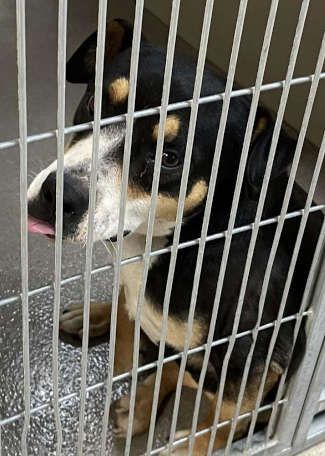
Female pit bull terrier
This one and a half year old female pit bull terrier has a short tricolor coat.
She is in kennel No. 20, ID No. LCAC-A-5312.

Male pit bull terrier
This 3-year-old male pit bull terrier has a short black and white coat.
He is in kennel No. 21, ID No. LCAC-A-5076.
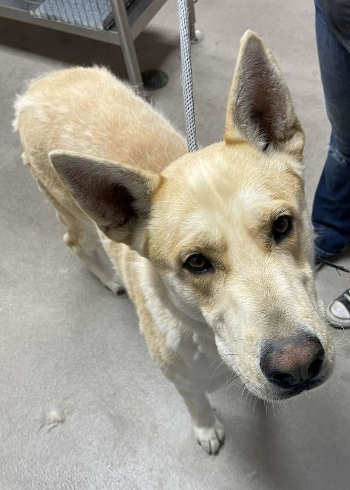
Male shepherd
This 2-year-old male shepherd has a tan and white coat.
He is in kennel No. 22, ID No. LCAC-A-5223.
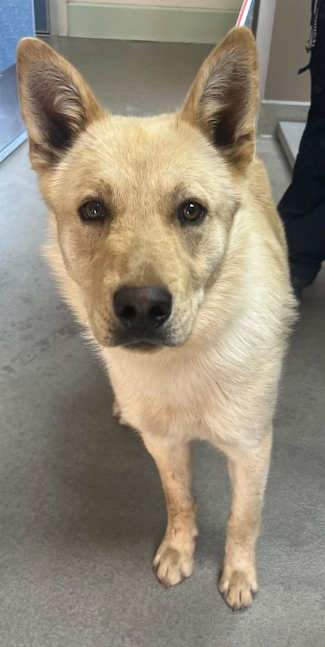
Male shepherd
This 1-year-old male shepherd has a tan coat.
He is in kennel No. 25, ID No. LCAC-A-5303.
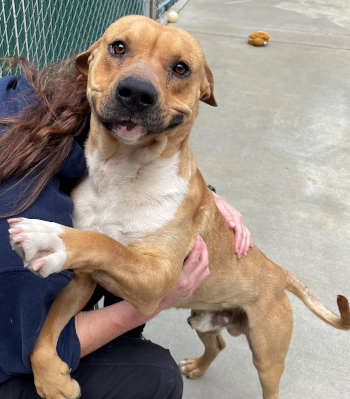
Male pit bull
This 1-year-old male pit bull terrier has a short tan coat with white markings.
He is in kennel No. 26, ID No. LCAC-A-5120.
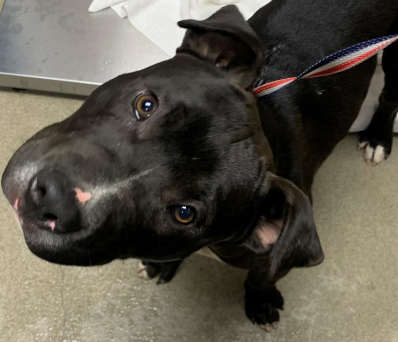
Male pit bull terrier
This 1-year-old male pit bull terrier has a black coat with white markings.
He is in kennel No. 27, ID No. LCAC-A-5203.
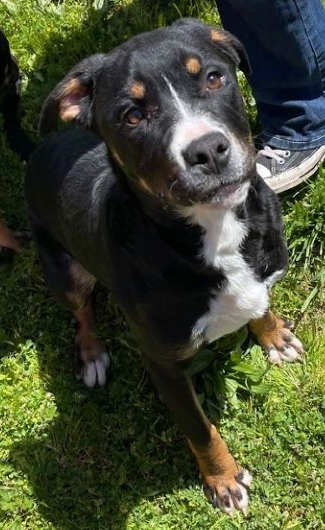
Female pit bull-shepherd puppy
This 5-month-old female pit bull-shepherd puppy has a short tricolor coat.
She is in kennel No. 32, ID No. LCAC-A-5072.
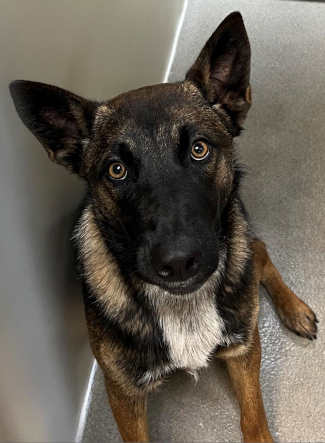
Male shepherd
This 1-year-old male shepherd has a tricolor coat.
He is in kennel No. 33, ID No. LCAC-A-5310.
Email Elizabeth Larson at
- Details
- Written by: NATIONAL AERONAUTICS AND SPACE ADMINISTRATION
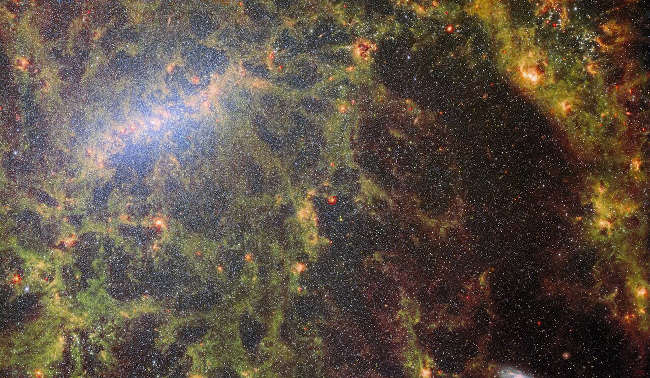
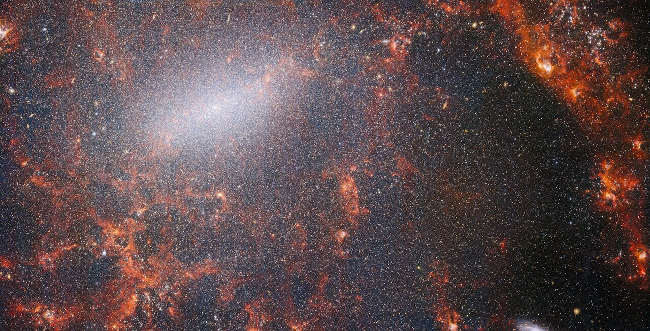
A delicate tracery of dust and bright star clusters threads across this image from the James Webb Space Telescope.
The bright tendrils of gas and stars belong to the barred spiral galaxy NGC 5068, whose bright central bar is visible in the upper left of this image — a composite from two of Webb’s instruments.
NASA Administrator Bill Nelson revealed the image Friday during an event with students at the Copernicus Science Centre in Warsaw, Poland.
NGC 5068 lies around 20 million light-years from Earth in the constellation Virgo. This image of the central, bright star-forming regions of the galaxy is part of a campaign to create an astronomical treasure trove, a repository of observations of star formation in nearby galaxies.
Previous gems from this collection can be seen here (IC 5332) and here (M74).
These observations are particularly valuable to astronomers for two reasons. The first is because star formation underpins so many fields in astronomy, from the physics of the tenuous plasma that lies between stars to the evolution of entire galaxies.
By observing the formation of stars in nearby galaxies, astronomers hope to kick-start major scientific advances with some of the first available data from Webb.

The second reason is that Webb’s observations build on other studies using telescopes including the Hubble Space Telescope and ground-based observatories.
Webb collected images of 19 nearby star-forming galaxies which astronomers could then combine with Hubble images of 10,000 star clusters, spectroscopic mapping of 20,000 star-forming emission nebulae from the Very Large Telescope (VLT), and observations of 12,000 dark, dense molecular clouds identified by the Atacama Large Millimeter/submillimeter Array, or ALMA. These observations span the electromagnetic spectrum and give astronomers an unprecedented opportunity to piece together the minutiae of star formation.
With its ability to peer through the gas and dust enshrouding newborn stars, Webb is particularly well-suited to explore the processes governing star formation. Stars and planetary systems are born amongst swirling clouds of gas and dust that are opaque to visible-light observatories like Hubble or the VLT.
The keen vision at infrared wavelengths of two of Webb’s instruments — MIRI, or Mid-Infrared Instrument, and NIRCam, or Near-Infrared Camera — allowed astronomers to see right through the gargantuan clouds of dust in NGC 5068 and capture the processes of star formation as they happened. This image combines the capabilities of these two instruments, providing a truly unique look at the composition of NGC 5068.
The James Webb Space Telescope is the world's premier space science observatory. Webb will solve mysteries in our solar system, look beyond to distant worlds around other stars, and probe the mysterious structures and origins of our universe and our place in it. Webb is an international program led by NASA with its partners, European Space Agency and the Canadian Space Agency.
- Details
- Written by: Elizabeth Larson
The 4.5-magnitude quake was reported at 5:01 a.m. Saturday just inside the Sonoma County border.
It was located 3.6 miles southwest of Cobb and 13.4 miles north northeast of Healdsburg, at a depth of sixth tenths of a mile.
Lake County News received reports of residents in the Kelseyville area feeling it rocking and rattling their homes.
The U.S. Geological Survey had received 224 shake reports from around the North Coast, including Lake County, by 10 a.m. Saturday.
That main quake was followed by several aftershocks: a 2.8-magnitude at 5:02 a.m., a 2.6-magnitude at 5:07 a.m. and another 2.8-magnitude at 5:10 a.m., all close to the epicenter of the main quake in Sonoma County, and a 2.7-magnitude quake at 5:09 a.m. in Lake County that was just west of Cobb.
Reports on the main quake can be made here.
Email Elizabeth Larson at
- Details
- Written by: LAKE COUNTY NEWS REPORTS

The California Department of Fish and Wildlife invites everyone with an interest in natural resources to join us in recognizing California Invasive Species Action Week from Saturday, June 3, through Sunday, June 11.
For the past 10 years, CDFW has devoted the first week in June to engaging the public in taking action to prevent the harmful impacts of non-native plants and animals that threaten California’s natural resources, ecology and economy.
Historically, agencies, nonprofits and volunteer organizations across the state have teamed up to host events for California Invasive Species Action Week.
This year, opportunities to participate include virtual events and activities in all parts of the state, such as:
• Restoring habitat at Tolowa Dunes State Park in Crescent City with California State Parks, Tolowa Dunes Stewards and Redwood Parks Conservancy.
• Protecting the American River Parkway near Sacramento from invasive plants with the American River Parkway Foundation.
• Becoming a “Weed Warrior” at Cabrillo National Monument in San Diego by assisting with efforts to remove non-native grasses and other invasive plants.
• Learning how to identify Lake Tahoe’s native and invasive aquatic plants during a webinar with the League to Save Lake Tahoe.
• Watching lunchtime webinars from the University of California Cooperative Extension on topics such as removing the invasive seaweed Caulerpa and efforts to stop damaging insects from entering California.
Visit the CISAW schedule on CDFW’s website for details on these events and many more.
You can also watch webinars and learn about how to stop the spread of invasive species by taking small, everyday actions, such as landscaping with native plants, not releasing unwanted pets into the wild, reporting invasive species findings, and cleaning, draining and drying gear when recreating in bodies of water.
The CISAW web page lists simple actions Californians can take all year long while visiting natural areas, boating or fishing, or at home.
Next week, CDFW will announce winners of the annual California Invasive Species Youth Art and Video Contest on social media. This year’s theme was “Think Ahead and Prevent the Spread.”
The mission of CDFW’s Invasive Species Program is to reduce the impacts of invasive species on the wildlands and waterways of California. The program is involved in efforts to prevent the introduction of these species into the state, detect and respond to introductions when they occur, and prevent the spread of those species that have established.
For questions or more information about CISAW, please contact