 How to resolve AdBlock issue?
News
- Details
- Written by: Lake County News reports
The committee, or GPAC, will guide the Lake County General Plan and local area plans update.
Ideal applicants will have expertise in one or more of the following fields:
• Public at-large (one seat for each supervisorial district).
• Fire district.
• Tribal representative.
• Homeowners association.
• Education.
• Water district.
• Environmental group.
• Senior support services.
• Business association.
• Conventional agriculture.
• Cannabis industry.
The project will update the 2008 Lake County General Plan and all eight local area plans.
This comprehensive update will plan through the year 2050, incorporating updated policy approaches to sustainability, safety and resilience, housing, environmental justice, and other important topics while carrying forward enduring county values like preserving and celebrating agriculture and the unique character of individual communities.
The process will be community-driven and is expected to take three years to complete.
The GPAC, composed of a diverse set of stakeholders, will serve as general plan ambassadors to the community, letting their networks know about the project and opportunities to participate.
GPAC members will review key interim, draft and final products; advance review of public meeting materials; assist with community outreach to stakeholder groups; and provide general project guidance.
A specific meeting schedule will be determined once the committee is formed. The project anticipates a total of five meetings over the course of the project through spring 2026.
Applications are online at https://www.lakecountyca.gov/1116/Board-of-Supervisors or at the Lake County Courthouse, Clerk of the Board Office, Room 109, 255 North Forbes St., Lakeport.
Applications are due to the Clerk of the Board of Supervisors Office no later than Friday, Feb. 16.
Membership on the committee is voluntary.
If you are interested in serving on the GPAC or if you would like more information, please contact Community Development Director Mireya Turner at 707-263-2221 or
- Details
- Written by: Mathew Barlow, UMass Lowell
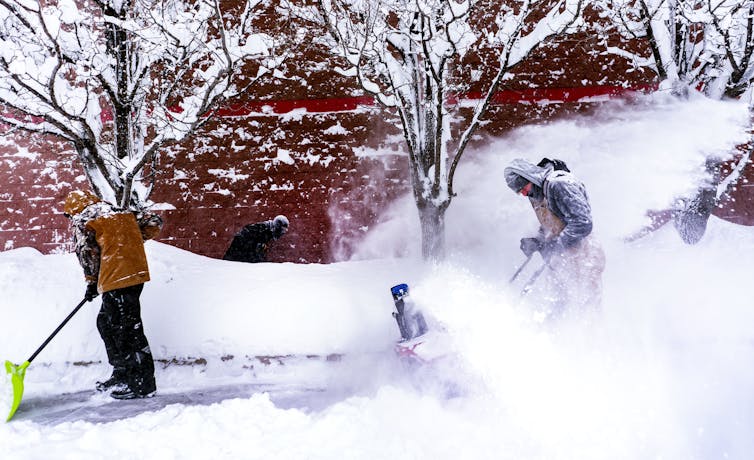
Extremely cold Arctic air and severe winter weather swept southward into much of the U.S. in mid-January 2024, breaking daily low temperature records from Montana to Texas. Tens of millions of people were affected by dangerously cold temperatures, and heavy lake-effect snow and snow squalls have had severe effects across the Great Lakes and Northeast regions.
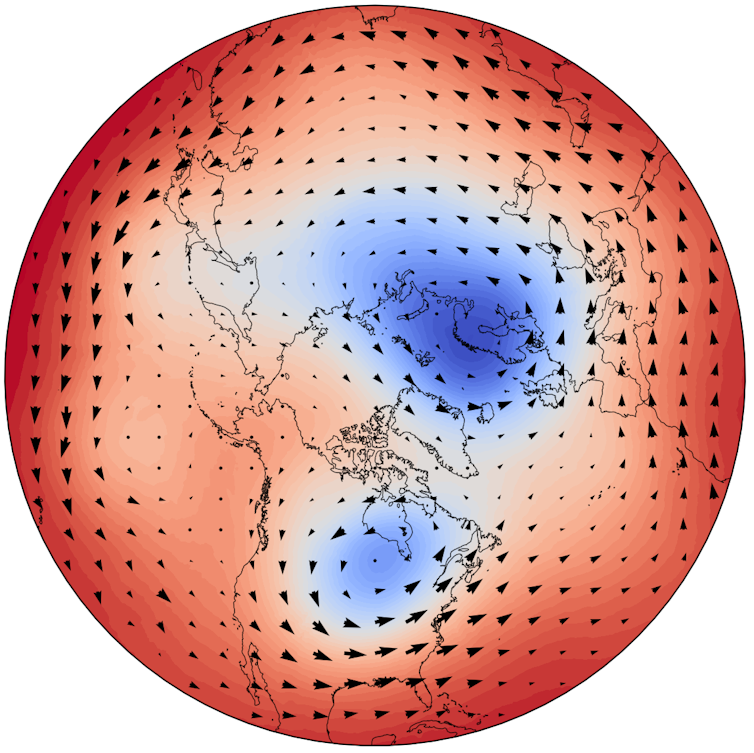
These severe cold events occur when the polar jet stream – the familiar jet stream of winter that runs along the boundary between Arctic and more temperate air – dips deeply southward, bringing the cold Arctic air to regions that don’t often experience it.
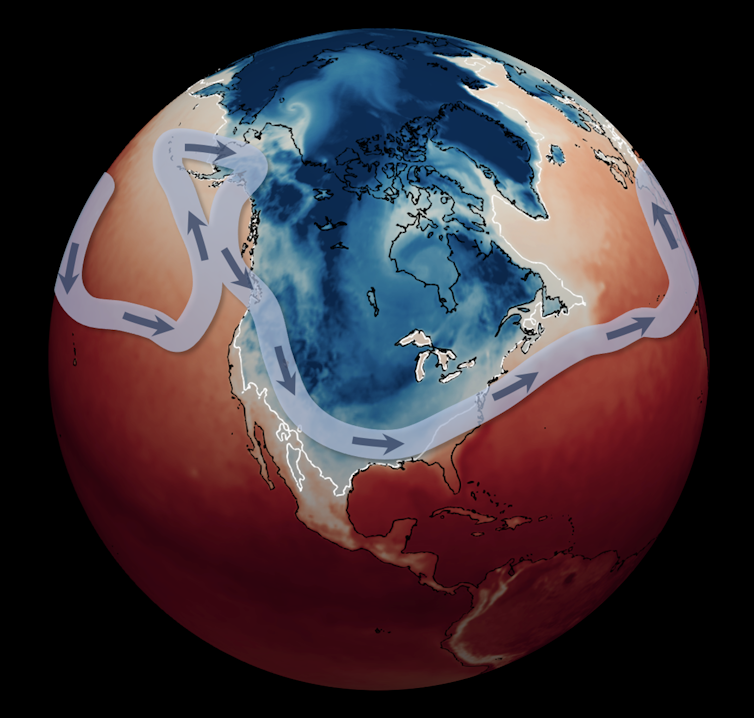
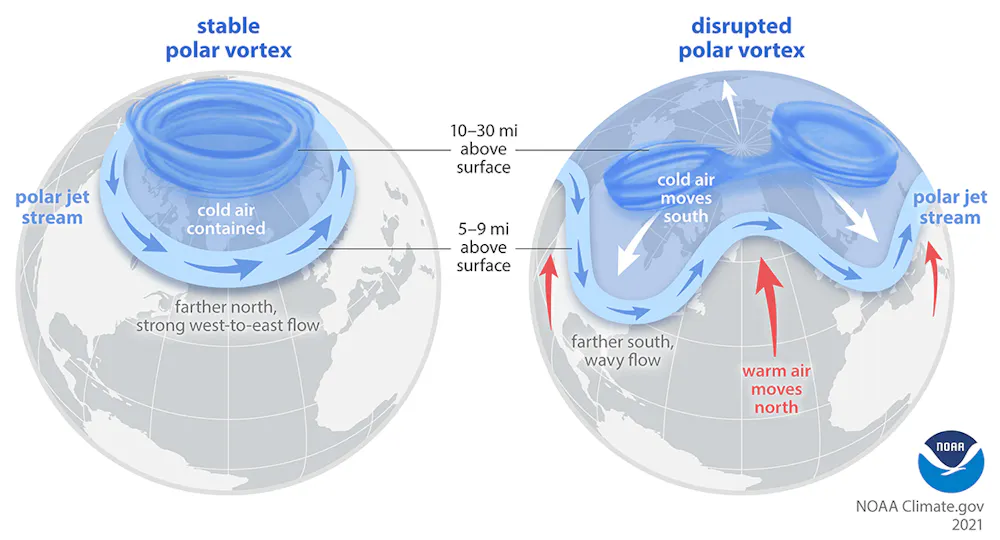
An interesting aspect of these events is that they often occur in association with changes to another river of air even higher above the jet stream: the stratospheric polar vortex, a great stream of air moving around the North Pole in the middle of the stratosphere.
When this stratospheric vortex becomes disrupted or stretched, it can distort the jet stream as well, pushing it southward in some areas and causing cold air outbreaks.
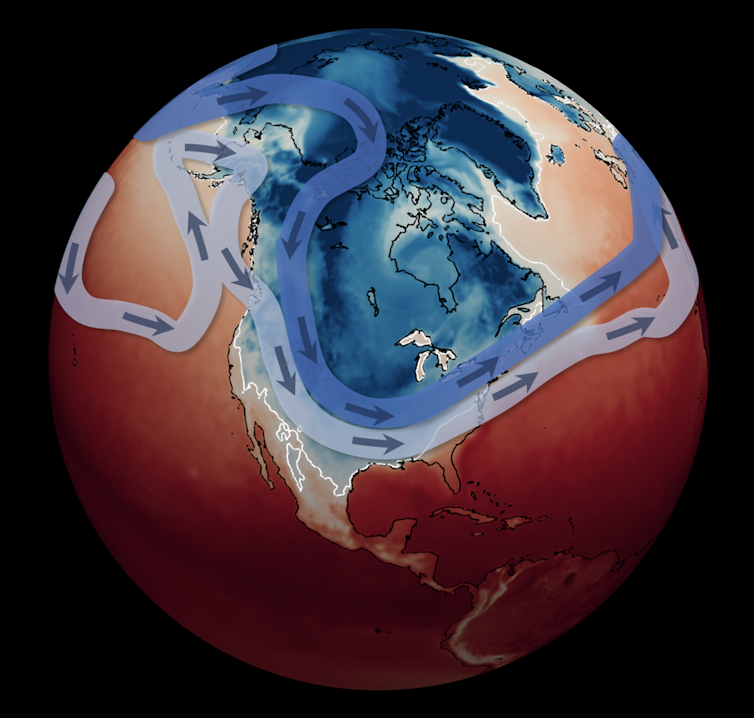
The January 2024 Arctic cold blast fit into this pattern, with the polar vortex stretched so far over the U.S. in the lower stratosphere that it had nearly split in two. There are multiple causes that may have led to this stretching, but it is likely related to high-latitude weather in the prior two weeks.
No, cold doesn’t contradict global warming
After Earth just experienced its hottest year on record, it may seem surprising to set so many cold records. But does this cold snap contradict human-caused global warming? As an atmospheric and climate scientist, I can tell you, absolutely and unequivocally, it does not.
No single weather event can prove or disprove global warming. Many studies have shown that the number of extreme cold events is clearly decreasing with global warming, as predicted and understood from physical reasoning.
Whether global warming may, contrary to expectations, be playing some supporting role in the intensity of these events is an open question. Some research suggests it does.
The February 2021 cold wave that severely disrupted the Texas electric grid was also associated with a stretched stratospheric polar vortex. My colleagues and I have provided evidence suggesting that Arctic changes associated with global warming have increased the likelihood of such vortex disruptions. The effects of the enhanced high latitude warming known as Arctic amplification on regional snow cover and sea ice may enhance the weather patterns that, in turn, result in a stretched polar vortex.
More recently, we have shown that for large areas of the U.S., Europe and Northeast Asia, while the number of these severe cold events is clearly decreasing – as expected with global warming – it does not appear that their intensity is correspondingly decreasing, despite the rapid warming in their Arctic source regions.
So, while the world can expect fewer of these severe cold events in the future, many regions need to remain prepared for exceptional cold when it does occur. A better understanding of the pathways of influence between Arctic surface conditions, the stratospheric polar vortex and mid-latitude winter weather would improve our ability to anticipate these events and their severity.
Mathew Barlow, Professor of Climate Science, UMass Lowell
This article is republished from The Conversation under a Creative Commons license. Read the original article.
- Details
- Written by: Elizabeth Larson
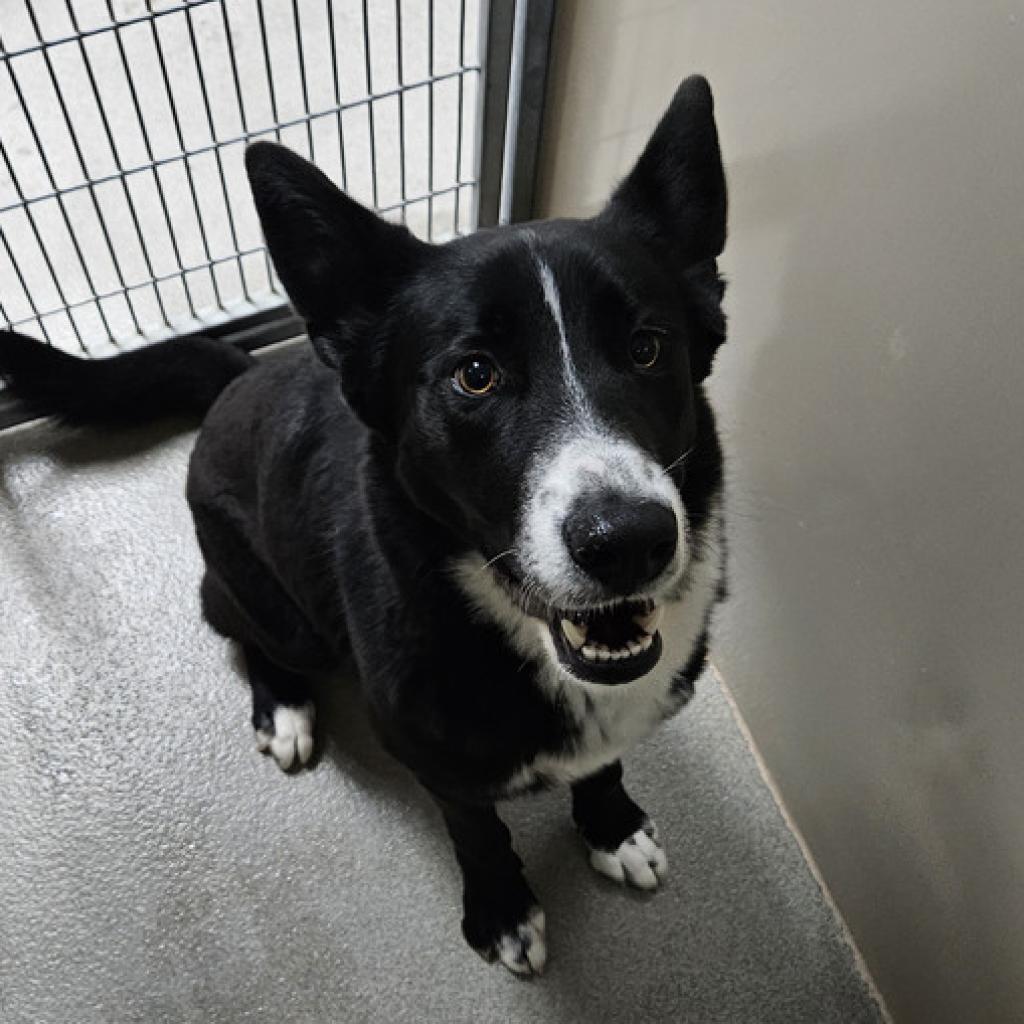
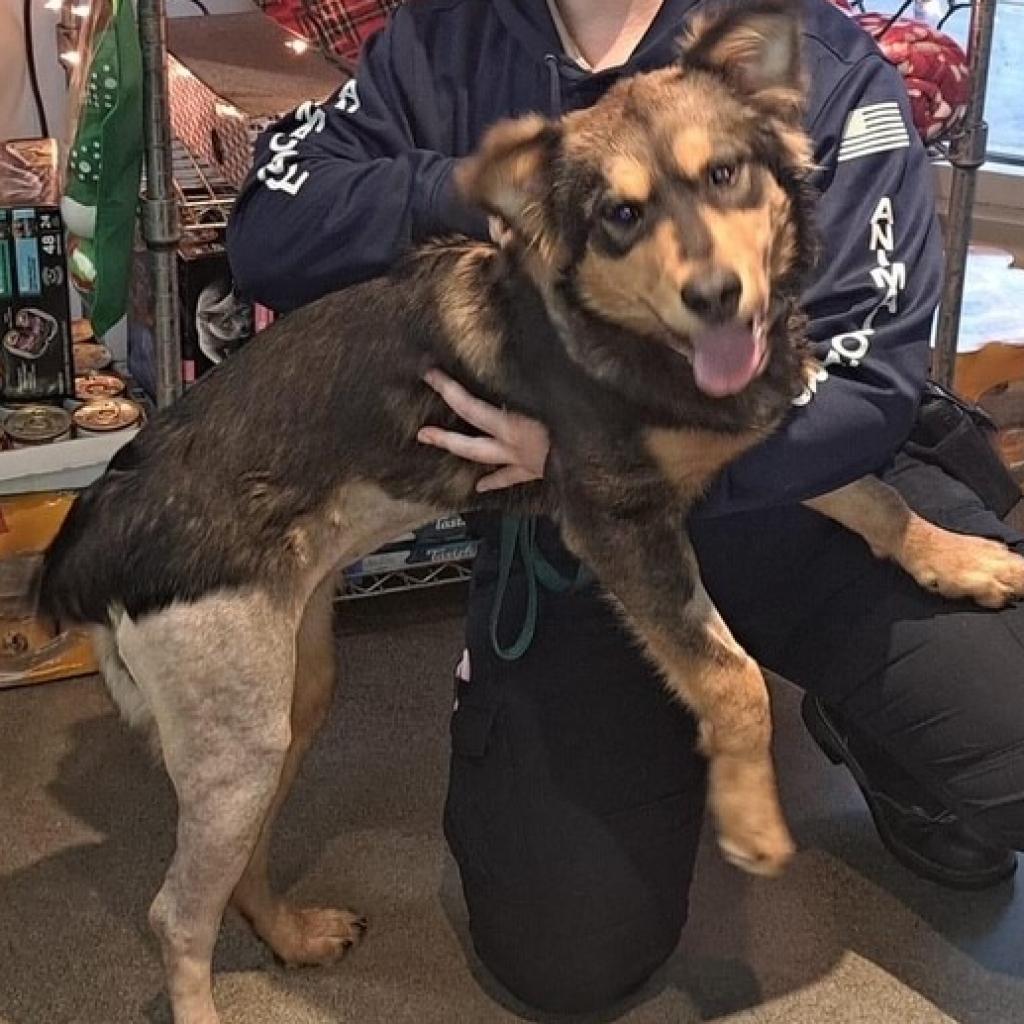
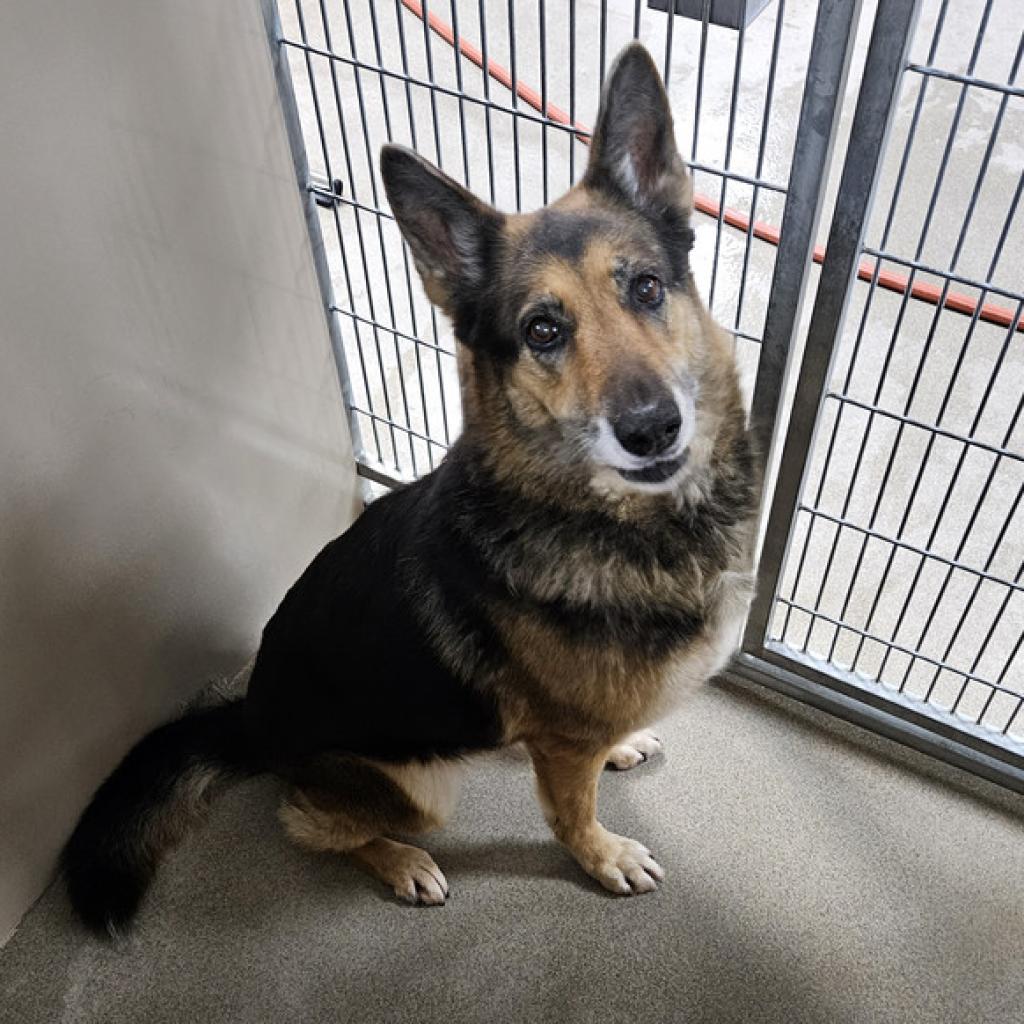
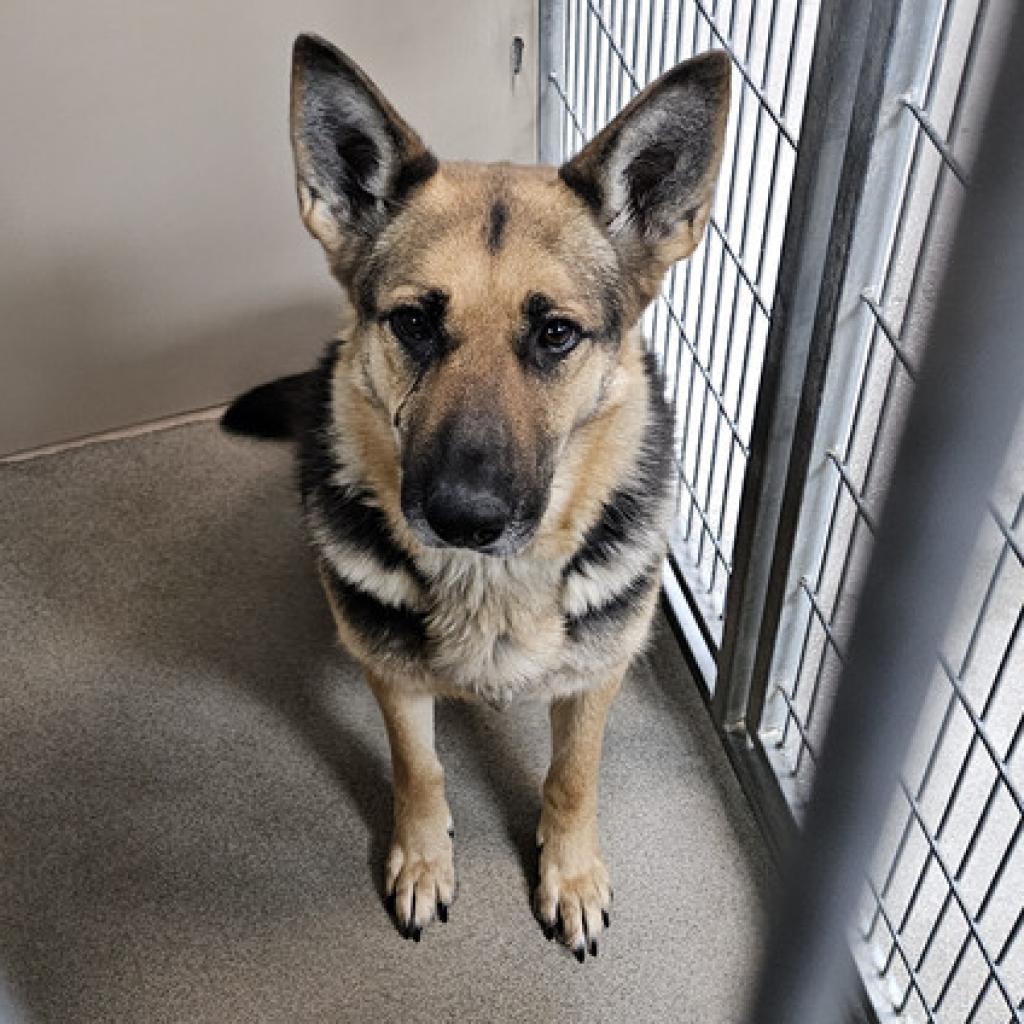
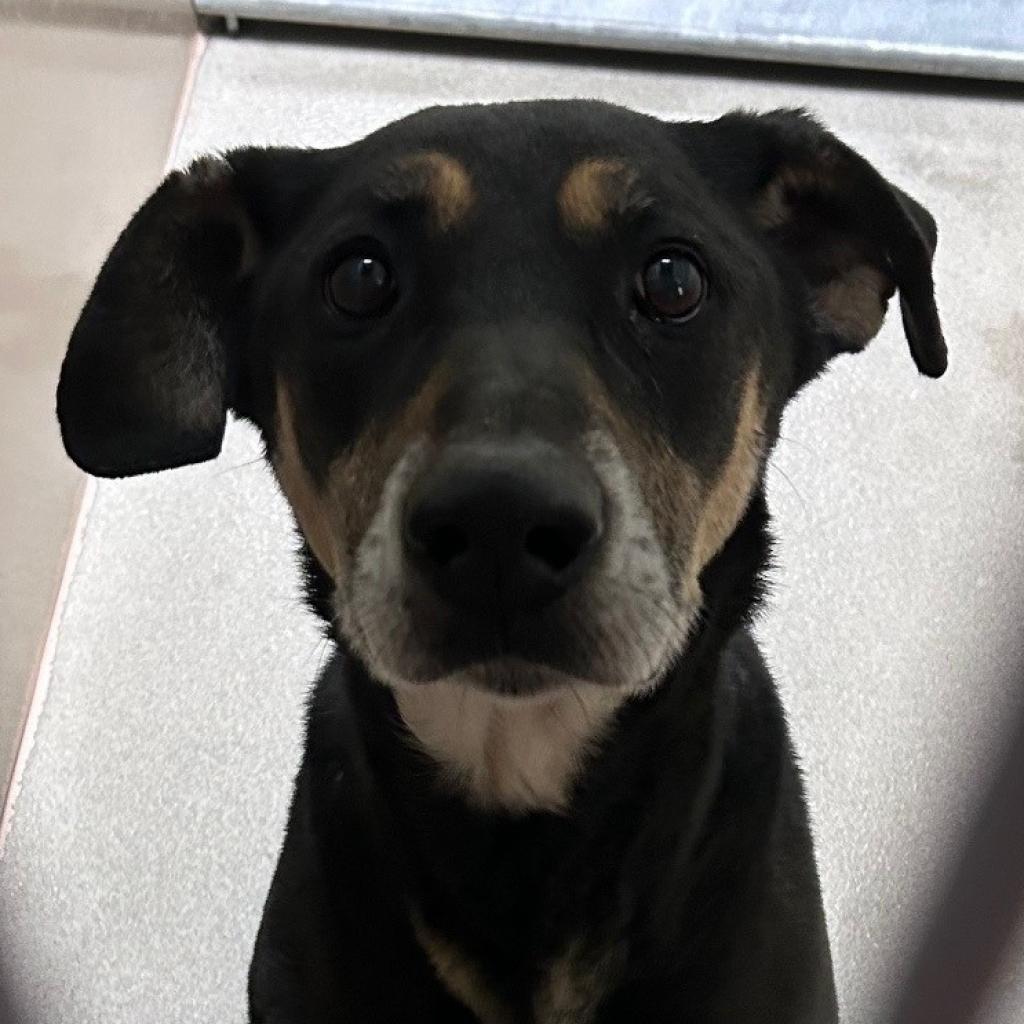
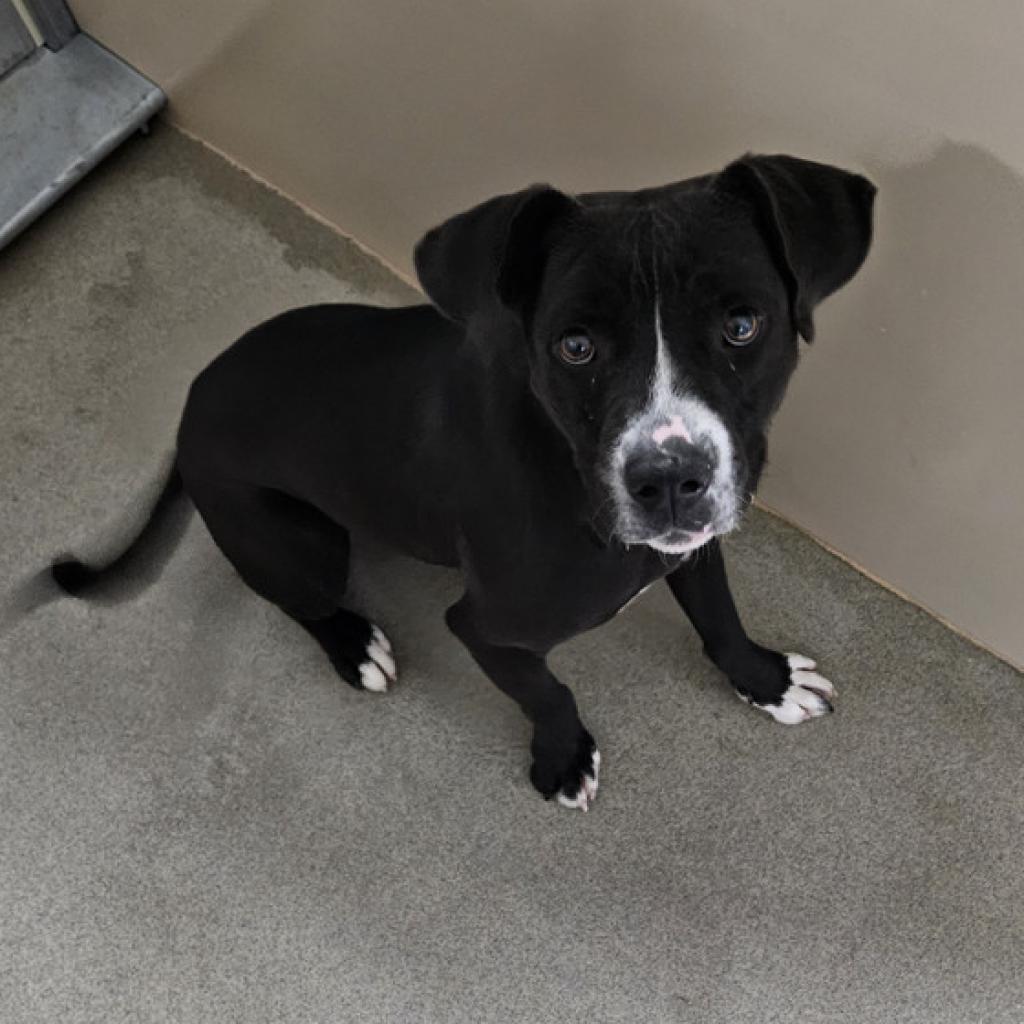
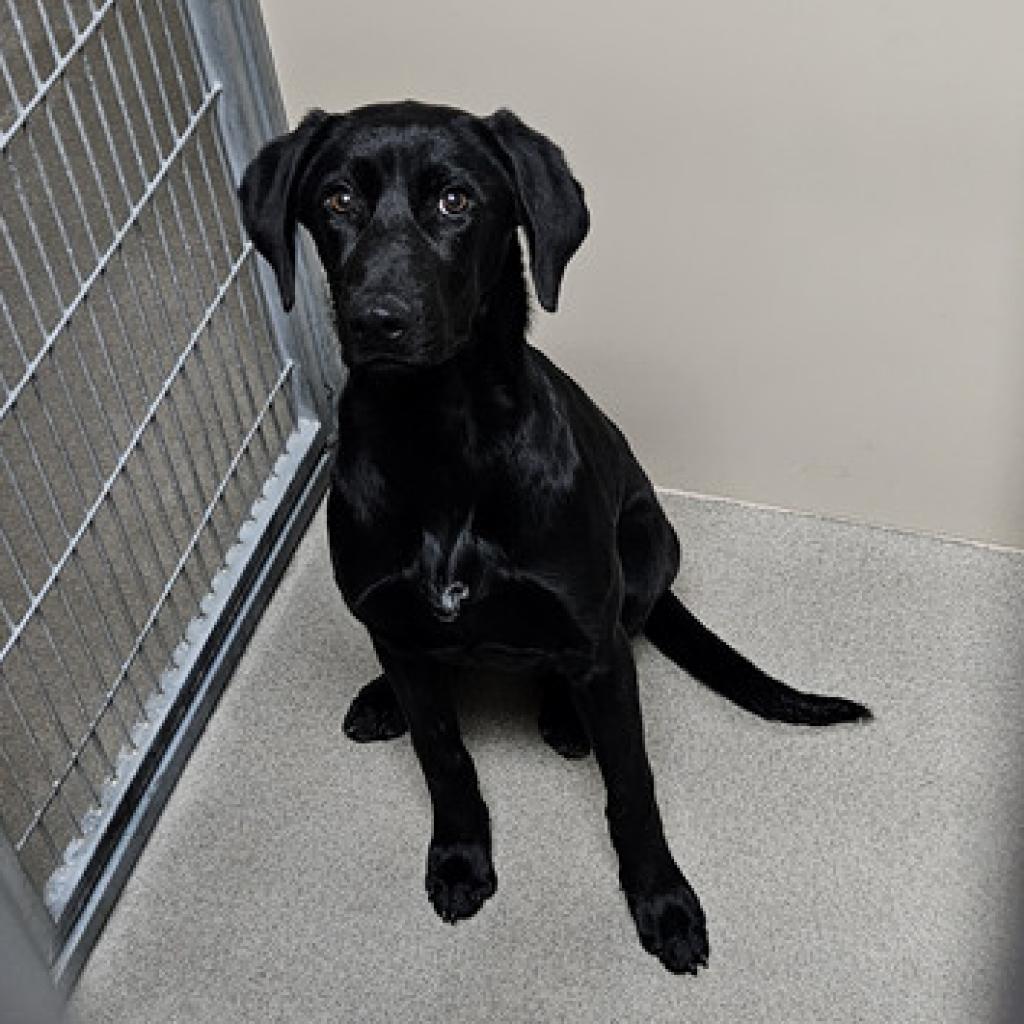
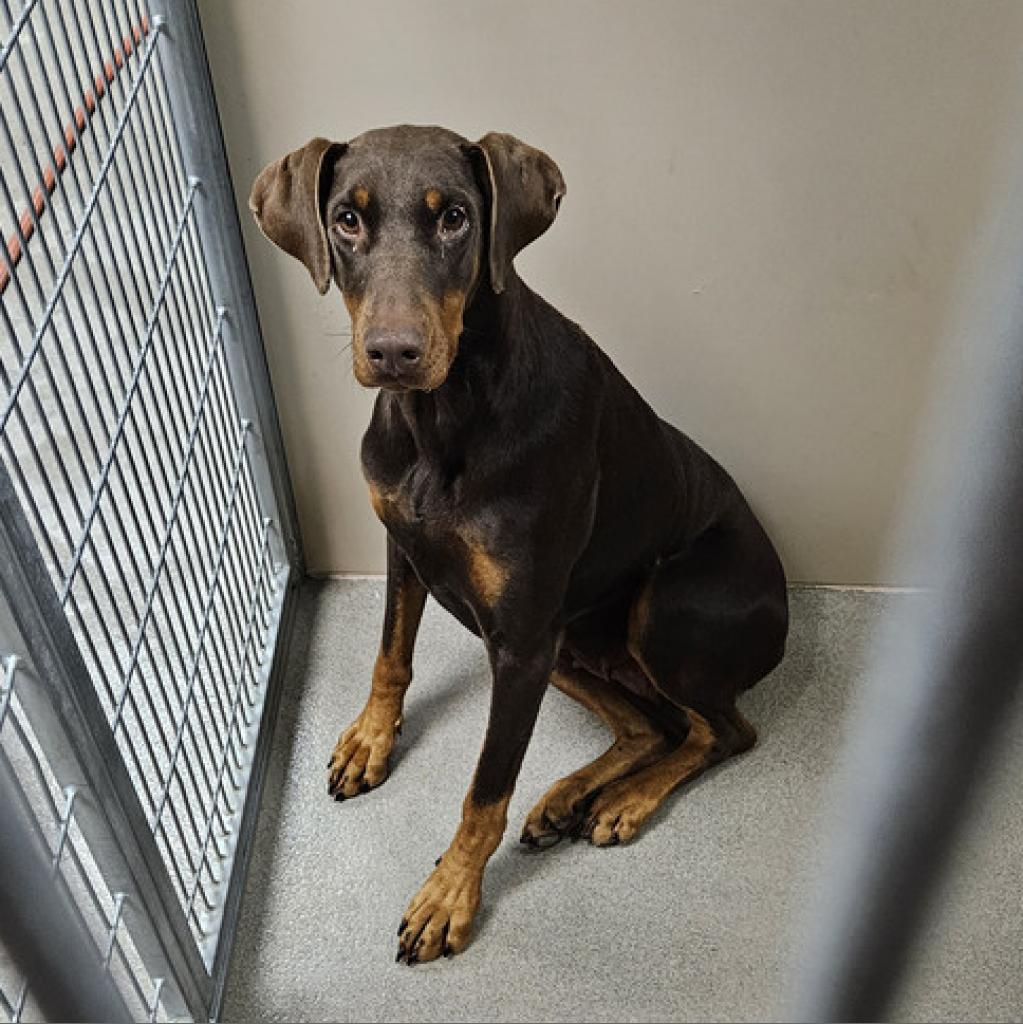
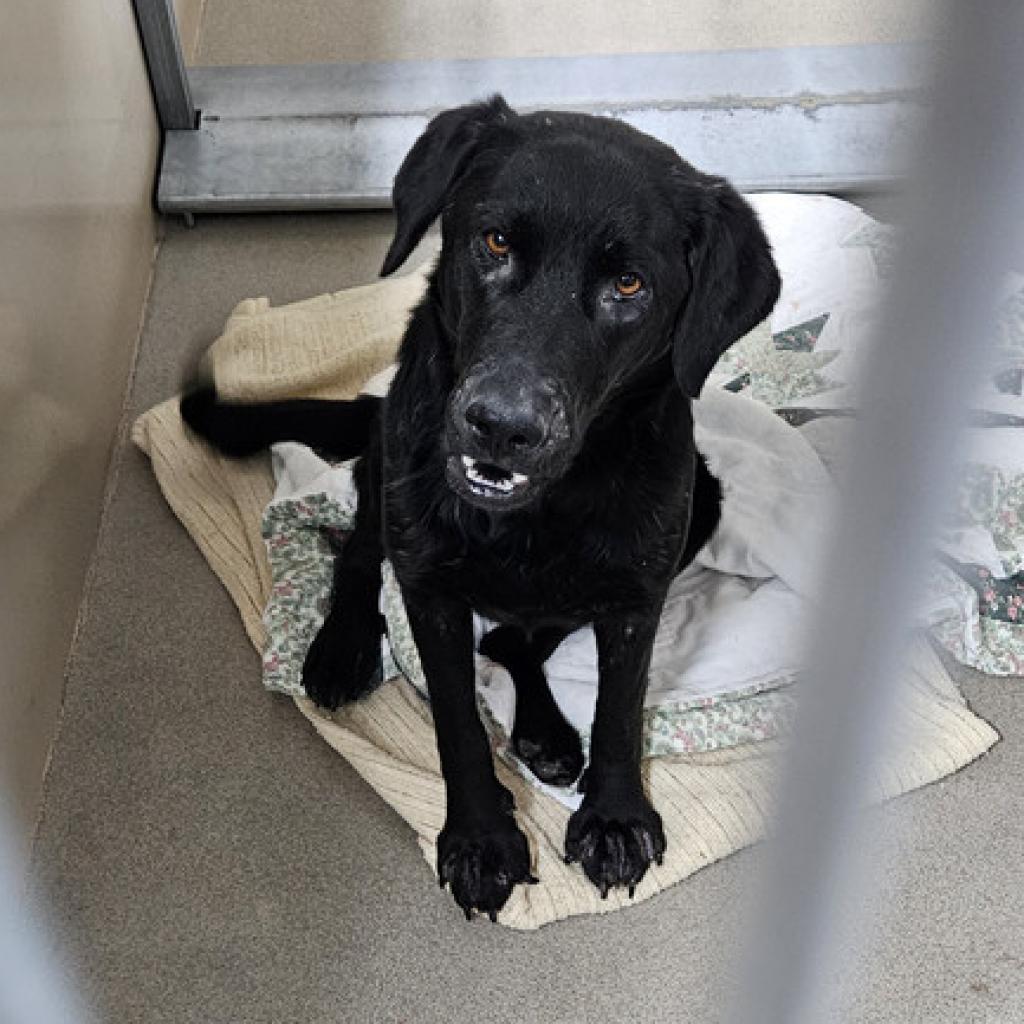
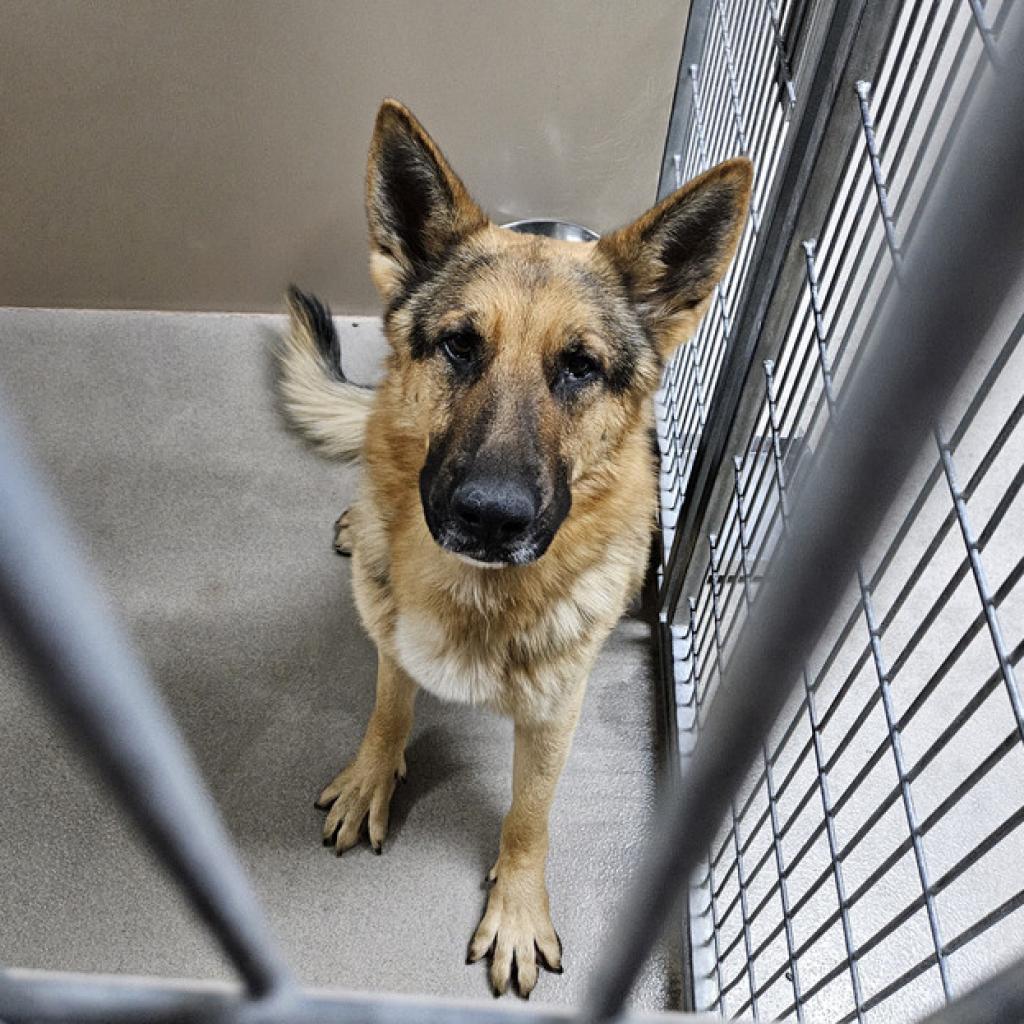
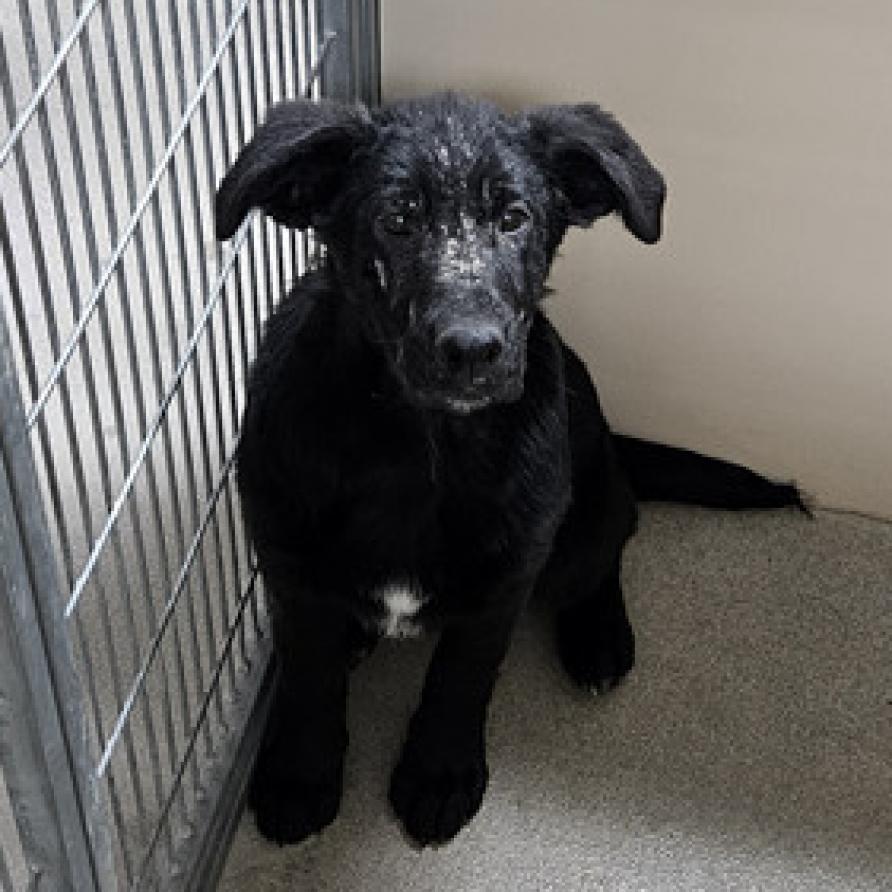
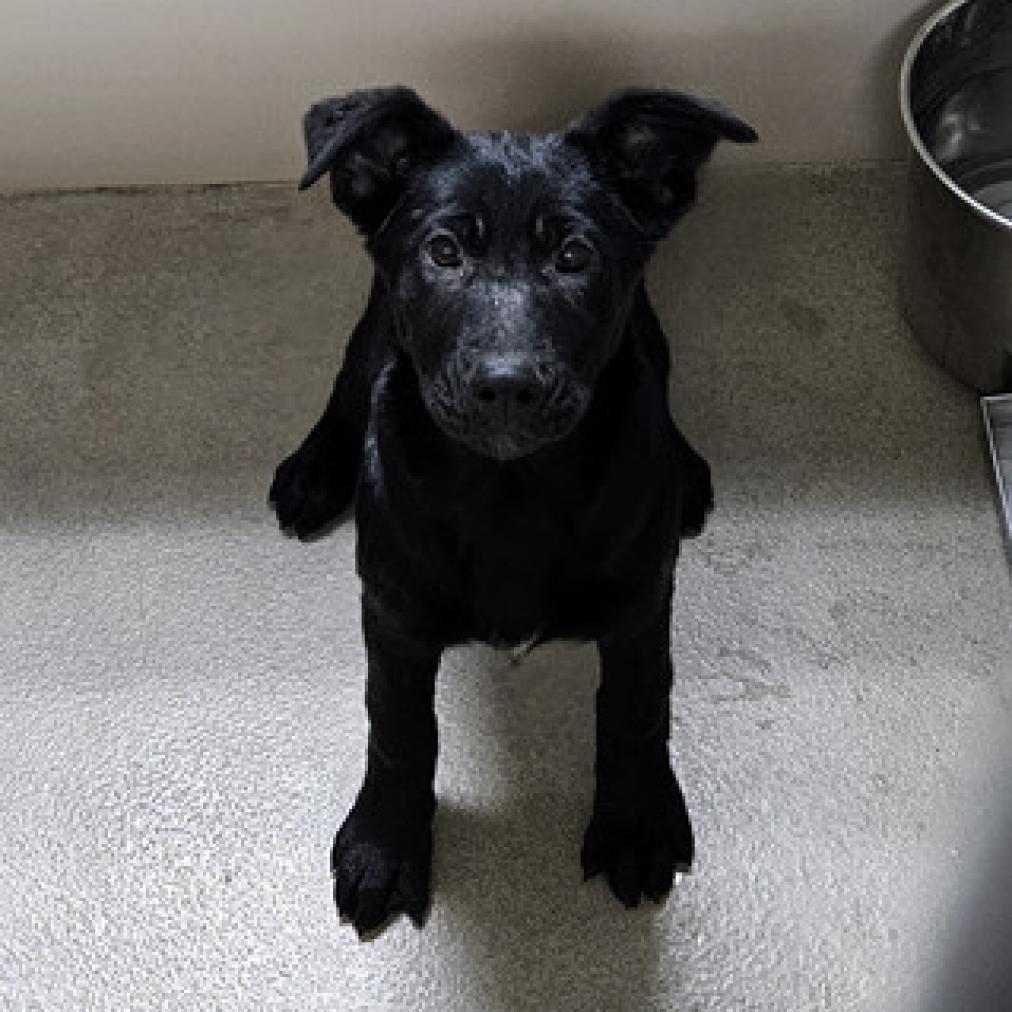
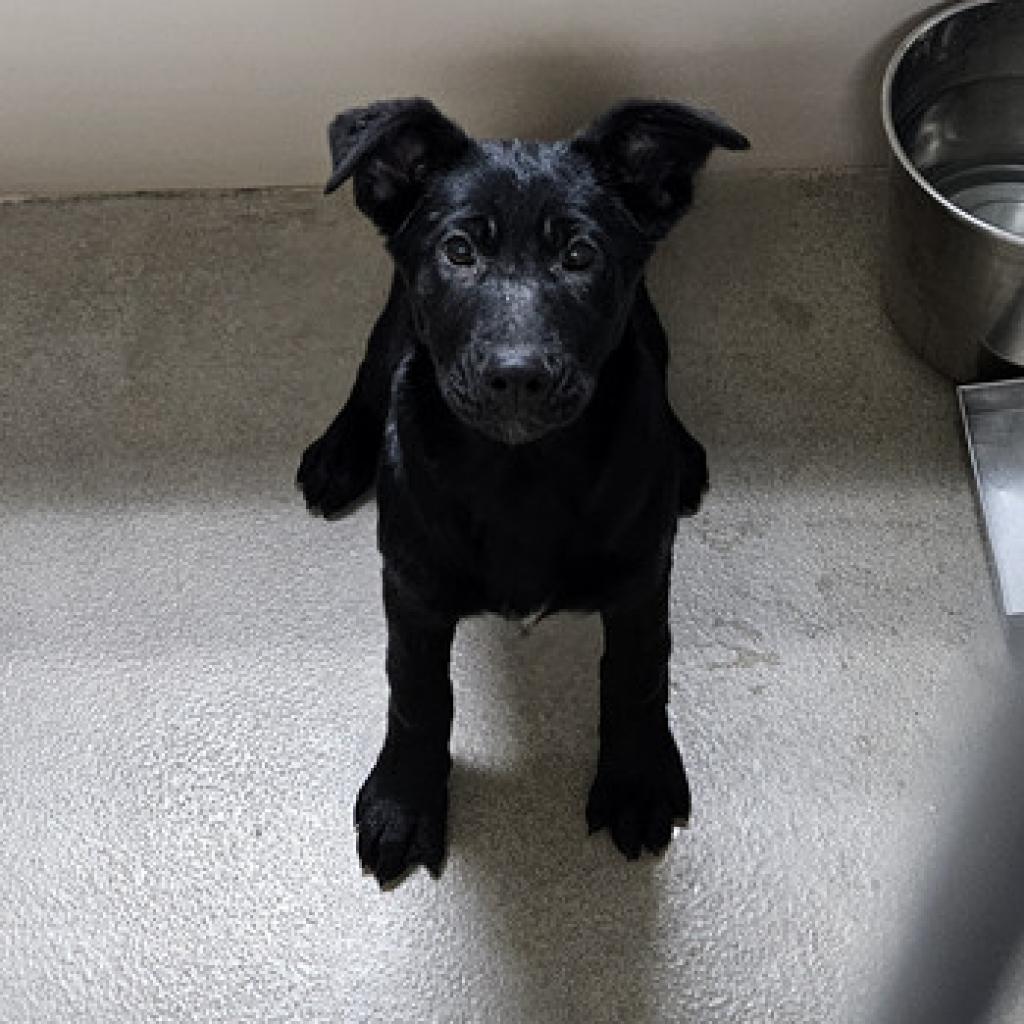
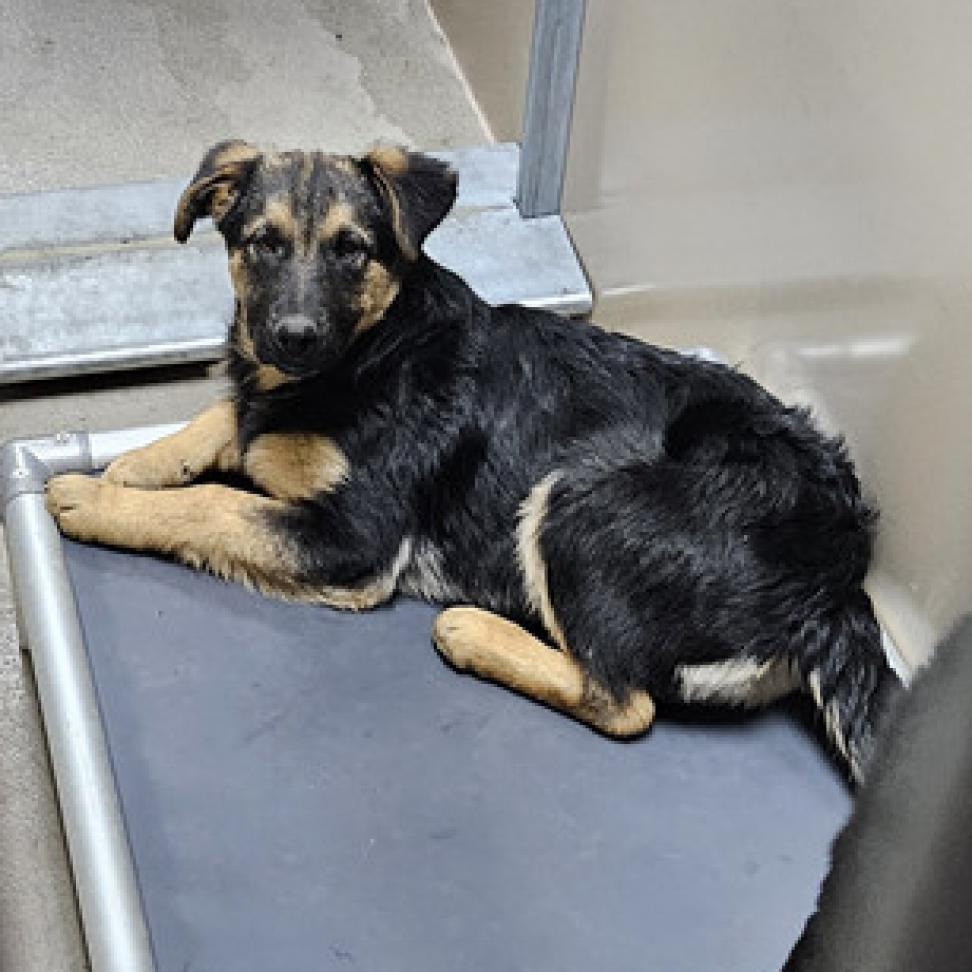
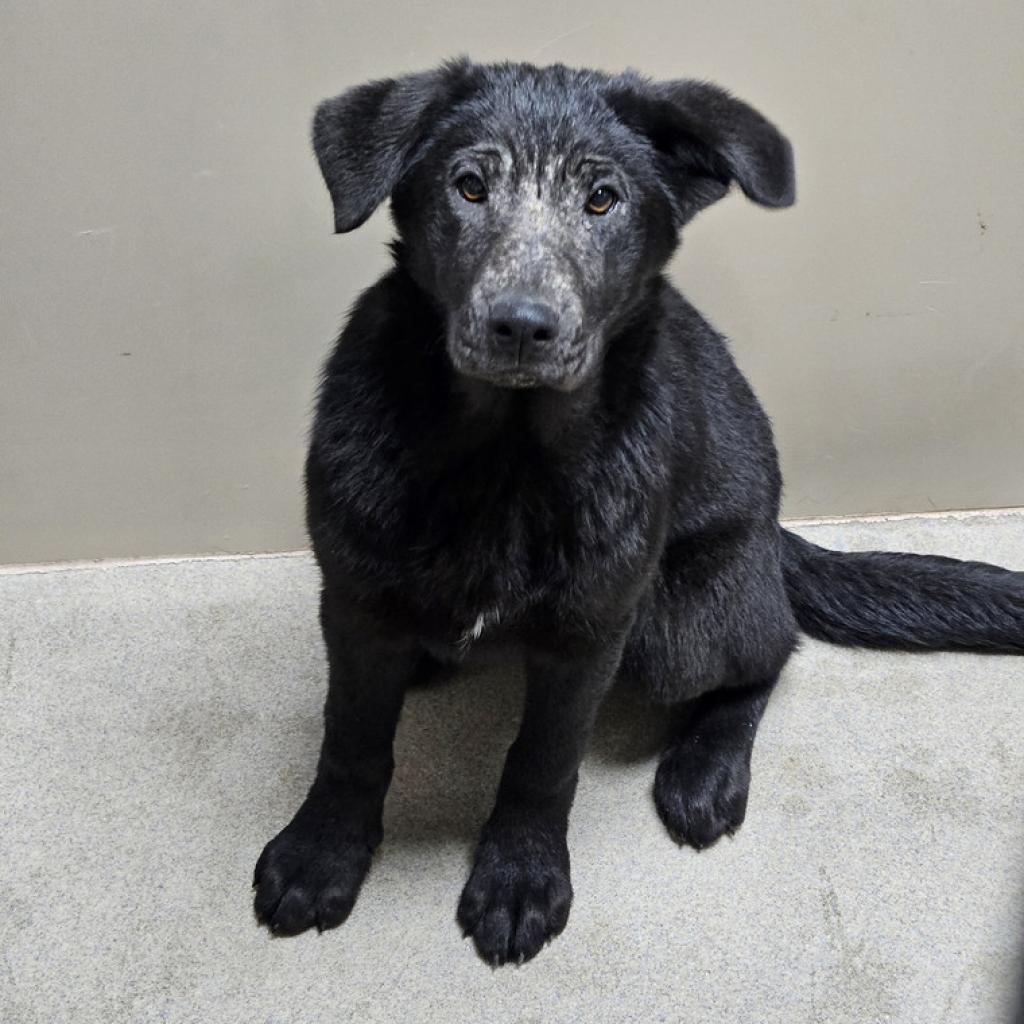
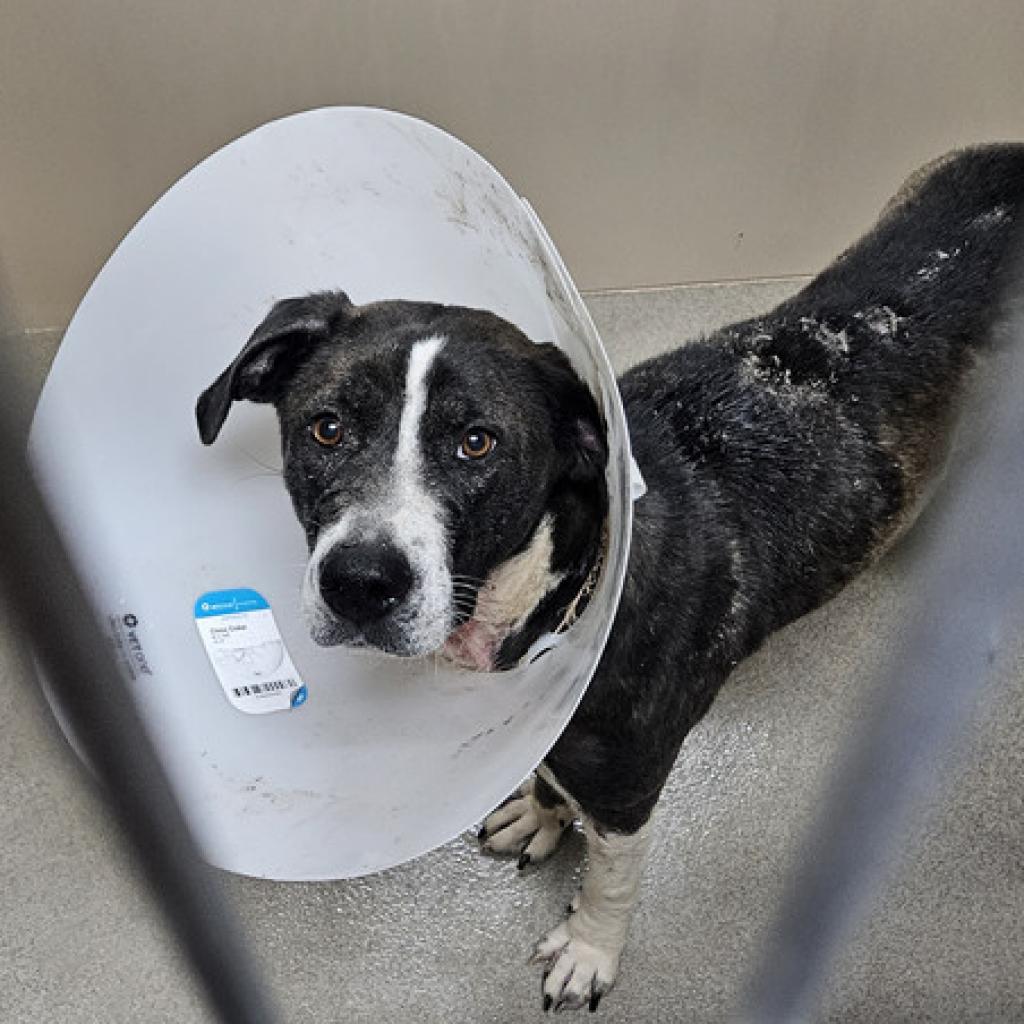
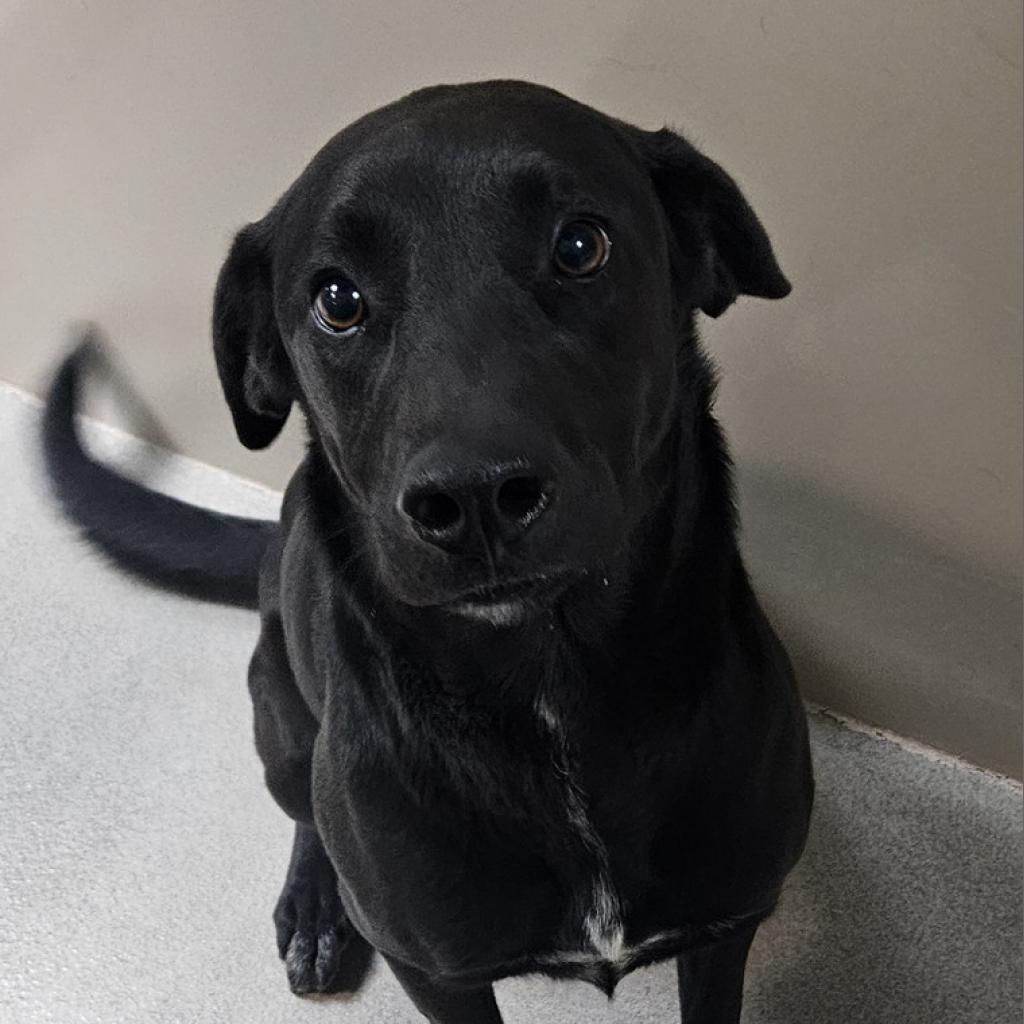
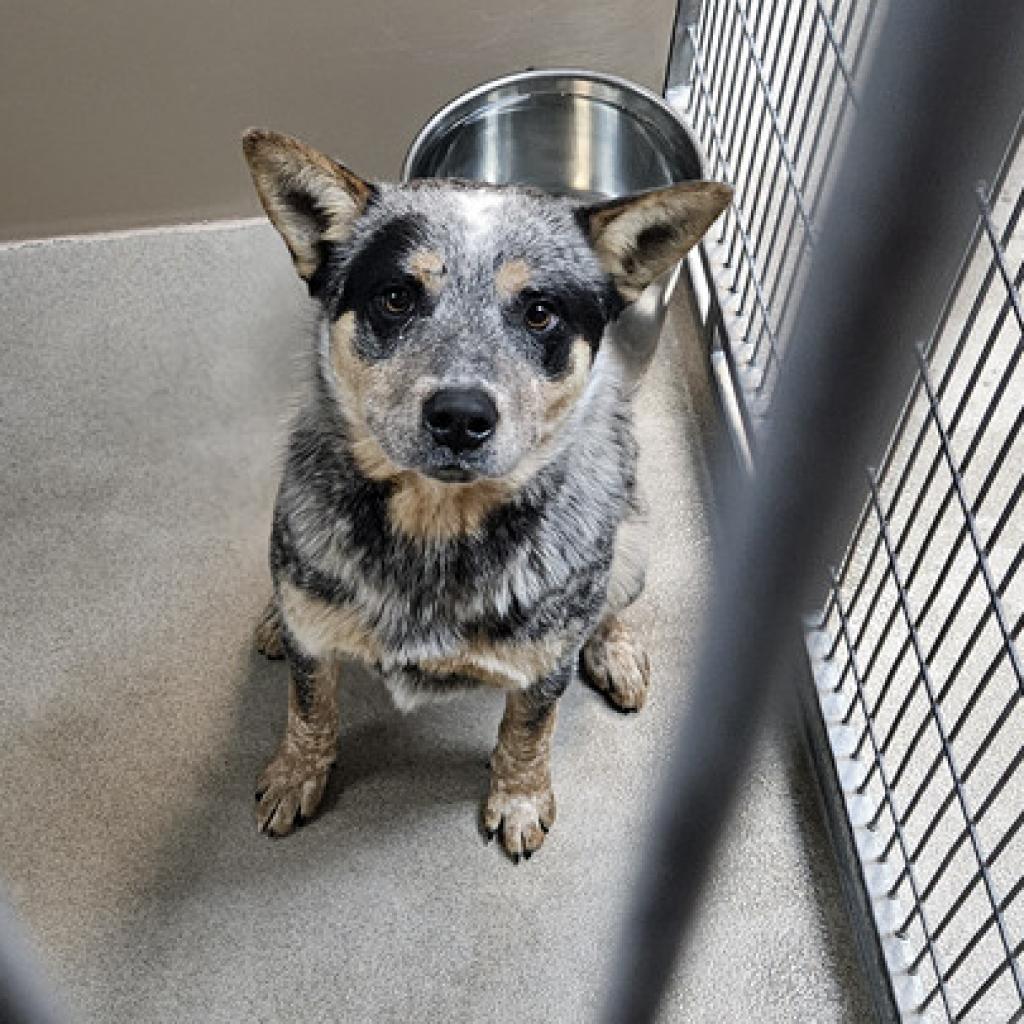
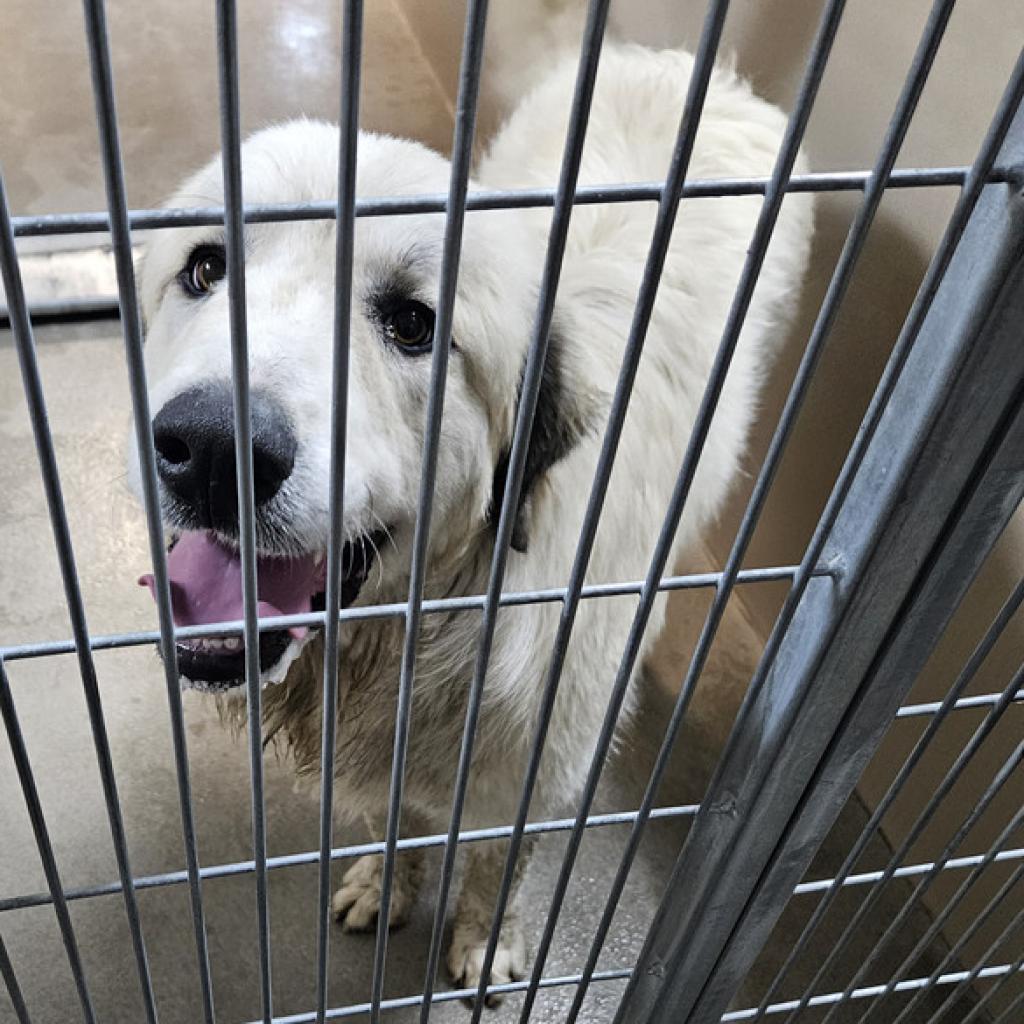
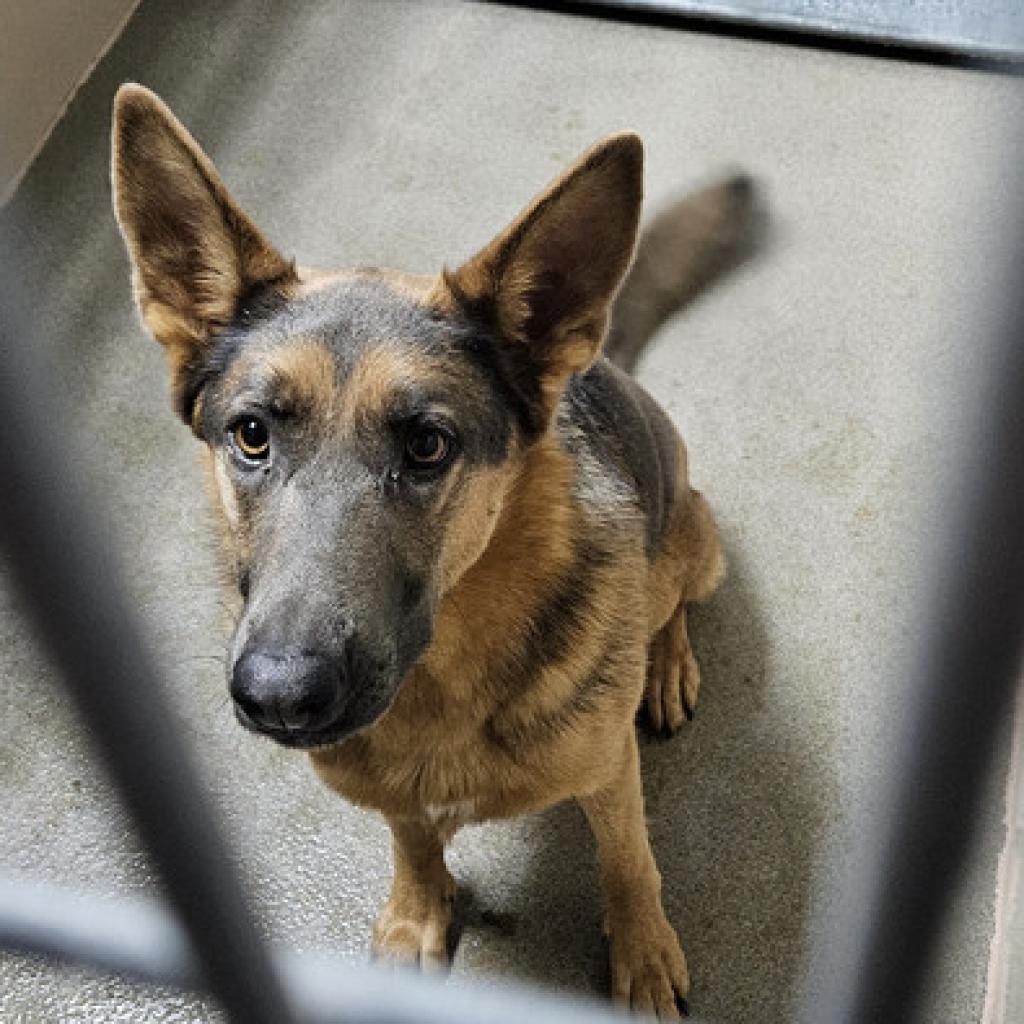
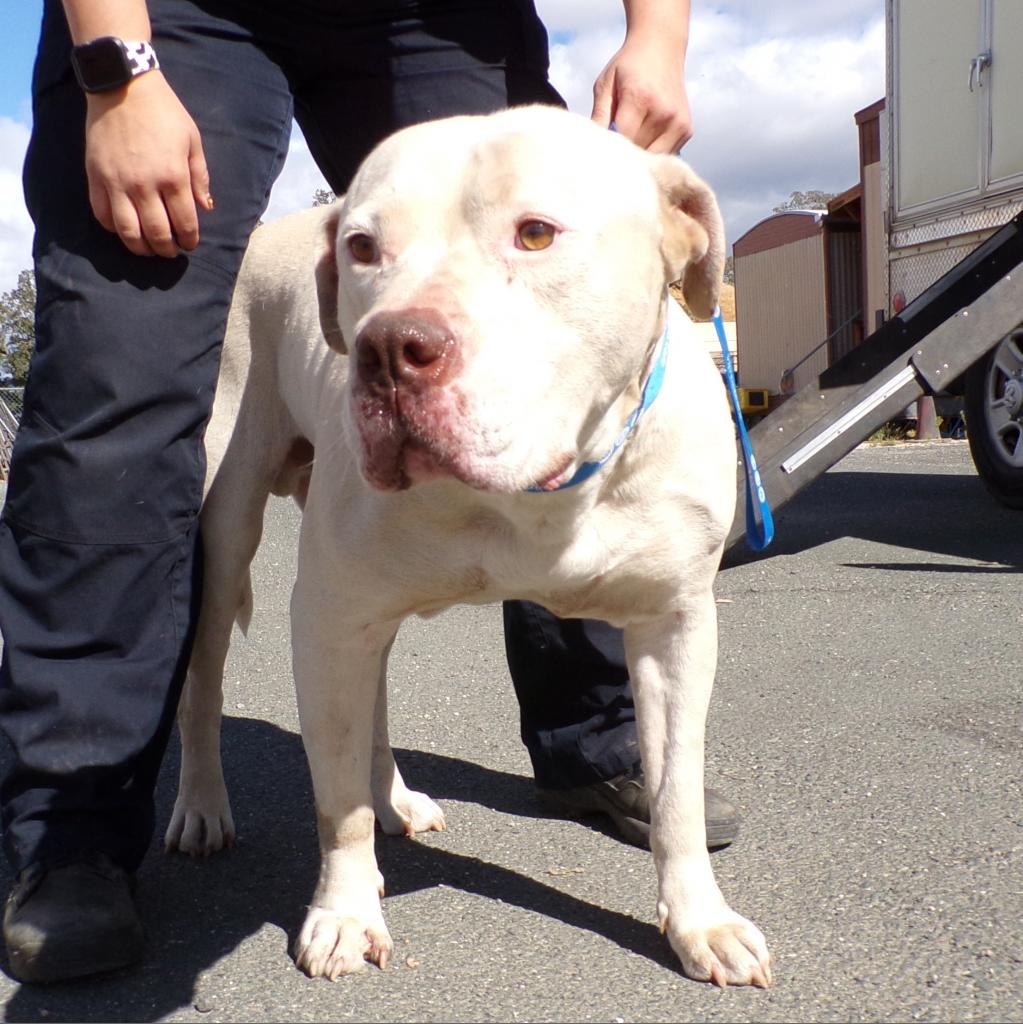
Dogs available for adoption this week include mixes of Alaskan husky, Australian cattle dog, Australian shepherd, border collie, boxer, bulldog, Doberman pinscher, German shepherd, Great Pyrenees, hound, Labrador retriever, pit bull, Queensland heeler, shepherd and terrier.
Dogs that are adopted from Lake County Animal Care and Control are either neutered or spayed, microchipped and, if old enough, given a rabies shot and county license before being released to their new owner. License fees do not apply to residents of the cities of Lakeport or Clearlake.
Those dogs and the others shown on this page at the Lake County Animal Care and Control shelter have been cleared for adoption.
Call Lake County Animal Care and Control at 707-263-0278 or visit the shelter online for information on visiting or adopting.
The shelter is located at 4949 Helbush in Lakeport.
Email Elizabeth Larson at


















- Details
- Written by: NATIONAL AERONAUTICS AND SPACE ADMINISTRATION
This month marks the 20th anniversary of Spirit and Opportunity’s landing on Mars, part of a mission whose legacy will extend far into the future.
In January 2004, twin NASA rovers named Spirit and Opportunity touched down on opposite sides of Mars, kicking off a new era of interplanetary robotic exploration.
They arrived in dramatic fashion three weeks apart, each nestled in a cluster of airbags that bounced along the surface around 30 times before coming to a stop and deflating.
The golf cart-size rovers’ mission: to look for evidence that water once flowed on the Red Planet’s surface.
Their findings would rewrite science textbooks, including Opportunity’s discovery soon after landing of the famous “blueberries” — spherical pebbles of the mineral hematite that had formed in acidic water. Several years into the mission, Spirit, undaunted but now dragging a damaged wheel, uncovered signs of ancient hot springs that could have been ideal habitats for microbial life billions of years ago (if any ever existed on the Red Planet).
Scientists suspected Mars had long ago been radically different than the freezing desert it is today: Orbital images had shown what looked like networks of water-carved channels. But before Spirit and Opportunity, there was no proof that liquid water had formed those features.
“Our twin rovers were the first to prove a wet, early Mars once existed,” said former project scientist Matt Golombek of NASA’s Jet Propulsion Laboratory in Southern California, which managed the Mars Exploration Rover mission. “They paved the way for learning even more about the Red Planet’s past with larger rovers like Curiosity and Perseverance.”
An enduring legacy
Thanks in part to the science collected by Spirit and Opportunity, NASA approved development of the SUV-size Curiosity rover to investigate whether the chemical ingredients that support life were present billions of years ago on what was once a watery world. (The rover found soon after its 2012 landing that they were.)
Perseverance, which arrived at the Red Planet in 2021, is building on Curiosity’s success by collecting rock cores that could be brought to Earth to check for signs of ancient microbial life through the Mars Sample Return campaign, a joint effort by NASA and ESA (European Space Agency).
While working on Spirit and Opportunity, engineers developed practices for exploring the surface that continue today, including the use of specialized software and 3D goggles to better navigate the Martian environment. And after honing years of expertise during the twin rovers’ travels over Mars’ rocky, sandy surface, engineers are able to plan safer, longer drives, and to quickly put together the far more complex daily plans required to operate Curiosity and Perseverance.
Science team members have also become more adept in their role as virtual field geologists, drawing on years of knowledge to select the best ways to investigate Martian terrain using the robotic “eyes” and tools carried by their roving partners.
Martian marathon
Designed to last just 90 days, Spirit landed on Jan. 3; Opportunity, on Jan. 24. The solar-powered Mars Exploration Rovers soldiered on for years – in the case of Opportunity, nearly 15 years, before succumbing to a planet-enveloping dust storm in 2018. That durability surpassed the wildest dreams of scientists and engineers, who had only expected localized exploration over a distance of no more than one-third of a mile (600 meters).
Instead, through their long-lived robotic surrogates, the team got the chance to roam a wide variety of Martian terrains. Opportunity, the first rover to go a marathon-length distance on another planet, would ultimately cover nearly 30 miles (45 kilometers) in total – the farthest distance driven on another planet.
“This was a paradigm shift no one was expecting,” said former project manager John Callas of JPL. “The distance and time scale we covered were a leap in scope that is truly historic.”
The chance to see so much was critical for revealing that not only was Mars once a wetter world, but also that it supported many different kinds of watery environments – fresh water, hot springs, acidic and salty pools – at distinct points in its history.
Continuing inspiration
The roving twins would also inspire a new generation of scientists. One of those was Abigail Fraeman, who was a high school student invited to JPL on the night of Opportunity’s landing. She got to watch the excitement as the first signal returned, confirming Opportunity had safely landed.
She would go on to pursue a career as a Mars geologist, returning to JPL years later to help lead Opportunity’s science team. Now deputy project scientist for Curiosity, Fraeman calls many of the people she met on Opportunity’s landing night her close colleagues.
“The people who kept our twin rovers running for all those years are an extraordinary group, and it’s remarkable how many have made exploring Mars their career,” Fraeman said. “I feel so lucky I get to work with them every day while we continue to venture into places no human has ever seen in our attempt to answer some of the biggest questions.”
For more information about Spirit and Opportunity, visit https://mars.nasa.gov/mer.