 How to resolve AdBlock issue?
News
- Details
- Written by: Elizabeth Larson
“While this storm is not expected to be as fierce as the ones earlier in the month, the latest in the train of storms will be dangerous, posing several risks to people and property — including a renewed flood risk and gusty winds for some along the West Coast, and for central and northern California, it can bring severe thunderstorms and even an isolated tornado across parts of Northern and Central California on Monday and even across parts of Southern California on Tuesday. The storm has the potential to once again slow travel and activities, including business activities, in the state,” said AccuWeather Chief Meteorologist Jonathan Porter.
Accuweather said that, comparing the impacts expected over the upcoming days to the storms that barreled into California from Feb. 3 to 5, forecasters are not expecting the risks to be as widespread due to one main factor: this storm will be losing energy as it approaches rather than strengthening.
Rainfall totals in inches for the 72-hour period ending at 2 a.m. Tuesday:
— Hidden Valley Lake: 4.61
— Indian Valley Reservoir: 2.77.
— Kelseyville: 5.20.
— Lake Pillsbury: 3.96.
— Lower Lake: 4.43.
— Lyons Valley: 3.31.
— Whispering Pines: 5.80.
The National Weather Service’s forecast for the week shows chances of rain through Monday.
Along with the rain, more high winds are in the forecast, causing concerns for more falling trees and power lines.
Due to concerns statewide about the strength of these latest storms, Gov. Newsom preemptively activated the State Operations Center in Mather to help coordinate state, local and federal response.
Email Elizabeth Larson at
- Details
- Written by: Elizabeth Larson

LAKE COUNTY, Calif. — This month’s storms have pushed Clear Lake into the “full” range.
The lake is considered full at 7.56 feet Rumsey, the special measure for Clear Lake.
It topped that measure just after 10 p.m. Monday, according to the United States Geological Survey’s gauge on Clear Lake at Lakeport.
The USGS measurements show the lake rose to 7.90 feet Rumsey shortly after 2 a.m. Tuesday.
The lake reaches the “action” stage at 8 feet Rumsey and flood stage at 9 feet Rumsey, the USGS reported.
Last year, it took the lake until March 14 to reach the full level, and from there it topped out at 8.38 feet Rumsey on March 21 before receding.
Email Elizabeth Larson at
- Details
- Written by: Bhagya Subrayan, Purdue University

Curious Kids is a series for children of all ages. If you have a question you’d like an expert to answer, send it to
Why does a leap year have 366 days? Does the Earth move slower every four years? – Aarush, age 8, Milpitas, California
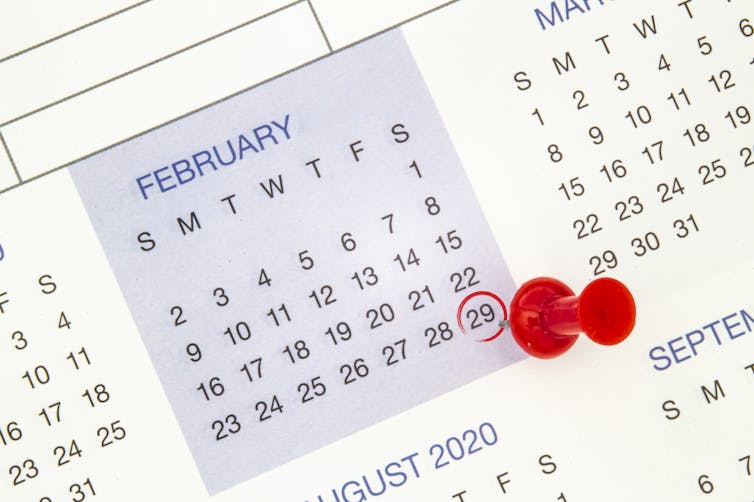
You may be used to hearing that it takes the Earth 365 days to make a full lap, but that journey actually lasts about 365 and a quarter days. Leap years help to keep the 12-month calendar matched up with Earth’s movement around the Sun.
After four years, those leftover hours add up to a whole day. In a leap year, we add this extra day to the month of February, making it 29 days long instead of the usual 28.
The idea of an annual catch-up dates back to ancient Rome, where people had a calendar with 355 days instead of 365 because it was based on cycles and phases of the Moon. They noticed that their calendar was getting out of sync with the seasons, so they began adding an extra month, which they called Mercedonius, every two years to catch up with the missing days.
In the year 45 B.C.E., Roman emperor Julius Caesar introduced a solar calendar, based on one developed in Egypt. Every four years, February received an extra day to keep the calendar in line with the Earth’s journey around the Sun. In honor of Caesar, this system is still known as the Julian calendar.
But that wasn’t the last tweak. As time went on, people realized that the Earth’s journey wasn’t exactly 365.25 days – it actually took 365.24219 days, which is about 11 minutes less. So adding a whole day every four years was actually a little more correction than was needed.
In 1582, Pope Gregory XIII signed an order that made a small adjustment. There would still be a leap year every four years, except in “century” years – years divisible by 100, like 1700 or 2100 – unless they were also divisible by 400. It might sound a bit like a puzzle, but this adjustment made the calendar even more accurate – and from that point on, it was known as the Gregorian calendar.
What if we didn’t have leap years?
If the calendar didn’t make that small correction every four years, it would gradually fall out of alignment with the seasons. Over centuries, this could lead to the solstices and equinoxes occurring at different times than expected. Winter weather might develop in what the calendar showed as summer, and farmers could become confused about when to plant their seeds.
Other calendars around the world have their own ways of keeping time. The Jewish calendar, which is regulated by both the Moon and the Sun, is like a big puzzle with a 19-year cycle. Every now and then, it adds a leap month to make sure that special celebrations happen at just the right time.
The Islamic calendar is even more unique. It follows the phases of the Moon and doesn’t add extra days. Since a lunar year is only about 355 days long, key dates on the Islamic calendar move 10 to 11 days earlier each year on the solar calendar.
For example, Ramadan, the Islamic month of fasting, falls in the ninth month of the Islamic calendar. In 2024, it will run from March 11 to April 9; in 2025, it will occur from March 1-29; and in 2026, it will be celebrated from Feb. 18 to March 19.
Learning from the planets
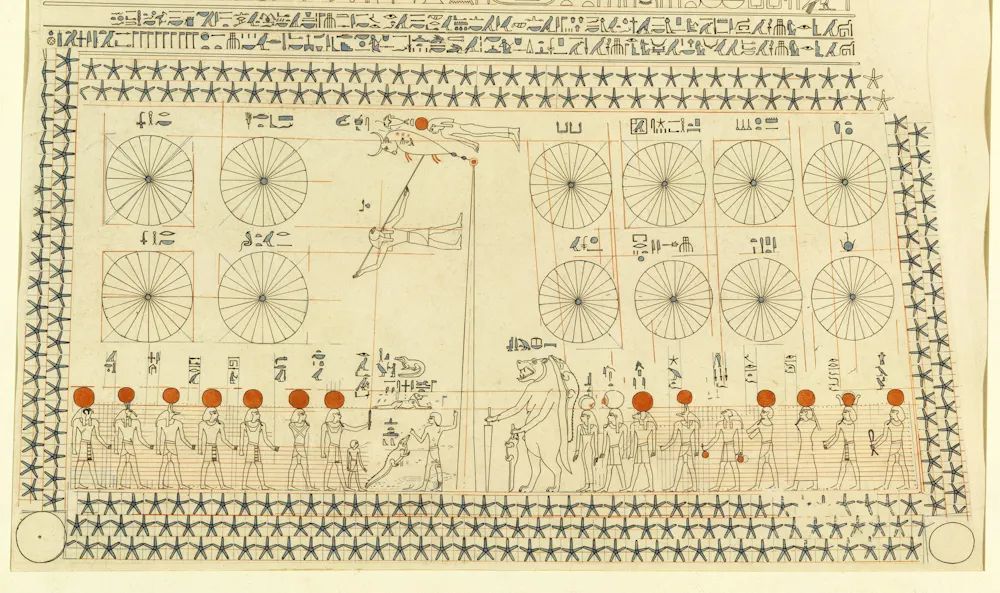
Astronomy originated as a way to make sense of our daily lives, linking the events around us to celestial phenomena. The concept of leap years exemplifies how, from early ages, humans found order in conditions that seemed chaotic.
Simple, unsophisticated but effective tools, born from creative ideas of ancient astronomers and visionaries, provided the first glimpses into understanding the nature that envelops us. Some ancient methods, such as astrometry and lists of astronomical objects, persist even today, revealing the timeless essence of our quest to understand nature.

People who do research in physics and astronomy, the field that I study, are inherently curious about the workings of the universe and our origins. This work is exciting, and also extremely humbling; it constantly shows that in the grand scheme, our lives occupy a mere second in the vast expanse of space and time – even in leap years when we add that extra day.
Hello, curious kids! Do you have a question you’d like an expert to answer? Ask an adult to send your question to
And since curiosity has no age limit – adults, let us know what you’re wondering, too. We won’t be able to answer every question, but we will do our best.
Bhagya Subrayan, PhD Student in Physics and Astronomy, Purdue University
This article is republished from The Conversation under a Creative Commons license. Read the original article.
- Details
- Written by: Lake County News reports
The storm is anticipated to be brief but intense.
Lake County is under a flood watch and high wind warning through Tuesday morning.
Gov. Newsom has activated the State Operations Center in Mather to help coordinate state, local and federal response to the storm.
"Already this year, severe storms have proven to be deadly up and down California,” Newsom said. “Our state is taking this next storm seriously, and we ask all Californians to take steps now to prepare."
The governor also directed the California Governor's Office of Emergency Services, or Cal OES, to strategically preposition swift water rescue crews and other rescue personnel and equipment in multiple counties to be able to respond if needed.
According to the National Weather Service, this storm could bring significant rainfall and snow throughout much of the state, as well as potential for thunderstorms, debris flows and mudslides.