 How to resolve AdBlock issue?
News
- Details
- Written by: Elizabeth Larson
LAKE COUNTY – For those interested in serving their community, this Friday is the deadline to sign up for numerous board and commission seats that will be on the ballot this November.
Up for election are seats on boards of education, water and fire protection districts.
The process of signing up is a simple one, said Jim Emenegger, an elections office assistant.
For one, you don't need to go out and collect signatures. “It's just filling out a form,” said Emenegger. “There's no fee or anything.”
The only item that requires a fee is if someone wants to include a candidates statement in the voter handbook, Emenegger added.
The county Registrar of Voters Office reported that the following seats are open and will be elected Nov. 6. All are four-year terms unless otherwise noted, and become vacant on the first Friday in December or when a successor is elected and qualifies for office.
Education
Mendocino-Lake Community College District
Trustee Area No. 1, 3, 4 and 7 (must be filed in Mendocino County)
Trustee Area No. 7, one vacancy, file in Lake County
Lake County Board of Education
Trustee Area No. 1, one vacancy
Trustee Area No. 2, one vacancy
Trustee Area 4, one vacancy, two-year unexpired term
Kelseyville Unified School District
Three vacancies
Lakeport Unified School District
Three vacancies
Upper Lake Union High School District
Two vacancies
Lucerne Elementary School District
One vacancy
Upper Lake Union Elementary School District
Two vacancies
Water Districts
Adams Springs Water District
Three vacancies (two full terms; one two-year unexpired term)
Villa Blue Estates Water District
Three vacancies (three two-year terms)
Buckingham Park Water District
Three vacancies (two full terms; one two-year unexpired term)
Callayomi County Water District
Two vacancies
Clearlake Oaks County Water District
Three vacancies
Cobb Area County Water District
Three vacancies (two full terms; one two-year unexpired term)
Konocti County Water District
Two vacancies
Upper Lake County Water District
Three vacancies
Scotts Valley Water Conservation District
Division 1, one vacancy
Division III, one vacancy
Fire Protection Districts
Kelseyville Fire Protection District
Two vacancies
Lake County Fire Protection District
Three vacancies
South Lake County Fire Protection District
Three vacancies
Anderson Springs Community Services District
Three vacancies (two full terms; one two-year unexpired term)
Butler-Keys Community Services District
Three vacancies
Hidden Valley Lake Community Services District
Three vacancies
Application forms must be submitted by 5 p.m. Friday, Aug. 10.
For more information about filing for any of these elective offices, contact the Lake County Registrar of Voters office, 263-2372; or visit them at the Lake County Courthouse, 255 N Forbes St., Room 209, Lakeport.
E-mail Elizabeth Larson at
{mos_sb_discuss:2}
- Details
- Written by: Margaret McClure
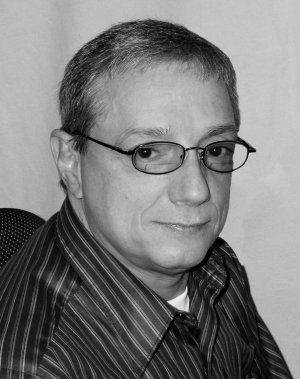
LAKE COUNTY – As Aug. 5 through 11 is National Health Center Week, it a good time to celebrate the efforts of groups like Mendocino Community Health Clinic (MCHC) and its board of directors for their contribution to the health of our local community.
Meaningful service is one of John Pavoni’s fundamental values. The Clearlake Oaks resident works with disadvantaged children and serves on the Lake County’s Maternal Child and Adolescent Health Advisory Board, East Lake Elementary School’s Site Council, Konocti Unified School District Bond Oversight Committee, Clearlake Oaks Manor Senior Housing Project and serves as Liaison Officer for Li'l Acorns Preschool.
Since 2000, he has served on the Board of Directors of Mendocino Community Health Clinic (MCHC). In 2006 and 2007, his peers have elected him to the position of board chair. He holds governance oversight of MCHC’s three community-based health centers: Hillside Health Center, in Ukiah, Lakeside Health Center, in Lakeport and Little Lake Health Center, in Willits.
“I have stayed on the MCHC Board out of a desire to ‘pay it forward,'” Pavoni explained. “As a MCHC consumer and as a citizen, I know that serving MCHC is an opportunity to safeguard the right to health care for others and for my family. It is a way to build a safe and healthy future that will benefit all of us.”
A former nurse, Pavoni has become certified in Health Center Governance through the National Association of Community Health Clinics (NACHC). NACHC certification marks the board’s commitment that MCHC will work with staff to provide quality, competent, cost-effective health care at each of its centers.
He also recently participated in a training at UCLA’s Anderson School of Management/Health Care Executive Program.
“Being a board member requires something more that just showing up to meetings,” Pavoni explained. “Health care is quite complicated and, to be effective as a board member, you must engage in continuous education. This is a must and, for me, it is a passion. The training offered through NACHC helped to familiarize me with the procedural, financial, legal and technical responsibilities of serving a community health center.”
Prior to 1960, before the development of the community health center system of care, distribution of health services was primarily based on a community’s financial ability to support their health care provider. Of course, that left many small and rural communities without services from a doctor or dentist; often, there were not enough people in the community to make the “business” of doctoring pay.
As part of President Johnson’s War on Poverty, the dire health status of our nation’s citizens was improved through creation of a nationwide system of community health centers.
Since the beginning, federally funded health centers have been required to have boards made up of a majority of people who use its services.
“The consumer-based boards of our nation’s community health centers make it possible for each center to meet the unique needs of their community,” Pavoni noted. “Such boards exhibit better responsiveness to the health care needs of their families, friends and neighbors. Having such members gives center's administration a different perspective. We are people who utilize services the clinic provides.
“First and foremost, we are volunteers,” he continued. :”We have no financial incentive for our service. We are involved to demonstrate our commitment, to our communities and to staff as they provide the best health care possible. I am also proud to say that we work hard to ensure that quality healthcare is available.
“The health centers operated by MCHC strengthen the local Web of care in each community,” said Pavoni. “Our centers meet the highest standard of care as demonstrated by recent results from our review by the Joint Commission on the Accreditation of Healthcare Organizations (JCAHO). Their report on our services provides an in-depth look at our system of care, and their accreditation of each of our centers provides strong evidence of excellence.”
Because of his position as board chair, Pavoni also serves as a board member on the Alliance for Rural Community Health (ARCH). ARCH is a consortium of Lake and Mendocino County health centers.
“ARCH helps to give our region’s rural communities a strengthened voice in the growing healthcare debate,” he said. “Through ARCH, we are advancing our strength as patient advocates, locally and regionally.”
As the national health care environment worsens, the local system is feeling the impacts. “The difficulty of recruiting doctors, dentists and nurses into an area where housing prices have gone through the roof is only going to get worse,” said Pavoni.
“New programs are going to be needed to support the health of our aging population but, at the same time, the commitment to caring for these needs is diminishing. I am hopeful that, as health centers work together to advocate for meaningful local solutions though ARCH, we will be empowered to address the health care needs of our community more effectively.”
The federal community health center program is recognized as one of the federal government’s most effective. Designed to have a unique and significant impact, the program is expanding access to health care for underserved populations.
According to ExpectMore.Gov, “A 1998 evaluation found Medicaid health center users experience 22 percent lower hospitalization rates than Medicaid users receiving care from other sources.” In this way, health center patients improved health status is reducing the impacts on local hospitals and other service and law-enforcement agencies.
In addition to John Pavoni, Manuel Ramirez, former staff member of Lake County Environmental Health, represents the interests of Lake County.
From Mendocino County, Directors include Harold Lance, Carlos Frausto, Robert O'Connell, Bill Mergener, Bonnie Carter, Anne Veno Caviglia, Cyril Colonius and John Slonecker.
For more information about how you can make a contribution to Lakeside Health Center by becoming an MCHC Board Member, please contact Kathy MacDougall, administrative assistant to the president, at 472-4511.
Margaret McClure is director of communications for the Alliance for Rural Community Health.
{mos_sb_discuss:2}
- Details
- Written by: Editor
WASHINGTON – On Saturday, the House of Representatives passed the most significant energy reform legislation in over a decade.
The New Direction for Energy Independence, National Security, and Consumer Protection Act (HR 3221 & HR 2776) will make an historic investment in new energy technologies and renewable energy, improve energy efficiency for a wide array of products, and reduce carbon dioxide emissions significantly.
“Our district is on the cutting edge of many new energy technologies: the Geysers are the largest complex of geothermal power plants in the world; we have numerous world class wineries that are powered by solar energy," said Rep. Mike Thompson. “Our universities have also been leaders – from UC Davis’ development of the plug-in vehicle to the cutting edge biofuels research being conducted at Humboldt State. This bill improves and expands federal incentives for the development of these types of renewable and alternative energy, so communities across the nation can follow our lead."
The legislation extends federal tax credits for the production of biomass, geothermal, wind and many other types of renewable energy.
The solar investment tax credit is extended for eight years, providing long-term stability for the solar energy industry; also extended are the biodiesel and renewable diesel tax credits.
Additionally the legislation creates new monetary incentives and expands existing credits for taxpayers to make their homes and their businesses more energy efficient.
The bill also makes a first-time investment in new technology known as “smart meters," which will allow consumers to better manage their electricity usage during peak hours. This is of critical importance to states like California, where electricity infrastructure is already stressed and overloaded.
Lastly, the bill sets ambitious goals that will help lower the country’s carbon emissions and reduce our dependence on tradition fossil fuels. Utility companies would be required to meet a renewable energy portfolio standard whereby 15 percent of their energy must be derived from renewable sources by the year 2020.
“This legislation makes a long overdue investment in renewable energy, and it does so without increasing the budget deficit by a single dime," said Thompson. “As I have said many times in the past, we cannot drill our way to energy independence. We have no choice but to fully embrace the renewable energy sources and innovative technologies available to us; and this bill does just that."
{mos_sb_discuss:2}
- Details
- Written by: Elizabeth Larson
CLEARLAKE – The Burns Valley Road area of Clearlake has long been a safety issue for those who travel along it by foot or bicycle, including the area's senior population. However, city officials say they're moving forward on a project that would install a walking and biking path along the road, which would significantly improve pedestrian safety safety.
The sidewalk project has been on the drawing board for about two years, said City Administrator Dale Neiman.
The current plan, according to a report Neiman gave to the City Council at its July 26 meeting, involves widening the existing street – which Neiman said is extremely narrow, at only about 24 feet wide – and installing curb, gutter and sidewalk.
Linda J. Burton, executive director of the Highlands Senior Center on Bowers Road, said in an interview Thursday that there are many senior housing complexes in the area – Walnut Grove, Autumn Village and Austin Manor, and the Orchard Park assisted living facility near the Redbud Library.
Many of those seniors travel back and forth between the Burns Valley Shopping Center, the senior center and their homes on foot, in wheelchairs or using scooters, Burton explained.
“A lot of them are walking along a little dirt path,” said Burton, with those who are unsteady on their feet walking on the pavement in the narrow street.
Because of those conditions, there's a great need for a sidewalk and crosswalks, said Burton.
“There are clearly some safety issues,” Neiman said at the council meeting, adding that he also has witnessed wheelchairs having to travel into the road's lanes.
But there have been several delays, including a discovery that the city's plan was going to cost $300,000, about $100,000 more than the total amount of the two grants the city had acquired to pay for the project.
Neiman's solution to the shortfall, which the council approved July 26, included dropping the curb, gutter, sidewalk and drainage improvements.
“If we build the curb, gutter and sidewalk and drainage improvements we would be adding about $200,000 to the value of the adjoining property because it would not have to be built when the property is developed,” Neiman's report stated.
Developer Robert Adelman will be required to make the improvements as he builds the nearby Lake Glenn Subdivision, Neiman said in a Thursday interview.
The city's revised plan calls for building a 6-foot-wide asphalt pedestrian/bike lane along the street's west side, which will be delineated with yellow lines and a bike lane strip.
The bike lane will narrow to 4 and a half feet in width at the Burns Valley intersection so the city can avoid the cost of extending or replacing the culvert, Neiman reported.
In addition, rather that reconstructing sections of both lanes of the road, the city will only reconstruct a portion of the road's west travel lane, Neiman's staff report noted.
The City Council unanimously approved Neiman's suggested revisions, with council members stating their concerns for the safety of seniors traveling along the road.
Mayor Judy Thein met with interim City Engineer Bob Galusha at the site Wednesday, where she said he answered several of her concerns, including the width of the bike lane/walking path at the culvert.
Thein said she had wanted the path wider than the proposed 4 and a half feet when the path reaches the culvert, but said when Galusha showed her measurements at the site, and explained that Americans with Disabilities Act (ADA) compliance requires only 3 feet, she said she was satisfied.
The project will include crosswalks from nearby senior housing complexes to the senior center and to the pedestrian walkway, a guardrail to keep people from falling into the creek, and new ADA-compliant curbs, Thein explained.
Thein said the work will be geared toward senior safety as they travel to and from the senior center and the Burns Valley Mall.
The project, said Thein, has been important to her since she joined the council, and her goal is that it's completed as soon as possible. Seniors trying to navigate the area “just cannot go through another winter like they have been,” she said.
Neiman said the construction plans will need to be revised, which will take about six weeks.
The city still has a few other obstacles to overcome, he said. Those include getting easements from a nearby property owner, who received the deeds from the city about a month ago but hasn't returned them.
In addition, Adelman – who is being required to replace a culvert that crosses Burns Valley Road at the intersection near the senior center – hasn't obtained the necessary approvals from the city or the funding. In that case, Neiman said the city could allocate $50,000 to do the work and have Adelman reimburse the city later.
Neiman said Adelman hasn't yet given the city a time frame about when he plans to move forward on the Lake Glenn Subdivision development or the attendant sidewalk improvements. He said Adelman has finalized his construction drawings and is working on project financing, but most likely will miss this years building season.
Neiman said the city also needs the assistance of Pacific Gas & Electric Co. (PG&E) to move some power poles along the route.
At the City Council meeting, Neiman said he had not received word back from PG&E when the pole relocations might be possible.
Jana Schuering, a spokesperson for PG&E's North Bay and North Coast regions, said the company is in the process of estimating the project, which she said should be done by Aug. 9. At that time, the company will schedule a crew to relocate the power poles.
If everything moves forward smoothly from this point, Neiman said they'll go to bid after the plans are revised and, hopefully, have the project complete by October or November.
“That would be a great benefit to seniors living in this area,” said Burton.
E-mail Elizabeth Larson at
{mos_sb_discuss:2}