 How to resolve AdBlock issue?
News
- Details
- Written by: Lake County News Reports

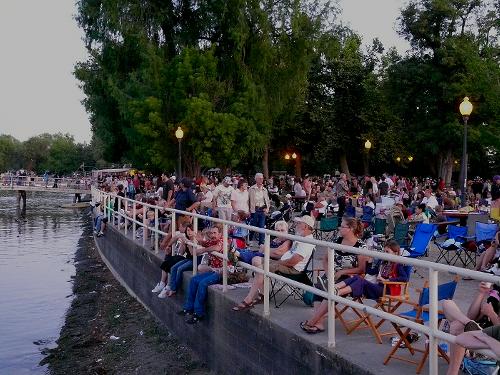
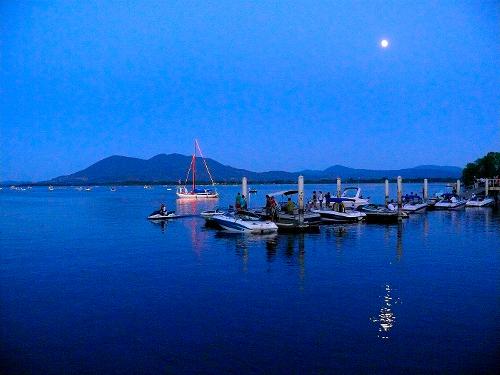
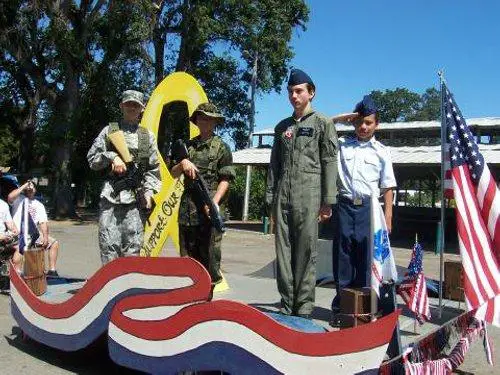
LAKE COUNTY – Lake County residents and visitors were out in force this hot, clear weekend, enjoying Independence Day festivities around the lake.
Clearlake Oaks kicked off the celebration on Friday evening with its fireworks display.
On Saturday, the cities of Clearlake and Lakeport celebrated July 4 with all-day festivals that culminated in nighttime fireworks displays.
The International Worm Races, an annual favorite, were back again this year. Always an opportunity for good fun, the race had the worms at their mark with coaches standing by.
Possibly the most hilarious event of the weekend was the second annual cardboard and duct tape boat race off of Library Park in Lakeport.
Since last year, competitors have been perfecting their efforts. The boats held up even better, with only one child managing to sink a boat this time around.
Find a video of the 12 and under age division race shot by correspondent Terre Logsdon at the YouTube Lake County News Channel, www.youtube.com/watch?v=UsdOYO_TuFM .



- Details
- Written by: Lake County News Reports
The Wine Alliance, a nonprofit organization of wineries, winegrape growers, vineyard owners, related businesses and community supporters founded in 2000, raises funds to benefit “the arts, health and community” of Lake County, while promoting Lake County as a premier growing region for fine wine grapes. An all-volunteer board of directors and auction committee plan and direct the annual charity event.
This year’s Wine Auction, the 10th annual, will take place at 5 p.m. on Saturday, Sept. 19, at the National Guard Armory, north of Lakeport.
In these times of challenging economic uncertainties for many local nonprofit programs and agencies, the sponsors recognized the need to limit expenses in order to donate more funds to the beneficiary groups.
Walker-Stimmel noted that over $714,000 in proceeds has been contributed to Lake County programs from the first nine events, held at the Buckingham Golf & Country Club with the support of owner Mark Wotherspoon.
The Wine Alliance board has expressed its appreciation to Wotherspoon and his staff for their exceptional contributions to the community through hosting the auction activities.
This year’s beneficiaries are the Allegro Scholarship Program, Lake County Hunger Task Force, St. Helena Hospital Clearlake Mammography Fund, Stitch and Give Knitters, Vietnam Veterans of Lake County, People Services Inc., Senior Law Project Inc., the fine arts programs at the five Lake County high schools and the Meals on Wheels programs at five senior centers.
A special “fund a need” portion of the live auction will benefit the Ely Stage Stop & Country Museum project of the Lake County Historical Society.
Beneficiaries were selected by the Wine Alliance board of directors and a committee of community members, and chaired by Judy Luchsinger.
The event is a black tie affair that showcases fine foods and wines from Lake County restaurants, caterers, and wineries. The ticket price is $100 per person and includes participation in the live and silent auctions and dancing to live music, provided this year by the LC Diamonds.
Tom DiNardo, sommelier diplomate with the International Sommelier Guild, is this year’s guest auctioneer. He will be joined by Stephanie Green, sommelier and owner of the Kelseyville wine shop, Focused on Wine.
Andy Beckstoffer, chairman and CEO of Beckstoffer Vineyards, and a major North Coast vineyard owner, is the Wine Auction event chair. Congressman Mike Thompson, chair of the 2008 benefit, is a special guest. Beckstoffer and Thompson continue their longtime support of Lake County and the expanding local wine industry. Rob Roumiguiere, partner in Roumiguiere Vineyards and Wine Alliance treasurer, is this year’s master of ceremonies.
A record number of applicants submitted their funding requests to the Wine Alliance, demonstrating the number of programs in Lake County seeking financial assistance.
The recipient organizations will use their grants for the following projects.
The Arts: The Allegro Scholarship Program assists exceptional music students with financial needs and will receive $2,000. The fine arts programs at each of the five high schools in Lake County (Clear Lake High, Kelseyville High, Lower Lake High, Middletown High, and Upper Lake High) will share the balance of funds in this category.
Health
The Lake County Hunger Task Force will receive $2,500 to assist senior centers and food banks with produce from its community gardens.
The balance of funds will be shared equally by the five senior centers that provide “meals on wheels” or nutrition programs and the St. Helena Hospital Clearlake Medical Imaging department for its no-cost mammograms to low or no-income women.
Community
The Stitch and Give Knitters will receive $1,000 to help them provide knitted items to the women’s shelter, pregnant teen program, Head Start program, and newborn hats to the area hospitals.
The Lake County Chapter of Vietnam Veterans of America will receive $5,000 for its advocacy and outreach programs, including the Avenue of Flags at local cemeteries, and providing gifts to patients at extended care facilities.
Remaining funds in this category will be shared between Peoples Services Inc., and Senior Law Project Inc. People Services has been meeting the needs of the developmentally disabled in Lake County for 35 years. The Senior Law Project provides legal help to elder clients in Lake County.
The Ely Stage Stop & Country Museum project of the Lake County Historical Society will receive special attention through a “fund a need” live auction lot. The recently relocated structure is considered to be Lake County’s oldest “stick-built” building, dating to the late 1850s. It will be the centerpiece of a new interpretive museum for Lake County’s agrarian past.
Additional events include winemaker dinners at several locations on Friday, Sept. 18, at 6 p.m. More details about hosts and locations will be announced later. The proceeds from the dinners will also be contributed to this year’s beneficiaries. Tickets will be $60 per person, after the purchase of a ticket for the Wine Auction.
Members of the Wine Alliance board include Margaret Walker-Stimmel, president; Marie Beery, vice president; Pamela Shine-Duncan, secretary; Rob Roumiguiere, treasurer; and Kaj Ahlmann, Judy Luchsinger, Wilda Shock, and Janet Thompson, directors.
More information, tickets and reservations, and sponsorship opportunities may be obtained by contacting the Lake County Wine Alliance by phone, 866-279-WINE, by mail, P.O. Box 530, Kelseyville, CA 95451, or at www.winealliance.org .
- Details
- Written by: Elizabeth Larson
Gov. Arnold Schwarzenegger and the state Legislature are locked in budget impasse over the shape of the budget ahead.
Last Tuesday, Schwarzenegger followed through on his promise to veto a budget that didn't fully resolve the state's crushing deficit issues. He then issued an emergency declaration on Wednesday – the day the new fiscal year began – and expanding the number of furloughs for state workers.
The governor also called a Proposition 58 legislative special session to address the budget, giving them 45 days to solve the crisis, otherwise no other bills will be able to be addressed and they'll be forced to remain in session.
On Thursday, State Controller John Chiang began issuing $776 million in registered warrants – also known as IOUs – to county governments for CalWORKs grants, administration of social services, mental health services and alcohol and drug treatment programs. Counties are mandated to provide those services under state and federal law, according to the California State Association of Counties (CSAC). In February, Chiang also had delayed some payments.
Chiang said the state's “massively unbalanced spending plan” and cash shortfall haven't been seen since the Great Depression, with its $2.8 billion cash shortage in July estimated to grow to $6.5 billion in September. And after that, he said, “we see a double-digit freefall.”
Only those categories determined by the state constitution, federal law and court decisions will receive regular payments this month, Chiang's office reported.
The IOUs are added injury for counties, which already are facing proposed cuts of $4.3 billion, according to CSAC, which said some counties could themselves be pushed to the financial brink as a result.
“We are putting the governor, Legislature and residents we serve on notice that we cannot uniformly ensure the delivery of critical health, public safety and other vital services in the current fiscal
environment," said Gary Wyatt, Imperial County supervisor and CSAC president.
“Let's be clear, services will be disrupted at the local level, and the state's inability to resolve its budget issues is severely impeding counties' ability to meet the needs of the people we serve,” Wyatt said.
CSAC accused the state of pushing its cash crisis down to counties, which it said will be forced to conserve cash by paring down services, such as libraries, parks or road maintenance, or by issuing their own IOUs to vendors in order to make ends meet.
Lake County Administrative Officer Kelly Cox said the state budget agreement approved several months ago included payment deferrals to counties for certain programs for two months, so the county already was anticipating IOUs, which he said are better than standard payment deferrals because of the interest earnings tied to them.
Cox said the state set an interest rate of 3.75 percent on the IOUs on Thursday. He said the notes will mature on Oct. 2.
“That's actually a very favorable interest rate and better than we can do on most of our current treasury investments,” said Cox.
He said the county's primary bank, Wells Fargo, will accept the state's warrants through at least July 10, so there is no immediate impact on the county.
Cox said he doesn't anticipate the state's payment deferrals and IOUs to force the county to borrow from outside sources, because the county's treasury has sufficient funding and reserves.
He estimated that the county's Social Services Department received revenue for July aid payments last month, so they are good until the end of July, and they have other resources to get them through August.
Cox is concerned about deferrals of mental health revenues to the county's Mental Health Department, which already has been operating on a very tight budget. Cox said Mental Health has no ability to absorb additional payment deferrals and will likely require interim financing from another source in the county budget.
With the state under tremendous pressure to bring the budget to a conclusion, Cox said he doubts the IOUs and deferrals will continue for an extended period, and that the county should be able to weather the situation until then.
For Cox and other county officials, the bigger concern is the outlook of a final state budget, which has a laundry list of potentially negative impacts for Lake and its sister counties.
“The county could very well end up with a long-term loss of road maintenance funding, a long-term borrowing by the state of our local property tax revenues, significant amounts of new fees imposed by the state for forensic lab services and other state services that we must use to fulfill our responsibilities, a loss of Williamson Act open space subvention revenues, and major long-term financial implications of changes to the welfare and mental health programs – implications that will result in a substantial shift of costs from the state to the county,” said Cox. “Those are the things I'm most concerned about and anxious to see resolved.”
CSAC said the state is proposing to raid $1.7 billion in local gas tax funds. There also is the proposed suspension of Proposition 1A of 2004, which protects local government revenue.
“Counties are not confident that the state will be able to repay the property tax 'loan' in a timely manner, as the Constitution requires,” the group said in a statement last week.
E-mail Elizabeth Larson at
- Details
- Written by: Lake County News Reports

My neighbor Chris works at my local grocery store and told me he would like to see a column and recipe on barbecue sauce.
It was still winter when he told me that, but since barbecue sauce is thought of as a summer thing I liked the fact that I would really have some time for experimenting.
It was easy to understand why he would want a barbecue recipe; he’s one of those people who has friends, likes to entertain all of the time and barbecues outside for them. Me being a misanthropic curmudgeon, you can count the number of people who have been to my house on one hand.
There is enough information about barbecuing and barbecue sauces to fill many books so I won’t be able to cover everything in this short column, but hopefully you’ll get some new insights.
Researching different barbecue sauces turned out to be very entertaining. I found that all barbecue sauces have one thing in common and that is ... nothing at all.
There are regional sauces for Kansas City, St. Louis, Owensboro, Memphis, Texas, the Carolinas, “Southern” and Cajun, even Argentinean (now that’s southern!).
China has a barbecue style sauce called Hoisin that is a favorite at my house. There are barbecue sauces that revolve around unique ingredients like mustard, maple, vinegar, cola, root beer, fruit, whiskey, bourbon, chipotle and honey. There is even an Alabama white barbecue sauce, which is basically mayonnaise with vinegar and hot sauce.
Alabama white barbecue? The sauce is made and used in a certain restaurant in Alabama and it has several copycats. I just don’t get it, personally. Although I have dated women from the Southern states (one girlfriend actually thought “Damn Yankee” was one word and a noun), I will never understand southerners or certain facets of their cuisine. I don’t understand the fascination with NASCAR either so I’m probably the one in the wrong here.
Barbecue as we know it was created in the Caribbean, but the American Southern states adopted it and I may even say perfected it over the past couple hundred years. It has been useful for social occasions, feeding slaves and political rallies.
The American South came to revolve around the pit. But while it is a staple of that region, almost every nation, culture and ethnic group has their own version of barbecue. South American countries like Chile and Argentina are also very passionate about the culture of the grill.
I love to grill and barbecue but I always have the historical facts and gross details going through the back of my mind as I do. Trust me, we’ll get to them today.
While barbecuing and grilling are closely related they are not the same thing, and insinuating so in the American South would be fightin’ words; Southerners take their “’cuein” very seriously. It would be like walking up to a win maker and saying that Sauvignon Blanc and Chardonnay wines taste the same.
Barbecue is the act of slow cooking over many hours in a low heat with plenty of wood smoke. It also usually involves some sort of spice rub or sauce that is applied before the cooking process.
Grilling is cooking on a rack over different types of charcoal or gas.
The act of barbecue was created in the Caribbean as a way of slow cooking tough meat so the connective tissues break down and moisturize the meat, making it more palatable.
There are many conflicting stories about the invention and evolution of barbecue, and since there aren’t many written records from that time and area we may never get the entire story.
What we do know is that chunks of meat were sandwiched between racks of green sticks and slowly cooked for hours until it was moist and tender. The fire was made in a pit and while some foods cooked underground others were cooked on the racks above.
This slow way of cooking was called a barbacoa (in some aboriginal dialects of the Caribbean) and the slow cooking and smoking process itself was called buccan (in other dialects).
Pirates traveling through the Caribbean during the early years of its discovery adopted this manner of buccan cooking and eventually became known as “Buccaneers.”
The word barbacoa is still being used in Mexico to describe a type of cooking underground with hot rocks and maguey or banana leaves, similar to Hawaiian imu cooking.
The Buccaneers preferred to cook goats and pigs with this method while many of the native tribes used it to cook rival tribes' people. Yes, you read that right, the origins of barbecue come from cannibalism. Since human flesh cooks and tastes similar to pork cannibalistic tribes call humans “long pig.”
There is a story about how the word barbecue came from the French “Barbe a queue” which means “Beard to tail,” and another anecdote says it came from American bar slang for “Bar, Beer and Cues (billiards),” but both have been discredited. Those French, always trying to take the credit for creating a great thing. There is also a story (discounted) on how the French invented sushi so you can see the pattern.
The invention of barbecue sauce is a mystery to the unbiased. Asking who created barbecue sauce is like asking who Jerusalem belongs to. Not only will you get a dozen different answers and all of them have valid claims but by the end somebody is throwing out threats of war.
There are stories of Christopher Columbus bringing a sauce from the Caribbean, and stories of its invention in colonial North America. South Carolina-style vinegar, mustard and black pepper barbecue sauce has been traced back to 18th century German immigrants and it appears that most barbecue sauces evolved from that original creation.
The mustard-based sauce was enhanced with ketchup in the early 1900s when ketchup became commercially produced, the pairing first made in possibly Virginia or Georgia. Commercial barbecue style sauces didn’t become popular until the 1950s.
So the barbecue sauce that you get in the grocery store is a relatively new arrival in the culinary scene. Although North Carolinians also claim the invention of the original sauce, we Californians may look at the feud and wonder, “What’s the difference? They’re both Carolinas!” But I’ll warn you, barbecuers are fanatics! Ask one for their recipe and the subject of how you are going to die WILL be discussed. The discussion on barbecue to southerners can be compared to asking a Californian, “Which city has the best restaurants, Los Angeles or San Francisco?”
So with my neighbor Chris in mind, I wanted to create a unique barbecue sauce that could represent Lake County – something that when you taste it would make you think that it represents the Lake County flavor.
I tried to make a barbecue sauce for grilling bass or catfish and trust me, you don’t want to drive down that road. What did I come up with instead? Pear barbecue sauce made with fresh pears and pear champagne.
This recipe works best if you have a food mill. If you don’t have a food mill ... well, buy one; it will change the way you cook.
With this recipe, putting it through a food mill will easily remove all the tomato seeds, tomato and pear peels, etc.
If you absolutely don’t want a food mill you could smash the cooked mixture through a sieve or strainer with fairly good results but, trust me, you want a food mill.
Lake County pear barbecue sauce
4 pears, seeded and coarsely chopped
3 large tomatoes (or 9 Romas), coarsely chopped
2 cups Lady of the Lake Pear Champagne
1 medium onion, coarsely chopped
1 large clove garlic, smashed
1 cup rice wine vinegar
1 cup brown sugar
1 teaspoon Dijon mustard (optional)
½ teaspoon chipotle powder
Put all of the ingredients in a two quart stockpot and set to high heat. Bring to a boil (uncovered), then reduce heat and simmer for two hours.
When the contents have reduced by half, turn off the heat and let cool for a few minutes.
When mixture is cooled and not dangerous to handle, put through a food mill.
Put strained sauce in the blender and puree, or use a stick blender to smooth it out to desired consistency.
Put into a container and allow to sit at least 24 hours to let the flavors meld.
Ross A. Christensen is an award-winning gardener and gourmet cook. He is the author of "Sushi A to Z, The Ultimate Guide" and is currently working on a new book. He has been a public speaker for many years and enjoys being involved in the community.