 How to resolve AdBlock issue?
News
- Details
- Written by: Dennis Fordham
Who is eligible for Medi-Cal? Becoming eligible is a two-step process: First, one must be linked to Medi-Cal; and, second, one must not exceed Medi-Cal’s strict resource limitations.
How is one linked? The following three classes of persons are linked to Medi-Cal: “seniors,” “persons receiving SSI benefits” and “disabled persons.” Seniors, persons 65 years or older, are automatically linked, as are persons receiving any monthly SSI payments, regardless of age. Lastly, “disabled persons” are persons found to be disabled under Social Security standards. Usually a Social Security Administration disability hearing is used to establish disability, but sometimes the Department of Social Services may use its own physicians.
How much may one own? One cannot own more than a very limited dollar amount of available, countable resources (assets). That threshold is presently $2,000 for an individual, and $3,000 for a family. Countable resources do not include exempt assets, such as a primary residence, personal property (unlimited value), business assets (a time-limited exemption), musical instruments, marriage rings, a vehicle (one per family), a burial plot, and retirement accounts (provided they are paying required minimum distributions if the participant is age 70 ½ or older).
In the case of a couple, where one spouse is receiving Medi-Cal for residential skilled nursing care, the stay-at-home well spouse (i.e., so-called “community spouse”) is entitled to retain further (otherwise countable) resources equal to the so-called “Community Spouse Resource Allowance” (CSRA) – currently around $110,000 (2009). The CSRA is most commonly used to shelter cash and investment accounts and helps to provide the stay-at-home (well) spouse with an income stream on which to continue to live at home.
How does one deal with excess assets? To qualify, many persons convert their excess available, countable – nonexempt assets into exempt assets, gift assets, spend-down other countable resources on necessities (although any purchase for fair value received counts for spend down); or they make the assets non-available (by placing it up for sale, e.g., listing real property with a broker).
This can become complicated when a person with dementia is involved. Often, court approval to gift assets between spouses is necessary. Furthermore, and very importantly, gifting of countable resources done within Medi-Cal’s so-called “look-back” period will create periods of ineligibility. The current look-back period is thirty-six months for gifts made directly between persons and sixty-months for gifts made from a trust.
Next is determining one’s share of cost – i.e., how much one must pay before Medi-Cal (a payor of last resort) pays. For persons living in residential skilled nursing facilities, all income, except a $35 a month allowance goes to pay share of cost. There is an exception when the stay-at-home spouse receives less than the so-called “Minimum Monthly Maintenance Needs Allowance” (‘MMMNA’), currently around $2,700/month, in which case the shortfall may be deducted from the incapacitated spouse’s income (i.e., before paying share of cost) to bring the well spouse’s income up to MMMNA, so far as possible.
After the Medi-Cal recipient dies, the Estate Recovery Unit must be notified, and the State has 90 days to “bill” for what Medi-Cal paid-out. Interestingly, medical services received before age 55 years of age are not subject to recovery. That exception, however, does not apply to skilled nursing home services.
Lastly, Medi-Cal applications involve stringent scrutiny. All bank statements need to be submitted going back three months before application, as well as ‘back-up’ documents to entries such as ‘income’ deposits, or payments when spend-down is involved. Also, documents such as birth certificate, driver’s license and social security cards must be provided.
Dennis A. Fordham, attorney (LL.M. tax studies), is a State Bar Certified Specialist in Estate Planning, Probate and Trust Law. His office is at 55 1st St., Lakeport, California. Dennis can be reached by e-mail at
- Details
- Written by: Elizabeth Larson
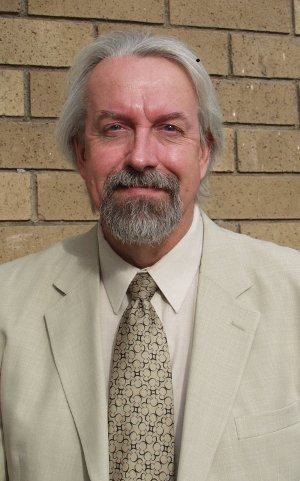
LAKE COUNTY – Another hat is being tossed into the ring for the office of district attorney.
Lakeport attorney Doug Rhoades has announced his candidacy for district attorney in the 2010 election.
Rhoades, 56, will join another Lakeport attorney, Don Anderson, 57, in challenging incumbent Jon Hopkins, who has indicated he'll seek reelection next year. Hopkins, 63, was elected after running unopposed in 2006.
A Lake County resident since 1962, Rhoades has extensive experience both in law enforcement and in legal practice.
Rhoades worked for the Lake County Sheriff’s Office, serving as a correctional officer, deputy sheriff and sergeant, for more than 21 years.
After obtaining an administration of justice degree from Mendocino College, he attended Sonoma State University where he received a bachelor’s degree.
In 1996, Empire School of Law in Santa Rosa awarded a juris doctor degree. He began his law practice the following year.
Rhoades is active in the local community and many civic organizations.
He is past president of the Lake County Arts Council, the Lake County Deputy Sheriff’s Association and served on the Kelseyville Unified School District’s Board of Trustees.
“Many good things have happened in Lake County since I was a young boy here,” Rhoades said. “But I have seen what occurs when poor decisions are made. Prosecutorial decisions need to benefit our entire community, but many recent actions have been detrimental to Lake County’s reputation.
“That’s one reason I am seeking the office of District Attorney,” Rhoades said. “The other is a desire to continue to serve the public. I am fortunate to have received the support of many friends in the community who have asked me to run.”
Anderson welcomed Rhoades to the race. “I know Doug well,” he said.
“The more competition, the better,” and the more issues that will come out, Anderson added.
Hopkins responded to Rhoades' announcement and his criticism of the District Attorney's Office with strong statements of his own.
“This is not a political job, it is a professional job,” Hopkins said.
He said the district attorney is the last person who should make decisions based upon which way the political wind is blowing. “We make thousands of decisions a year, and they have to be based upon a professional opinion of what should be done to protect the public and accomplish justice.”
There are several key issues to the effective and fair administration of justice, according to Rhoades.
“The right to a jury trial is guaranteed to all criminal defendants. But that can mean no other settlement was possible. When the prosecuting agency refuses to discuss resolution of a case, the defendant is left with little choice but to put it before a jury,” Rhoades said.
“As district attorney, I would seek to resolve appropriate cases through serious negotiation of the charges and consequences,” he added.
Hopkins responded that his office never refuses to discuss resolution in a case, but it won't sentence bargain with accused felons, which is a longheld stance.
“We have seen a succession of defense lawyers advocate a run for district attorney on this platform that urges a policy of greater leniency on felony cases, and the people of Lake County consistently say no,” Hopkins said.
Rhoades said the District Attorney's Office's current administration wastes resources that should be devoted to the most serious crimes, such as drug trafficking and production, crimes against the elderly and all crimes of violence, domestic or otherwise.
“In our current economy, resources will be even more scarce,” Rhoades said. “We must focus on violent crimes and those that cause significant economic loss, rather than devote those resources to incidents that do not put the public at risk.”
Hopkins said Rhoades' claim of wasted resources is not true. He said he has two senior deputy district attorneys who devote most of their time to prosecuting drug trafficking and prosecution, as well as a team comprised of a prosecutor, investigator and victim advocate assigned to elder abuse cases, both financial and physical abuse.
In addition to receiving new grants for pursuing domestic violence and driving under the influence prosecutions, Hopkins also has a team dedicated to child molestation and abuse cases, which he said are priorities for his office. That led to the creation of the multidiscipline interview center (MDIC), completed last year, to serve child victims in a more secure, comforting environment.
Rhoades, who also handles court-appointed cases for indigent defendants, emphasized the inconvenience and cost to the public that a failure to resolve cases produces.
“Many people respond to a jury summons only to find a case has settled on the day of trial or been continued,” he said. “That wastes time for each juror, not to mention lost wages and travel costs. Those reporting for jury service should expect their time to be respected and reserved for serious cases that cannot be resolved in any other manner.”
Hopkins said there are many reasons for continuances and delays – some of which result from the actions of defense attorneys – and it wouldn't be helped by adopting a policy of sentence bargaining with felons.
“An investment of a juror's time in sitting on a criminal case is always a sacrifice, but it is a sacrifice that makes our system the best in the world, and it makes our communities safe,” he said.
Rhoades, Anderson and Hopkins will begin the bulk of the paperwork for the election process early next year, when petitions for signatures in lieu of filing fees will start in January, to be followed the next month by declaration of candidacy and nomination papers.
The primary will be held June 8. If no candidate wins a 50 percent plus one majority, the two top vote getters will take part in a runoff election in November 2010.
E-mail Elizabeth Larson at
- Details
- Written by: Elizabeth Larson
The small grass fire was reported at around 11 a.m. at the corner of Big Valley and Renfro, said Capt. Jim Dowdy of the Kelseyville Fire Protection District.
It was located on the roadside and began burning into an open field, said Dowdy. No structures were threatened.
The first Kelseyville engine on scene was able to contain the fire, said Dowdy, with a Lakeport Fire Protection District engine coming for backup being canceled before arrival.
Dowdy said the fire was held to a quarter-acre in size, and contained within about 10 minutes.
The cause is still under investigation, he said.
Red flag conditions for high winds were expected in the area today, said Dowdy, adding, “We're not really seeing any right now.”
E-mail Elizabeth Larson at
- Details
- Written by: Lake County News Reports
The incident currently is under investigation by the Lake County District Attorney's Office, which was called in to head up the case, as Lake County News has reported.
Clearlake Police Chief Allan McClain said Thursday that 26-year-old Sean Pryor was shot after confronting officers with weapons. Pryor is at Santa Rosa Memorial Hospital in stable condition.
Based on policy and standard procedure, the officer who shot Pryor is on paid administrative leave and his name will not be released, McClain said in his report.
McClain said that at 10 a.m. Wednesday officers responded to an address in the 16000 block of 33rd Avenue on a report of an adult male inside the residence destroying property who had threatened to kill the other occupants.
When officers arrived they could hear someone breaking items inside the residence, McClain said.
Officers attempted to talk with Pryor, who McClain said was very agitated, uncooperative and refused to come to the door.
McClain said his officers obtained a key to the residence from family members and entered the residence through the front door.
As the officers entered the house Pryor confronted them, allegedly holding a large knife or machete in one hand, according to McClain.
McClain said Pryor had poured a flammable liquid onto the linoleum floor entry way. The first officer through the door slipped on the wet floor and fell to the ground, and when the officer went down Pryor attempted to light the flammable liquid but the liquid failed to ignite.
Pryor continued to move toward the officers and as Pryor stood over the officer on the ground the officer fired his weapon, McClain.
The officers on scene called for an ambulance and administered first aid to Pryor who was taken to Santa Rosa Memorial Hospital for treatment.
The District Attorney’s Office is investigating this incident and any further comments regarding this investigation will come from their office, McClain said.
McClain urged anyone with information regarding this investigation to contact Lake County District Attorney Investigator John Flynn at 707-263-2722.