How to resolve AdBlock issue?
Refresh this page
How to resolve AdBlock issue?
Refresh this page
Lake County News,California
  • Home
    • Registration Form
  • News
    • Education
    • Veterans
    • Community
      • Obituaries
      • Letters
      • Commentary
    • Police Logs
    • Business
    • Recreation
    • Health
    • Religion
    • Legals
    • Arts & Life
    • Regional
  • Calendar
  • Contact us
    • FAQs
    • Phones, E-Mail
    • Subscribe
  • Advertise Here
  • Login
How to resolve AdBlock issue?
Refresh this page

News

Lake County Office of Emergency Services launches hazard preparedness website

Details
Written by: Lake County News reports
Published: 04 May 2024
LAKE COUNTY, Calif. — The Lake County Office of Emergency Services has announced the launch of ready.lakecountyca.gov: a one-stop public webpage to obtain preparedness, response and recovery information.

All hazards preparedness is important for Lake County residents. Small steps can make a large impact during an emergency.

Fire, law and emergency services are dedicated to life and property protection during an emergency and individual preparedness ensures resources are available to respond to the most critical needs.

Wildfire, earthquake, flood and severe weather are examples of hazards that could impact the area.

Preparing for these involve some of the same steps:

• Get alerts: Register for LakeCoAlerts (and remember each city operates their own alert and warning platforms).
• Know your zone.
• Make a plan.
• Prepare your home
• Know your neighbors and community
• Remain vigilant.

Links to social media, weather forecasts, road conditions and community resources are included on the page in addition to interactive children’s activities.

Contact links included on the page can be used to make suggestions for additional topics and information that the public would find helpful.

The power of touch is vital for both reading and writing

Details
Written by: Naomi S. Baron, American University
Published: 04 May 2024


In an increasingly digital world, children still enjoy the sensory power of being able to touch the books they read. Klaus Vedfelt via Getty Images

“Pat the Bunny,” the 1940 classic touch-and-feel book, is still in print – a testament to the value of touch in introducing infants and toddlers to the world of reading. Later, when children reach school age, a common technique for teaching the alphabet is using hands-on manipulation, such as forming letters out of clay.

But as these students get older, the role of touch diminishes – to the students’ detriment. Today’s reading assignments are heavily digital, and use of computer keyboards for writing shows no sign of abating, especially given the lure of AI tools for editing and composing.

I’m a linguist who investigates the differences between print and digital reading and how writing supports thinking. My colleague Anne Mangen and I asked more than 500 secondary students at an international school in Amsterdam about their experiences when reading print versus digital texts. Separately, I surveyed 100 university students and young adults in the U.S. and Europe on their likes and dislikes about handwriting versus typing.

Together, their responses demonstrate that adolescents and young adults continue to value touch in their encounters with the written word. The research offers important lessons for educators and parents.

What students tell us

In the studies, students wrote glowingly about touch when asked for the one thing they liked most about reading in print or writing by hand. What surprised me was how closely their perceptions about the importance of touch aligned in both studies.

On a physical level, the feeling of holding a book or writing instrument in their hands mattered to students. These are some of their observations: “You actually feel like you are reading because the book is in your hands,” and “I like feeling the paper and pen under my hands, being able to physically form words.” Study participants also commented on the interaction of touch and movement. Regarding reading, one wrote about “the feeling of turning each page and anticipating what’s to happen next.” About writing by hand, one participant described “being able to feel the words just glide across the page.”

Many students also mentioned cognitive benefits. A host of respondents wrote about focus, concentration, immersion or memory. Regarding print reading, one student said, “I take it more seriously because it’s physically in my hands.” For writing, one response was, “I can see what I’m thinking.”

There were also psychological reflections. Students wrote, “The feeling of a book in my hands is a very comfortable feeling,” and “The satisfaction of a whole page filled by handwriting, it feels like I climbed a mountain.” Other comments addressed how touch made students feel more personally connected to the act of reading and writing. About reading, one reflected that “it is more personal ‘cause it’s in your hands.” About handwriting, another declared, “I feel more attached to the content I produce.”

A number of respondents wrote that reading physical books and writing by hand somehow felt more “real” than engaging with their digital counterparts. One student commented on “the realness of the book.” Another reported that “it feels more real than writing on a computer, the words seem to have more meaning.”

The studies also asked what participants liked most about digital reading and about writing on a computer keyboard. Out of more than 600 answers, only one mentioned the role of touch in what they liked most about using these technologies for reading and writing. For reading, students praised the convenience and access to the internet. For writing, greater speed as well as internet access were frequent responses.

Girls sit a table working on touchscreen tablets.
Digital devices don’t provide the same experience as books, pens and pads. JGI/Jamie Grill via Getty Images

What science tells us

What students say about the importance of touch mirrors what researchers have found: Touch is an effective way to build early reading and writing skills, as well as to support how more developed readers and writers interact with the written word.

Psychologists and reading specialists continue to report higher comprehension in children and young adults when reading in print versus digitally, for both academic and leisure reading. For proficient writers, evidence suggests that spending more time writing by hand than using a computer keyboard correlates with better fine motor skills. A recent study in Norway compared brain images of university students taking notes and found that those who wrote by hand – rather than typing – showed greater electrical connectivity in the parts of the brain that process new information and support memory formation.

Strategies going forward

The challenge for teachers and parents is to figure out how to incorporate touch into literacy activities in a world that’s so reliant on digital tools. Here are three suggestions for addressing this paradox.

• Parents and teachers can begin by listening to students themselves. Despite all their time spent on digital devices, many young people clearly recognize how touch contributes to their reading and writing experiences. Expand the conversation by talking together about differences between digital and hands-on reading and writing.

• Next, parents can find opportunities for children to read print and write by hand outside of school, such as bringing their kids to the library to check out print books and encouraging them to write a story or keep a journal at home. Better still is when adults model these practices in their own lives.

• Finally, educators need to increase space in the curriculum for print reading and for handwritten assignments. Some teachers are already revisiting the intrinsic benefits of handwriting, including as a memory aid and a vehicle for thinking – both qualities that participants mentioned in my writing survey.

Digital reading materials and keyboards will undoubtedly persist in schools and homes. But this reality must not preclude the power of touch.The Conversation

Naomi S. Baron, Professor Emerita of Linguistics, American University

This article is republished from The Conversation under a Creative Commons license. Read the original article.

Space News: What’s up for May 2024

Details
Written by: Preston Dyches
Published: 04 May 2024


What's up for May? The Moon hangs out with Saturn twice this month, the Scorpion's "heart" briefly goes missing, and meteors in the morning, courtesy of Comet Halley.

On May 3, in the hour or so before dawn, the crescent Moon rose with Saturn in morning twilight. The pair were trailed by the Red Planet, Mars, which rose about 45 minutes after Saturn. They formed a nice lineup in the east for early risers to enjoy.

Then, on the following morning, the Moon shows a slimmer crescent and has moved between Saturn and Mars. The two planets are continuing to widen their separation following a close conjunction in early April, where they appeared super close in the sky.

And if you have a clear view to the horizon, you might just catch a glimpse of Mercury rising in the hour before the Sun. It's shining pretty brightly, but it's also low in the sky and competing with dawn twilight, so it makes for a good challenge. Those in the Southern Hemisphere will have an easier time spotting Mercury, as it rises a good bit higher in the sky for you.

On May 23, the full Moon will appear quite close to the bright red star Antares, in Scorpius, as the pair rise. But for those on the East Coast of the U.S. — south of Delaware and down through the whole state of Florida — you'll actually observe the Moon pass in front of Antares – an event called an occultation.

Over a couple of hours as the pair rise into the night sky, the Moon will move slightly in its orbit, first obscuring and then revealing Antares.

And finally, on May 31, planet Saturn rises in the wee hours of the morning with the crescent Moon in tow. If you're up early on the final day of May, you'll find the pair toward the southeast. They'll be close enough to appear in the same field of view if observing through binoculars.

May brings one of two annual meteor showers that are attributed to Halley's comet. The eta Aquariid meteors are seen each year in May, whereas the Orionid meteors streak through our skies in October.

This situation occurs because Earth crosses through Comet Halley's orbit twice every year, in May and October. Along Halley's path is a meteor stream — lots of little grains of rock and dust cast off by the comet, and these strike our atmosphere and burn up as meteors.

The shower peaks overnight on May 5th and into the morning of the 6th. You can see meteors from this shower the whole week centered around the peak night, though.

The place on the sky where the meteors appear to originate, the radiant, is in the constellation Aquarius, so you'll have a chance to see meteors as long as the radiant is above the horizon, with more meteors the higher that point rises in the sky.

This time of year, Aquarius rises after midnight, so the time to watch this shower is in the few hours before dawn.

This is a great shower for observers in the Southern Hemisphere. The radiant rises a good bit higher in the sky before morning twilight, because in May, which is autumn there, nights are longer.

Those in optimal dark sky conditions can see 40 meteors per hour. For Northern Hemisphere observers, it's less than half that amount — more like 10 to 20 meteors per hour.

It's still an above average shower, though, especially with the peak this year being near a new moon, making for a darker sky. And with the warmer temperatures that come with springtime north of the equator, it can be a worthy shower to go out and enjoy.

As always, to see the most meteors, find yourself a safe, dark spot away from bright lights and give your eyes a few minutes to adapt to the dark.

Lie down with your feet pointed more or less toward the east, and look straight overhead. Bring a warm drink and a friend or two, and turn an early morning into a “meteor morning,” as you search the skies for the eta Aquariid meteors.

Preston Dyches works for NASA's Jet Propulsion Laboratory.

President Biden expands Berryessa Snow Mountain National Monument

Details
Written by: Elizabeth Larson
Published: 03 May 2024


LAKE COUNTY, Calif. — Nearly nine years after its creation by presidential action, the Berryessa Snow Mountain National Monument has been expanded.

On Thursday, President Joe Biden issued a proclamation expanding the 330,780-acre monument — most of which is within Lake County’s borders — by another 13,696 acres of public lands managed by the Bureau of Land Management and located on the eastern ridge of the original monument area in Lake and Colusa counties.

The new 11-mile-long, north-south ridgeline area added to the monument encompasses the area known for many years as “Walker Ridge,” a tract which at Biden’s direction is now being renamed “Molok Luyuk,” which means “Condor Ridge” in the Patwin language of the Yocha Dehe Wintun Nation, which requested the expansion.

“We thank President Biden for expanding the Berryessa Snow Mountain National Monument and protecting Molok Luyuk, an area steeped in thousands of years of rich history and profound meaning to the Patwin people, whose traditional territory stretches south from these hills to the shores of San Pablo Bay and east to the Sacramento River,” said Yocha Dehe Tribal Chairman Anthony Roberts.

Biden’s proclamation directs Secretary of the Interior Deb Haaland to explore agreements for co-stewardship of the area with tribal nations, including the Cachil Dehe Band of Wintun Indians, Kletsel Dehe Wintun Nation, Yocha Dehe Wintun Nation and other tribal nations and Indigenous leaders “who worked tirelessly to ensure the protection of the sacred lands.”

“Molok Luyuk is a special and sacred place for area tribes and for many residents who enjoy recreation activities like hiking and mountain biking,” said Lake County Supervisor E.J. Crandell, a member of the Robinson Rancheria Tribe. “The natural beauty of our home also drives tourism, which is key to the economic vitality of the region. I am grateful that the president protected these beautiful lands. It is a gift to future generations.”

The monument encompasses public lands managed by the Bureau of Land Management and the U.S. Forest Service and runs through seven counties, from Napa in the south through Yolo, Solano, Lake, Colusa, Glenn and up to Mendocino in the north.

The region is known for its fascinating biodiversity, with the White House citing its “mosaic of unique geologic and hydrologic features,” the iconic California chaparral-covered canyons, oak and cypress woodlands, and spring-fed meadows that flank the ridge, unusual and rare serpentine wetlands and the 500 native California plant species that have been identified within the expansion area, including at least 38 different special-status plants.

Molok Luyuk also serves as a wildlife corridor for species such as tule elk, mountain lions, and bears, and is home to iconic species such as bald and golden eagles, officials reported.

In the president’s proclamation, it notes, “On a clear day, the highest points of Molok Luyuk offer a commanding view of the surrounding rugged and undeveloped landscape, encompassing Mount Shasta to the north, Mount Tamalpais to the southwest, and Sutter Buttes to the east. The view of the sun rising over Sutter Buttes to the east is central to the Patwin origin story. The expansion area contains evidence of occupation by Indigenous people for more than 10,000 years.”

Two-thirds of the monument is located within Lake County. In September 2019, the Lucerne Area Town Hall declared Lucerne as the gateway to the national monument, and two months later the Lake County Board of Supervisors adopted a proclamation also recognizing the town as the monument gateway.

“Molok Luyuk,” or Condor Ridge, at sunset. Photo by Bob Wick.

A long-running effort

This expansion follows yearslong advocacy from Reps. Mike Thompson and John Garamendi; U.S. Senator Alex Padilla; federal, tribal, and local officials representing Northern California; and nongovernmental organizations, including environmental conservation, public access, outdoor recreation, and off-highway vehicle groups.

“As an avid OHV recreationist, I am thrilled at the expansion of Berryessa Snow Mountain National Monument to include Molok Luyuk,” said Don Amador, former chair of the CA State Park Off-Highway Motor Vehicle Recreation Commission and an OHV user who spoke at the meeting in favor of the expansion. “The permanent protection of Molok Luyuk will improve the management of these lands and increase public access to recreation opportunities. This is a win-win for our community. I am grateful for President Biden using the Antiquities Act to expand the monument and protect these lands for future generations to enjoy.”

In 2022, Reps. Garamendi and Thompson first introduced legislation to expand the National Monument and reintroduced the legislation this March. Both lauded the action by Biden, with Thompson noting that the expansion “will ensure the region’s biodiversity, geological formations, and cultural connections are preserved for generations to come.”

President Biden took the action through his authority under the Antiquities Act, first used by President Theodore Roosevelt in 1906 to designate Devils Tower National Monument in Wyoming. It has been used by 18 presidents of both parties since then to protect natural and historic features.

Biden was vice president when President Barack Obama used the Antiquities Act to create the monument on July 10, 2015.

The action to expand the monument was Biden’s ninth use of the Antiquities Act. Also on Thursday, he took his 10th action under the act to expand the San Gabriel Mountains National Monument in Southern California.

The two expansions protect another 120,000 acres. With those actions Biden has now created or expanded seven national monuments and restored protections for three others and conserved more than 41 million acres of lands and waters, putting him on track to conserve more lands and waters than any president in history.

The two monument expansions are part of Biden’s America the Beautiful Initiative, which is supporting locally led conservation efforts across the country with a goal to protect, conserve, and restore at least 30 percent of U.S. lands and waters by 2030.

At the same time, the Governor’s Office reported that with the action Biden took Thursday, the state now stands at 24.5% of lands conserved.

Nick Jensen teaches about plant life on “Molok Luyuk,” or Condor Ridge, which has now been added to the Berryessa Snow Mountain National Monument. Photo by Bob Wick.

New protections for the region

One individual who has spent the last 25 years working for the creation and expansion of the Berryessa Snow Mountain National Monument is conservationist and author Bob Schneider.

Schneider is a member of the advisory council for Tuleyome, a Woodland-based nonprofit that has been a key advocate for the monument’s creation and for protections around the larger Berryessa region.

He’s the co-author of a book released in 2020, “Exploring the Berryessa Region: A Geology, Nature and History Tour,” and is now working on a second book that will take a more expansive look at the entire monument. It’s been underway for two years, “And now there’s a lot of pressure to get it done quickly.”

Schneider said the campaign to create the monument, and then to expand it, was one that involved many individuals and groups.

“The big thing about this campaign was the engagement of the tribe, the leadership they provided, the coalition that built around this, that certainly came out of what we did in the monument designation, which was a very inclusive movement,” he said.

Everyone who wanted to protect public lands could be part of it, and as a result, they built a very strong group of people, collaboratively working on that process, Schneider explained. “That actually is a good model and critical for the long term success of enjoying this place.”

He said he hopes in the next 10 years the work from monument supporters will focus more on economic development and neighboring towns and communities.

In his efforts to protect the region, Schneider also had fought against plans that had first arisen in 2010 to put dozens of wind turbines along Walker Ridge. It was estimated that the turbines would have been visible across Lake County.

However, the BLM denied the last permitting effort for the Walker Ridge wind energy project in February of 2022.

Schneider said the addition of the area formerly known as Walker Ridge to the monument will end those concerns about a wind project by protecting the ridge from it. He added that such projects are best sited on already disturbed land.

He said he believes the Molok Luyuk area is the best place to see the national monument, thanks to what can be seen here about plate tectonics, volcanic impacts, biological diversity such as plants that grow in serpentine soil, and habitat zones, as well as ranching, settlements and even old mercury mines. On top of all of that is the spiritual value for the tribes.

“On that ridge, those values really come together,” he said.

There also is a huge visual range of places to see and incredible views of surrounding areas, with Schneider noting that Condor Ridge is his favorite place for seeing all of it.

“There’s just so much in such a small space,” Schneider said.

He said he envisions an interpretive area at the ridge’s entrance with handicap accessible parking area, boardwalk, kiosk and other amenities. Schneider said Condor Ridge is a place that people can easily get to with regular vehicles.

“This provides an opportunity for everybody to build an emotional attachment to this place,” he said.

The White House proclamation noted that the name Molok Luyuk “recalls a time when California condors were a common sight soaring above the ridge, and the Patwin people would celebrate them with dances and ceremonies.”

Yocha Dehe Tribal Chairman Anthony Roberts noted, “Elements of the natural landscape on the ridge have traditional cultural significance to us. We look forward to the day when condors fly over Molok Luyuk once again.”

Schneider said the Yocha Dehe tribe is putting together a plan to reintroduce condors to the region like the Yurok Tribe has done successfully in its territory to the north.

“This could be happening in the next five years,” Schneider said of the condor reintroduction.

Email Elizabeth Larson at This email address is being protected from spambots. You need JavaScript enabled to view it.. Follow her on Twitter, @ERLarson, or Lake County News, @LakeCoNews.

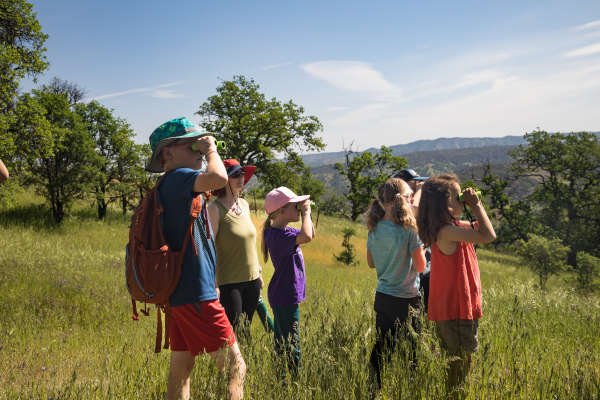
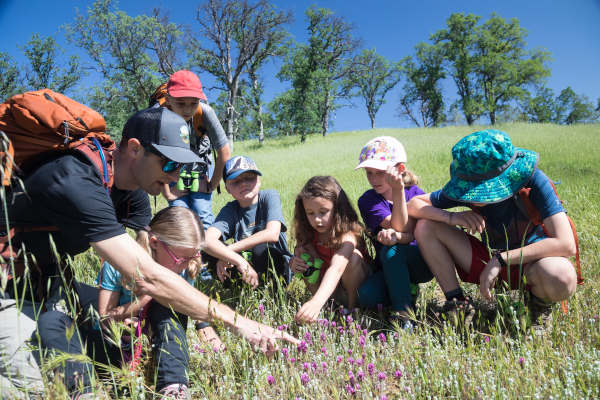
Visitors enjoying “Molok Luyuk,” or Condor Ridge, which has now been added to the Berryessa Snow Mountain National Monument. Photo by Bob Wick.

  1. County of Lake receives $700,000 grant to study Scott Dam decommissioning scenarios
  2. Anderson Marsh Interpretive Association plans new version of ‘Senior Days’ for 2024
  3. Healthy teeth are wondrous and priceless – a dentist explains why and how best to protect them
  • 693
  • 694
  • 695
  • 696
  • 697
  • 698
  • 699
  • 700
  • 701
  • 702
How to resolve AdBlock issue?
Refresh this page