 How to resolve AdBlock issue?
News
- Details
- Written by: Robert Sanders
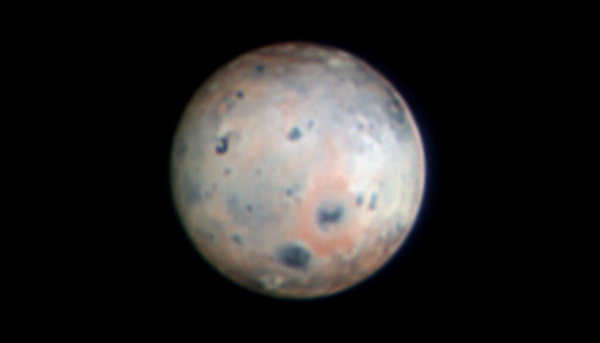
BERKELEY, Calif. — Since 1979, when Jupiter's moon Io was found to be pockmarked with volcanoes, astronomers and volcanologists have been excited by what the reddish satellite could tell us about the evolution of the Jovian system and Earth’s early volcanic history.
Yet, studies of eruptions and lava flows on Io have been hampered by fuzzy images from Earth-bound and space-borne telescopes and far too few closeups from flyby spacecraft.
A sharp new camera recently installed on a telescope in Arizona could remedy that.
A team of astronomers and engineers will publish next week in the journal Geophysical Research Letters the highest resolution optical images of Io ever taken from Earth — images sharp enough to discern volcanoes so close to one another that the debris from their eruptions overlap.
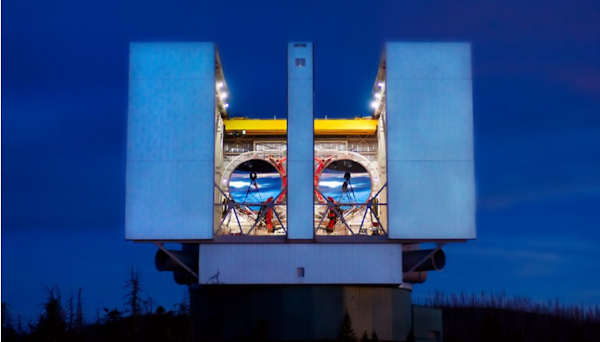
Taken by the Large Binocular Telescope (LBT) on Mount Graham in Arizona, the images were made possible by a new high-contrast optical imaging instrument, dubbed SHARK-VIS, and the telescope's adaptive optics system, which compensates for the blurring induced by atmospheric turbulence.
The images reveal surface features as small as 50 miles across, a spatial resolution that until now had been achievable only with spacecraft sent to Jupiter, such as the two Voyager spacecraft in 1979, the Galileo mission, which ended in 2003, and Juno, which has been orbiting Jupiter since 2016.
The resolution is equivalent to taking a picture of a dime-sized object from 100 miles away, according to the research team. The images are two to three times better than could be obtained through the Hubble Space Telescope.
"The visible light images are really incredible," said Imke de Pater, a professor emerita of astronomy and of earth and planetary science at the University of California, Berkeley, who helped interpret the images with Ashley Davies, a principal scientist at NASA's Jet Propulsion Laboratory in Pasadena, California, and Katherine de Kleer, assistant professor at the California Institute of Technology.
De Pater has been observing Io for decades, mostly using ground-based infrared telescopes, such as the Keck Observatory and Gemini Observatory in Hawaii, and radio telescopes like the Atacama Large (sub)Millimeter Array (ALMA) in Chile. Infrared observations capture hot features, such as lava flows, but are inherently lower resolution. Most recently, she analyzed infrared images from NASA's newest observatory, the James Webb Space Telescope (JWST).
"With Keck and Gemini, it's all in the infrared," she said. "While we do see some surface features, when you image the satellite in visible light, you can really see images similar to what Voyager and Galileo have obtained. With these visible-light images, you can look at the landscapes and topography."
Her hope is to combine optical images from the LBT with infrared observations to correlate glowing hot magma with visible features, such as lava flows and colorful deposits created by fallout from volcanic plumes.
"I hope we can do simultaneous observations at some point in the infrared and visible to see the hot magma and then the effect of that on the surface," she said. "Sharper images at visible wavelengths like those provided by SHARK-VIS and LBT are essential to identify both locations of eruptions and surface changes not detectable in the infrared, such as new plume deposits."
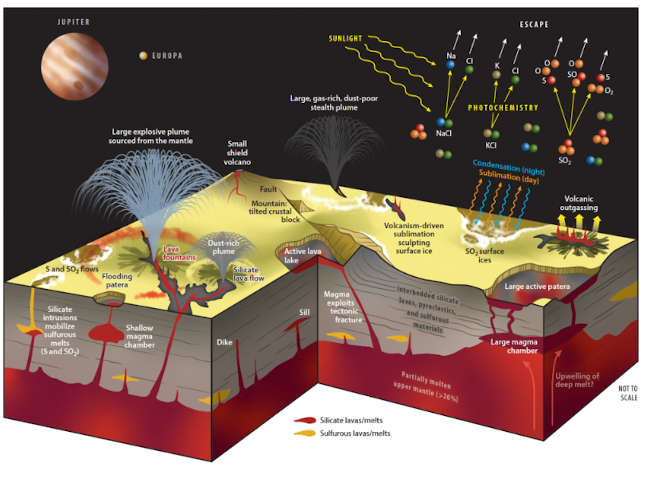
Pele and Pillan Patera, dueling volcanoes
According to the paper's first author, Al Conrad, an associate staff scientist at the Large Binocular Telescope Observatory, the eruptions on Io — the most volcanically active body in the solar system — dwarf their contemporaries on Earth. Studies like this one will help researchers understand why some worlds in the solar system are volcanic, but not others, he said, and may someday shed light on volcanic worlds in exoplanet systems around nearby stars.
"Io, therefore, presents a unique opportunity to learn about the mighty eruptions that helped shape the surfaces of Earth and the moon in their distant pasts," Conrad said.
Slightly larger than Earth's moon, Io is the innermost of Jupiter's Galilean moons, which in addition to Io include Europa, Ganymede and Callisto. Locked in a gravitational "tug of war" among Jupiter, Europa and Ganymede, Io is constantly being squeezed, leading to frictional heat buildup in its interior — believed to be the cause for its sustained and widespread volcanic activity.
By monitoring the eruptions on Io's surface, scientists hope to gain insights into the heat-driven movement of material underneath the moon's surface, its internal structure and, ultimately, on the tidal heating mechanism responsible for Io's intense volcanism.
Davies said that the new image taken by SHARK-VIS is so rich in detail that it has allowed the team to identify a major resurfacing event in which the plume deposit around a prominent volcano known as Pele, located in Io's southern hemisphere close to the equator, is being covered by eruption deposits from Pillan Patera, a neighboring volcano. A similar eruption sequence was observed by NASA's Galileo spacecraft, which explored the Jupiter system between 1995 and 2003.
"We interpret the changes as dark lava deposits and white sulfur dioxide deposits originating from an eruption at Pillan Patera that partially cover Pele's red, sulfur-rich plume deposit," Davies said. "Before SHARK-VIS, such resurfacing events were impossible to observe from Earth."
According to de Pater, Pele seems to erupt continuously, sending plumes of volcanic gases some 300 kilometers above Io's surface — high enough to have been imaged by Voyager, Galileo and Hubble. The gases in the plume, which emerge from a lava lake, freeze and settle on the surface as a prominent, broad, reddish, sulfur-rich ring.
Pillan Patera, on the other hand, seems to erupt episodically, leaving emplaced lava surrounded by a white ring of frozen sulfur dioxide (SO2). The new images show the white deposits obscuring Pele's reddish deposits, though likely for only a brief period. Photos of Io taken by Juno in April showed a nearly complete orange ring, with perhaps a hint of paler red where Pillan's deposits had been.
"It's kind of a competition between the Pillan eruption and the Pele eruption, how much and how fast each deposits," she said. "As soon as Pillan completely stops, then it will be covered up again by Pele’s red deposits."
SHARK-VIS was built by the Italian National Institute for Astrophysics at the Rome Astronomical Observatory and is managed by a team led by principal investigator Fernando Pedichini, assisted by project manager Roberto Piazzesi. In 2023, it was installed at the LBT, together with its complementary near-infrared instrument SHARK-NIR, to fully take advantage of the telescope's outstanding adaptive optics system. The instrument houses a fast, ultra-low noise camera that allows it to observe the sky in "fast imaging" mode, capturing slow-motion footage that freezes the optical distortions caused by atmospheric turbulence, and to post-process data to an unprecedented sharpness.
SHARK-VIS instrument scientist Simone Antoniucci said he anticipates new observations to be made on objects throughout the solar system.
"The keen vision of SHARK-VIS is particularly suited to observing the surfaces of many solar system bodies — not only the moons of giant planets, but also asteroids," he said. "We have already observed some of those, with the data currently being analyzed, and are planning to observe more."
The LBT is part of Mount Graham International Observatory, a division of the University of Arizona's Steward Observatory.
- Details
- Written by: LAKE COUNTY NEWS REPORTS
Gov. Gavin Newsom and State Superintendent of Public Instruction Tony Thurmond on Friday announced the awarding of $470 million to 302 local educational agencies, or LEAs, from the Golden State Pathways Program, which integrates college preparatory coursework meeting the A–G course requirements for admission to state universities and the opportunity to earn 12 college credits with career exploration, career technical education courses, and work-based learning.
The program also helps students identify high-need opportunities in their regions and aligns their higher education and career goals with the jobs needed in their communities.
The Golden State Pathways Program provides LEAs with resources to promote pathways for students in high-wage, high-skill, high-growth areas including technology, health care, education, and climate-related fields, which allows students to advance seamlessly from high school to college and career and provides the workforce needed for economic growth.
“Every student in California deserves the opportunity to build real-life skills and pursue the careers they want. This funding will be a game-changer for thousands of students as the state invests in pathways to good-paying high-need careers — including those that don’t require college degrees,” said Newsom.
“By establishing career technical pathways that are also college preparatory, the Golden State Pathways Program provides a game-changing opportunity for California’s young people. I am very proud of today’s investment,” Thurmond said. “Creating pathways that are truly both college-bound and career-ready shows our students that career exploration is all about opening doors and expanding possibilities. I look forward to seeing our students gain entry to competitive wages and thriving futures.”
“I am grateful to Governor Newsom, the Legislature, and State Superintendent Thurmond for prioritizing this funding and recognizing that we must target these resources to LEAs that need the most assistance — those with higher than average rates of dropout, suspension, foster youth, and student homelessness so we can do more to provide these vulnerable populations with the skills and training they need to compete for jobs in high-wage and high-growth areas,” said State Board of Education President Linda Darling-Hammond.
Of the $470 million awarded on Friday, $422 million was awarded to LEAs in the form of implementation grants slated to support the grant recipient’s ability to offer participating pupils high-quality college and career pathways opportunities.
The state’s report on the awards showed that two Lake County schools have received funds as part of that $422 million that was awarded.
They are Lakeport Unified School District, $1,590,000; and Middletown Unified School District, $755,000.
Golden State Pathways Program integrates college preparatory coursework meeting the A-G course requirements for admission to state universities and the opportunity to earn 12 college credits with career exploration, CTE courses and work-based learning.
The remaining nearly $48 million went to LEAs in the form of consortium development and planning grants. These grants are to support collaborative planning between a grant recipient and their program partners in the development of high-quality college and career pathways opportunities.
In that separate funding, the Lake County Office of Education will receive $1,250,000.
The Golden State Pathways Program is the result of funding included in the 2022 Budget Act passed by the Legislature and signed by Governor Newsom.
The program was established to do all of the following:
• Promote pathways in high-wage, high-skill, high-growth areas, including (but not limited to) technology, health care, education (including early education and child development), and climate-related fields.
• Encourage collaboration between LEAs, institutions of higher education, local and regional employers, and other relevant community interest holders to develop or expand the availability of innovative college and career pathways that simultaneously align with an LEA’s local or regional labor market needs.
• Enable more pupils to access postsecondary education opportunities and workforce training opportunities or to obtain gainful employment in an industry that simultaneously aligns with local, regional, or state labor market needs.
• Support the continued development of a skilled and educated workforce with an emphasis on addressing areas of acute statewide need, such as developing a diverse workforce to meet the need for professional and learning support positions in child care settings; preschools; and schools maintaining prekindergarten, kindergarten, or any of grades 1 to 12, inclusive.
This program is in alignment with the Governor’s Master Plan for Career Education, which will align and simplify the TK-12, university, and workforce systems in California to support greater access to education and jobs for all Californians, and with the state superintendent’s efforts to connect California’s students with high-wage, high-growth career paths through high-quality career education opportunities.
- Details
- Written by: LAKE COUNTY NEWS REPORTS
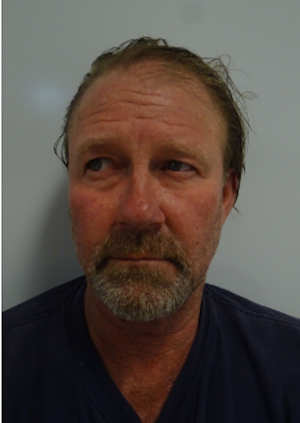
KELSEYVILLE, Calif. — Authorities have arrested a Kelseyville man who they said was responsible for the armed robbery last week of the Soda Bay Market.
Bryan Albert Bouchard, 57, was taken into custody on May 29, according to the Lake County Sheriff’s Office.
At 4 p.m. Friday, May 24, the sheriff’s office responded to a silent panic alarm triggered by the store clerk at Soda Bay Market.
The clerk told deputies that a robbery had just occurred. More than $2,000 in cash and merchandise was stolen.
Deputies reviewed the surveillance footage, which showed the subject wearing a white motorcycle helmet and using what appeared to be a handgun to commit the robbery.
Before deputies could arrive, the subject fled on a motorcycle towards Buckingham.
Using the automated license plate reader cameras in the area, a deputy reviewed all motorcycles that had traveled in the area of the robbery during the days prior.
The deputy found a matching motorcycle with a rider wearing what appeared to be the same helmet and having a similar build to the robbery suspect.
A records check using the motorcycle's license plate found a registered owner and Bouchard’s address. The deputy drove past the registered owner’s house and located the motorcycle.
On Wednesday, May 29, deputies and detectives served a search warrant at the residence in the 5000 block of Vista Drive in Kelseyville. They recovered $461 in cash, tobacco, rolling papers, and other evidence related to the robbery.
Bouchard was arrested and transported to the Hill Road Correctional Facility, where he was booked on multiple charges related to second-degree robbery.
Those charges included felonies of a masked criminal in possession of firearm in public, grand theft, second-degree burglary and robbery, and misdemeanor exhibiting a concealed firearm in public.
His bail was set at $25,000, and jail records indicate he later posted the required portion and was released.
Bouchard was arraigned on Friday and is due to return to court for entry of plea on Tuesday, according to Lake County Superior Court records.
- Details
- Written by: DENNIS FORDHAM
The revocable living trust has become increasingly important for California residents who receive Medi-Cal benefits.
Medi-Cal has a variety of different programs, including the Modified Adjusted Gross Income, OR MAGI, Medi-Cal for persons between 18 and 65 years old, various different Community Based Medi-Cal programs (for the aged, blind, disabled, medically needy, and working disabled), and long term care Medi-Cal (residential skilled nursing facilities).
Medi-Cal involves three basic areas: Eligibility, share of cost (once eligible) and estate recovery (after death).
Let us discuss how the revocable living trust assists in each of these areas.
Prior to Jan. 1, 2024, to be eligible for Medi-Cal (excluding MAGI Medi-Cal, based on income only) required that the combined value of all of the applicable available non-exempt assets (e.g., bank accounts, second homes, second vehicles, etc.), whether or not owned in the person’s living trust, be under a limit.
For decades, $2,000 was the countable asset limit for an individual, $3,000 for a married couple. That asset limit temporarily increased to $130,000 on July 1, 2023.
MAGI Medi-Cal set the way to abolish the Medi-Cal asset test with an income limit only test (presently, $1732/month).
Accordingly, assets whether or not held in one’s living trust, no longer directly prevent an otherwise eligible person from participating in community based Medi-Cal or skilled nursing home Medi-Cal. This sets California apart.
Nonetheless, anyone receiving Supplemental Security Income, or SSI, remains subject to the stringent $2,000 available countable asset limit.
Persons on SSI benefits automatically qualify for Medi-Cal even if they are not aged (65 or older). A living trust, therefore, does not assist SSI recipients as it does Medi-Cal recipients. SSI recipients, therefore, benefit from irrevocable special needs trusts.
Medi-Cal’s income rules still determine eligibility and share of cost to its various programs. A person who receives Medi-Cal with a share of cost, therefore, must pay something towards their own health care costs. Beneficiaries at a skilled nursing facility always pay a share of cost.
Share of cost counts income that is actually available to meet certain essential needs. If a Medi-Cal beneficiary’s available countable income exceeds their maintenance needs level (presently, $1,732/month) then an otherwise eligible Medi-Cal beneficiary has a share of cost.
A trust, whether revocable or irrevocable, minimizes a person’s available countable income and share of cost. Income received by a trust (with income producing assets) does not count as income to the trust beneficiary for determining Medi-Cal share of cost.
However, direct distributions by the trust to the beneficiary — of either trust income or principal (i.e., anything not income) — count as available income.
But, if the trust were instead to pay a portion of a person’s support and maintenance needs, called, “in kind support and maintenance,” or ISM, but not 100% of any ISM cost (e.g., rent), then such ISM payments do not count for Medi-Cal share of cost.
Also, if the trust were directly to pay for other expenses and purchases other than certain necessities of life (e.g., buying a vehicle) then such other trust purchases do not count as income for share of cost.
Thus having a trust, whether revocable or irrevocable, allows a Medi-Cal beneficiary to reduce their Share of Cost or to have income below the income limit for eligibility related to certain Medi-Cal programs.
Next, a deceased Medi-Cal beneficiary’s estate can still sometimes be subject to Medi-Cal estate recovery, for Medi-Cal services provided, if the beneficiary’s estate is probated and the decedent was not survived by a spouse.
Currently California law requires a probate when the total gross value of a decedent’s probate estate exceeds $184,500. If the Medi-Cal beneficiary’s estate avoids probate, due to being small or using non probate assets (e.g., trusts and/or death beneficiary assets) then there is no Medi-Cal Estate Recovery.
Trusts both avoid probate and Medi-Cal estate recovery at the same time. With no more Medi-Cal eligibility asset test, many more California residents are now eligible to receive either community based Medi Cal or long term care Medi Cal. Thus, the living trust is even more important than before.
The foregoing discussion is not legal advice. Consult a qualified attorney for guidance.
Dennis A. Fordham, attorney, is a State Bar-Certified Specialist in estate planning, probate and trust law. His office is at 870 S. Main St., Lakeport, Calif. He can be reached at