How to resolve AdBlock issue?
Refresh this page
How to resolve AdBlock issue?

Refresh this page
Lake County News,California
  • Home
    • Registration Form
  • News
    • Education
    • Veterans
    • Community
      • Obituaries
      • Letters
      • Commentary
    • Police Logs
    • Business
    • Recreation
    • Health
    • Religion
    • Legals
    • Arts & Life
    • Regional
  • Calendar
  • Contact us
    • FAQs
    • Phones, E-Mail
    • Subscribe
  • Advertise Here
  • Login
How to resolve AdBlock issue?
Refresh this page

News

Helping Paws: A new group of dogs

Details
Written by: Elizabeth Larson
Published: 09 June 2024
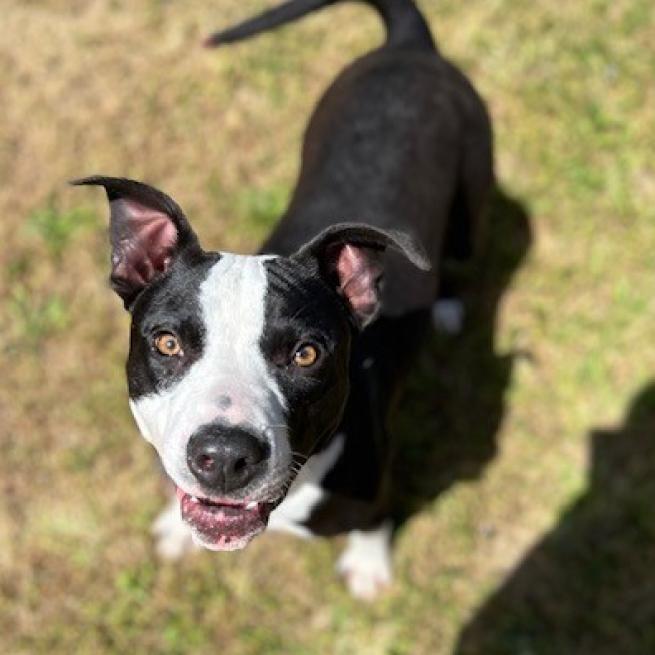
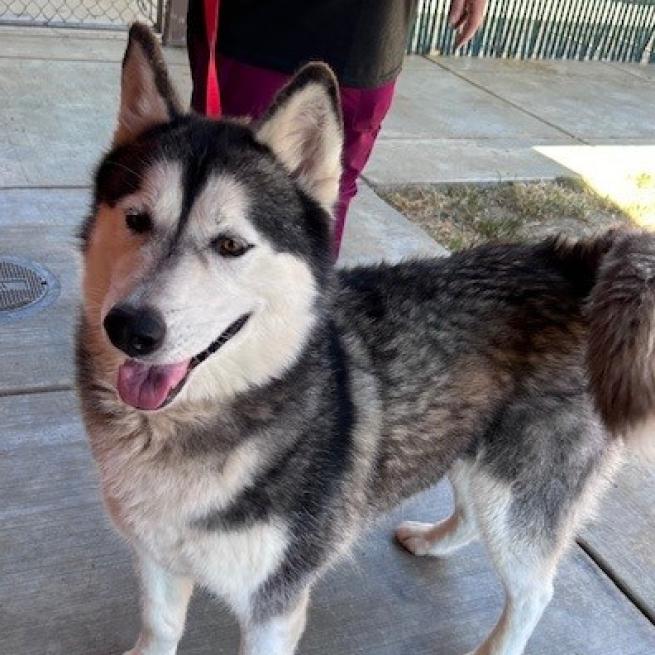
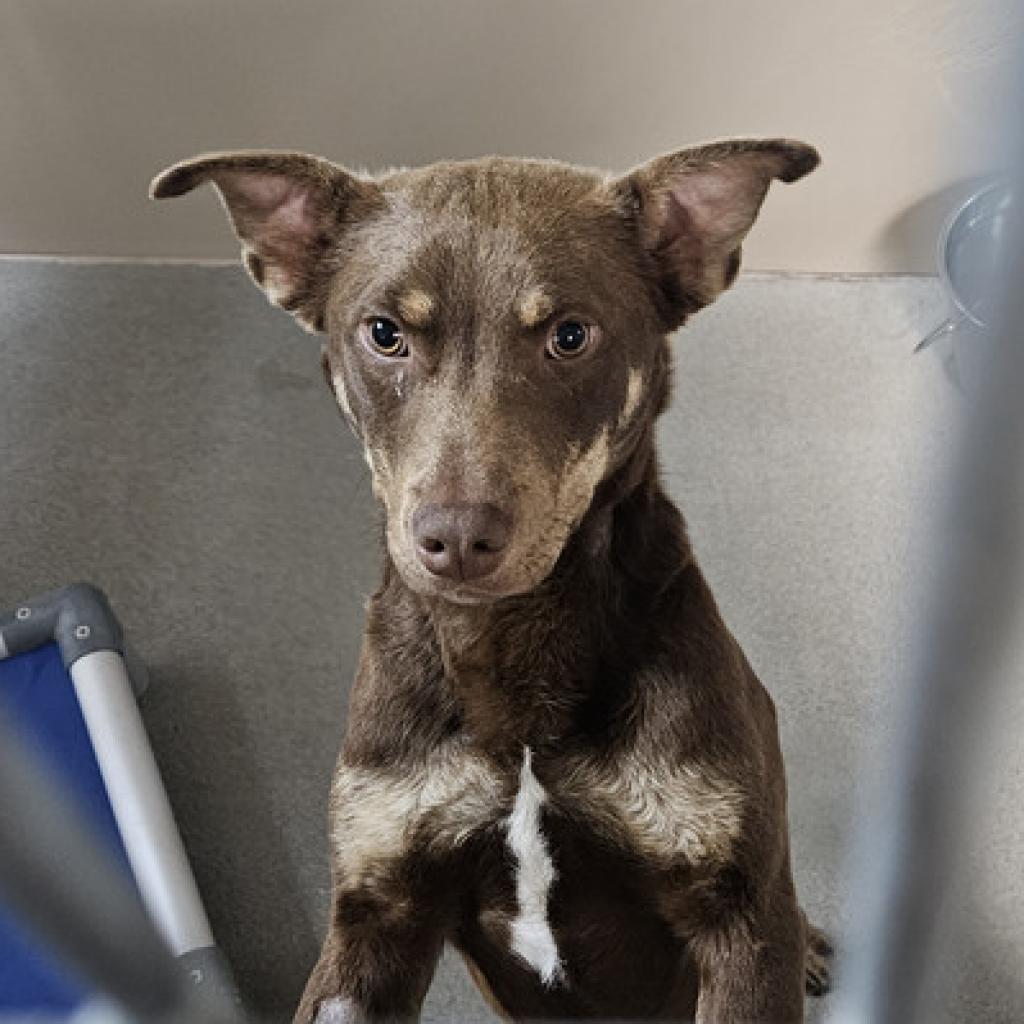
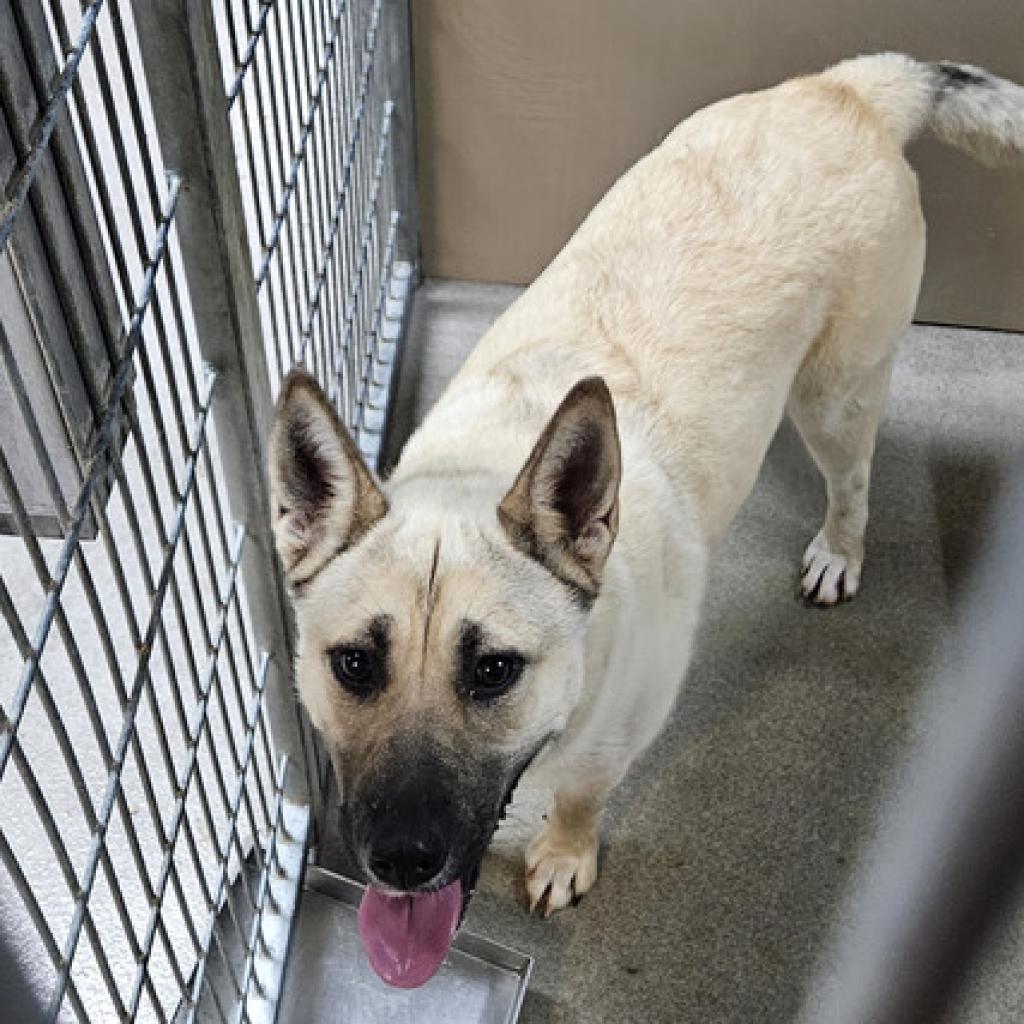
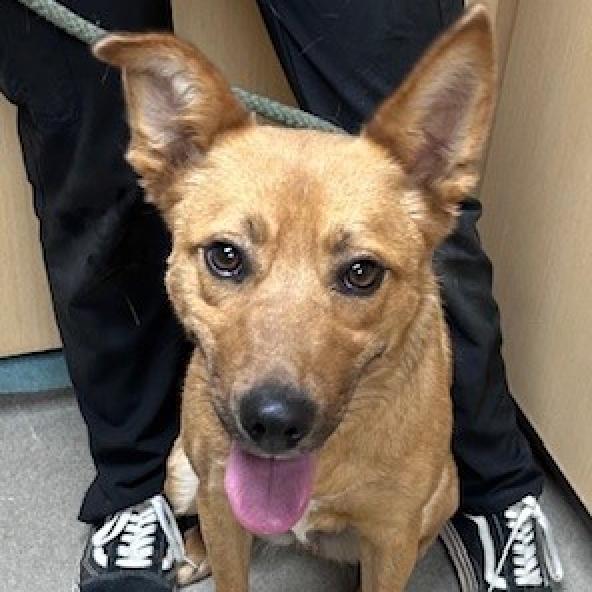
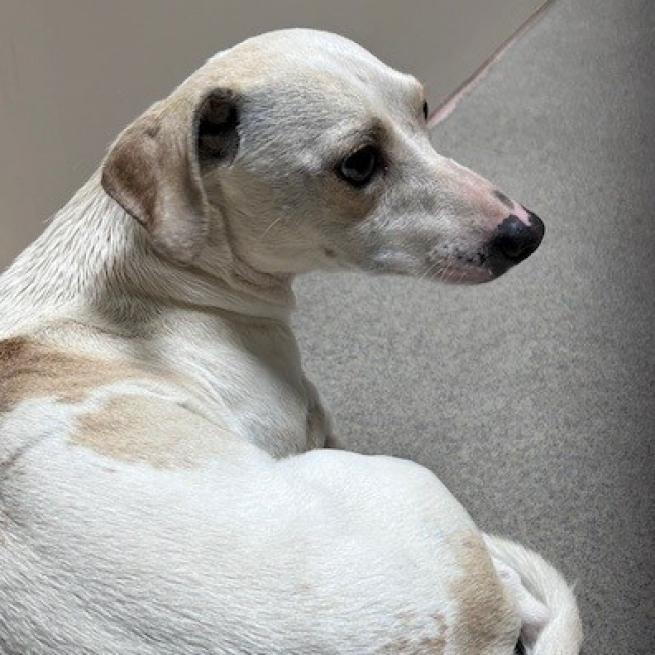
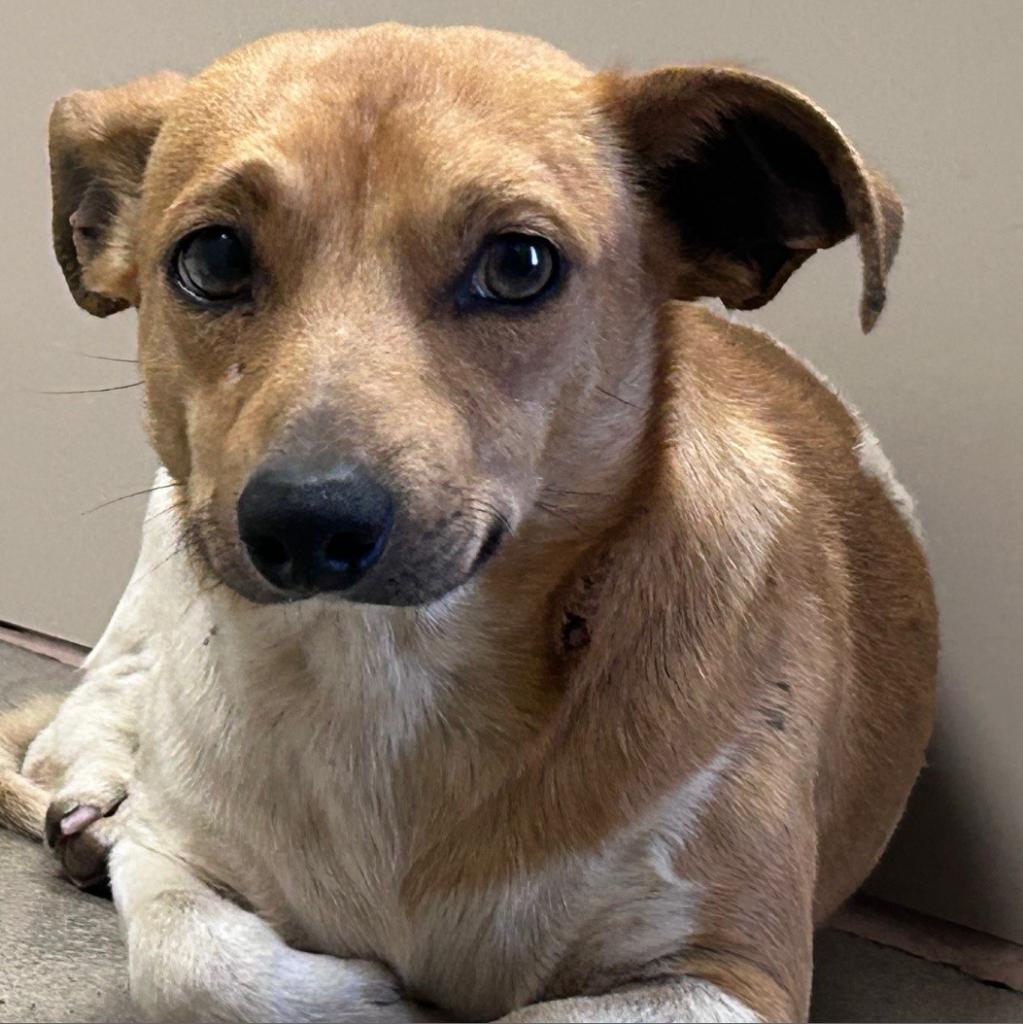
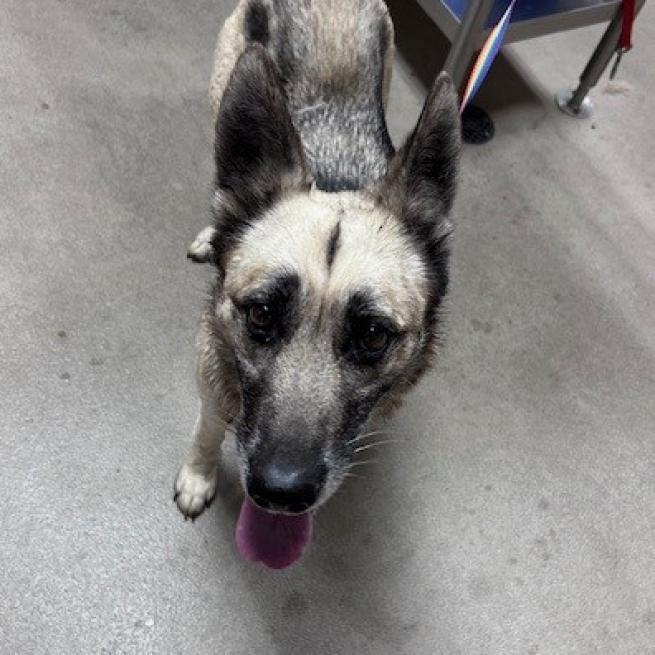
LAKE COUNTY, Calif. — Following a successful adoption event last week, Lake County Animal Care and Control has dozens more dogs waiting to find their new families.

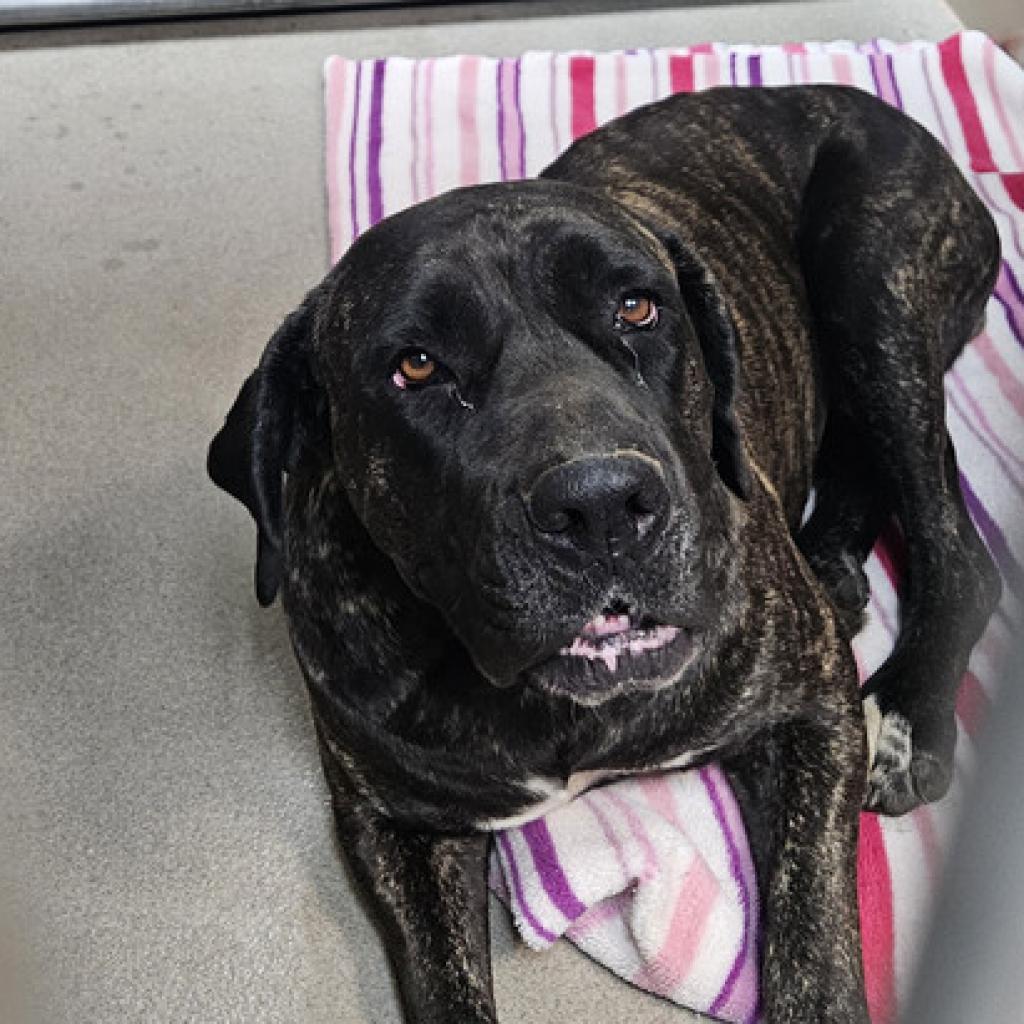
Dogs available for adoption this week include mixes of Alaskan husky, Australian cattle dog, Australian terrier, Chihuahua, dachshund, German shepherd, hound, Labrador Retriever, mastiff, pit bull terrier, Rottweiler and terrier.

Dogs that are adopted from Lake County Animal Care and Control are either neutered or spayed, microchipped and, if old enough, given a rabies shot and county license before being released to their new owner. License fees do not apply to residents of the cities of Lakeport or Clearlake.

Those dogs and the others shown on this page at the Lake County Animal Care and Control shelter have been cleared for adoption.

Call Lake County Animal Care and Control at 707-263-0278 or visit the shelter online for information on visiting or adopting.

The shelter is located at 4949 Helbush in Lakeport.

Email Elizabeth Larson at This email address is being protected from spambots. You need JavaScript enabled to view it.. Follow her on Twitter, @ERLarson, or Lake County News, @LakeCoNews.


Kennel#5's preview photo
Kennel#5

Kennel#22's preview photo
Kennel#22

Foster#7134(Crusty)'s preview photo
Foster#7134(Crusty)

Kennel#28(Tucker)'s preview photo
Kennel#28(Tucker)

Kennel#26's preview photo
Kennel#26

Kennel#14's preview photo
Kennel#14

Kennel#2's preview photo
Kennel#2

Kennel#3(Jet)'s preview photo
Kennel#3(Jet)

Kennel#24(Rex)'s preview photo
Kennel#24(Rex)

Kennel#9's preview photo
Kennel#9

Kennel#10's preview photo
Kennel#10

Kennel#20(Piper)'s preview photo
Kennel#20(Piper)

 
Kennel#21(Coco)'s preview photo
Kennel#21(Coco)

Kennel#6's preview photo
Kennel#6

 
Kennel#29a's preview photo
Kennel#29a

Kennel#32's preview photo
Kennel#32

Kennel#29c's preview photo
Kennel#29c

Kennel#29b's preview photo
Kennel#29b


Kennel#4's preview photo
Kennel#4

Kennel#33's preview photo
Kennel#33

Kennel#34's preview photo
Kennel#34

Kennel#25's preview photo
Kennel#25

Kennel#30's preview photo
Kennel#30


Vector Control offers tips to stay safe as summer heats up

Details
Written by: LAKE COUNTY NEWS REPORTS
Published: 09 June 2024
LAKEPORT, Calif. – June means lots of outdoor activities in Lake County — graduations, Father’s Day, barbecues, pool parties, the end of the school year and the beginning of summer vacation.

It also means mosquito season, and it’s important to take steps to protect yourself and your family from mosquito bites and diseases like West Nile virus.

“Right now we’re seeing more mosquitoes than we usually do in June,” said Dr. Jamesina Scott, district manager and research director of the Lake County Vector Control District. “Warmer weather means mosquitoes develop faster and feed more often. This means that they have more opportunities to transmit diseases like West Nile virus.”

Dr. Scott recommends that residents take a few basic steps to protect their family and their community from mosquito bites.

Simple steps to fight mosquitoes:

• Eliminate standing water: Mosquitoes develop in even small amounts of water. Empty wheelbarrows, planters, toys, and anything that can hold water.
• Avoid dusk and dawn: This is when mosquitoes are most active.
• Wear protective clothing: Cover up with long sleeves and pants when outdoors.
Use mosquito repellent: Choose an EPA-registered repellent and follow label instructions.

Scott reminds residents and visitors alike that if they need help with a mosquito problem, call the district at 707-263-4770 or visit the district’s website to request service. “We want to help everyone enjoy a safe and healthy summer in Lake County.”

Vector Control also has free mosquito-eating fish to prevent mosquitoes in animal stock tanks, water gardens, fountains, or out-of-service pools and spas. The fastest way to get the mosquitofish is to pick them up from Vector Control’s main office in Lakeport. Please call first to make sure that we have fish available.

Residents with questions or who would like help with a mosquito problem, including reporting a neglected pool or spa, or who have an in-ground yellowjacket nest on their property that they would like treated, should contact the Lake County Vector Control District at 707-263-4770 or submit a request www.LCVCD.org.

For more information about West Nile virus or to report a dead bird, visit https://westnile.ca.gov/. Information about mosquito repellents can be found on the US Centers for Disease Control and Prevention website at www.cdc.gov/westnile/faq/repellent.

Space News: Scientists call the region of space influenced by the Sun the heliosphere – but without an interstellar probe, they don’t know much about its shape

Details
Written by: Sarah A. Spitzer, University of Michigan
Published: 09 June 2024


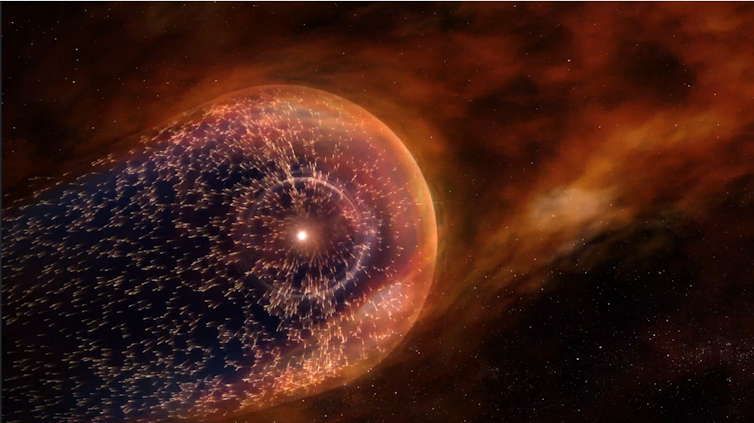
An artist’s depiction of the heliosphere, the Sun’s region of influence in space. Little is known of the actual shape of the heliosphere. NASA

The Sun warms the Earth, making it habitable for people and animals. But that’s not all it does, and it affects a much larger area of space. The heliosphere, the area of space influenced by the Sun, is over a hundred times larger than the distance from the Sun to the Earth.

The Sun is a star that constantly emits a steady stream of plasma – highly energized ionized gas – called the solar wind. In addition to the constant solar wind, the Sun also occasionally releases eruptions of plasma called coronal mass ejections, which can contribute to the aurora, and bursts of light and energy, called flares.

The plasma coming off the Sun expands through space, along with the Sun’s magnetic field. Together they form the heliosphere within the surrounding local interstellar medium – the plasma, neutral particles and dust that fill the space between stars and their respective astrospheres. Heliophysicists like me want to understand the heliosphere and how it interacts with the interstellar medium.

The eight known planets in the solar system, the asteroid belt between Mars and Jupiter, and the Kuiper Belt – the band of celestial objects beyond Neptune that includes the planetoid Pluto – all reside within the heliosphere. The heliosphere is so large that objects in the Kuiper Belt orbit closer to the Sun than to the closest boundary of the heliosphere.

A comparison of the distance an interstellar probe could reach beyond the boundary of the heliosphere relative to Voyager and New Horizons.
An artist’s depiction of the heliosphere and its place in the local interstellar medium and in the Milky Way galaxy. An interstellar probe could travel farther than any previous spacecraft and help scientists get a good look at our heliosphere – the Sun’s influence in space – from the outside. JHU/APL

Heliosphere protection

As distant stars explode, they expel large amounts of radiation into interstellar space in the form of highly energized particles known as cosmic rays. These cosmic rays can be dangerous for living organisms and can damage electronic devices and spacecraft.

Earth’s atmosphere protects life on the planet from the effects of cosmic radiation, but, even before that, the heliosphere itself acts as a cosmic shield from most interstellar radiation.

In addition to cosmic radiation, neutral particles and dust stream steadily into the heliosphere from the local interstellar medium. These particles can affect the space around Earth and may even alter how the solar wind reaches the Earth.

Supernovae and the interstellar medium may have also influenced the origins of life and the evolution of humans on Earth. Some researchers predict that millions of years ago, the heliosphere came into contact with a cold, dense particle cloud in the interstellar medium that caused the heliosphere to shrink, exposing the Earth to the local interstellar medium.

An unknown shape

But scientists don’t really know what the heliosphere’s shape is. Models range in shape from spherical to cometlike to croissant-shaped. These predictions vary in size by hundreds to thousands of times the distance from the Sun to the Earth.

Scientists have, however, defined the direction that the Sun is moving as the “nose” direction and the opposing direction as the “tail” direction. The nose direction should have the shortest distance to the heliopause – the boundary between the heliosphere and the local interstellar medium.

No probe has ever gotten a good look at the heliosphere from the outside or properly sampled the local interstellar medium. Doing so could tell scientists more about the heliosphere’s shape and its interaction with the local interstellar medium, the space environment beyond the heliosphere.

Crossing the heliopause with Voyager

In 1977, NASA launched the Voyager mission: Its two spacecraft flew past Jupiter, Saturn, Uranus and Neptune in the outer solar system. Scientists have determined that after observing these gas giants, the probes separately crossed the heliopause and into interstellar space in 2012 and 2018, respectively.

While Voyager 1 and 2 are the only probes to have ever potentially crossed the heliopause, they are well beyond their intended mission lifetimes. They can no longer return the necessary data as their instruments slowly fail or power down.

These spacecraft were designed to study planets, not the interstellar medium. This means they don’t have the right instruments to take all the measurements of the interstellar medium or the heliosphere that scientists need.

That’s where a potential interstellar probe mission could come in. A probe designed to fly beyond the heliopause would help scientists understand the heliosphere by observing it from the outside.

An interstellar probe

Since the heliosphere is so large, it would take a probe decades to reach the boundary, even using a gravity assist from a massive planet like Jupiter.

The Voyager spacecraft will no longer be able to provide data from interstellar space long before an interstellar probe exits the heliosphere. And once the probe is launched, depending on the trajectory, it will take about 50 or more years to reach the interstellar medium. This means that the longer NASA waits to launch a probe, the longer scientists will be left with no missions operating in the outer heliosphere or the local interstellar medium.

NASA is considering developing an interstellar probe. This probe would take measurements of the plasma and magnetic fields in the interstellar medium and image the heliosphere from the outside. To prepare, NASA asked for input from more than 1,000 scientists on a mission concept.

The initial report recommended the probe travel on a trajectory that is about 45 degrees away from the heliosphere’s nose direction. This trajectory would retrace part of Voyager’s path, while reaching some new regions of space. This way, scientists could study new regions and revisit some partly known regions of space.

This path would give the probe only a partly angled view of the heliosphere, and it wouldn’t be able to see the heliotail, the region scientists know the least about.

In the heliotail, scientists predict that the plasma that makes up the heliosphere mixes with the plasma that makes up the interstellar medium. This happens through a process called magnetic reconnection, which allows charged particles to stream from the local interstellar medium into the heliosphere. Just like the neutral particles entering through the nose, these particles affect the space environment within the heliosphere.

In this case, however, the particles have a charge and can interact with solar and planetary magnetic fields. While these interactions occur at the boundaries of the heliosphere, very far from Earth, they affect the makeup of the heliosphere’s interior.

In a new study published in Frontiers in Astronomy and Space Sciences, my colleagues and I evaluated six potential launch directions ranging from the nose to the tail. We found that rather than exiting close to the nose direction, a trajectory intersecting the heliosphere’s flank toward the tail direction would give the best perspective on the heliosphere’s shape.

A trajectory along this direction would present scientists with a unique opportunity to study a completely new region of space within the heliosphere. When the probe exits the heliosphere into interstellar space, it would get a view of the heliosphere from the outside at an angle that would give scientists a more detailed idea of its shape – especially in the disputed tail region.

In the end, whichever direction an interstellar probe launches, the science it returns will be invaluable and quite literally astronomical.The Conversation

Sarah A. Spitzer, Research Fellow in Climate and Space Sciences and Engineering, University of Michigan

This article is republished from The Conversation under a Creative Commons license. Read the original article.

Shakespeare at the Lake plans punk rock take on ‘The Tempest’

Details
Written by: LAKE COUNTY NEWS REPORTS
Published: 08 June 2024
LAKE COUNTY, Calif. — Shakespeare at the Lake, a co-production of Lake County Theatre Company and Mendocino College, announced that “The Tempest” by William Shakespeare will be its featured play for this summer’s production.

Rehearsals are in full swing for this year’s production, which organizers said will feature an exciting cast with several new faces.

“The Tempest” will be set in the vibrant and energetic 1980s punk rock scene, bringing a fresh and contemporary twist to Shakespeare’s classic tale.

“The Tempest” is a magical and enchanting play that explores themes of love, forgiveness and redemption.

The story follows Prospero, the rightful Duke of Milan, who has been exiled to a remote island with his daughter Miranda.

With the help of his spirit servant Ariel, Prospero conjures a tempest to bring his enemies to the island and ultimately reunite with his family and reclaim his rightful place as duke.

How will this fit into the punk rock scene of the 80s? Come on out and find out.

Shows are July 27 and 28 in Library Park in Lakeport, and Aug. 2 and 3 in Austin Park in Clearlake. All shows begin at 7 p.m.

Admission is free, as it has always been, and there is plenty of space.

Bring a blanket, chair, sun hat and some friends. Grab a bite to eat or a cold drink from one of our vendors, or bring your own. Organizers promise it will be a good time.

For more information, please visit www.laketheatre.org.
  1. Kirk named Veterans Home deputy administrator
  2. Clearlake man arrested in Mendocino County sexual assault case
  3. Space News: What’s Up for June 2024
  • 654
  • 655
  • 656
  • 657
  • 658
  • 659
  • 660
  • 661
  • 662
  • 663
How to resolve AdBlock issue?

Refresh this page