How to resolve AdBlock issue?
Refresh this page
How to resolve AdBlock issue?
Refresh this page
Lake County News,California
  • Home
    • Registration Form
  • News
    • Education
    • Veterans
    • Community
      • Obituaries
      • Letters
      • Commentary
    • Police Logs
    • Business
    • Recreation
    • Health
    • Religion
    • Legals
    • Arts & Life
    • Regional
  • Calendar
  • Contact us
    • FAQs
    • Phones, E-Mail
    • Subscribe
  • Advertise Here
  • Login
How to resolve AdBlock issue?
Refresh this page

News

Fall migration brings the return of avian influenza in wild birds

Details
Written by: LAKE COUNTY NEWS REPORTS
Published: 08 December 2024
Wild geese along the Pacific Flyway. Photo courtesy of the California Department of Fish and Wildlife.

Avian Influenza H5N1 is again circulating in susceptible wild birds in California during fall migration.

California sits at the epicenter of the Pacific Flyway, one of North America’s major migratory routes that brings millions of visiting birds through the state each fall and winter.

Preliminary detections of avian influenza have been made in wild birds collected in late October and November from several counties including Contra Costa, Marin, Monterey, Los Angeles, San Benito, San Luis Obispo, and San Diego.

Prior to these detections, the last confirmed detections of avian influenza H5N1 in wild birds in California was in July 2024. Avian influenza in free-ranging wild birds is primarily a disease of waterfowl and shorebirds, the natural hosts of avian influenza viruses whose wetland and other watery habitat is a significant factor for disease transmission among these species.

Predators and scavengers that feed on infected birds may also be at risk of acquiring infection. The Eurasian strain of Highly Pathogenic Avian Influenza (HPAI) H5N1 was first detected in California in July 2022. During the past two seasons, detections of the virus in wild birds have generally subsided during spring and summer and re-emerged in the fall as waterfowl and other waterbirds undertake fall migration.

Avian influenza spreads through direct bird-to-bird contact and may also spread to birds through contaminated surfaces including hands, shoes, clothing and hunting gear.

While the Centers for Disease Control considers the transmission risk of avian influenza to people to be low, residents and waterfowl hunters are advised to take precautions to protect themselves, hunting dogs, falconry birds, poultry and pet birds.

Steps that may help reduce the spread of avian influenza include:

• Report dead wild birds, and other wildlife, to CDFW using the mortality reporting form. While it is not possible to test every wild bird for avian influenza, all mortality reports are important and help disease specialists monitor the outbreak.
• Report sick and dead poultry to the California Department of Food and Agriculture (CDFA) hotline at 1 (866) 922-2473.
• Prevent contact between domestic birds and wild birds, especially waterfowl. Exclude wild birds from accessing chicken or other domestic bird feed and water.
• Do not feed waterfowl or other waterbirds at park ponds as it may increase the congregation of birds and contribute to disease spread.
• Do not bring potentially sick wild birds home or move sick birds to another location.
• Before transporting potentially sick wild birds to wildlife rehabilitation centers, veterinary clinics, or other animal facilities, contact the facility for guidance and to determine if the bird should be collected.
• If recreating outdoors in areas with large concentrations of waterfowl and other waterbirds, wash clothing and disinfect footwear and equipment before traveling to other areas or interacting with domestic birds.
• Where it can be done so safely, dead birds may be disposed of to help reduce exposure to new birds and minimize scavenging by birds and mammals that also may be susceptible to infection. Dead birds may be collected into a plastic bag and placed in the regular trash collection. Guidance on protective equipment is available from the California Department of Public Health. If assistance or guidance is needed with the disposal of dead birds on private property, contact your county environmental health department or animal services for options available in your area.

Additional safety recommendations for waterfowl hunters:

• Harvest only waterfowl that look and behave healthy. Do not handle or eat sick game. Do not handle wild birds that are obviously sick or found dead.
• Field dress and prepare game outdoors or in a well-ventilated area. Do not dress wild game in the vicinity of poultry or pet birds.
• Wear rubber gloves or other impermeable disposable gloves while handling and cleaning game.
• Remove and discard intestines soon after harvesting and avoid direct contact with intestinal contents. Place waste in a plastic bag and dispose in a garbage container that is protected from scavengers.
• Do not eat, drink, smoke or vape while handling dead game.
• When done handling game, wash hands thoroughly with soap and water (or alcohol-based hand sanitizer if soap and water are unavailable), and clean knives, equipment and surfaces that came in contact with game. Wash hands before and after handling any meat.
• Keep harvested waterfowl cool (either with ice or refrigeration), below 45 degrees Fahrenheit, until processed and then refrigerate or freeze.
• Thoroughly cook all game to an internal temperature of 165 degrees Fahrenheit before consuming.
• Clean and disinfect clothing, footwear and hunting gear before traveling to other areas. As appropriate, footwear and gear may be washed with soap and water, then disinfected in household bleach diluted 1:10 with water for at least 10 minutes.
• Bathe dogs with pet shampoo after hunting outings, and do not feed dogs raw meat, organs or other tissues from harvested waterfowl.
• Falconers should avoid hunting waterfowl, and other waterbirds, during the avian influenza outbreak.

For more information on avian influenza H5N1, check out CDFW’s informational flyer addressing frequently asked questions and links to additional resources. The USDA maintains the official list of detections on its website.

For guidance on keeping domestic birds healthy, please visit the CDFA and USDA websites.

For guidance on orphaned or injured live wild birds, please contact your nearest wildlife rehabilitation center prior to collecting the animal. Be advised that some wildlife rehabilitation centers may have restrictions on the wildlife species they will admit.

California Highway Patrol achieves fifth consecutive CALEA accreditation

Details
Written by: LAKE COUNTY NEWS REPORTS
Published: 08 December 2024
The California Highway Patrol announced the renewal of its Commission on Accreditation for Law Enforcement Agencies, or CALEA, Law Enforcement Accreditation, effective Nov. 16.

This marks the CHP's fifth consecutive accreditation, underscoring its commitment to excellence in law enforcement practices.

The CALEA accreditation is an internationally recognized standard of excellence that establishes guidelines for the effective and efficient operation of law enforcement agencies.

The renewal signifies CHP’s dedication to professionalism, accountability and continuous improvement in serving and protecting California’s communities.

“This prestigious recognition highlights the CHP’s commitment to upholding the highest standards of professionalism and excellence in law enforcement practices,” said CHP Commissioner Sean Duryee. “The CHP remains steadfast in our mission to ensure the safety and security of all Californians, and this accreditation further solidifies our position as a leader in law enforcement.”

The CHP initially earned accreditation under CALEA’s Advanced Law Enforcement Accreditation Program in 2010.

Since then, the CHP has maintained its status as the largest CALEA-accredited law enforcement agency west of the Mississippi River and third largest nationally.

The accreditation process involves a rigorous review of law enforcement policies, procedures and operations. It also requires the agency to present annual reports demonstrating adherence to established standards throughout a four-year accreditation cycle.

CALEA’s programs extend beyond general law enforcement to include specialized accreditation for training academies and communication agencies, further reflecting the CHP’s comprehensive approach to public safety.

The CHP’s mission is to provide the highest level of safety, service and security to the people of California. Agency officials said this achievement reaffirms the CHP’s dedication to that mission and its role as a nationwide model for law enforcement agencies.

Space News: Extraterrestrial life may look nothing like life on Earth − so astrobiologists are coming up with a framework to study how complex systems evolve

Details
Written by: Chris Impey, University of Arizona
Published: 08 December 2024


Evolution, the process of change, governs life on Earth − and potentially different forms of life in other places. Just_Super/E+ via Getty Images

We have only one example of biology forming in the universe – life on Earth. But what if life can form in other ways? How do you look for alien life when you don’t know what alien life might look like?

These questions are preoccupying astrobiologists, who are scientists who look for life beyond Earth. Astrobiologists have attempted to come up with universal rules that govern the emergence of complex physical and biological systems both on Earth and beyond.

I’m an astronomer who has written extensively about astrobiology. Through my research, I’ve learned that the most abundant form of extraterrestrial life is likely to be microbial, since single cells can form more readily than large organisms. But just in case there’s advanced alien life out there, I’m on the international advisory council for the group designing messages to send to those civilizations.

Detecting life beyond Earth

Since the first discovery of an exoplanet in 1995, over 5,000 exoplanets, or planets orbiting other stars, have been found.

Many of these exoplanets are small and rocky, like Earth, and in the habitable zones of their stars. The habitable zone is the range of distances between the surface of a planet and the star it orbits that would allow the planet to have liquid water, and thus support life as we on Earth know it.

The sample of exoplanets detected so far projects 300 million potential biological experiments in our galaxy – or 300 million places, including exoplanets and other bodies such as moons, with suitable conditions for biology to arise.

The uncertainty for researchers starts with the definition of life. It feels like defining life should be easy, since we know life when we see it, whether it’s a flying bird or a microbe moving in a drop of water. But scientists don’t agree on a definition, and some think a comprehensive definition might not be possible.

NASA defines life as a “self-sustaining chemical reaction capable of Darwinian evolution.” That means organisms with a complex chemical system that evolve by adapting to their environment. Darwinian evolution says that the survival of an organism depends on its fitness in its environment.

The evolution of life on Earth has progressed over billions of years from single-celled organisms to large animals and other species, including humans.

Evolution is the process of change in systems. It can describe how a group of something becomes more complex – or even just different – over time.

Exoplanets are remote and hundreds of millions of times fainter than their parent stars, so studying them is challenging. Astronomers can inspect the atmospheres and surfaces of Earth-like exoplanets using a method called spectroscopy to look for chemical signatures of life.

Spectroscopy might detect signatures of oxygen in a planet’s atmosphere, which microbes called blue-green algae created by photosynthesis on Earth several billion years ago, or chlorophyll signatures, which indicate plant life.

NASA’s definition of life leads to some important but unanswered questions. Is Darwinian evolution universal? What chemical reactions can lead to biology off Earth?

Evolution and complexity

All life on Earth, from a fungal spore to a blue whale, evolved from a microbial last common ancestor about 4 billion years ago.

The same chemical processes are seen in all living organisms on Earth, and those processes might be universal. They also may be radically different elsewhere.

In October 2024, a diverse group of scientists gathered to think outside the box on evolution. They wanted to step back and explore what sort of processes created order in the universe – biological or not – to figure out how to study the emergence of life totally unlike life on Earth.

Two researchers present argued that complex systems of chemicals or minerals, when in environments that allow some configurations to persist better than others, evolve to store larger amounts of information. As time goes by, the system will grow more diverse and complex, gaining the functions needed for survival, through a kind of natural selection.

A rock made up of metal, with translucent olivine crystals suspended within.
Minerals are an example of a nonliving system that has increased in diversity and complexity over billions of years. Doug Bowman, CC BY

They speculated that there might be a law to describe the evolution of a wide variety of physical systems. Biological evolution through natural selection would be just one example of this broader law.

In biology, information refers to the instructions stored in the sequence of nucleotides on a DNA molecule, which collectively make up an organism’s genome and dictate what the organism looks like and how it functions.

If you define complexity in terms of information theory, natural selection will cause a genome to grow more complex as it stores more information about its environment.

Complexity might be useful in measuring the boundary between life and nonlife.

However, it’s wrong to conclude that animals are more complex than microbes. Biological information increases with genome size, but evolutionary information density drops. Evolutionary information density is the fraction of functional genes within the genome, or the fraction of the total genetic material that expresses fitness for the environment.

Organisms that people think of as primitive, such as bacteria, have genomes with high information density and so appear better designed than the genomes of plants or animals.

A universal theory of life is still elusive. Such a theory would include the concepts of complexity and information storage, but it would not be tied to DNA or the particular kinds of cells we find in terrestrial biology.

Implications for the search for extraterrestial life

Researchers have explored alternatives to terrestrial biochemistry. All known living organisms, from bacteria to humans, contain water, and it is a solvent that is essential for life on Earth. A solvent is a liquid medium that facilitates chemical reactions from which life could emerge. But life could potentially emerge from other solvents, too.

Astrobiologists Willam Bains and Sara Seager have explored thousands of molecules that might be associated with life. Plausible solvents include sulfuric acid, ammonia, liquid carbon dioxide and even liquid sulfur.

Alien life might not be based on carbon, which forms the backbone of all life’s essential molecules – at least here on Earth. It might not even need a planet to survive.

Advanced forms of life on alien planets could be so strange that they’re unrecognizable. As astrobiologists try to detect life off Earth, they’ll need to be creative.

One strategy is to measure mineral signatures on the rocky surfaces of exoplanets, since mineral diversity tracks terrestrial biological evolution. As life evolved on Earth, it used and created minerals for exoskeletons and habitats. The hundred minerals present when life first formed have grown to about 5,000 today.

For example, zircons are simple silicate crystals that date back to the time before life started. A zircon found in Australia is the oldest known piece of Earth’s crust. But other minerals, such as apatite, a complex calcium phosphate mineral, are created by biology. Apatite is a primary ingredient in bones, teeth and fish scales.

Another strategy to finding life unlike that on Earth is to detect evidence of a civilization, such as artificial lights, or the industrial pollutant nitrogen dioxide in the atmosphere. These are examples of tracers of intelligent life called technosignatures.

It’s unclear how and when a first detection of life beyond Earth will happen. It might be within the solar system, or by sniffing exoplanet atmospheres, or by detecting artificial radio signals from a distant civilization.

The search is a twisting road, not a straightforward path. And that’s for life as we know it – for life as we don’t know it, all bets are off.The Conversation

Chris Impey, University Distinguished Professor of Astronomy, University of Arizona

This article is republished from The Conversation under a Creative Commons license. Read the original article.
Lakeport Elementary students engage in cultural learning

Details
Written by: LAKE COUNTY NEWS REPORTS
Published: 07 December 2024
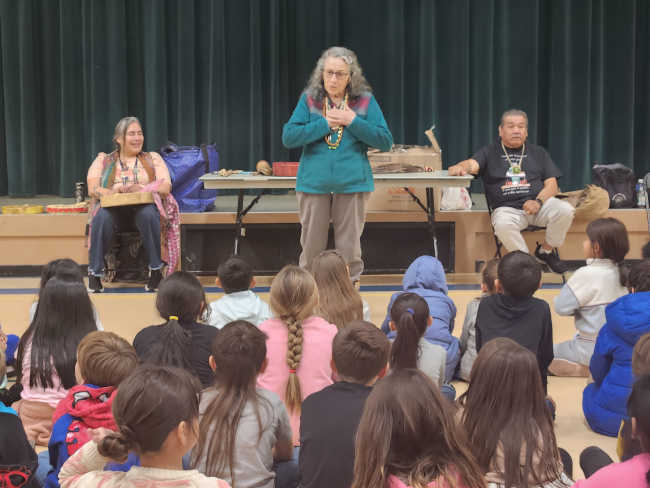
Lakeport Unified School District students attend an assembly hosted by the 7th Generation Warriors for Peace. Photo courtesy of the Lake County Office of Education.

LAKEPORT, Calif. — Students in grades first through fourth at Lakeport Elementary School participated in a powerful assembly hosted by the 7th Generation Warriors for Peace, a program dedicated to fostering cultural awareness, social-emotional learning, and trauma-informed practices.

“This program provided our students with a meaningful opportunity to learn about culture, community, and resilience,” said Matt Bullard, superintendent of Lakeport Unified School District. “We are committed to providing experiences that build understanding and help students grow academically and emotionally.”

The event featured storytelling, drumming, dancing and wisdom-sharing, offering students an enriching and interactive experience.

Highlights of the assembly included:

• Maggie Steele captivated students with cultural storytelling and drumming, creating meaningful connections to history and tradition.

• MarTan Martinez energized the audience with interactive dancing and emphasized the importance of personal self-advocacy.

• Betty Castillo-Morrison shared valuable lessons in empathy and resilience through her wisdom and insights.

The ongoing presentations are funded through the Lake County Office of Education, or LCOE, Collaborative for Academic, Social, and Emotional Learning grant.

This grant supports efforts to integrate social-emotional learning, trauma-informed practices, and harm reduction strategies across the district.

This collaboration underscores Lakeport Unified School District’s commitment to building supportive and inclusive learning environments that empower students to thrive academically, socially, and emotionally.

“We are proud to partner with 7th Generation Warriors for Peace and LCOE to provide our students with these transformative experiences,” the Curriculum and Instruction Department said in a statement. “Events like this strengthen our community and equip our students with the tools they need to succeed both in school and in life.”

For more information about LUSD’s SEL initiatives or upcoming events, contact the Curriculum and Instruction Department at This email address is being protected from spambots. You need JavaScript enabled to view it..
  1. Yuba Community College District welcomes new trustees
  2. Avian flu virus has been found in raw milk − a reminder of how pasteurization protects health
  3. Clearlake Animal Control: ‘Jean’ and the dogs
  • 456
  • 457
  • 458
  • 459
  • 460
  • 461
  • 462
  • 463
  • 464
  • 465
How to resolve AdBlock issue?
Refresh this page