Veterans
- Details
- Written by: Department of Veterans Affairs
In a double-blind randomized controlled trial, VA scientists will compare the drug degarelix (trade name Firmagon) to a placebo for improving the clinical outcomes of nearly 200 veterans who have been hospitalized with COVID-19.
“Veterans who have contracted this virus are in need of immediate care,” said VA Secretary Robert Wilkie. “This trial is an important step in advancing knowledge of a potential treatment for those infected with COVID-19. We are here to do everything in our power to preserve and protect life.”
Degarelix is often used to treat advanced cases of prostate cancer. It works by rapidly, but temporarily, suppressing the body’s production of male hormones. These hormones can fuel the growth of prostate cancer.
Scientists are testing degarelix because lab evidence suggests male hormones trigger the production of a protein called TMPRSS2 on lung tissue. The virus that causes COVID-19 relies on TMPRSS2 to enter lung tissues.
Researchers from the University of Alabama at Birmingham and Columbia University applied advanced artificial intelligence and computational genomics techniques and used that lab evidence for this COVID-19 data. The researchers collaborated with VA to plan the new trial.
Potential side effects of degarelix are typically linked to long-term treatment. In the trial, patients will be administered only one dose of the drug that will last 28 days. Any side effects of degarelix are thus expected to be temporary.
By temporarily lowering male hormone levels, researchers believe they can reduce the production of TMPRSS2 in lung tissue and thus prevent the virus from penetrating lung cells. Hormone levels will return to normal at the end of treatment.
The study is not suitable for female veterans. Existing evidence shows degarelix may have the opposite effect in the female body by increasing TMPRSS2 production, thus worsening the severity of COVID-19 symptoms.
The West Los Angeles VA Medical Center is leading the trial. The study also involves VA medical centers in New York (Brooklyn and Manhattan) and Washington state (Puget Sound), leveraging the Prostate Cancer Foundation/VA network of centers of excellence. The University of California, Los Angeles is involved in the analysis of research specimens, but not the clinical element of the study.
VA researchers expect to complete the trial in about four months.
For more information, visit http://research.va.gov .
- Details
- Written by: Department of Veterans Affairs
VA never closed its doors during the pandemic but did implement a wide range of actions to ensure the safety of its patients and employees.
Under VA’s plan, conditions on the ground will determine how quickly each facility resumes normal operations, and each phase of the plan is aimed at making sure that Veterans’ safety comes first.
“A central planning solution for resuming regular operations makes no sense here because some areas of the country will take longer to recover, while other areas have seen minimal cases,” said VA Secretary Robert Wilkie. “That’s why we’re letting local conditions dictate our next steps.”
VA medical facilities will be permitted to embark on Phase 1 of the plan once certain local conditions have been met. These conditions include falling numbers of patients exhibiting COVID-19 symptoms, reduced numbers of people testing positive for the virus, and increased testing capacity.
Once these and other conditions are met, local VA facilities will maintain their current risk-mitigation activities (such as continued telework when possible) but may also begin assessing how best to permit elective procedures and resume certain face-to-face visits that have been postponed.
Phase 2 of the plan is the resumption of services that have been postponed, again as deemed possible based on local conditions, and subject to safety protocols deemed as necessary by local staff.
In Phase 3, VA facilities will again allow visitors to hospitals, community living centers, senior living facilities, and spinal cords injury and disorder units after a full assessment of the risks and only amid continuing improvement in their part of the country. Most VA employees will also return to work in this phase.
VA’s national cemeteries, benefit administrators and Board of Veterans Appeals will also be using this same three-phase approach to determine whether and how best to resume things like public cemetery interments and face-to-face meetings with Veterans about their benefit status.
- Details
- Written by: Lake County News Reports
“Due to COVID-19 precautionary measures and out of concern for our veterans, we are honoring current social isolation and distancing guidelines,” said Tonya Heredia, chief of virtual care at the SFVAHCS. “Through VA’s virtual care tools, we are able to leverage available technology to make sure that our patients and staff are as safe as possible during this time.”
To help address veterans’ most-urgent needs first, SFVAHCS asks veterans to use our online tools for routine or non-urgent questions.
Here are some examples:
Telephone or video appointments: Veterans can receive care at home – either over the phone or via video using VA Video Connect on their computers, smartphones, or tablets. To set up telephone or video appointments, veterans can send their providers a secure message on My HealtheVet by visiting http://myhealth.va.gov . Veterans may also call, but VA is requesting that Veterans only call with urgent needs at this time. To learn more about VA Video Connect, visit http://mobile.va.gov/app/va-video-connect .
Prescription refills: Veterans can request prescription refills and order and ship medications to their homes using My HealtheVet or the Rx Refill mobile app. Download the app at http://mobile.va.gov/app/rx-refill .
Text message reminders: Veterans can use Annie’s Coronavirus Precautions protocol to send automated text messages with information about COVID-19. This VA application helps veterans monitor for symptoms and can assist if they need to contact their VA facility for care. Enroll at http://mobile.va.gov/annie .
Secure messaging: With My HealtheVet, VA’s online patient portal, veterans can send online secure messages to their VA health care teams to ask nonurgent health questions. Register at www.myhealth.va.gov .
SFVAHCS Telephone Linked Care Line, or TLC: TLC gives veterans direct access to a medical support assistant and an advice nurse, so they can receive personalized, timely attention for their health care concerns – without leaving their homes. To reach TLC, call 415-752-1212, or (toll free) 1-800-733-0502.
For more information about VA’s Connected Care technologies, visit http://connectedcare.va.gov .
- Details
- Written by: Department of Veterans Affairs
After careful review and consideration of findings provided by the Federal Trade Commission and State Attorneys General Offices, VA has concluded there is sufficient evidence to support a finding that these schools have utilized advertising, sales, or enrollment practices that are erroneous, deceptive, or misleading either by actual statement, omission, or intimation against GI Bill beneficiaries, in violation of the law.
VA intends to suspend enrollment of new students for all programs in 60 days unless the schools take corrective action.
This decision only applies to new GI Bill students, and to the extent allowable under current law, the department will afford current students at these institutions the opportunity to continue their programs of study, provided they have maintained continuous enrollment. Schools may also be prohibited from submitting enrollment certifications for new students or students returning from a break in attendance during the suspension.
Additionally, while VA’s action will not impact current students that maintain continuous enrollment, the state approving agencies responsible for approving courses at these schools may also take independent actions based on VA’s decision.
If such action occurs, a decision by the relevant state approving agency to withdraw program approval would remove VA’s authority to issue benefit payments to currently enrolled students as well as new students. However, VA will take appropriate actions to keep beneficiaries informed of any developments that would impact them.
VA is working closely with Congress, Veterans Service Organizations, State Approving Agencies, VA-approved Institutions of Higher Learning, other federal agencies and school associations to ensure GI Bill students are provided the best options to continue their educational pursuits.
“Our aim in taking this action is to protect Veterans and their dependents’ GI Bill benefits and comply with the law,” said VA Secretary Robert Wilkie. “The department is committed to helping beneficiaries avoid any negative consequences that may result.”
VA has notified all affected GI Bill students of their options moving forward. Any GI Bill students impacted by these suspensions may contact VA’s Education Call Center at 888-442-4551 between 7 a.m. to 6 p.m. Central Time, Monday-Friday or go to https://gibill.custhelp.va.gov/ to submit any questions they may have.
- Details
- Written by: Department of Veterans Affairs
Application instructions and eligibility information for these grants — which will help qualified organizations plan, develop, manage and implement these programs — are available at VA Adaptive Sports Grant Program.
“Built on VA clinical expertise and operations, with essential support from community partners, the adaptive sports grant program allows VA to extend its level of care beyond the clinical setting,” said VA Secretary Robert Wilkie. “We are pleased to offer grant funds to community organizations as it means there will be more Veterans engaging in the challenge of sports and more Veterans who are exposed to new skills for healthier living.”
In 2019, VA awarded $14.9 million in adaptive sports grants to 126 organizations, estimated to serve more than 11,000 Veterans and service members from every state, the District of Columbia and Puerto Rico. Of the total awarded, $1.5 million is being used to assist organizations that offer equine-assisted therapy to support mental health.
All applications must be submitted to www.grants.gov by 8 p.m. EST, March 17. VA will announce awards based on a competitive selection in fall 2020.
- Details
- Written by: Department of Veterans Affairs
“This update was necessary to improve accuracy and communication of information,” said VA Secretary Robert Wilkie. “VA depends on DOD to provide information regarding in-service environmental exposure for disability claims based on exposure to herbicides outside of vietnam."
DOD conducted a thorough review of research, reports and government publications in response to a November 2018 Government Accountability Office report.
“DOD will continue to be responsive to the needs of our interagency partners in all matters related to taking care of both current and former service members,” said Defense Secretary Mark T. Esper. “The updated list includes Agents Orange, Pink, Green, Purple, Blue and White and other chemicals and will be updated as verifiable information becomes available.”
Veterans who were exposed to Agent Orange or other herbicides during service may be eligible for a variety of VA benefits, including an Agent Orange Registry health exam, health care and disability compensation for diseases associated with exposure. Their dependents and survivors also may be eligible for benefits.
- Details
- Written by: Department of Veterans Affairs
One hundred years later, doctors and health care professionals at the San Francisco VA Health Care System, or SFVAHCS, are using the internet to return to this time-honored tradition of house calls through the use of the VA’s suite of mobile apps, its online patient portal and telehealth.
For veterans in the SFVAHCS catchment area, which stretches from San Bruno to the northern border of California, telehealth which uses telecommunications technology to virtually connect veteran patients with health care providers, has become a game-changer.
“Being able to talk with – and see – your provider from the convenience and privacy of your home is what makes this technology so popular,” said Tonya Heredia, SFVAHCS telehealth nurse manager. “Some rural veterans live miles away from the closest VA medical center or clinic. With telehealth technologies, veterans don’t have to travel miles for care. We can bring the care to them.”
In Fiscal Year 2019, more than 900,000 veterans used VA telehealth services to participate in over 2.6 million episodes of care.
SFVAHCS currently provides telehealth care in 40 specialties and subspecialties to veterans living in more than 32 states and in Fiscal Year 2019, use of telehealth services at SFVAHCS, increased by more than 120 percent from the previous fiscal year.
“Telehealth allows us to deliver the right care to our Veterans at the right time,” said Steven Buckingham, lead clinical technician at the Eureka VA Community Based Outpatient Clinic.
In addition to telehealth, veterans are utilizing other internet-based technologies to take an active role in their health care.
Veterans can use the VA’s online patient portal, My HealtheVet, to track a wide range of medical conditions, send secure messages to their health care teams, schedule appointments, and refill prescriptions from their home computers and mobile devices. Since the site’s launch in 2003, My HealtheVet has eclipsed more than five million registered users.
Veterans can also use any of the VA’s nearly two dozen patient-facing web and mobile apps. These online tools assist veterans with issues ranging from weight loss and mental health to refilling prescriptions and scheduling their medical appointments. VA’s mobile apps are accessed by thousands of veterans each year.
For more information about VA’s Connected Care programs, visit http://connectedcare.va.gov.
- Details
- Written by: Elizabeth Larson
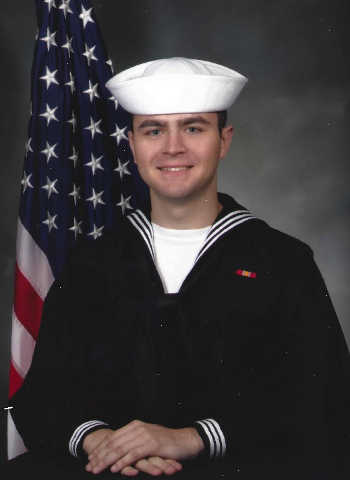
GREAT LAKES, Ill. – Navy Seaman Quintin S. Scott, son of Douglas and Tina Scott of Lakeport, Calif., recently completed US Navy basic training as an E-3 Seaman at Recruit Training Command, Great Lakes, North Chicago, Illinois.
He is a 2018 graduate of Clear Lake High School.
During the eight-week program, Scott completed a variety of training which included classroom study and practical instruction on naval customs, first aid, firefighting, water safety and survival, and shipboard and aircraft safety. Emphasis was also placed on physical fitness.
Scott received a Marksman Sharpshooter Ribbon, which is the highest award one may receive for weapons qualifications.
The capstone event of boot camp is “Battle Stations.” This exercise gives recruits the skills and confidence they need to succeed in the fleet.
“Battle Stations” is designed to galvanize the basic warrior attributes of sacrifice, dedication, teamwork and endurance in each recruit through the practical application of basic Navy skills and the core values of honor, courage and commitments. Its distinctly “Navy” flavor was designed to take into account what it means to be a sailor.
After completing boot camp in Great Lakes, Illinois, Scott has been assigned to the Naval Submarine Training Command in Groton, Connecticut.
- Details
- Written by: Department of Veterans Affairs
The Philippines is the farthest east VA regional benefits office.
The act extends the presumption of herbicide exposure, which include toxins such as Agent Orange, to veterans who served in the offshore waters of the Republic of Vietnam during the Vietnam War.
Signed into law Jun. 25, the law specifically affects Blue Water Navy, or BWN, veterans who served no more than 12 nautical miles offshore of the Republic of Vietnam between Jan. 6, 1962, and May 7, 1975, as well as veterans who served in the Korean Demilitarized Zone between Jan. 1, 1967 and Aug. 31, 1971.
These veterans can now apply for disability compensation and other benefits if they have since developed one of 14 conditions that are presumed to be related to exposure to herbicides.
Veterans do not need to prove that they were exposed to herbicides. The specific conditions can be found by searching the term “Agent Orange” on www.va.gov.
“For six months, VA worked diligently to gather and digitize records from the National Archives and Records Administration to support faster claims decisions,” said VA Secretary Robert Wilkie. “These efforts will positively impact the claims process for veterans filing for these benefits.”
To be eligible, a veteran must have served in the identified locations during the specified time period and currently have a condition(s) associated with herbicide exposures, such as Agent Orange.
Blue Water Navy claims are being processed under current prioritization criteria; however, special priority is being given to veterans who are over the age of 85 or have a terminal condition.
Qualifying recipients include affected Veterans who are still living and certain survivors of deceased BWN and Korean DMZ Veterans.
Survivors can file claims for benefits based on the Veteran’s service if the Veteran died from at least one of the 14 presumptive conditions associated with herbicides such as Agent Orange. The law also provides benefits for children born with spina bifida if their parent is or was a veteran with certain verified service in Thailand during a specific period.
The act includes provisions impacting the VA Home Loan Program. Veterans have more access to obtain no-down payment home loans, regardless of loan amount, and the home loan funding fee is reduced for eligible Reservists and National Guard borrowers who use their home loan benefits for the first time. VA’s website describes the eligibility of certain Purple Heart recipients who do not have to pay a funding fee as well as other benefits.
Veterans who want to file an initial claim for an herbicide-related disability can use VA Form 21-526EZ, Application for Disability Compensation and Related Compensation Benefits or work with a VA-recognized Veterans Service Organization to assist with the application process. Veterans may also contact their state Veterans Affairs Office.
BWN veterans who previously filed a claim seeking service connection for one of the 14 presumptive conditions that was denied by VA may provide or identify any new and relevant information regarding their claim when reapplying.
To reapply, veterans may use VA Form 20-0995, Decision Review Request: Supplemental Claim.
As a result of the new law, VA will automatically review claims that are currently in the VA review process or under appeal.
Visit Blue Water Navy Veterans benefits for more information or call 1-800-749-8387 for special issues.