 How to resolve AdBlock issue?
Regional
- Details
- Written by: LAKE COUNTY NEWS REPORTS
This project is one of 83 projects in 11 states that was selected as part of a nearly $585 million investment from President Joe Biden’s Bipartisan Infrastructure Law to improve water conveyance and storage, increase safety, improve hydropower generation and provide water treatment.
The Trinity River Hatchery project will install a supervisory control and data acquisition, or SCADA, system; replace corroded and leaking piping; install new filtration system and incubator jars; abate hazardous noise from hatchery operations; and replace deteriorated iron supports for 150 shallow troughs and 26 deep tanks.
“Fully operational fish hatcheries are a vital part of the local economy and ecosystems on the North Coast. The recovery of threatened Coho and Chinook salmon depends on the work the Trinity River Hatchery is doing, and it’s important the facility can run at top notch,” said Rep. Huffman. “After 60 years of use, most of the systems in this building have outlived their usefulness and are in disrepair. I know just how important this hatchery is to Trinity, and I’m incredibly glad I could help get the hatchery this funding to make long-overdue upgrades so it can keep supporting our region.”
“Modernization of Trinity River Hatchery is a huge boon for the steelhead, coho and Chinook raised there and will dramatically improve our operations at the facility,” said Director of the California Department of Fish and Wildlife Charlton H. Bonham. “We deeply appreciate the investment from President Biden as well as Congressman Huffman for championing this effort.”
“President Biden’s Bipartisan Infrastructure Law is making an historic investment to provide clean, reliable water to families, farmers and Tribes,” said Deputy Secretary of the Interior Tommy Beaudreau. “As we work to address record drought and changing climate conditions throughout the West, these investments in our aging water infrastructure will conserve community water supplies and revitalize water delivery systems.”
“President Biden is investing in America, and today’s announcement delivering much needed repairs to aging dams and other water infrastructure is part of our whole-of-government approach to making communities more resilient to drought,” said Senior Advisor to the President and White House Infrastructure Implementation Coordinator Mitch Landrieu on Wednesday.
“These projects have been identified through a rigorous process and is a testament to the Bureau of Reclamation’s commitment to deliver water to future generations,” said Bureau of Reclamation Commissioner Camille Calimlim Touton. “As we manage through changing climate, we must look to the safety of our projects to ensure that we can continue to provide clean, reliable water to communities, irrigators, and ecosystems across the west.”
President Biden’s Investing in America agenda is delivering historic resources to communities to help advance drought resilience and strengthen local economies.
The Bipartisan Infrastructure Law includes $8.3 billion over five years for Reclamation water infrastructure projects to advance drought resilience and expand access to clean water for families, farmers and wildlife. The investment will repair aging water delivery systems, secure dams, complete rural water projects, and protect aquatic ecosystems.
The Inflation Reduction Act is investing another $4.6 billion to address the worsening crisis. Combined, these two initiatives represent the largest investments in climate resilience in the nation’s history and provide a once-in-a-generation opportunity for the work of the Interior Department.
Wednesday’s announcement builds on $240 million allocated through the Law in fiscal year 2022. The next application period for extraordinary maintenance funds is expected in October 2023.
- Details
- Written by: CALIFORNIA HIGHWAY PATROL
Officers will look for violations by both motorcycle riders and drivers that make roads dangerous for other traffic, including unsafe speed, following too closely, unsafe lane changes and improper turning.
Motorcycle-involved crashes in California continue to be a major concern for the California Highway Patrol.
From January 2021 through December 2021, provisional statistical data revealed there were 19 injury crashes involving motorcycles and 3 fatal crashes involving motorcycles in the CHP Humboldt jurisdiction.
Funding for these operations is provided by a grant from the Office of Traffic Safety, through the National Highway Traffic Safety Administration.
Titled “Get Educated and Ride Safe (GEARS) V, the grant funding assists the CHP in reducing deadly and serious injury crashes involving motorcycles,
The Humboldt Area will continue to deploy additional enforcement efforts through Sept. 30.
If you have any questions or need additional information, please contact the Humboldt Area office at 707-822-5981.
- Details
- Written by: California Department of Fish and Wildlife
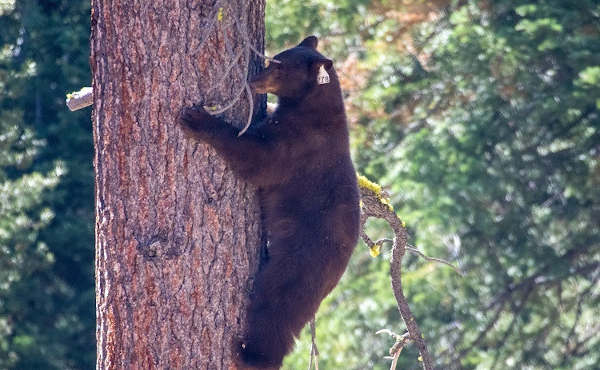
The snow will be melting soon in the Lake Tahoe region and a heavy winter will give way to a busy spring for wildlife in the area. Bears that have been in winter dens will be emerging soon and they will be hungry!
In the fall, black bears went through hyperphagia (pronounced hi·per·fay·jee·uh), which is an increase in feeding activity (consuming about 25,000 calories a day) driven by their need to fatten up before winter.
Over the course of the winter, bear bodies utilize those fat stores during hibernation when food is scarce. Come spring, their body mass will have naturally decreased and as a result, bears will be on the lookout for easy food sources to help rebuild those fat reserves.
Heavy snow brings challenges for bears
Bears in the Tahoe Basin will be in a difficult position this year as they come out of their dens and are met with historic snow loads across their habitat. The grasses and other sprouts that would usually be greening up with the melting of snow won’t be available until much later in the spring.
Bears will instinctively move to lower elevations to find those fresh greens, but the snow will make them search for easier routes like roads and trails. This is going to bring bears down into urban areas as they move through the mountains.
As bears make their way through the area, please be vigilant about cleaning up bear attractants. We know a lot of people felt it important to feed the birds this winter, but please do not let your bird feeders feed the bears. Now is the time to take them down completely.
Bears can and will be active day and night, so we recommend taking feeders down and keeping them down. We also know proper disposal of garbage can be difficult with snow piling up on the roads, but please take a few minutes to dig out your bear boxes so garbage can easily be secured inside.
Clean out your vehicles, especially if you have food stored in your vehicle for winter travel safety. In addition, remember to keep doors and windows locked on buildings so bears cannot break into structures.
Your actions can impact an entire ecosystem
Bears play an important role in Lake Tahoe’s ecosystem and allowing them access to human food and garbage is detrimental to natural processes in the region.
Bears help spread berry seeds through their scat, transport pollen, clean up animals that died during the winter, eat insects, and provide other essential functions of nature.
As a result, if they find and access human food and garbage, bird seed, pet food, coolers, and other sources of human food, the Tahoe Basin loses the benefits bears offer to these natural processes. Bears need to be wild animals rather than garbage disposals, especially since unnatural food sources can impact their overall health by damaging and/or rotting their teeth.
In fact, bears will unknowingly eat undigestible items from human trash like foil, paper products, plastics, and metal that can damage their internal systems and even lead to death. If these items do make it through their digestive system, they leave it behind in their scat rather than the native seeds and healthy fertilizer needed to grow the next generation of plant life.
Call the experts
Spring is also the time of year that residents or visitors may see a bear they feel looks unhealthy, sick, or orphaned. If anyone has concerns about a bear’s health, never hesitate to call official wildlife experts.
If the bear needs help, state agency wildlife experts have the training and expertise to assess the bear’s condition and transport it to a wildlife veterinarian. Healthy bears mean healthy ecosystems, and we can all do our part to set both up for success!
For great tips about living responsibly with bears, visit tahoebears.org and bearwise.org.
The bottom line is that Lake Tahoe is bear country. It’s up to each one of us, including those living in, visiting, or recreating in the Tahoe Basin to practice good stewardship habits by always securing food, trash, and other scented items. Good habits will help ensure we keep Tahoe bears wild.
To report human-bear conflicts:
In California, contact the California Department of Fish and Wildlife at 916-358-2917 or report online using the Wildlife Incident Reporting (WIR) system at apps.wildlife.ca.gov/wir.
Non-emergency wildlife interactions in California State Parks can be reported to their public dispatch at 916-358-1300.
In Nevada, contact the Nevada Department of Wildlife at 775-688-BEAR (2327).
If the issue is an immediate threat, call the local sheriff’s department or 911.
- Details
- Written by: Humboldt County Sheriff’s Office
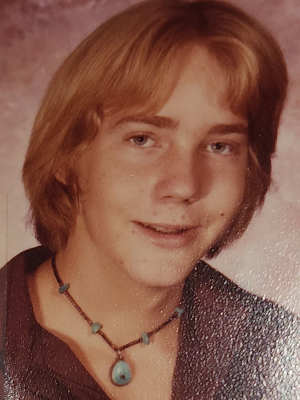
NORTH COAST, Calif. — The identity of a man located deceased in the Eel River has finally been determined after 25 years through DNA, thanks to a partnership between the Humboldt County Sheriff’s Office’s Cold Case Unit, the California Department of Justice and Othram Inc.
In March of 1998, a Loleta resident and his father were searching the Eel River by boat for driftwood when they located what appeared to be human remains in the river near Cock Robin Island.
Sheriff’s deputies responded via jetboat and recovered the remains. The decedent was found to be partially clothed and in advanced stages of decomposition. No identification was located.
Following this recovery, an autopsy was conducted, and it was determined the remains had been in the water for approximately one month. The decedent’s cause of death was listed as possible drowning.
The deceased was described by investigators only as being a white male adult, 5 foot 10 inches tall, about 170 pounds, and likely 35-45 years old. This description did not match any reported missing persons from Northern California.
During the investigation, the California Department of Justice, or DOJ, was able to recover one latent fingerprint which was run through the Automated Latent Print System but received no matches.
A forensic dental examination was completed by a local dentist. A DNA sample was obtained and entered into both the California Missing Persons DNA Database and the National Unidentified Persons DNA Index.
The DNA profile was routinely searched against profiles from both missing persons and other human remains in the Combined Index System, or CODIS. No profile matches were ever made.
Missing persons cases stay open until solved. In December of 2022, the HCSO and the California DOJ partnered with Othram Inc., a forensic genealogy lab, to determine if advanced forensic DNA testing could help establish an identity for the unidentified man or a close relative.
With funding provided by Roads to Justice, the DOJ sent Othram a DNA extract from the unknown man’s remains. Othram scientists used forensic genome sequencing to build a comprehensive DNA profile for the man.
Once the profile was built, Othram’s in-house genealogy team used forensic genetic genealogy to produce investigate leads.
In mid-February of 2023, the Humboldt County Sheriff’s Office received the Othram report indicating the DNA profile may belong to Jeffery Todd Sydow, born in 1963.
The report included several genetic relatives, including a possible sister named Shirl from Missouri.
Sheriff’s investigators were able to contact Shirl, who confirmed that she did have a brother named Jeffery Todd Sydow.
Shirl told investigators that for unknown reasons Jeffery stopped communicating with family members. Their last contact with him was in the mid-1990s.
Over the years Shirl had tried to reach out to Jeffery but could not locate him. As family was not sure whether the loss of contact was intentional, Jeffery was never reported as a missing person.
The DOJ was able to compare the one latent print with fingerprints known to be Jeffery’s and got a positive match.
Family members are making arrangements with the Humboldt County Coroner’s Office to have Jeffery’s remains released for burial with other deceased family members.
“We’d like to thank the California Department of Justice DNA Lab and Othram for their outstanding work and assistance in solving this case and providing the Sydow family some closure for their missing loved one,” the sheriff’s office said.
The Humboldt County Sheriff’s Office is continuing its partnership with the California DOJ and Othram, and is reviewing several of missing persons investigations for the use of this latest DNA technology.
Anyone with information regarding Sydow and his last known activities or whereabouts prior to his death, or information that may assist in the investigation of any open missing persons cases, is asked to contact HCSO Cold Case Investigator Mike Fridley at 707-441-3024.