 How to resolve AdBlock issue?
Recreation
- Details
- Written by: Editor
The California Fish and Game Commission on Thursday voted 3-0 in favor of an emergency rulemaking to prohibit recreational take and possession of Dungeness crab and all rock crab from ocean waters, including bays and estuaries, north of the Ventura/Santa Barbara county line.
Closure of the fisheries shall remain in effect until the director of the Office of Environmental Health Hazard Assessment (OEHHA), in consultation with the director of the California Department of Public Health (CDPH), determines that domoic acid levels no longer pose a significant risk to public health and no longer recommends the fisheries be closed.
The commission also directed the California Department of Fish and Wildlife (CDFW) to maintain a list of closed ocean waters of the state and update that list on Wednesday of each week by 1 p.m.
It shall be the responsibility of any person prior to taking Dungeness crab to call the department's hotline, 831-649-2883, or visit the department's Web site at www.wildlife.ca.gov/fishing/ocean/health-advisories to obtain the current status of any ocean water.
The recreational Dungeness crab season was scheduled to start Saturday, Nov. 7
CDPH, in conjunction with CDFW, has been actively testing crabs since early September and results from the most recent tests showed that the health risk to humans is significant.
CDPH issued a health advisory on Tuesday. OEHHA followed that with a recommendation for delays and closures.
CDFW will continue to coordinate with CDPH and OEHHA to test domoic acid levels in crab along the coast to determine when the fisheries can safely be opened.
Domoic acid is a potent neurotoxin that can accumulate in shellfish, other invertebrates and sometimes fish. It causes illness and sometimes death in a variety of birds and marine mammals that consume affected organisms. At low levels, domoic acid exposure can cause nausea, diarrhea and dizziness in humans. At higher levels, it can cause persistent short-term memory loss, epilepsy, and can in some cases be fatal.
Domoic acid is produced from some species of the marine diatom Pseudo-nitzschia. Currently, a massive toxic bloom of Pseudo-nitzschia has developed, significantly impacting marine life along California's coast.
Biologists tested crab from eight ports from Morro Bay to Crescent City, and determined that domoic acid levels are exceeding the State's action level.
Algal blooms are common, but this one is particularly large and persistent. Warmer ocean water temperatures due to the El Niño event California is experiencing are likely the cause of the size and persistence of this bloom.
Commercial fisheries are also affected by domoic acid levels. CDFW has authority to delay or otherwise restrict commercial fisheries and is developing an emergency rulemaking under that authority.
The commercial Dungeness crab season is currently scheduled to open Nov. 15.
- Details
- Written by: Editor
The California Department of Public Health (CDPH) issued a health advisory warning individuals to avoid eating rock and Dungeness crab due to the detection of high levels of domoic acid.
The advisory was followed by a recommendation from the Office of Environmental Health Hazard Assessment (OEHHA) to the California Fish and Game Commission and the California Department of Fish and Wildlife (CDFW) to delay the start of the Dungeness crab season and close the rock crab fishery.
These actions would apply to each fishery from the Oregon border to the southern Santa Barbara County line.
The OEHHA recommendation has prompted an emergency meeting of the commission, which will take place at 8 a.m. on Thursday, Nov. 5.
At that time, the commission will consider voting to delay the opening of the recreational Dungeness crab fishery. The recreational Dungeness crab season is currently scheduled to start Saturday, Nov. 7.
Also based on the recommendation from OEHHA, CDFW will act on its authority to delay the start of the commercial Dungeness crab season. The commercial Dungeness crab season is currently scheduled to start Sunday, Nov. 15 in most of the state.
Similar action will be considered by the Commission and CDFW to close the recreational and commercial rock crab fisheries in the affected area. Both recreational and commercial rock crab seasons are open all year.
“These are incredibly important fisheries to our coastal economies and fresh crab is highly anticipated and widely enjoyed this time of year. Of course, delaying or closing the season is disappointing,” said CDFW Marine Regional Manager Craig Shuman. “But public health and safety is our top priority.”
CDFW, along with the OEHHA and CDPH, has been actively testing crabs since early September. OEHHA announced today that consumption of Dungeness and rock crabs is likely to pose a significant human health risk as a result of high levels of domoic acid.
CDFW will continue to coordinate with OEHHA and CDPH to test domoic acid levels in crab along the coast to determine when the fisheries can safely be opened.
Domoic acid is a potent neurotoxin that can accumulate in shellfish, other invertebrates and sometimes fish. It causes illness and sometimes death in a variety of birds and marine mammals that consume affected organisms.
At low levels, domoic acid exposure can cause nausea, diarrhea and dizziness in humans. At higher levels, it can cause persistent short-term memory loss, seizures and can in some cases be fatal.
Domoic acid is produced from some species of the marine diatom Pseudo-nitzschia. Currently, a massive toxic bloom of Pseudo-nitzschia has developed, significantly impacting marine life along California’s coast.
State scientists have been testing crab from eight fishing ports from Morro Bay to Crescent City, and have determined that the neurotoxin has spread throughout the fishery grounds.
Algal blooms are common, but this one is particularly large and persistent. Warmer ocean water temperatures associated with the El Niño event California is experiencing is likely a major contributing factor to the size and persistence of this bloom.
- Details
- Written by: Editor
KELSEYVILLE, Calif. – The Kelseyville Tennis Advisory Board will meet on Thursday, Nov. 12.
The meeting will begin at 4 p.m. at the Kelseyville Unified School District Office, 4410 Konocti Road.
On the agenda is election of officers and court maintenance.
The public is welcome to attend.
For more information please call Ellen Karnowski at 707-279-9652.
- Details
- Written by: Editor
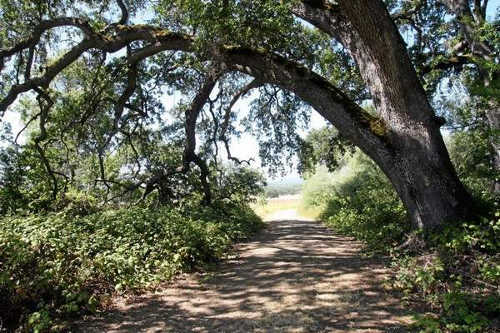
LOWER LAKE, Calif. – Anderson Marsh State Historic Park will hold its final guided nature walk of the year on Saturday, Nov. 14.
Bring binoculars and meet in the ranch house parking lot at 8:15 a.m. for time to experience the early morning wildlife to be found in the ranch house and barn complex yard. The walk begins at 8:30 a.m.
A guided tour of the historic ranch house museum will follow the walk.
Heavy rain will cancel the walk. If rain cancels the walk the ranch house tour will begin at 8:30 a.m.
There is no charge for those attending the event.
Park docents Gae Henry and Henry Bornstein will lead a leisurely walk to discover what autumn continues to bring to the park.
The walk will begin on the Cache Creek Nature Trail, pausing at the deck on Cache Creek at the end of the Cache Creek Trail boardwalk.
Assuming the ground is dry enough, the guided walk will continue across the grasslands of Anderson Flats, through the marsh and oak woodland habitats of the marsh and ridge trails, and end back at the ranch house. The entire walk should take between two and two and a half hours.
This time of year, many mammals and birds are attracted to the park because of the abundance of wild blackberries, grapes, rose hips and mistletoe berries available for food.
Fall also brings many migrating birds to the park, some to eat the autumn fruits and some to rest in the waters of Cache Creek and Anderson Marsh, or in the nearby trees.
Phainopepla have returned for the mistletoe berries, flocks of wintering eared grebes are being spotted on the water and the white tailed kites have returned to the grasslands.
Take advantage of this opportunity to join the fun and get a head start on working off all of those calories we will soon be enjoying on Thanksgiving Day.
Anderson Marsh State Historic Park is located on Highway 53, between Lower Lake and Clearlake.
For more information about the guided walk and tour, email AMIA at
For information about how you can help support Anderson Marsh Interpretive Association's campaign to keep the park open, thriving and available for events such as our monthly nature walks, please visit www.andersonmarsh.org or contact the association at the email or phone number above.