 How to resolve AdBlock issue?
Recreation
- Details
- Written by: Governor's Office
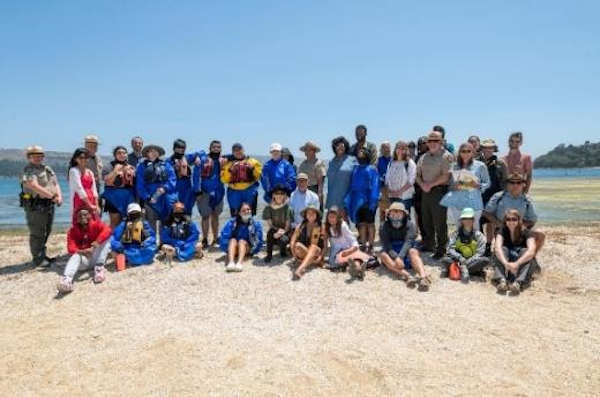
Gov. Gavin Newsom has signed legislation to advance the state’s commitment to equitable access to California State Parks.
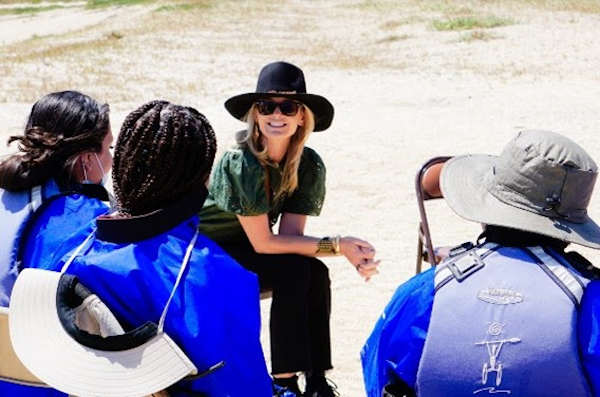
Championed by First Partner Jennifer Siebel Newsom, whose California for ALL Kids initiatives support children’s physical, mental, and social-emotional well-being, the legislation establishes a pilot program to give every fourth grader a free annual pass to select California State Parks.
“Nature is a public good and a crucial public health tool. For adults and children alike, quality time in nature is good for our hearts, minds, and bodies,” said First Partner Jennifer Siebel Newsom. “No state is better-positioned than California to leverage the great outdoors to augment our communities’ health and well-being — especially for youth in underserved communities.”
AB 148 establishes the California State Park Adventure Pass, a three-year pilot program that waives day-use entrance fees to 19 state parks for fourth graders and their families for a full year.
Earlier this month, the governor also signed SB 129, legislation that includes $5.6 million to fund the new State Park Adventure Pass as well as $3 million to establish the State Library Park Pass, a new two-year pilot program to provide state park passes to libraries across the state that may be checked out by library patrons to gain free day-use access to state parks.
"Access to nature is a crucial component to the health and well-being of our kids, and these outdoor access pilot programs set us on a path to expand access to nature and benefit children’s health," said California Natural Resources Agency Secretary Wade Crowfoot. "I am very excited to continue working with the First Partner and California State Parks to reduce barriers and expand access to state parks for kids and residents from park-poor communities."
In 2019, the First Partner and the California State Parks Foundation launched Pathways to Parks, an initiative to bridge the nature gap and expand park access for California youth.
Since then, the First Partner has met with California youth, state parks advocates, and community leaders to learn more about the positive impacts the outdoors has on young people’s physical and mental health.
According to a recent report, 70% of low-income communities across the country live in nature-deprived areas.
Studies indicate that access to parks and greenspace can lead to improvements in childrens’ physical well-being, social emotional learning, and academic outcomes, with children experiencing reduced stress and demonstrating more enthusiasm for school.
One study found that every $1 invested in trails for physical activity led to $2.94 in medical benefits.
“With the leadership of the governor and first partner, California was able to create for the very first time innovative access programs for children and families to explore state parks,” said California State Parks Director Armando Quintero. “More diverse communities will have the opportunity to become part of California’s landscape, enjoy the physical and mental benefits of connecting with nature, and be inspired to take care of these treasured places for future generations. We look forward to the continued partnership with the Administration and Legislature.”
With 280 state park units, over 340 miles of coastline, 970 miles of lake and river frontage, 15,000 campsites, and 4,500 miles of trails, the California Department of Parks and Recreation contains the largest and most diverse recreational, natural, and cultural heritage holdings of any state agency in the nation.
For the full text of AB 148, visit https://leginfo.legislature.ca.gov/faces/billNavClient.xhtml?bill_id=202120220AB148.
For the full text of SB 129, visit https://leginfo.legislature.ca.gov/faces/billNavClient.xhtml?bill_id=202120220SB129.
- Details
- Written by: Nadine Strauss
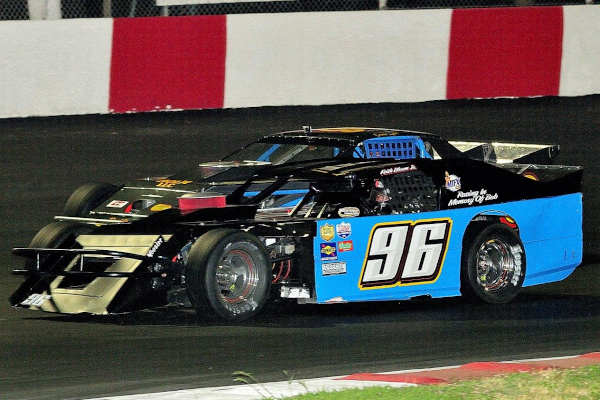
ROSEVILLE, Calif. — The North State Modifieds, presented by Protect the Harvest, will return to Roseville's All American Speedway Saturday for the second running of the “Bob Lehman Classic.”
The 60-lap Economy Heating & Air Challenge will be a bullring battle between the North State Modifieds and the NASCAR Jaws Gear & Axle Modifieds.
The first-ever meeting between touring North State Modifieds and the Jaws Gear & Axle Modifieds was initially set for July 10 but delayed by extreme high temperatures.
Each division will run in accordance with their respective rule books and tires, but both will be eligible for the posted awards.
The awards include $1,000 to the race winner, $150 to take the green flag, and Authority Heating & Air lap leader bonuses of $250 on both lap five and lap 55.
The 60 lap feature will commemorate the life and legacy of longtime race enthusiast and NSMS supporter Bob Lehman of Rio Linda.
Lehman passed away in November of 2019, one day shy of his 78th birthday. He was a lifelong welder, fabricator and race car builder.
Lehman had two loves of his life, his family and racing. He built his first race car at his childhood home with his buddies and his dad at the age of 15. He was always the car builder, never the driver.
He made a promise to his mother when he was young that he would not drive, and he kept it. But race car building was his passion.
In Lehman’s mind, every car he built was the “Flintstone Special” or could be. He had his favorite cars over the years, and that one was definitely one of them.
Lehman built a catalog of race cars; a Super Modified, NASCAR Grand National, Late Model, Super Late Model, NASCAR Pro Truck, Modified and Lucas Modified.
He was an iconic figure at the racetrack. Lehman was quick to help other race teams with advice, ideas, and emergency parts — just so they could all race.
Event sponsor Terry Deal of Economy Heating & Air said, “Bob Lehman was a huge inspiration to the start of my career in racing.”
Many other competitors in the Roseville area have been touched by Lehman and will be attending this commemorative event.
The North State Modified Series would not be possible without the support of Protect the Harvest, Lucas Oil, Economy Heating & Air, Sullivan Construction and Masonry, Hoosier Tire West, Sunoco Race Fuels, Naake Suspension, Five Star Bodies, Racer Bling, Mark & Sharon Baldwin, Scribner Plastics, Mort Houston, McMurray & Sons Roofing, Frank’s Radios, Supercuts, Vogel’s RVs and Authority Heating & Air.
- Details
- Written by: California Department of Fish and Wildlife
CDFW is advising anglers not to fish past noon on certain inland waters as even catch-and-release angling during the hottest parts of the day can greatly increase fish stress and mortality.
“Many of our inland fisheries that rely on cold water habitat will likely be significantly impacted in the short and long term,” said CDFW Inland Fisheries Manager Roger Bloom. “California's drought cycles have required us to learn to manage fisheries with extreme variations in water flows. The last drought resulted in significant effects to fisheries that took years to recover from. We hope the self-imposed Hoot Owl restrictions by anglers will help mitigate those effects.”
Coldwater species such as trout, salmon and steelhead have the greatest likelihood of being affected by the drought this year but low water levels and high-water temperatures can potentially affect all inland aquatic species.
CDFW has introduced a series of voluntary angling recommendations – so-called “Hoot Owl” Restrictions – that directs anglers to focus their fishing during the cooler “hoot owl” periods of the day when water temperatures are lowest. A watchlist of specific waters anglers should avoid fishing past noon is included and will be updated as conditions change. Sustained afternoon water temperatures exceeding 67 degrees Fahrenheit for trout fisheries could trigger addition to the list.
Currently, the list of waters include:
— Lower Owens River (Pleasant Valley Dam downstream to Five Bridges) in Mono County.
— Hot Creek in Mono County.
— Mill Creek (Walker Basin) in Mono County.
— Lower Rush Creek (Grant Lake to Mono Lake) in Mono County.
— Bridgeport Reservoir in Mono County.
— Deep Creek (San Bernardino County).
— Crowley Lake (Mono County).
— Truckee River (Lake Tahoe to the Nevada state line) in Nevada, Placer and Sierra counties.
As conditions change, CDFW will post the updated list on the “Hoot Owl” Restrictions page.
Elevated water temperatures, lower oxygen levels, disease, low flows and low water levels are among the drought-related effects impacting many of California’s coastal waters and inland fisheries.
CDFW offers a number of other angling tips to reduce fish stress during the drought:
— Minimize the time you spend "fighting" the fish and any hands-on handling.
— Use rubber or coated nylon nets to protect a fish's slime layer and fins.
— Quickly remove the hook with forceps or needle-nosed pliers.
— Minimize the amount of time the fish is exposed to air, especially when the weather is warm.
— Keep your hands wet when handling the fish.
— If the fish is deeply hooked, do not pull on the line. Instead, cut the line as close as possible to where it is hooked and leave the hook so it can dissolve.
— Allow the fish to recover in the net before you release it.
— If the fish does not stay upright when you release it, gently move it back and forth.
— Avoid fighting fish from deeper, cooler waters and bringing them into warmer waters at the surface if your intention is to release them.
— Target fisheries that have stable water levels and species that are more resilient to elevated temperatures.
While these best practices may not all apply to anglers interested in harvesting their fish to eat, mortality may result from non-targeted species caught and released or fish outside of legal size limits that must be returned to the water.
- Details
- Written by: California Department of Fish and Wildlife
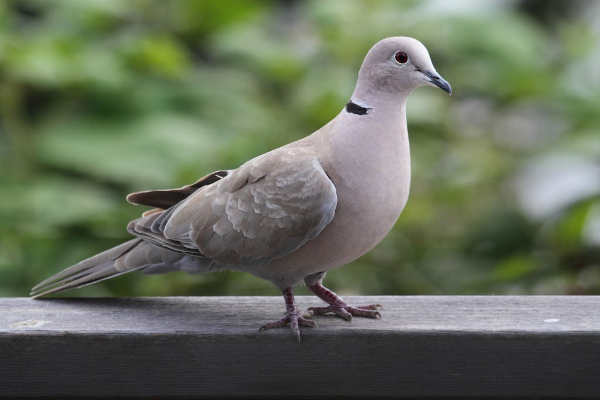
Eurasian collared doves
Q: I am aware that there is a year-round open season on Eurasian collared doves and no limit. Can I hunt them in the middle of summer? How am I supposed to tell the difference between all the doves in flight?
A: Let’s start with the first question! Yes, you can hunt Eurasian collared doves all year long. And you’re right, mourning doves, white-winged doves, spotted doves, ring turtle doves and Eurasian collared doves look similar, but hunters are expected to know the difference.
Stated more explicitly: wildlife officers expect you to know the difference! Over time, dove hunters need to develop the skills to differentiate between different dove species on the wing. We have a dove identification graphic that may help get you started. Learning more about dove species can help, too.
For example, there are areas of the state where Eurasian collared doves are more prevalent (mostly in the southern half of the state).
We recommend two strategies. First, hunt with a partner who has a significant amount of experience in telling the difference between each type of dove in flight.
As you see doves while hunting, ask the experienced hunter to explain what characteristics they are looking at to differentiate the birds from one another. Hunters will look at markings such as the black band across the back of the Eurasian collared dove’s neck. They also pay attention to flight patterns and listen to different sounds generated by the doves’ wings.
Second, when you begin hunting doves, we suggest hunting during the mourning dove and white-winged dove season. That way if you make a mistake, you’ll have a reduced chance of inadvertently violating the law. For example, if you hunt dove on Sept. 1, the most popular dove hunting day of the year, you will have some room for error.
Bird identification is a skill in and of itself. Duck hunters are faced with the same requirements yet have many more species to differentiate from. Many duck hunters are known to visit popular waterfowl migratory areas to watch birds even after the season is over for the purpose of improving their identification and calling skills. There’s no reason why dove hunters can’t do the same.
With a decent pair of binoculars and an attentive ear, you can more quickly learn the subtle differences between dove species and gain a better understanding of their behaviors. Finally, remember that Eurasian collared dove are a game species, and hunters must possess both a license and an upland game bird validation.
Steelhead Report Cards
Q: The state collects data from steelhead report cards. I would like to see this data. Is it ever released or summarized for public viewing?
A: Some data collected from steelhead report cards is summarized and updated on our website. The website also includes the last legislative report which summarizes data from 2007 through 2014.
A legislative report summarizing data from 2015-2019, which includes total report cards sold, amount of revenue accrued and spent, angling data, and benefits of the report card program has been submitted for review and will be made available once approved.
Requests for steelhead report card data can also be submitted directly to the Program Coordinator at
Taking mollusks by hand
Q: When limpets are taken from shore can gloves be used to protect your hands?
A: Yes, gloves can be used to take any number of intertidal invertebrates, including limpets. Limpets are a type of saltwater mollusk. California Code of Regulations, Title 14, Section 29.10(a) permits the take of saltwater mollusks by hand. Nothing in the regulations prohibits gloving the hands. If you think about harvesting California Spiny Lobsters by hand while on SCUBA for example, just try to take a spiny lobster without wearing gloves! Ouch!
Fishing license
Q: I have a fishing license but my friend doesn’t. When I catch a fish, can my friend help me by netting the fish while I hold the rod?
A: No. The California Fish and Game Code defines take in section 86. It states: “Take” means hunt, pursue, catch, capture or kill, or attempt to hunt, pursue, catch, capture or kill. If your friend is assisting you with the “catching” of fish, by the letter of the law, he or she would need a license too.