 How to resolve AdBlock issue?
Recreation
- Details
- Written by: Editor
Thirty-six cadets graduated on Friday, Aug. 17, from the California Game Warden Academy during ceremonies at the Performing Arts Center in Paradise.
“I remember what I felt like the day my badge was pinned,” said Nancy Foley, chief of the Department of Fish and Game’s (DFG) Law Enforcement Division. “I see the same eagerness in the eyes of
today’s graduating class of cadets.”
Foley presided over the graduation on her last day as California’s top warden. She is retiring after a distinguished 25-year career at DFG.
Annually, wardens make contact with more than 295,000 people and issue more than 15,000 citations. They often work alone and in remote areas that do not allow for immediate backup.
In California, the average warden has a patrol district of more than 600 square miles.
In addition to law enforcement, wardens often recommend recreational activities and serve as educators to the public by speaking to schools, service groups and media.
The graduating class included 19 sponsored warden cadets who will begin field training immediately.
Another 17 self-sponsored cadets paid their way through the academy planning to become game wardens. DFG hopes to hire them.
All the cadets spent the last 31 weeks in intensive training at Butte College in Oroville, where the academy is located.
The following are the graduating cadets and their hometowns. Sponsored cadets are noted with an asterisk.
Corey Adler, Salinas, Calif.*
Brandon Alisio, Visalia, Calif.*
Michael Allen, Tiburon, Calif.
Leonard Arkinstall, Long Beach, Calif.*
Garrett Barker, Paradise, Pardise, Calif.
Ambartsum Bagdasaryn, Northridge, Calif.*
Nathan Daniel, Seaside, Calif.
Chrisopher Doty, Fresno, Calif.*
April Esconde, Covina, Calif.*
Christopher Foster, Rocklin, Calif.
Kyle Glau, Auburn, Calif.
Todd Kinnard, Hesperia, Calif.*
Brendan Lynch, Sonoma, Calif.*
Brad Mello, Walnut Grove, Calif.*
Leah Miller, Woodland, Calif.*
Dustin Moe, Loma Rica, Calif.
Nicholas Molsberry, San Diego, Calif.
Justin Monroe, Fairfield, Calif.*
Jefferey Moran, Waterford, Calif.*
Tara Morrison, Arnold, Calif.
Preston Murphy, Fort Bragg, Calif.
Brian Peters, Taft, Calif.*
Matthew Plaza, Patterson, Calif.
Matthew Prado, Woodland, Calif.*
Brandon Rose, Graeagle, Calif.
Brian San Agustin, Stockton, Calif.*
Perry Schultz, Sacramento, Calif.*
Keith Smith, Elk Grove, Calif.
Ryan Stephenson, Fall River Mills, Calif.
Ryan Sutherland, Crescent City, Calif.
Angel Tapia, Woodland, Calif.*
Casey Thomas, Morro Bay, Calif.
Jeff Travers, Chico, Calif.
Mark White, Fairfield, Calif.*
Joshua Williams, Elk Grove, Calif.
Doug Willson, Sebastopol, Calif.*
DFG teamed with Butte College in 2007 to provide peace officer training for prospective wardens. This partnership secured an academy facility and a California Commission on Peace Officer Standards and Training (POST)-certified training program for warden cadets on the college’s Oroville campus.
Butte College has a 39-year history of police recruit training. The 928-acre campus, the largest in California, is also a designated wildlife refuge.
DFG is actively hiring warden cadets. Those interested in a career as a game warden may review the job requirements and minimum qualifications at www.dfg.ca.gov/enforcement/career/index.aspx .
- Details
- Written by: Carrie Wilson
Question: A group of friends and I are planning to take a trip on their yacht, basically sailing up and down the coast and visiting some of the small islands along the way.
A couple of us like to fish but aren’t sure of what regulations will apply to us if were fishing outside of state waters.
Do we have to have a fishing license if we are fishing more than three miles from shore? I’ve heard something about the coastal three nautical mile limit but want to be sure we have our ducks lined up before we launch. Thanks for your help. (Randi L.)
Answer: Yes. California sport fishing licenses are required even when fishing outside of California waters if the vessel you’re fishing from is registered in California, or if your trip either begins or ends in California waters.
The only time you will not need a California license is if your boat is not registered in California and your trip originates in another state or country, and you never come into California waters to fish or to conduct commerce (e.g. purchase fuel, food or other goods). This includes the offshore islands that are considered a part of California (e.g. Farallon Islands, Channel Islands, etc.).
In addition, species that are illegal to possess in California are also generally prohibited from being imported into California. Fish and wildlife cannot be imported into California unless legally taken and possessed outside of the state (Fish and Game Code, section 2353).
Proper disposal of cat litter benefits sea otters, wildlife and humans
Question: What is the most responsible way to manage cat litter? Because of wildlife disease impacts from cat feces, biodegradable forms of cat litter disposal may be a bad idea if they are composted on site. Yet, loads of litter in plastic bags in our overburdened landfills is not a good thing either.
We know that keeping cats indoors is the best thing to do for wildlife (the number of birds and lizards killed by house cats each year is staggering AND outdoor cats defecate where feces can enter the ecosystem), but it’s hard to know how best to deal with litter. Any advice? I'm stumped … and I have an indoor cat I want to be responsible about caring for it! (Becky S.)
Answer: The following information is provided by Department of Fish and Game (DFG) Veterinarian Melissa Miller from the Marine Wildlife Veterinary Care and Research Center in Santa Cruz:
First of all, thank you for being such a responsible pet owner. I do agree that cats make wonderful pets, but their natural predatory behavior can significantly impact native wildlife.
Animal feces, including cat feces, also can spread parasites, bacteria and other pathogens to sea otters, wildlife and humans. So what can you do to prevent this?
First, like you, I keep my cats indoors all of the time and provide sunny spots for them to hang out and watch the birds outside – they really enjoy that. It’s good to know that indoor cats commonly live longer and are healthier overall, so this is a win-win.
Second, cats have very unique nutritional requirements, so I feed them a high quality commercial cat food and make sure that any special treats I give them are fully cooked, because raw meat can cause bacterial and parasite infection for your cats, and indirectly, you.
Third, I prevent access to rodents, wild birds and their fleas, which could also be a source of infection. As for the cat box issue: I agree that there is no “perfect” solution. However, based on what we know at present, our recommendation is to clean the cat box(es) every day, place the soiled litter in a plastic bag, seal it and place it in your regular trash where it will be disposed of in an approved landfill.
We do not recommend composting of feline waste because of the potential human and wildlife health risks. Some of the pathogens that can be present in feline feces are extremely hardy and can survive for months to years in contaminated soil, and the infectious dose is very low.
For more information on this topic and to learn more about how improper disposal of kitty litter can be dangerous for sea otters, please see http://seaotterresearch.org/resources.shtml .
Two rod stamps required on Free Fishing Day?
Question: Is a second rod stamp required to fish with two rods on the two free fishing days when no license is required? (Melana H., Sacramento)
Answer: Yes! Free Fishing Day allows fishing without a California sport fishing license, but other requirements for additional stamps and report cards still apply. Those items must be purchased and in anglers possession if they are required, even on Free Fishing Day.
The next free fishing day will be on Sept. 8.
Carrie Wilson is a marine biologist with the California Department of Fish and Game. While she cannot personally answer everyones questions, she will select a few to answer each week. Please contact her at
- Details
- Written by: Editor
The California Department of Fish and Game (DFG) has two hunter education instructors marking their 50th year of service, having taught at least one hunter education class every year since 1962.
Monty Montenegro and David Deyell have donated thousands of hours and taught thousands of students hunting ethics, wildlife conservation, survival and firearm and archery safety.
“Mr. Montenegro and Mr. Deyell’s commitment to the future of California’s hunting heritage serves as example to the 850 dedicated volunteer Hunter Education Instructors (HEI) throughout the state,” said Capt. Roy Griffith of California’s Hunter Education Program. “California’s 300,000 licensed hunters owe them a debt of gratitude.”
Born in 1929 on Catalina Island, Montenegro is a former U.S. Marine who served in the Korean War. He was the first HEI to offer the course in Spanish, and with help from his wife, Ana, translated the course’s 100-question exam into Spanish. A version of that translation is still in use today.
A proud Marine, Montenegro served as Department Commandant for the Marine Corps League and today is Post Commander of VFW Post 3197. He teaches in Los Angeles County.
Deyell grew up in New York, where he taught members of his younger brother’s Explorer Scout troop the fundamentals of firearm safety and marksmanship. Inspired by his father, an avid target shooter, Deyell went on to help his high school rifle team win top honors in New York City four years in a row.
He moved to California in 1960, where he soon began teaching hunters. He continued teaching hunter education through his service in the U.S. Army, where he served in an Army Marksmanship Training Unit during the Vietnam era. Deyell teaches in Ventura County.
In a continued effort to reduce firearm accidents, the state of California requires all first-time resident hunters, regardless of age, to complete hunter education training or pass a comprehensive equivalency test before purchasing a hunting license. DFG’s HEIs conduct training throughout the state. Each year approximately 30,000 students complete the state’s ten-hour minimum hunter education course.
Anyone interested in becoming a volunteer hunter education instructor, or those interested to take a hunter education course, may go to http://www.dfg.ca.gov/huntered/ .
- Details
- Written by: Editor
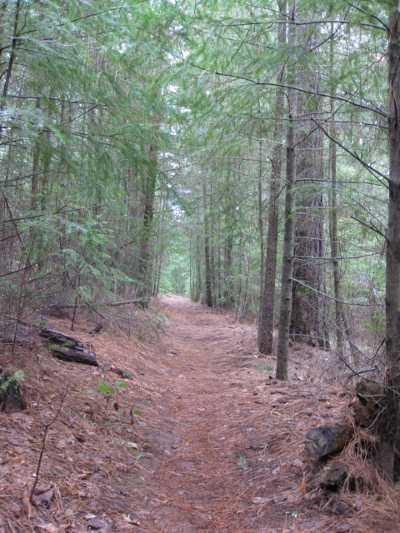
COBB, Calif. – Join the Friends of Boggs Mountain in a hike on the Hoberg Loop Trail in Boggs Mountain State Forest next Wednesday, Aug. 29, at 9 a.m.
This is an opportunity to get some exercise and enjoy the outdoors and the wonders of nature as you walk in the footsteps of Luther Burbank.
Burbank, famed American botanist who did much of his plant work in Sonoma County, was a guest at Hoberg’s Resort in the early 20th Century where he enjoyed hiking the Hoberg Loop Trail.
This will be a moderately paced two-mile hike on moderate terrain and will be led by Darlene Hecomovich.
They will talk a little about Luther Burbank as well as discuss the flora encountered along the way that will include the ground cover of bracken, bunch grass, and mosses to the understory filled with coffeeberry and manzanita and on to the upper story of magnificent Douglas Fir and sugar and Ponderosa pines. Come and enjoy it all as they hike.
Wear sturdy shoes, dress appropriately for weather conditions, and bring water and enthusiasm.
Meet promptly at 9 a.m. at the Hoberg Loop Trail Trail Head which is on Entrance Road off Highway 175.
Entrance Road is 0.5 miles north of the entry to Boggs Mountain State Forest and two miles north of Cobb Village. Turn east on Entrance Road and proceed 100 yards up to the Trailhead.
For further information phone Darlene Hecomovich at 707-928-5591 or email at