 How to resolve AdBlock issue?
Health
- Details
- Written by: Editor
WASHINGTON, DC – Reps. Mike Thompson (CA-05) and David B. McKinley, P.E. (WV-01) introduced H.R. 4392 to reverse a Centers for Medicare and Medicaid Services, or CMS, rule cutting $1.6B for drugs purchased by certain hospitals covered under the 340B program.
These cuts jeopardize care for millions by directly reducing revenue to hospitals that care for vulnerable patients in underserved and rural communities, without addressing the underlying price of the drugs.
“This rule dramatically undermines the ability of hospitals across the country to deliver care to our nation’s most vulnerable populations. I’m disappointed that CMS did not listen to hospitals, nor a majority of members in the House and Senate, and approved a rule that puts both hospitals and patients at risk,” said Rep. Thompson. “I will work with my colleagues on both sides of the aisle to stop this rule and ensure the 340B program can continue to serve low-income populations as Congress intended.”
“Protecting access to prescription drugs for low income communities should be a priority. Unfortunately, CMS’s misguided rule jeopardizes the ability of rural hospitals to provide vital services. This would have a huge impact on West Virginia hospitals’ ability to provide affordable care. We led a bipartisan letter to CMS with nearly 250 signers, but they didn’t listen. This bill ensures that rural hospitals are able to continue providing affordable services, and gives rural families peace of mind,” said Rep. McKinley.
“The AHA thanks Representatives McKinley and Thompson for leading this bipartisan effort to protect patient care by preventing CMS from reducing Medicare Part B payments for some 340B hospitals,” said Tom Nickels, executive vice president of the American Hospital Association. “For 25 years, the 340B Drug Pricing program has been critical in helping hospitals expand access to lifesaving prescription drugs and comprehensive health care to low-income patients and other vulnerable populations in communities across the country.”
“The AAMC would like to thank Representatives McKinley and Thompson for introducing this important bipartisan bill to prevent major Medicare cuts to safety net hospitals that participate in the 340B Drug Pricing Program,” said Atul Grover, MD, PhD, executive vice president of the Association of American Medical Colleges. “This program provides savings to many teaching hospitals, allowing them to maintain vital services for patients at no cost to taxpayers.”
“We thank Congressmen McKinley and Thompson for their leadership and support for low-income Americans and their essential hospitals,” said Bruce Siegel, MD, MPH, president and CEO of America’s Essential Hospitals. “They understand the damage this policy will cause to communities in West Virginia, California, and across the country, and we appreciate their efforts to protect patients. We urge all House members to support access to affordable drugs by supporting this critical legislation.”
On Nov. 1, CMS cut the reimbursement rate for Medicare Part B drugs purchased by certain hospitals covered under the 340B program by around $1.6 billion. This legislation would completely negate the effects of this rule.
Since 1992, the 340B program has used mandated discounts offered by drug manufacturers to help hospitals and other covered entities provide discounted drugs and lifesaving services to their patients. The CMS rule eliminates funding that hospitals use to support the unreimbursed cost of care for those who need it the most.
On September 28, 2017, McKinley and Thompson organized a bipartisan letter to CMS Administrator Seema Verma urging the administration to withdraw its harmful proposal to cut the 340B Drug Pricing Program. This letter was signed by 228 Members of Congress from both sides of the aisle who understand that protecting access to affordable care is a top priority.
To view the text of the bill, click here.
To view the bipartisan letter to CMS, click here.
- Details
- Written by: Editor
California acute care hospitals must offer influenza vaccination at no cost to health care personnel and require they receive annual influenza vaccination or declare in writing that they decline vaccination (Health and Safety Code section 1288.7).
This report presents data for the 2016-2017 influenza season, October 1, 2016, through March 31, 2017. Overall, California hospitals reached 83 percent influenza vaccination.
The highest vaccination rates are among employees paid by the hospital (87 percent) and the lowest are among licensed independent practitioners (67 percent), a category that includes physicians, advance practice nurses and physician assistants who are not directly paid by the hospital.
“California hospitals are continuing to make incremental progress in their health care personnel vaccination coverage,” said CDPH Director and State Public Health Officer Dr. Karen Smith. “To improve vaccination, hospitals should target specific health care personnel groups with the lowest vaccination coverage. Annual influenza vaccination is a simple, safe, and cost-effective way to prevent influenza.”
CDPH recommends that all health care personnel promote patient safety and the health of the public by taking appropriate measures, including annual vaccination, to prevent the spread of influenza infections in health care settings.
Members of the public should discuss influenza vaccination with their doctors or other health care providers and ask if they, themselves, have been vaccinated.
The report and an interactive map are available on the CDPH Web site. The data will also be available through CDPH’s Open Data Portal.
- Details
- Written by: Editor
From Jan. 1 through Oct. 31, 2017, 5,121 provisional cases of valley fever were reported in California. This is an increase of 1,294 provisional cases from the provisional 3,827 cases reported during that same time period in 2016.
The number of provisional cases provides a timely indicator of overall current activity, but the number of cases eventually confirmed is usually lower than the provisional number of cases reported.
The number of valley fever cases varies from year to year, and by season. Cases can be more common in the late summer and fall.
Provisional cases include suspect, probable, and confirmed cases: suspect and probable cases may be confirmed later or excluded as official valley fever cases upon further investigation.
CPDH is releasing the provisional data, since it provides an early indication of potential risk of valley fever in the current season.
It is unknown why there has been an apparent increase in provisional valley fever cases in California in 2017.
“With an increase in reported valley fever cases, it is important that people living, working, and travelling in California are aware of its symptoms, especially in the southern San Joaquin Valley and the Central Coast, where it is most common,” said CDPH Director and State Public Health Officer Dr. Karen Smith. “In these areas, anyone who develops flu-like symptoms, such as cough, fever, or difficulty breathing, lasting two weeks or more, should ask their health care provider about valley fever.”
Valley fever, also known as coccidioidomycosis, is caused by the spore of a fungus that grows in soil in parts of California, Arizona and other areas of the southwestern United States.
People get infected by breathing in spores present in dust that gets into the air when it is windy or when soil is disturbed, such as through digging during construction.
A person can reduce the risk of infection by avoiding breathing in dirt or dust in areas where valley fever is common. In these areas, when it is windy outside and the air is dusty, stay inside and keep windows and doors closed.
While driving, keep car windows closed and use recirculating air conditioning, if available. If you must be outdoors when it is windy and dusty, consider wearing a properly fitted mask (such as an N95 respirator mask, which is widely available in retail stores), and refrain from disturbing the soil whenever possible.
Employers should train their workers about valley fever symptoms and take steps to limit workers’ exposure to dust.
Most infected people will not show signs of illness. Those who do become ill with valley fever may have symptoms similar to other illnesses, including influenza or bacterial or viral pneumonia, so valley fever is not always recognized.
The flu-like symptoms can last for two weeks or more. While most people recover fully, some people are at risk for more severe disease or complications of valley fever such as pneumonia, infection of the brain, joints, bone, skin or other organs.
People with an increased risk for severe disease include those 60 years or older, pregnant women, and people with diabetes or conditions that weaken their immune system.
Additionally, African-Americans and Filipinos are at increased risk for severe disease, but the reason is unknown.
If you think you have valley fever, you should contact your health care provider.
For additional information on valley fever, please visit the CDPH Web site at www.cdph.ca.gov.
- Details
- Written by: Editor
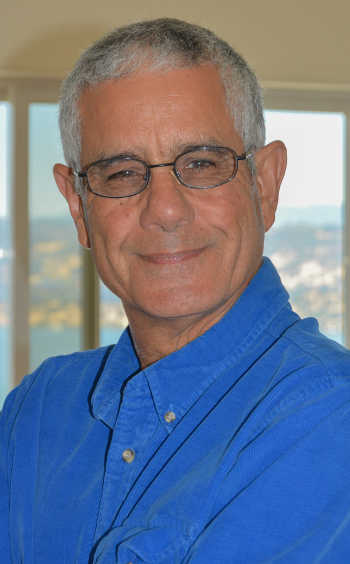
KELSEYVILLE, Calif. – Retired professional chef, Ron Barber, will be the guest presenter at this month's Companion Circle at A Positive Light Center for Spiritual Awakening, 6470 Kelsey Creek Drive in Kelseyville.
This educational and social gathering hosted by local mindfulness teacher JoAnn Saccato, MA, is Monday, Nov. 20, from 6:30 to 8 p.m. and is open to the public.
Barber will be presenting on mindfulness of taste just in time for the sumptuous holiday season.
"For many of us, eating has become something we do automatically, rarely being aware of the flavors and textures of the food we are eating," he explained. "Multitasking during meals has become common in our present day culture and we're missing out on a lot!"
Retired and now living in Kelseyville, Barber worked as a professional restaurant and winery chef for over twenty years in the Napa and Sonoma valleys.
He shared his culinary expertise at restaurants including The Girl & the Fig Restaurant, The Sonoma Mission Inn, Domaine Chandon, Beringer Wine Estates and St. Supery Vineyards & Winery. "This is where I really developed and fine-tuned my sense of taste," he noted.
"I've combined my intrigue with flavor mixing and tasting with my own daily mindfulness practice," Barber went on to say, "which has led to a deeper appreciation for the whole eating experience. I'm really excited to share this passion with others through this event!"
During his presentation, participants will focus on tasting food items prepared by Barber in a mindful fashion, concentrating on the sight, texture, flavors, and even the sound of the foods sampled.
"Bringing a mindful awareness to our eating helps us reduce the potential discomfort and weight gain from overeating without sacrificing our enjoyment," added Saccato. "In fact, our pleasure during the holidays can be increased manifold with a mindful approach."
Companion Circles are monthly gatherings for those curious about or committed to a mindfulness practice.
The Circles occur on the third Monday of each month from 6:30 to 8 p.m. The evening includes a guided mindfulness exercise, question and answer period, social mingling and the evening's presentation.
Attendees are invited to wear comfortable clothing. Optionally, guests can bring a simple finger food to share. Tea and water are served. There is a suggested donation of $10, though, no one is turned away for lack of funds.
For more information on the Companion Circles, visit www.MindfulAndIntentionalLiving.com or call 707-350-1719.