 How to resolve AdBlock issue?
Education
- Details
- Written by: Elizabeth Larson
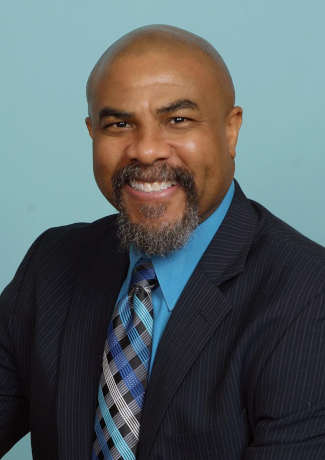
MARYSVILLE, Calif. – Yuba College recently named Dr. Alan Dixon as its new dean of career and technical education, or CTE, and workforce development.
Dixon comes to Yuba College after working in higher education for 15 years. He will begin his new position by working closely with faculty to understand the current trends and technology standards for various CTE industries.
“Technology undergoes constant change. To best prepare our students to enter the workforce, we must keep pace with that change,” he said. “My goal as CTE dean is to work with faculty to ensure our students are trained with the latest and greatest technology so they graduate with the tools they need to succeed.”
Dixon oversees approximately 20 areas at the college including: health programs like nursing, emergency medical technology and radiology; behavioral science programs such as human services and psychiatric technology; applied technology programs including manufacturing and welding; public safety programs like the police and fire academies, and more programs that lead to in-demand careers.
“These programs are designed to help students hone in on the skills they need so they are fully prepared to step into the careers they want. It’s exciting to work with faculty to shape the best learning experience they can have,” Dixon said.
Additionally, he is eager to work with local agencies and employers to build internship programs that will give students real-world experience and support local employers.
“It is a win for Yuba College when our students become contributing members of our community from both their learning experiences with us and the experiences they gain with our community partners,” Dixon said.
He shared that he is eager to build his own relationships with the Yuba community.
“I am looking forward to forging local relationships to learn about the needs and priorities of our community and working together to meet and exceed those challenges. My belief is if we work together to learn about each other and share our hopes and dreams, we can continue to evolve our college to best serve our students and community,” Dixon said.
To learn about CTE programs at Yuba College, please visit https://yc.yccd.edu/academics/career-technical-education/.
- Details
- Written by: Elizabeth Larson
The initiative is called “Caring Campus” and empowers college personnel to break down silos and ensure all parts of the college can work in support of student success.
The Caring Campus program, created by the Institute for Evidence-Based Change, or IEBC, was designed to increase student retention and success in community colleges. It helps equip staff members with the tools they need to assist anyone on campus, even if their problem is unrelated to their area of expertise.
At its core, the program outlines how to interact with others on campus, creating a shared resource guide that allows Yuba College employees to assist students with any issue they may be facing.
The goal, according to IEBC, is to ensure students feel welcome, safe and included while in college. Caring Campus empowers classified professional staff to take an active role in student success.
Students are more likely to enroll in an institution where they feel welcome and stay where they feel cared about. If students do not feel connected to the college they attend, they are far less likely to persist and succeed, regardless of the academic interventions and support services the college has provided.
The initiative at Yuba College is being led by classified professional staff members hand-picked by college leadership to represent their departments.
The team created six commitments:
• Name tags for all staff, faculty and administrators with their names and titles.
• 10-foot rule: Greet and assist any student that looks like they need help.
• Cross-departmental awareness: Foster a culture of awareness of all parts of the college and their functions.
• Virtual cross-departmental awareness: Ensure online directories and pages are updated and accurate.
• Give contact information upfront: Guidance for virtual and phone interactions.
• Reaching out at key times: Protocol for establishing engagement with students so they know who to turn to and how to ask for help.
“These seem like small initiatives, but they truly have a tremendous impact,” said Carrie Stoner, program specialist for the college’s Disabled Students Programs and Services and Caring Campus committee member. “Putting these efforts into practice allows us to create a much more personal connection with students, which makes it easier for them to reach out when they need help or feel lost.”
The program has already been implemented at more than 120 colleges across the country, according to IEBC, and includes an implementation phase, a monitoring phase and a communication phase to ensure Caring Campus is seamlessly integrated and supported by the institution after launch.
Little resource commitment is required to implement the program, as it is rooted in inspiring behavior change to improve and enhance the many student success initiatives already at work in an institution.
IEBC said Caring Campus can go immediately to scale after just one or two semesters of coaching.
To learn more about the Caring Campus initiative, visit the Institute for Evidence-Based Change website.
- Details
- Written by: Savings Bank of Mendocino County
Students at 14 schools and the surrounding community have free access to Banzai, an award-winning online program and content library that allows users to practice real-world finance from the safety of their home or classroom using any internet-enabled device.
At a time when a solid foundation of practical financial knowledge is critical, these resources will make a huge impact on users.
Through the Banzai online courses, students try out managing a budget, saving for a goal, and dealing with unexpected financial pitfalls. Teachers are able to easily monitor and grade student progress remotely.
Other resources, which include articles, calculators, and personalizable Coach sessions, explain everything from the basics of filing your taxes to how health insurance works. These resources are available at sbmendocino.teachbanzai.com/wellness.
“Thanks to Savings Bank of Mendocino County, area students will now have access to a wide array of courses and resources designed to help prepare them for our increasingly complex world,” says Morgan Vandagriff, co-founder of Banzai. “We wouldn't be able to provide these tools without their support.”
Savings Bank of Mendocino County is working with Banzai to build financial literacy in the community by investing time, money, industry experience, and a variety of bank resources. Now, they’re taking their commitment to education a step further.
Through their help, students have access to Banzai learning tools, virtual or in-classroom presentations from a Savings Bank of Mendocino County expert, and even class visits to a branch to see it all in person.
Banzai resources are used by over 100,000 teachers across the U.S. These educational tools align with California’s state curriculum requirements, making the program a fun way for students to gain vital skills and an ideal way for anyone in the community to increase their financial literacy.
After finishing the Banzai courses, users will know how to track where their money is and what it’s for, recognize financial trade-offs, and plan for a financially sound future.
Teachers interested in using Banzai can visit sbmendocino.teachbanzai.com or call 888-8-BANZAI.
For more information about Banzai visit banzai.org.
For more information about Savings Bank of Mendocino County visit www.savingsbank.com.
- Details
- Written by: MCHC Health Centers
The MSW’s three-year “distributed” learning track allows students to take online evening classes with only two in-person weekend classes per semester.
This is excellent news for federally qualified health centers, or FQHCs, like MCHC Health Centers, according to MCHC CEO Rod Grainger, because it enables people to remain in their home communities while earning a degree that will both allow them to achieve their career goals and do a great service to their community by expanding access to healthcare.
“This is a great opportunity to earn an MSW without taking on much, if any, educational debt. It opens up the path to become a therapist for those who would not otherwise be able to attend university,” Grainger said.
Currently, the nationwide shortage of providers across many sectors of the healthcare industry makes it difficult to provide adequate care, especially in small, rural communities.
To combat this, MCHC and other FQHCs support programs and initiatives that lower barriers to entry into healthcare careers, especially when those programs and initiatives help local community members gain the education and skills they need for a meaningful career.
“We know that people who grow up in a specific community are often uniquely qualified to provide culturally competent and holistic care there because of a deep understanding and connection to their home,” Grainger said.
Chico State’s MSW Behavioral Health program is an accredited program that meets all the requirements for students who wish to pursue becoming licensed upon graduation, and the vast majority of the program can be completed from home.
Licensed clinical social workers often serve as therapists or primary care counselors in community health centers.
The two scholarships for Chico State’s MSW program, available only to Northern California residents, are the Behavioral Health Expansion Program, or BHEP, which offers a $10,000-per-year stipend, and the California social worker education center’s public behavioral health program, CalSWEC’s PBHP, which offers a $25,000-per-year scholarship.
The three-year online MSW program option is considered an extended learning program with a tuition cost of $499.00 per unit.
In addition to tuition, students pay University fees each semester. On average, a spokesperson for the Chico State MSW program estimated per-semester costs to be about $8,500. So, with the financial support of these programs, a student could have enough money to pay for books, tuition, and travel.
Anderson said, “In essence, the cost to the MSW student would mostly be the time they dedicate to earning their degree.”
BHEP seeks to expand licensed clinical social workers in Northern California. The program includes no obligation to repay the annual $10,000 stipend.
It also offers ongoing peer mentorship and trainings to MSW students seeking to work with children, youth under 25, or families in historically underserved communities in the “Northern California Service Region,” specifically, the region encompassing Mendocino, Lake, Colusa, Sutter, Yuba, and Nevada Counties and all counties north of them.
BHEP entails no post-graduation service obligation, but does require students in the program to serve their field placement training with an organization that provides behavioral health services in the service region and asks for a commitment to provide behavioral health services in that region after their graduation.
CalSWEC’s PBHP is based out of the University California, Berkeley, and is focused on the retention and development of MSW graduates in publicly funded behavioral health programs. Chico State MSW scholarship recipients must serve one year at a public behavioral health agency for every year the scholarship is awarded.
Students who participate in the program will spend their practicum placement in a community-based behavioral health setting and their field training will focus on providing publicly funded behavioral health services. MCHC and other FQHCs satisfy the requirements for service during the MSW program at Chico State and the required post-graduate service.
In California, to become a licensed clinical social worker, you must complete 3,000 hours of supervised clinical practice after graduate school. FQHCs often work with those who have completed their graduate coursework and passed the licensing exam to provide them with the experience they need to complete their training.
The Chico State University MSW application deadline is January 15, 2024. For more information about the distributed learning program, contact Program Coordinator Molly Calhoun at
If you are interested in pursuing a career in healthcare but are not ready to get a Master’s in Social Work, there are other avenues available to you. The Mendocino County Office of Education (mcoe.us) offers entry programs into the medical and dental fields and Mendocino College (mendocino.edu) has a well-regarded nursing program. There is also a program sponsored by the California Medicine Scholars Program (avenuem.ucdavis.edu) to create a pipeline for students in community college who plan to transfer to a four-year institution to eventually pursue medical school.
MCHC Health Centers includes Hillside Health Center and Dora Street Health Center in Ukiah, Little Lake Health Center in Willits, and Lakeview Health Center in Lakeport. It is a community-based and patient-directed organization that provides comprehensive primary healthcare services as well as supportive services such as education and translation that promote access to healthcare.