 How to resolve AdBlock issue?
Education
- Details
- Written by: Editor
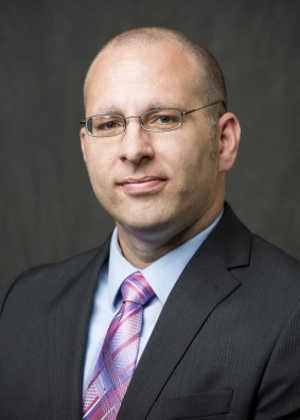
LUCERNE, Calif. – Marymount California University’s (MCU) Lakeside campus will offer two courses for audit-only this fall semester, with limited availability and by application.
Dr. Jonathan H. Westover will teach Entrepreneurship I (Bus 315) and Entrepreneurship for Social Change (Bus 415).
Entrepreneurship I explores the framework for the principles and practices necessary for the formation and development of a new enterprise.
Students will learn what investors look for when assessing a business opportunity.
Entrepreneurship for Social Change is an emerging field which asserts that the problems of the world cannot be solved by governments or economic markets.
To make real changes, entrepreneurs must act as stewards of their communities and undertake ventures which add social value.
This interdisciplinary course is targeted to those students who may consider a social entrepreneurial opportunity early in their careers, although the skills developed will benefit any career direction. This course will include a field project with significant, value-added social service.
To submit an application for audit status in Bus 315 or Bus 415, contact Michelle Scully, MCU Lakeside Executive Director, at
Westover is an Assistant Professor of Management and Associate Director of the Center for the Study of Ethics at Utah Valley University, specializing in international human resource management, organizational development, and community-engaged experiential learning and research.
“We are very excited to have Dr. Westover teaching at MCU Lakeside this semester,” said Scully. “His experience and vision bring a great energy to the campus. Our senior students will be actively involved in Bus 415 as pioneers in our first offering of this course and within this new and expanding field of entrepreneurship for social change. They will be working on senior capstone projects and many have already expressed their personal goal is to contribute to their community. We’ve established collaborative relationships for this course with local business people who share a vision for business combined with social change.
“Dr. Westover’s class will be interacting with the Bus 415 class at the main MCU campus in southern California, and we look forward to creating an intercampus dialogue between students. We are proud to offer this course as a topic which resonates with MCU’s vision statement of ‘challenging students to pursue lives of leadership and service,’” said Scully.
A recipient of numerous research, teaching, and service awards and fellowships early in his academic career, Westover recently was a Fulbright Scholar and is a regular visiting faculty member in other graduate business programs in the U.S., United Kingdom, Belarus, Poland, and China.
Prior to his doctoral studies in the sociology of work and organizations, comparative international sociology, and international political economy (University of Utah), Westover received his Bachelor of Science in sociology and Master's of Public Administration from the Marriott School of Management at Brigham Young University.
He also received graduate certificates in demography and higher education teaching during his time at the University of Utah.
Professor Westover has published extensively and his ongoing research examines issues of globalization, labor transformation, work quality characteristics and the determinants of job satisfaction cross-nationally.
MCU’s Lakeside campus is located at 3700 Country Club Drive in Lucerne, www.facebook.com/MarymountLakeside .
- Details
- Written by: Editor
BERKELEY, Calif. – Matt Terwilliger has been named Chief Revenue Officer of the Cal Alumni Association (CAA), UC Berkeley’s alumni association.
Terwilliger joined CAA in 2013 to lead business development efforts. As senior director of business development and strategic partnerships, he increased revenue by more than 30 percent per year, substantially increasing support to CAA’s wide array of programs and services for Cal alumni.
Through the establishment of new partnerships, such as Peet’s Coffee & Tea, Sungevity (a solar provider), and Nationwide Insurance, as well the renewal of existing relationships with a variety of other local and national organizations, Terwilliger has successfully broadened CAA’s affinity partner portfolio.
In his new position as chief revenue officer, he will oversee the majority of CAA’s revenue-generating departments, including Business Development, Cal Discoveries Travel, Alumni House Rentals and Membership.
“I can think of no one more deserving of this position than Matt Terwilliger,” said CAA Executive Director Jefferson Coombs, ’89. “Matt has worked tirelessly to advance the interests of our organization and those of the University. We are excited to see what Matt will achieve in this new role.”
Terwilliger received a B.S. in marketing in from Florida State University’s College of Business in 1997 and an M.S. in education there in 1999, but has since long been a part of the Cal family.
He spent more than a decade in Cal Athletics, where he ultimately served as an associate athletic director, overseeing the marketing, ticket sales, and brand management teams. Moreover, he maintained oversight of many Cal Athletics department business partnerships such as IMG College, Collegiate Licensing Company, and Gameday Merchandising.
During his time at Athletics, the department experienced tremendous revenue growth and won several national awards.
Terwilliger also sits on the Board of Directors of Visit Berkeley, the marketing organization for the city of Berkeley.
Founded in 1872 the Cal Alumni Association represents the entire UC Berkeley alumni community. CAA is a self-funded, non-profit organization which exists to serve and support the University of California, Berkeley through an array of programs and services, including scholarships, legislative advocacy, and the award-winning California magazine.
- Details
- Written by: Editor
California Attorney General Kamala Harris has issued a consumer alert to Californians based on an increased number of complaints regarding student loan debt consolidation scams received by the Attorney General’s Public Inquiry Unit.
Often times purporting to offer “student debt management” or “student loan consolidation” plans, private companies are charging borrowers upfront or monthly fees for free federal loan benefits.
These companies may claim that they have a special relationship with the Department of Education or that a special governmental loan consolidation will be ending soon and will urge students to use their services in obtaining student loan consolidation or relief.
Many times these companies will charge an initial application fee as well as a monthly service fee.
Consolidating federal student loans is free and can only be done through the Federal Direct Consolidation Program.
A direct consolidation loan will combine multiple federal student loans into one loan, resulting in a single monthly payment.
Most direct consolidation loans will be eligible for alternative payment plans, including income-driven repayment plans that can lower monthly payments according to income levels. Private education loans are not eligible for the Federal Direct Consolidation Program.
Applying for a direct consolidation loan can be completed online:
Step 1: Find out more information on the eligibility requirements, benefits, and potential warnings against federal loan consolidation at the Department of Education’s Federal Student Aid Web site here: https://studentaid.ed.gov/sa/repay-loans/consolidation .
Step 2: Make a list of all of your federal student loans. You can get a complete list of all of your federal loans here: https://www.nslds.ed.gov/npas/index.htm .
Step 3: Apply for a Direct Consolidation Loan by completing and submitting the free Federal Direct Consolidation Loan Application and Promissory Note found here: https://studentloans.gov/myDirectLoan/consolidationPaper.action .
Step 4: Choose and apply for a repayment plan option. If you are having trouble making your student loan payments, you may want to consider an income-driven repayment plan such as the Income Based Repayment Plan, Pay As You Earn Plan, Income Contingent Repayment Plan, or the Income Sensitive Repayment Plan: https://studentaid.ed.gov/sa/repay-loans/understand/plans . The online repayment estimator may be helpful in determining the best repayment plan for your needs: https://studentloans.gov/myDirectLoan/mobile/repayment/repaymentEstimator.action .
If you are a current servicemember with federal student loans:
As a current servicemember you may be eligible for special benefits and repayment options for your federal student loans. More information can be found here: https://studentaid.ed.gov/sa/sites/default/files/military-student-loan-benefits.pdf .
For more information on federal loan consolidation:
If you have questions about consolidating your federal student loans, you can contact the Department of Education’s Loan Consolidation Information Call Center at: 800-557-7392 or visit www.studentloans.gov/ .
To file a complaint about a possible student loan debt relief scam, contact the Attorney General’s Public Inquiry Unit, https://oag.ca.gov/contact/consumer-complaint-against-business-or-company , or the Consumer Financial Protection Bureau, http://www.consumerfinance.gov/complaint/ .
- Details
- Written by: Editor
SACRAMENTO – Community college students throughout California will soon have access to new technology that will help them identify their academic goals, develop structured, personalized plans for success and make informed course choices about their education.
“This represents another big step forward for our drive to improve student success,’’ said California Community Colleges Chancellor Brice W. Harris. “The education planning and degree audit platform now being deployed will help increase student completion rates by providing centralized technology tools for customized student services and education planning.”
Nine college districts will pilot the software beginning fall 2015 before it will roll out to the remaining colleges beginning in 2016.
Teams from the Education Planning Initiative and Hobsons, developer of the technology platform selected for the project, are working closely with college IT personnel and student service representatives to discuss technology planning and implementation for these pilot college campuses:
1. City College of San Francisco
2. Los Medanos College (Contra Costa Community College District)
3. Fresno City College (State Center Community College District)
4. Crafton Hills College (San Bernardino Community College District)
5. Mt. San Jacinto College
6. Santa Barbara City College
7. El Camino College
8. Victor Valley College
9. Santa Rosa Junior College
The platform will assist students in mapping out multi-year course plans to see a clear, streamlined path to reaching their education goals while balancing work and childcare schedules, financial concerns and other challenges.
In addition, the platform helps community colleges support student success and completion rates by breaking down communications silos on campus, allowing instructors, academic counselors, tutors and others to quickly connect with the student and with each other to keep students on track toward graduation.
“Students, faculty and staff will have access at various secure levels to design and monitor completion progress,” said Norberto Quiroz, a counselor at Santa Rosa Junior College and a member of the Education Planning Initiative steering committee. “Students will have access to counseling at the tip of their cursor, and counselors will have the ability to create short and long term comprehensive planning that will point toward students’ stated goals.”
The Education Planning Initiative (EPI) is a project of the California Community Colleges Chancellor’s Office.
As part of a systemwide Student Success Initiative, the EPI’s mission is to increase student completion rates by providing centralized technological tools for student services and education planning that customize information and activities for individual student needs.
For more information about the initiative, visit http://cccedplan.org .
The California Community Colleges is the largest system of higher education in the nation composed of 72 districts and 113 colleges serving 2.1 million students per year. Community colleges supply workforce training, basic skills education and prepare students for transfer to four-year institutions.
The Chancellor’s Office provides leadership, advocacy and support under the direction of the Board of Governors of the California Community Colleges.
For more information about the community colleges, please visit http://californiacommunitycolleges.cccco.edu/ , https://www.facebook.com/CACommColleges or https://twitter.com/CalCommColleges .