 How to resolve AdBlock issue?
Education
- Details
- Written by: Editor
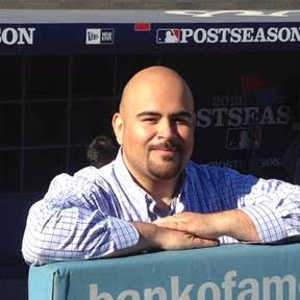
Velasco was selected from a competitive pool of highly qualified candidates, after an extensive search, to advocate for the students, provide visionary leadership, and strengthen our services to students.
Superintendent/President Arturo Reyes noted Velasco’s higher education student services experience, academic preparation, commitment to student equity and social justice, and his integrity as primary qualities in recommending him for this vital role at Mendocino College.
“Mr. Velasco is a positive force in our community and at the college,” said Reyes. “His enthusiastic dedication to student access, success, and completion make him an excellent fit for the vice president role at our institution. I am confident he will serve all our students well! We are thrilled to have him join the executive leadership team at Mendocino College.”
Velasco has worked in higher education for more than seven years. He most recently served as the interim dean of student services at Mendocino College and previously held the director of financial aid position.
Since January 2015 he has been serving in these two capacities where he oversees multiple student services departments and special programs.
Prior to joining Mendocino College, Velasco worked at Arizona State University in the Financial Aid and Scholarship Services Office as assistant director, coordinator, financial aid counselor and office specialist.
At Arizona State University he was instrumental in the streamlining of customer service efforts and the implementation of a number of university college initiatives.
A product of a single-parent household and a first-generation college student, Velasco earned an AA in liberal arts from Santa Monica College.
As a proud graduate of the California community college system, he then transferred to Columbia University where he earned a bachelor’s degree in history. Most recently he earned a Master of Public Administration degree from Arizona State University.
He also was a member of Leadership Mendocino’s 23rd class, is an active member of the Rotary Club of South Ukiah, and has been instrumental in forming the local “Friends of the Rotary” program.
Velasco, his wife Amanda and their son currently live in Ukiah.
- Details
- Written by: Editor
Titled “Vision for Success: Strengthening the California Community Colleges to Meet California’s Needs,” the comprehensive report articulates a set of goals and commitments developed by a team of community college experts who spent months reviewing research and gathering input from a wide array of policy makers, employers, college faculty and staff, social justice advocates and everyday Californians. A virtual town hall yielded more than 550 comments and suggestions.
Vision for Success makes clear that a focus on getting every student to his or her defined objective will serve as the “North Star” guiding all reform efforts at every level.
“One in five Americans attending a community college are enrolled in a California community college, which makes it imperative that we remain innovative and always put students first,” said Board of Governors President Cecilia V. Estolano. “We can do better, we must do better, and the Vision for Success is a first step in a making sure that we do.”
Goals in the Vision for Success are:
• Increasing by 35 percent the number of California community college students transferring annually to a UC or CSU campus. The Public Policy Institute of California says this benchmark must be reached if California is to meet future workforce demands for employees with bachelor’s degrees. The Vision for Success calls for reaching this goal by mid-2022.
• Boosting by 2022 the number of students completing career education programs who find a job in their field of study from the current 60 percent to 69 percent.
• Increasing by at least 20 percent the number of students annually who earn associate degrees, credentials, certificates or acquire specific skill sets that prepare them for an in- demand job. This goal, set for 2022, is needed to meet future workforce demand in California, as analyzed by the Centers of Excellence for Labor Market Research.
• Significantly reducing the average number of units accumulated by students who earn an associate degree from approximately 87 to 79. Most associate degree require 60 units, and reducing the average number of units-to-degree will help students reach their educational goals sooner and at less cost.
• Reducing achievement gaps by 40 percent within 5 years and fully closing those achievement gaps for good within 10 years.
“The California Community Colleges system is the state’s engine of social and economic mobility, but our state needs us to step up the pace of improvement,” said Chancellor Eloy Ortiz Oakley. “They know that today’s students are tomorrow’s workforce, and leaders are rightfully concerned that too few students are making it through college and achieving their dreams. Our Vision for Success provides an honest look at our performance as a system, both where we are excelling and where we are falling short, while setting out very clear goals for improvement.”
Achieving the goals set forth in Vision for Success will require a set of seven commitments that taken together can move the college system in the right direction to reach those objectives.
Focusing relentlessly on students’ end goals tops the list of commitments and serves as the North Star guiding the California Community Colleges system.
Critical in meeting this commitment is the Guided Pathways initiative, a five-year, $150-million project aimed at engaging administrators, faculty and staff to enact comprehensive changes so that all courses are designed as part of a coherent pathway with a clear outcome.
Other commitments needed to realize the goals set forth in Vision for Success include focusing more intently on the student experience when designing programs and services; pairing high expectations with high support, including addressing gaps in basic skills before students arrive at a college campus; putting data analysis at the center of the program-review process; and taking ownership of goals and performance.
The Vision for Success was developed by the Success Center for California Community Colleges, a hub for student success projects housed at the Foundation for California Community Colleges. The report was created through support from The James Irvine Foundation, the Bill & Melinda Gates Foundation and College Futures Foundation.
The California Community Colleges is the largest system of higher education in the nation composed of 72 districts and 114 colleges serving 2.1 million students per year.
For more information about the community colleges, please visit http://californiacommunitycolleges.cccco.edu, https://www.facebook.com/CACommColleges or https://twitter.com/CalCommColleges.
- Details
- Written by: Editor
In a letter to Education Secretary Betsy DeVos, Attorney General Becerra and 20 attorneys general underscore that the Borrower Defense Rule, which is now in limbo, would have provided a streamlined loan forgiveness process for students who have been defrauded by for-profit universities.
The second rule, the Gainful Employment Rule, would have ensured that students attending vocational programs receive an education that, at a minimum, will allow them to repay their federal student loans.
Secretary DeVos announced last month that the Department would refuse to implement both of these rules as part of a “regulatory reset” while looking to develop alternative regulations that would likely leave victimized borrowers with far les s protection.
“Secretary DeVos’ action shows what side she is on, and it is clearly not with our students,” said Attorney General Becerra. “Unscrupulous for-profit purveyors of a sham college education are celebrating and the American Dream is playing defense. As a Member of Congress, I supported reforms to the student lending system and defended regulations that protect student loan borrowers. As Attorney General, I will continue doing everything in my power to ensure that all who seek a higher education can do so without having to worry about the motives of for-profit schools.”
Becerra also challenged the department earlier this month for unlawfully delaying the implementation of the Borrower Defense Regulations, and prior to that, he urged Secretary DeVos to expedite loan forgiveness for students defrauded by Corinthian Colleges, among other actions.
The California Attorney General’s Office also led the charge against California-based Corinthian Colleges for targeting low-income, vulnerable individuals through false advertisements that misrepresented job placement rates and the value of school programs, obtaining a $1.1 billion judgement against Corinthian on March 26, 2016.
“These rules are the products of a significant amount of time and effort on the part of numerous stakeholders and the department,” write the attorneys general in the letter to Secretary DeVos. “Simply abandoning them is both a waste of departmental resources and an injustice for students. For all of the reasons discussed herein, we call on the department to fulfill its responsibilities to students and taxpayers and reconsider its decision to revoke and replace these critical protections.”
- Details
- Written by: Elizabeth Larson
The session will take place beginning at 6:30 p.m. Tuesday, July 18, at Best Western El Grande Inn at 15135 Lakeshore Drive in Clearlake.
The school, which has opened enrollment for the 2017-18 school year, gives students in Sonoma, Napa, Lake, Mendocino, Colusa, Glenn and Yolo counties the flexibility to learn at home with a curriculum that meets rigorous state education standards.
The information session will provide families with an opportunity to meet with Connections Academy @ North Bay instructors and staff and thoroughly explore the school’s program and curriculum.
Other topics to be covered include how teachers interact with students in the virtual environment, personalized learning opportunities including options for accelerated learning and gifted programs, college preparation, socialization, the role of the parent or other Learning Coach, and the use of technology.
Families unable to attend this session are encouraged to attend an online information sessions.
For a full list of online information sessions, please visit http://www.connectionsacademy.com/california-online-north-bay/events.aspx.