 How to resolve AdBlock issue?
Education
- Details
- Written by: Elizabeth Larson
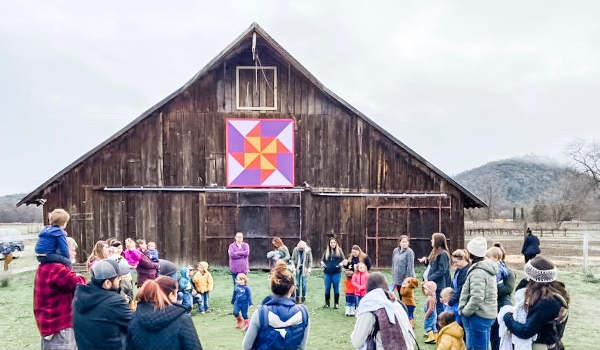
KELSEYVILLE, Calif. – On Friday, Dec. 11, local nonprofit Shade Canyon School announced its goal to open a Waldorf-inspired public charter school in Kelseyville, seeking to broaden the tuition-free education options available to Lake County residents.
Shade Canyon will submit a petition to the Kelseyville Unified School District Board to be authorized as a charter school in the district.
The school plans to open in the fall of 2022 if approved. In its first year, Shade Canyon would include transitional kindergarten, kindergarten and first grade, then add one grade per year until the program spans grades TK-8.
Shade Canyon co-founder and mother of two, Savannah Mitchell, a lifelong Lake County resident, is a California-credentialed, Waldorf-trained teacher with a vision.
“When I first encountered Waldorf, I saw an education that I wish I’d had as a child,” said Mitchell. “I’ve dreamed for years of bringing that style of education to the families in my home county.”
Shade Canyon School’s founders are pursuing public charter status to ensure all interested Lake County families could have access to Waldorf-inspired education.
A time-tested model, Waldorf is the basis for over 1,000 schools worldwide. Although California contains 49 Waldorf-style schools (including two options in Ukiah, one in Napa, and a handful in Sonoma County), none are within easy driving distance for Lake County families, and private school tuition is expensive.
Waldorf education addresses the whole child: head, heart and hands. Classes meet each child in their current developmental phase, starting with play-based learning in the early grades. Intentional relationships between teachers and students form the foundation of learning. Many lessons are held outdoors, with hands-on experiences that engage all the senses. The educational model fosters dynamic thinking, creativity, and compassion – encouraging children to contribute their unique gifts to the world.
Morgan Chinnock, another co-founder, hopes Shade Canyon will offer her young children a return to the simplicity of childhood in the midst of a fast-paced, digitally-dominated world.
“Countering our culture’s one-sighted race to achievement, Shade Canyon springs from the conviction that as children are allowed to unfold at their natural pace in a supportive setting, they will grow and achieve in excellent, creative, and internally-driven ways,” Chinnock said.
Shade Canyon has already gathered community and kindled joy at their outdoor playgroups for families with preschoolers at Peace & Plenty Farm. While their playgroups are temporarily paused due to COVID-19, Shade Canyon continues to connect with the community through virtual events on their social pages.
In addition to founders Mitchell and Chinnock, Shade Canyon is supported by board members Nancy Lecourt, retired English Department chair and vice president of academic administration at Pacific Union College; Melinda Price, co-owner of Peace & Plenty Farm; and Monica Ashley, specialty Waldorf teacher and owner of Circle of Hands Waldorf toy store.
The group is currently completing its petition and invites Lake County families and community members to learn more and take their interest survey at www.ShadeCanyon.org.
- Details
- Written by: Elizabeth Larson
More than 120 awards totaling nearly $300,000 are being made available through PG&E’s employee resource group, or ERG, and engineering network group, or ENG, scholarships.
These scholarships are awarded annually to help offset the cost of higher education. ERG and ENG scholarship winners will receive awards ranging from $1,000 to $6,000 for exemplary scholastic achievement and community leadership.
PG&E ERG and ENG scholarship information, including criteria and applications, is available on PG&E’s website.
To be considered for a scholarship, all applications must be submitted by Feb. 12, 2021.
“Many of our ERG scholarship recipients are the first in their families to attend college. They will be tomorrow’s leaders and innovators. Our ERG scholarships take on even more importance this year because some of our applicants could’ve experienced financial challenges due to COVID-19. We’re proud to invest in these promising young people,” said Mary King, PG&E vice president of human resources and chief diversity officer.
“It’s more than just funds for tuition. Many of our applicants are looking to ensure their families wouldn’t have to make significant financial sacrifices so they could pursue college. These students are more than just straight A’s and perfect test scores. They’re inspiring members of our community destined to accomplish great things,” said Alyssa Piring, a PG&E gas program manager who previously received an ERG scholarship.
Since 1989, PG&E’s ERGs and ENGs have awarded more than $5 million in scholarships to thousands of recipients. The funds are raised totally through employee donations, employee fundraising events and Campaign for the Community, the company’s employee giving program.
Nearly 6,000 PG&E employees belong to the ERGs and ENGs. Each group helps further the company’s commitment to serving its communities and growing employee engagement.
PG&E’s ERG and ENG scholarships are available through these 13 groups:
– Access Network (individuals with disabilities);
– Asian;
– Black;
– Latino;
– Legacy (tenured employees);
– MEENA (Middle East, Europe and North Africa);
– National Society of Black Engineers (STEM career employees);
– NuEnergy (newer employees);
– PrideNetwork (LGBT employees);
– Samahan (Filipino);
– Society for Hispanic Professional Engineers (STEM career employees);
– Veterans;
– Women’s Network.
In addition to the PG&E scholarships, the Pacific Service Employees Association, or PSEA, a nonprofit mutual benefit organization serving PG&E employees and retirees, also provides scholarships for dependents of company employees.
- Details
- Written by: Elizabeth Larson
The plan will help the state better understand the crisis families, children and early learning and care providers are facing amid the COVID-19 pandemic and identifies key policy goals to ensure that all California children can thrive physically, emotionally and educationally in their early years through access to high-quality early learning and care programs.
These goals include universal preschool, enhanced workforce development and equitable career pathways for educators and caregivers, and funding reforms to promote equitable access to high-quality early learning and care.
“Every child in California deserves a shot at opportunity,” said Gov. Newsom. “By investing in the development and learning needs of our kids, with a focus on equity, we are investing in the future of our state. The Master Plan for Early Learning and Care translates our aspirations into an actionable roadmap – one that centers on the success of our youngest Californians, their families and the communities and caregivers that lift them up.”
From the start of the pandemic in March through the end of October, the Department of Social Services estimates 2,030 family child care homes and 390 child care centers have closed permanently, making it harder for families to work and care for their children.
In light of this, the plan recommends the first steps seek to provide relief to parents, quality care for children and stability to child care providers as the state rebuilds an early learning and care system weakened by COVID-19. Now more than ever it is clear how important child care is to the state’s overall economic recovery.
Released by the California Health and Human Services Agency, the Plan was a collaboration of a number of experts and practitioners from WestEd, the RAND Corp., Child Trends, American Institutes for Research, Glen Price Group, the Neimand Collaborative, Low Income Investment Fund, Stanford University and SparkPlace.
In addition, the Social Policy Research Associates and Parent Voices were instrumental in engaging families pre-COVID for this project.
The Early Childhood Policy Council also provided important input such as access to 3,000 public participants, including over 300 Spanish speakers, and joining various council meetings and discussions throughout this year.
The plan builds upon the Assembly Blue Ribbon Commission report and others and is rooted in the understanding that access to high-quality early learning and care improves outcomes for all children and families and helps address racial and economic inequities. The plan outlines specific recommendations for creating a comprehensive, family-centric system driven by equity, including:
– Unifying programs for infants and toddlers and improving access to Paid Family Leave;
– Providing universal preschool for all 4-year-olds and income eligible 3-year-olds and those with disabilities;
– Prohibiting suspensions and expulsions in subsidized early learning programs, which has disproportionately impacted young Black boys;
– Supporting the development of dual language learners who represent 60 percent of California’s young children;
– Building a licensure and workforce development system based on the knowledge and skills of the workforce that supports and rewards the workforce;
– Implementing funding reform to address regional cost of care differences, help sustain a high-quality workforce and allow for sliding fees for more private-pay families to participate;
– Growing shared services networks to support child care providers and help their small businesses grow; and
– Improving data sharing to advance equity, efficiency and continuous improvement.
“The Master Plan for Early Learning and Care unlocks the innovative spirit of California, helping us create a comprehensive early learning and care system that produces big returns in better education, health and economic outcomes,” said Dr. Mark Ghaly, secretary of California Health and Human Services. “Children, families, the future for our state – everyone wins when we build a California for All Kids.”
Transforming California’s early childhood system will take time, funding and partnerships with the federal government, philanthropy and business leaders.
California’s philanthropic community has long sought a comprehensive early learning and care system. In fact, $2.9 million in public-private partnership funding has already been committed, including investments from the Heising-Simons Foundation, the David and Lucile Packard Foundation, First 5 California, the Silver Giving Foundation and the Ballmer Group.
The announcement follows previous investments made to support the child care needs of families and support the child care workforce. The governor, in partnership with the Legislature, has allocated over $500 million in federal funds to increase access to child care vouchers, waive family fees and support the child care workforce with PPE and additional funding for non-operation days and increased costs for caring for school-aged children. New federal funds are critical to help the state recover.
In addition, a new administration in Washington presents an opportunity to increase funding and accelerate implementation. California’s research-based Master Plan aligns with the early care and learning proposals made by President-elect Biden during his campaign. Recommendations from the Master Plan position the state to implement a wide range of anticipated federal initiatives related to state expansion of high-quality early learning and care.
The Master Plan for Early Learning and Care can be read here.
For more information, including supplemental research and policy briefs, visit the interactive Master Plan for Early Learning and Care website at https://californiaforallkids.chhs.ca.gov.
- Details
- Written by: Elizabeth Larson
Parents and students have faced new challenges as school districts moved to incorporate remote learning as part of curriculum delivery during a year marked by the unprecedented coronavirus pandemic.
A growing number of families are participating in Mediacom’s Connect2Compete program which helps income-challenged families connect to low-cost home internet service. Currently, 94 student families in Lake County use C2C internet to meet online needs for their children’s education.
“School leaders continually face difficult decisions as they work to keep students and teachers safe, while also ensuring equity so that all students continue to learn,” said Mediacom’s Senior Director of Area Operations Shawn Swatos.
Connect2Compete is available in all areas where Mediacom delivers broadband service. The main criterion for eligibility is that at least one child in the household qualifies for the free or reduced-price school lunch program.
The flat-fee cost for a C2C internet subscription is $9.95 per month. Mediacom waives all fees associated with installation and modem rental. Participants are not required to sign a contract or pay a deposit.
“Mediacom made a commitment to invest company resources to help low-income families gain the connectivity they need to support their children’s education,” Swatosh said. “Today, in a COVID-19 world, a connection to our fiber-based network is more essential than ever, and our broadband technicians take pride in every installation that brings Connect2Compete to local students in Lake County and elsewhere.”
An online site provides information and a sign-up form at http://mediacomc2c.com. Families can also sign-up by calling C2C service representatives at 855-904-2225.