 How to resolve AdBlock issue?
Education
- Details
- Written by: Editor
MIDDLETOWN, Calif. – The Middletown Area Merchants Association (MAMA) will hold its annual Teachers' Appreciation Night on Tuesday, Sept. 18, from 5:30 p.m. to 7:30 p.m.
The event will be held in the multi-purpose room on the Middletown High School campus, 20932 Big Canyon Road.
The Teachers' Appreciation Night is a chance for the community to say “thank you” to all area teachers for what they do for local children.
There will be a potluck supper and MAMA will prepare goodie bags of gifts and special offers from local businesses to give to the teachers.
Plans are to prepare 100 goodie bags. “Goodies” could include things like a $5 gift card to your business or school supplies of any kind.
If you would like to participate, please have your items to Middletown Florist & Gifts by Wednesday, Sept. 12.
For more information contact MAMA at
- Details
- Written by: Editor
Outreach programs that offer a taste of real-world science and pair secondary students with enthusiastic young researchers are key to promoting careers in science and technology, according to University of British Columbia researchers.
In a paper published this week in PloS Computational Biology, UBC researchers document their work on the Genomics Field Trip Program hosted at the Michael Smith Laboratories (MSL).
Joanne Fox, Jennifer McQueen and Jody Wright outline the benefits of research-based field trips, offering a blueprint for designing science outreach programs.
“Genomics is important because students will deal with challenging questions and they need to be informed and science-literate,” says Fox, a faculty member at the Michael Smith Laboratories. “For example, they may have their personal genome sequence and they may have to decide who has access to that information.”
The Genomics Field Trip program encourages exploration of the sciences through a full day genomics experience which takes place at the MSL laboratories.
Program instructors are typically UBC graduate students who benefit from the experience by developing their ability to communicate scientific ideas to the general public.
They also develop skills in lesson design and delivery, allowing them to enhance their instructional skills, something that does not always occur in teaching assistantship positions.
Fox hopes the success of the Genomics Field Trip Program will inspire other institutions to develop similar programs.
The recommendations included in her paper can be used as a blueprint for science programs and an online genomics toolkit provides valuable information for lesson plans.
“This type of program helps graduate students remember why science is so exciting, and in turn inspires the next generation of scientists,” Fox explained.
- Details
- Written by: Editor
Less than half of US schools address pandemic preparedness in their school plan, and only 40 percent have updated their school plan since the 2009 H1N1 pandemic, according to a study published in the September issue of the American Journal of Infection Control, the official publication of the Association for Professionals in Infection Control and Epidemiology (APIC).
A team of researchers from Saint Louis University collected and analyzed survey responses from approximately 2,000 school nurses serving primarily elementary, middle and high schools in 26 states to ascertain whether schools were prepared for another pandemic, particularly focusing on infectious disease disasters.
Pandemic preparedness is critical not only because of ramifications of the 2009 H1N1 pandemic, but also because of the threat of a future pandemic or an outbreak of an emerging infectious disease, such as severe acute respiratory syndrome.
School preparedness for all types of disasters, including biological events, is mandated by the U.S. Department of Education.
The team found that less than one-third of schools (29.7 percent) stockpile any personal protective equipment, and nearly a quarter (22.9 percent) have no staff members trained on the school’s disaster plan.
One-third (33.8 percent) of schools report training students on infection prevention less than once per year. Only 1.5 percent of schools report stockpiling medication in anticipation of another pandemic.
On a positive note, although only 2.2 percent of schools require school nurses to receive the annual influenza vaccine, the majority (73.7 percent) reported having been vaccinated for the 2010-11 season.
“Findings from this study suggest that most schools are even less prepared for an infectious disease disaster, such as a pandemic, compared to a natural disaster or other type of event,” said Terri Rebmann, PhD, RN, CIC, lead study author and associate professor of Environmental and Occupational Health at the Saint Louis University School of Public Health. “Despite the recent H1N1 pandemic that disproportionately affected school-age children, many schools do not have plans to adequately address a future biological event.”
The researchers conclude that U.S. schools must continue to address gaps in infectious disease emergency planning, including developing better plans, coordinating these plans with local and regional disaster response agency plans, and testing the plan through disaster drills and exercises.
Whenever possible, school nurses should be involved in these planning efforts, as health care professionals can best inform school administrators about unique aspects of pandemic planning that need to be included in school disaster plans.
- Details
- Written by: Editor
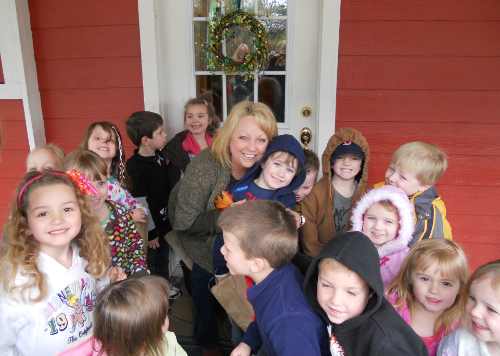
LAKE COUNTY, Calif. – While nearly 10,000 children in grades kindergarten through 12 head back to school in Lake County this month, hundreds of early childhood educators are gearing up to prepare our younger students for future school success.
While preschool is not considered part of the public education system in California, a vast body of research demonstrates that early education matters.
Early childhood provides a window of opportunity to dramatically shape a child’s brain when it is rapidly developing, and quality early childhood programs help children develop the linguistic, cognitive, social and emotional building blocks that help them succeed in school.
Choosing the right early education experience for your child can be confusing, as there are many different options.
The following are preschool options available in Lake County.
Head Start
Head Start has four sites in Lake County: Lakeport, Upper Lake and two in Clearlake. Head Start serves children 3-5 years of age in a full day preschool setting. The program is free for income-qualifying families. To find out about openings and the application process, call 707-462-3403, extension 121.
Although not a preschool program, Early Head Start has one Lake County site in Lakeport. The program provides care for children 6 weeks to 3 years of age in a full-day, year-round child development center. The federally funded program is free for those who qualify.
Early Head Start also offers a home-base option for children 0-3 and expectant mothers. Weekly home visits are provided to assist parents with educational information, activities, community resources and services. For more information on either program or to obtain an application, call 707-262-1379.
State preschools
Early Connection Preschools
Lake County Office of Education offers part-day preschool programs, called Early Connection Preschools on or near several elementary schools throughout Lake County: Middletown, Lakeport, Kelseyville, Lower Lake, Clearlake, and Lucerne.
Early Connection Preschools serve children 4-5 years of age in a part-day preschool setting. The program is free or reduced for income-qualifying families – depending on income level requirements.
To find out more about the program, openings and the application process, call 707-263-4563, or visit www.lakecoe.org > For Students and Parents > Child Development Programs, where you can also find information on the after school programs offered at school sites through Lake County Office of Education.
The Learning House
The Learning House offers a full day state preschool program in a beautiful, yet convenient, rural setting in Clearlake. The program is free or reduced for income-qualifying families – depending on income level requirements. The Learning House also has programs for infants and toddlers, as well as after school. To find out more about the program, openings and the application process, call 707-995-2076.
Yuba Child Development Center
Yuba Child Development center offers a part-day state preschool program conveniently located onsite at the Yuba College Clearlake campus. The program is offered 8:30 a.m. to noon, Monday through Friday, and is open to student families and non-student families alike. The program is free or reduced for income-qualifying families – depending on income level requirements. To find out more about the program, openings and the application process, call 707-995-7909.
Private centers
There are a number of private preschool programs available throughout Lake County as well, including:
Coyote Valley Preschool in Hidden Valley Lake; Alphabet Soup Preschool in Middletown, Sugar Pine Preschool in Cobb; and Lakeport Christian Center Preschool in Lakeport. Private centers often cater to the needs of their unique communities, and can offer very special programs for families and their children. Programs vary depending on the center. To find out about the private centers listed above, or other programs in your area, contact North Coast Opportunities, Resource and Referral at 707-263-4688, Extension 13.
Family child care
Lake County is also home to a variety of family child care programs. Rates and services vary per location. Many family child care homes offer dynamic programs and enhanced flexibility for families. For a list of family child care homes that meet your needs, contact North Coast Opportunities, Resource and Referral at 707-263-4688, Extension 13.
Transitional Kindergarten
Transitional Kindergarten is a new program that offers children with birthdays between September and December a developmentally appropriate curriculum aligned with kindergarten standards, taught by credentialed teachers at elementary schools. Transitional Kindergarten was created by a new California law called the Kindergarten Readiness Act. Districts have three years to fully implement the program, and current programs vary throughout the county. For more information on Transitional Kindergarten and the specific program in your district, contact Shelly Mascari at Lake County Office of Education at 707-262-4162.
According to research reported by Science Magazine and Preschool California, children who attend high quality preschool programs score better on reading and math achievement tests, are less likely to be placed in special education, are less likely to be held back a grade, and are more likely to graduate from high school. If you would like more information on child care in Lake County, including how to identify a quality child care program, visit the Lake County Child Care Planning Council at www.lakecountychildcareplanning.com .