 How to resolve AdBlock issue?
Community
- Details
- Written by: Redbud Audubon Society

LAKE COUNTY, Calif. — Special guest Tiana Williams-Claussen will talk about reintroducing California condors to their historical Northern California and Pacific Northwest range at Redbud Audubon’s Zoom program on Thursday, Feb. 17, at 7 p.m.
The Yurok Tribe in Northern California has been preparing over 14 years to bring condors, this nation’s largest bird, home to a historic part of its range after a century-long absence.
Not only will this restore an apex species into the region’s ecological systems, but it will promote the Yurok Tribe’s reconnection to this amazing creature that is sacred to the tribe and has great cultural importance.
Williams-Claussen, director of the Yurok Tribe Wildlife Department, will briefly introduce the incredible Prey-go-neesh — the California condor — and describe the traditions guiding the Yurok Tribe's efforts to bring condors back to the tribal ancestral territory.
She will explain the tribe’s step-by-step progress over 14 years to develop collaborative partnerships with the National Park Service, the U.S. Fish and Wildlife Service, the Ventana Wildlife Society, multiple zoos and local hunters.
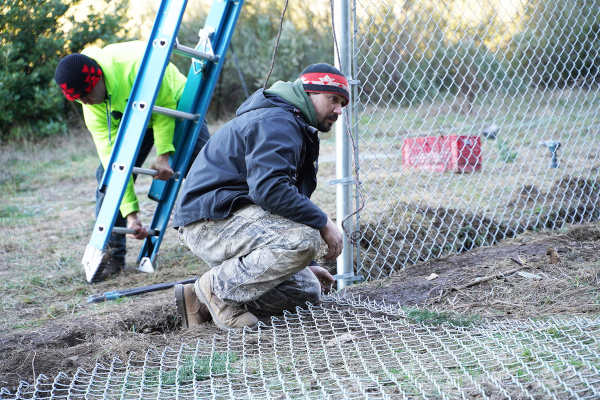
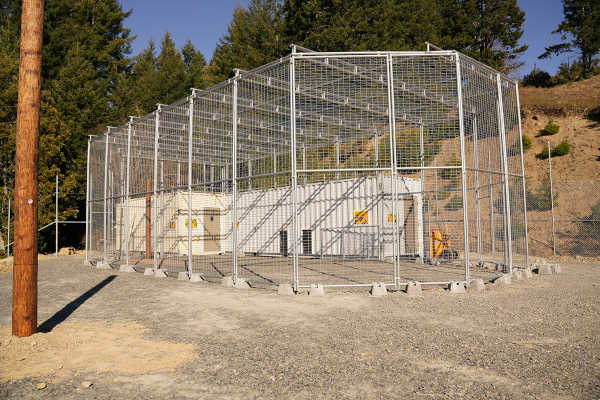
With the necessary facilities construction nearing completion, the tribe hopes to release the first four condors this spring. In closing her talk, she will describe the Yurok Tribe’s approach for reintegrating condors once they are released.
Williams-Claussen is a Yurok tribal member from the village of Wehl-kwew and was raised in Yurok ancestral territory.
She received her Bachelor of Arts degree in biochemical sciences from Harvard University, after which she returned to serve her tribe. She was instrumental in the formation of the Yurok Tribe Wildlife Department in 2008 and currently serves as department director.
Her native upbringing and formal education combine to allow her to bridge the gap between Yurok traditional understandings of the world and those rooted in Western science. She is working toward a cohesive, well-informed approach to holistic ecosystem management.
To register for this fascinating presentation, go to www.redbudaudubon.org and click on the registration link on the homepage of the website. The link to join the presentation will be sent to you the day of the program. In order to secure your spot, please register by Wednesday, Feb. 16.
- Details
- Written by: Western Region Town Hall
The meeting will begin at 5:30 p.m. at the Habematolel community center, 9460 Main St. in Upper Lake.
Everyone is welcome to attend.
- Details
- Written by: Lake County Registrar of Voters Office
The first day a candidate may file for office is Monday, Feb. 14, and the last day is Friday, March 11, at 5 p.m.
Official declaration of candidacy forms for eligible candidates desiring to file may be obtained from the Lake County Registrar of Voters office in person at 325 N. Forbes St. in Lakeport during regular office hours of 8 a.m. to 5 p.m. Monday through Friday; closed County holidays and weekends.
For more information call the Registrar of Voters Office at 707-263-2372 or toll-free at 888-235-6730.
- Details
- Written by: California Citizens Redistricting Commission
Article 21, section 3(b)(2) of the California Constitution states that any registered voter in this state may file a petition for a writ of mandate or writ of prohibition, within 45 days after the commission has certified a final map to the Secretary of State, or SOS.
Because maps were certified to the SOS on Dec. 27, 2021, the deadline to file a lawsuit was Feb. 10, 2022, at midnight.
“We're glad to cross this first legal threshold to effectuate the people’s maps,” said Commission Chair Russell Yee. “The absence of a state lawsuit challenging these maps is a testament to the effectiveness of California's open, publicly accessible redistricting process and the design of its independent redistricting commission. We worked hard to apply the constitutional redistricting criteria and consider testimony from throughout the state, especially from minority communities. While the maps do not please everyone, we believe they are fair and equitable. We would have confidently defended these maps in court but are thankful we now won't need to.”
The possibility of other legal challenges remains. Article 21, section 2(i) of the state Constitution states that the map enactment date — Dec. 27 — triggers the 90-day period for a referendum petition to be filed. In the absence of a sufficient and timely referendum petition being filed, the maps would otherwise become “effective” 90 days after enactment/certification, or March 27.
On Monday, the U.S. Supreme Court reinstated a congressional map in Alabama that a lower court ruled hurt Black voters.
The state Constitution's legal challenge deadline does not apply to any challenge that might be filed in federal court alleging a violation of the U.S. Constitution or the federal Voting Rights Act.
Every 10 years, after the federal government publishes updated census information, California must redraw the boundaries of its electoral districts so that the state’s population is evenly allocated among the new districts.
In 2008, California voters passed the Voters First Act, authorizing the creation of the independent California Citizens Redistricting Commission to draw new State Senate, State Assembly, and State Board of Equalization district lines. In 2010, the Voters First Act for Congress gave the Commission the responsibility of drawing new Congressional districts following every census.
For more information, please visit www.WeDrawTheLinesCA.org.