 How to resolve AdBlock issue?
Opinion
- Details
- Written by: Jane E. Kirtley

Sunshine Week 2009 takes place from March 15 through 21. The annual event is about the public's right to know what its government is doing, and why. Sunshine Week seeks to enlighten and empower people to play an active role in their government at all levels, and to give them access to information that makes their lives better and their communities stronger. Lake County News will present guest commentaries and news stories about open government as part of this year's Sunshine Week.
Do you want to know what your government is up to? What it's doing with your tax dollars? When it will propose a new health care policy? Where it's sending young men and women to fight? How it's regulating banks and bailing out the financial industry? Why children in our public schools aren't performing as well as their counterparts in other countries?
Of course you do. It's your right to know these things. Dozens of state and federal laws say so.
But governments have a million excuses for resisting those laws. They’ll say that disclosing information will endanger national security. Or invade someone's privacy. Or make it tougher to compete in the global marketplace.
Some of those excuses may sound pretty reasonable. Once in a while, they're probably justified.
But most of us are at least a little bit skeptical when the government says "No, you can't have that information." The government's business is the public's business. Unless there's a very good reason, we expect government to tell us what it's doing, and how it's doing it. In other words, we expect it to be accountable to us. After all, we're paying for it.
The Bush administration didn't see it that way. It expanded government's power to conceal more and more information about its operations, while increasing its authority to collect more and more information about each of us. Many state and local governments followed suit. Secrecy became the order of the day.
President Obama says he wants to change all that. On his first day in office, he issued a series of policy statements declaring "a new era of openness." He's promised that "transparency and the rule of law will be touchstones of this presidency." He's pledged to use the Internet to encourage the public to help create government policy.
Whether you voted for Obama or not, this is good news. If you're a supporter, you'll expect Obama to maintain the two-way flow of information that characterized his presidential campaign. If you’re not, you'll want to keep tabs on everything his administration does. These policies will help make that possible.
Everything won't change overnight. Undoing years of secrecy will take time, and some of Obama's initiatives have already prompted both praise and criticism. Defense Secretary Robert Gates' announcement in February that he would revise the 1991 policy forbidding the news media to photograph flag-draped caskets containing military remains arriving at Dover Air Force base is just one example.
Some view the new policy as a way to honor those who have made the ultimate sacrifice for their country, and to remind the public of the cost of war. Others contend that the media's presence will distress surviving family members unnecessarily, and encourage the use of the images for political purposes.
Similar debates will continue on the state and local level, too. Should the public have access to concealed weapons permits? Should government employees' e-mails be subject to disclosure? Or would this violate individuals’ privacy?
Different states will answer these questions in different ways. But the president is right: we should presume that government information is open to all of us, unless there's a very good reason why it shouldn't be. For much too long, government officials have acted as if this decision belongs to them alone. They concluded that what they're doing is none of our business, and told us to get lost.
The president's directives have sent a clear message. It's time to open the doors of government, and let the public in. And we won't settle for anything less.
Jane E. Kirtley is the Silha Professor of Media Ethics and Law at the University of Minnesota. An attorney and former journalist, she was the executive director of The Reporters Committee for Freedom of the Press from 1985-1999.
{mos_sb_discuss:4}
- Details
- Written by: Sen. Patrick Leahy
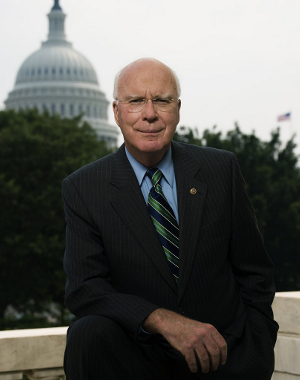
Sunshine Week 2009 takes place from March 15 through 21. The annual event is about the public's right to know what its government is doing, and why. Sunshine Week seeks to enlighten and empower people to play an active role in their government at all levels, and to give them access to information that makes their lives better and their communities stronger. Lake County News will present guest commentaries and news stories about open government as part of this year's Sunshine Week.
There is reason to hope that an era of greater openness is coming. As we mark this fifth annual Sunshine Week, some of the recent clouds obstructing the public's right to know are giving way to more transparency. The American people are beginning to get a better glimpse of how their government works — or sometimes doesn't work so well.
Already there is some good news for the Freedom of Information Act (FOIA), the law that gives life to the public's right to know. Within hours of taking the oath of office, President Obama issued a historic directive to strengthen FOIA, turning a page after the overreaching secrecy of the last administration. He issued presidential memoranda on FOIA and Transparency and Open Government that will promote accountability and transparency in government, along with an Executive Order on Presidential Records that will give the American people greater access to presidential records. Under the leadership of the new attorney general, Eric Holder, the Justice Department in recent weeks has begun releasing to the public some of the legal memos that were used to greatly expand executive power in the name of security.
Congress this month approved the first budget for the Office of Government Information Services at the National Archives. Established in the 2007 OPEN Government Act that I authored with my longtime partner on open government issues, Sen. John Cornyn of Texas, this office will house a FOIA ombudsman, charged with mediating inter-agency FOIA disputes and helping to ensure that the public's FOIA requests are swiftly addressed. By including funds for this office in the omnibus appropriations bill, Congress is renewing its commitment to the provisions of the OPEN Government Act, which made the first major reforms to FOIA in more than a decade.
Not all the clouds have been dispelled. It should concern every American that traditional sources of reliable reporting are shrinking or disappearing. Newspapers that have served their communities for more than a century are struggling, and some are closing their doors for good. It was investigative reporting by newspapers that ultimately forced the government to concede the existence of torture by our country and the shame of the mistreatment of our veterans at Walter Reed.
Information is a freedom, but information also is a right and a requirement for effective self government. Information is a pillar of our democracy. Without it, citizens are kept in the dark about key policy decisions that directly affect their lives. Without open government, citizens cannot make informed choices at the ballot box. Without the people's access to public documents and a vibrant free press, officials can make decisions in the shadows, often in collusion with special interests, escaping accountability for their actions. And once eroded, these rights are hard to win back.
When the Congress unanimously passed the OPEN Government Act, Democrats and Republicans alike joined together in promising the American people a more open and transparent government. FOIA's defenders in Congress must work to ensure that that this was not an empty promise. I intend to build on the FOIA reform work that Sen. Cornyn and I began several years ago by proposing new legislation to further strengthen FOIA. The bipartisan success with the OPEN Government Act and President Obama's FOIA directive shows that open government is not a partisan issue. Open government is an American value and a virtue that all Americans can embrace.
Sunshine Week gives us the chance to celebrate our successes and size up the challenges that lie ahead. We can remind ourselves that a free, open and accountable democracy is what our Founders envisioned and fought to create. The public's right to know helps government learn from mistakes so they are not repeated.
It is the duty of each new generation to protect this vital heritage. At this difficult and historic time for our nation, we have the opportunity again to reaffirm a commitment to an open and transparent government on behalf of all Americans today, which we have in our power the ability to leave as an enduring legacy for future generations of Americans tomorrow.
Sen. Leahy (D-Vt.) was installed in the Freedom Of Information Act Hall of Fame in 1996 and is the 2009 recipient of the Robert Vaughn FOIA Legend Award. He is the author of the Electronic FOIA Amendments of 1996 and coauthor of the OPEN Government Act.
{mos_sb_discuss:4}
- Details
- Written by: Michael R. Lemov
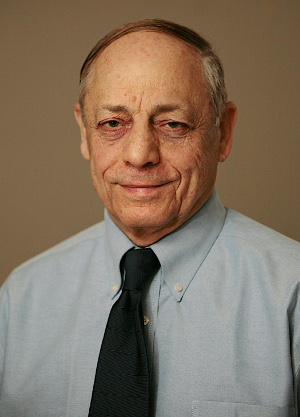
Sunshine Week 2009 takes place from March 15 through 21. The annual event is about the public's right to know what its government is doing, and why. Sunshine Week seeks to enlighten and empower people to play an active role in their government at all levels, and to give them access to information that makes their lives better and their communities stronger. Lake County News will present guest commentaries and news stories about open government as part of this year's Sunshine Week.
As we celebrate Sunshine Week this year, advocates of open government have reason to cheer. In the first week of his administration, President Barack Obama used an executive order to reverse the Bush administration’s direction to federal agencies — in the notorious Ashcroft memorandum — to resist most requests for government information and documents, requests based on the Freedom of Information Act (FOIA).
President Obama's executive order also required federal agencies to furnish definite plans to implement a more open and transparent government within 120 days. This is progress, indeed. But before we run up the flag and declare victory, a bit of history and a warning, is in order.
FOIA was authored and pushed to enactment by John E. Moss a little-known Congressman from Sacramento, who came to Washington in 1952. Moss fought for more than a decade with the Eisenhower and successor administrations to open the growing volume of government records to the public. He was originally involved in the issue when, while he was a freshman congressman, the civil service commission fired some 2,800 federal employees on grounds that they were "security risks." Moss, who had been burned himself by charges of being soft on communism in his first campaign for office in the McCarthy era, believed that the employees, who were being denied access to their own records, weren't getting a fair chance to defend themselves. And Moss doubted most were security risks at all.
The Departments of Justice and Defense have long offered many and varied reasons why people should not see what was in government files. It is too soon to know how they will respond to President Obama’s executive order. But under President Eisenhower, even as a member of Congress, Moss made little headway on the security matter and on his other efforts to open government. So he drafted and introduced one bill after another to change things. They went nowhere.
When John F. Kennedy defeated Richard M. Nixon in 1960, Moss, and his allies in the press, thought that FOIA’s time had come.
They were wrong. Although Kennedy was personally sympathetic to the idea of open government and promised Moss in a letter that he would only claim executive privilege personally and not through subordinates, the federal agencies proved to be a much tougher nut to crack, especially after Kennedy was assassinated. They significantly influenced Kennedy’s successor, Lyndon B. Johnson by recommending a veto of the FOIA bill that Moss was driving through the Congress.
At one point, Moss was pulled out of a hearing on FOIA by House Speaker John McCormack and Majority Leader Carl Albert. They had just come from a meeting with LBJ at the White House. The president wanted to know the status of "this terrible legislation." He asked, "What is Moss trying to do to me?" He suggested that the bill be shelved.
But Moss did not back down. The bill was eventually passed and sent to LBJ who was, at that moment, vacationing at his ranch in Texas. According to Bill Moyers, who was there at the time, LBJ was on the verge of vetoing the bill. What he feared — and what most presidents always fear — is that embarrassing or incorrect information would be released to the public and prove to be politically damaging. There is, as Moss found, an inherent tension between government and freedom of information.
With the clock ticking on FOIA's fate in July1966, it looked like the bill would die. LBJ was mostly concerned that national security and executive privilege might be compromised. But Moss and the press combined to energize a wave of editorials, telegrams and letters in support of the bill.
Moyers finally convinced LBJ to sign, what LBJ called, "the damn thing," even as he said "it will probably screw my administration."
History’s message is clear. Advocates of more open government and maximum freedom of the press must continuously fight against claims of national security and executive privilege to ensure they are not extended beyond reasonable boundaries or used as a shield against the publication of information that might prove embarrassing. Every week is, in a real sense, Sunshine Week.
Moss understood the need for vigilance. Before he died in 1997, he warned that openness in government was a concept that required constant renewal, no matter who is president and how sympathetic he or she may seem to the principle. Sometimes, he said, "You can have more disagreements with your family and friends than with strangers."
Michael R. Lemov is a Washington attorney and former counsel to Congressman John E. Moss. This article is based on his forthcoming book, “John Moss and the Consumer Decade.” He may be reached at
{mos_sb_discuss:4}
- Details
- Written by: Sophie Annan Jensen
You're welcome to believe whatever you want about the causes of this worldwide problem.
It's global warming as explained by Al Gore.
It's just a natural climate cycle.
It's chemical spraying.
It's Mother Earth fighting back at overpopulation and pollution.
It's La Niña and it will go away soon.
It's the God of your choice punishing us for something you don't like.
What you believe doesn't matter. It's happening, and it doesn't look as if we're responding well. In Spain last year, Barcelona was preparing to ship water in by truck, while a golf course was being planned in an arid region near the city.
The desert city of Las Vegas is gambling it can end its 10-year drought by tapping into underground aquifers northeast of the city, environmental consequences be damned.
Patricia Mulroy, manager of the Southern Nevada Water Authority, says, “We've tried everything … The way you look at water has to fundamentally change.”
No kidding. (Right, it sounds like the water guy in “Chinatown,” but that was Mulwray.)
In Sacramento, Governor Arnie repeated last year's call for a voluntary 20-percent cut in water use, and he and US Sen. Dianne Feinstein are talking about more dams. The state is broke; they didn't mention what they'd use for money.
In Lake County, despite the advice of Agricultural Commissioner Steve Hajik and Farm Bureau Executive Director Chuck March that we should avoid losing any of our good agricultural land, our planning commission has approved going ahead with a final environmental impact report on a development which would do just that.
Ms. Mulroy has one thing right: “The way you look at water has to fundamentally change.”
Maybe we could start by remembering that we're in the mostly dry West, of which Mark Twain is alleged to have said “Whiskey's for drinkin' and water's for fightin'.”
Then maybe we can think about why, if water is truly a “right,” people have been moving to where the water is throughout history.
Sophie Annan Jensen is a retired journalist. She lives in Lucerne.
{mos_sb_discuss:4}