How to resolve AdBlock issue?
Business News
- Details
- Written by: Editor
Taxable sales in California declined 5.9 percent in the fourth quarter of 2009, when compared to the same quarter of the previous year.
“While taxable sales in California continued a decline, there was improvement over the previous year,” said BOE Chairwoman Betty T. Yee. “It’s hard to find any Californian that hasn’t been touched by the recession – be it pay cuts, unemployment, foreclosures or diminished savings – and we continue to assist taxpayers and small business owners succeed in times of financial stress.”
Taxable sales in California declined for the 10th consecutive quarter; however, the decline is less steep than during the depths of the recent recession.
Fourth quarter 2009 taxable sales totaled $120.4 billion, $7.5 billion less than the fourth quarter of 2008 (a decline of 5.9 percent). However, the decline was not as steep as the previous quarter, when taxable sales dropped 15 percent on a year-over-year basis.
Overall, 51 counties in California showed a decline in year-to-year taxable sales, while seven counties had increases.
The counties in the San Francisco Bay Area and in the Southern California fared slightly better than the statewide total, as each region declined by 5.6 percent on a year-over-year basis.
Conversely, the decline in Central Valley counties continued to exceed the statewide total. For instance, taxable sales in San Joaquin Valley counties declined by 8.2 percent, while those in the Sacramento Area declined by 6.1 percent.
In the nine-county San Francisco Bay Area, taxable sales dropped 5.6 percent from a year ago, slightly better than the 5.9 percent drop for the state as a whole.
Taxable sales declined in the Bay Area’s major cities in the fourth quarter: taxable sales fell by 6.9 percent in the city of San Francisco, taxable sales declined by 4.9 percent in San Jose, and taxable sales declined by 7.4 percent for the fourth quarter 2009 in Oakland.
Taxable sales in most of the counties in the First Equalization District declined in the fourth quarter of 2009 on a year-over-year basis, including the following counties: Solano (-15.0%), Yolo (-13.5%), San Luis Obispo (-10.1%), Del Norte (-9.4%), Lake (-8.8%), Mendocino (-8.0%), San Francisco County (-6.9), Trinity (-6.7%), San Benito (-6.1%), Napa (-5.2%), Sonoma (-5.9%), Alameda (-5.1%), Santa Clara County (-4.9%), Santa Barbara (-4.7%), San Mateo (-4.6%), Santa Cruz (-4.3%), Contra Costa County (-3.5%), Monterey (-3.3%) and Marin (-2.7%).
Conversely, taxable sales in Colusa County increased 18.2 percent and Humboldt County increased 2.1 percent.
In constant dollar terms, taxable sales decreased by 7.5 percent over the same quarter a year ago. The California Taxable Sales Deflator increased by 1.7 percent for the fourth quarter of 2009. In comparison, the California Consumer Price Index (CPI) declined 1.2 percent.
Taxable Sales in California is a quarterly report on retail sales activity in California, as measured by transactions subject to sales and use tax.
It includes data about statewide taxable sales by type of business, as well as data about taxable sales in all California cities and counties from the first quarter of 2000 through the fourth quarter of 2009 and can be viewed on the BOE Web site at www.boe.ca.gov/news/tsalescont.htm.
Follow Lake County News on Twitter at http://twitter.com/LakeCoNews , on Facebook at http://www.facebook.com/pages/Lake-County-News/143156775604?ref=mf and on YouTube at http://www.youtube.com/user/LakeCoNews .
- Details
- Written by: Editor
The committee makes recommendations to the CDFA secretary on all matters pertaining to the department’s standardization program, which ensures that fresh fruit, nuts and vegetables meet minimum market standards.
The standardization program is funded by California’s fruit and vegetable producers to protect consumers and the agricultural industry from substandard products in the marketplace.
Standardization laws establish minimum standards for maturity, quality, size, standard container and pack and container markings.
Inspections, conducted by California’s agricultural commissioners and sealers, take place in fields, packinghouses, wholesale markets, retail distribution centers, retail outlets and highway inspection stations.
Five member vacancies are available. One vacancy represents the fresh fruit sector (oranges, table grapes and other citrus fruit), three vacancies represents the fresh vegetable sector (with one representing lettuce, tomatoes or mixed vegetables), and one vacancy representing other commodities. Individuals serving on the committee must have a financial interest, either personal or through employment, in a commodity represented.
The term of office for committee members is two years. Members receive no compensation, but are entitled to payment of necessary traveling expenses in accordance with the rules of the Department of Personnel Administration.
Individuals interested in being considered for an appointment should send a letter of consideration and include a letter of recommendation from the agricultural sector.
Nominations will be accepted until the positions are filled.
Applications should be sent to Mr. Steve Patton, California Department of Food and Agriculture, Inspection and Compliance Branch, 1220 ‘N’ Street, Sacramento, CA 95814, or emailed to
For further information on the standardization program and committee vacancies, contact Steve Patton at 916-445-2180.
- Details
- Written by: Editor
“Bioelements operated a blatant price-fixing scheme by requiring online retailers to sell its products at high prices,” Harris said. “Price manipulation harms consumers, competition and our business community. We will continue to be vigilant in protecting our markets from these kinds of abuses.”
The settlement is one of the first applications of California's strict, pro-consumer antitrust law banning vertical price-fixing in the wake of a controversial 2007 U.S. Supreme Court decision that weakened federal law in this area.
Vertical price-fixing occurs when companies along the distribution chain conspire to set the price of a product or service at an artificially high level.
In California, prices must be set independently – and competitively – by distributors and retailers.
Bioelements markets a line of human beauty-care products under its BIOELEMENTS trademark, offering skin products it claims have quasi-medicinal properties such as reducing wrinkles.
These products – known as “cosmesceuticals” because they supposedly merge the attributes of cosmetics and pharmaceuticals – are sold at beauty salons across California, as well as on the Internet.
An investigation initiated by Harris' predecessor as attorney general, Edmund G. Brown Jr., revealed evidence that since 2009, Bioelements had entered into dozens of contracts with other companies that required them to sell Bioelements' products online for at least as much as the retail prices prescribed by Bioelements. There were no express pricing requirements for products sold in person or in shops.
In doing so, Bioelements violated California's antitrust and unfair competition laws.
Under the settlement, in the form of a stipulated court judgment signed Tuesday by Riverside Superior Court Judge Harold W. Hopp, Bioelements is required to permanently refrain from fixing resale prices for its merchandise; inform distributors and retailers with whom Bioelements made price-fixing contracts that Bioelements considers the contracts void and will not try to enforce them; and pay a total of $51,000 in civil penalties and attorney fees.
The 2007 U.S. Supreme Court decision Leegin Creative Leather Products, Inc. v. PSKS, Inc. sharply curtailed federal antitrust law pertaining to vertical price-fixing, but did not affect California's strict state antitrust law.
In the last three years, the California Attorney General has sent two open letters to Congress urging passage of legislation reinstating federal safeguards against vertical price-fixing schemes like Bioelements'.
In February 2010, the attorney general obtained an injunction under California law against another cosmetics company, DermaQuest, Inc., which halted a price-fixing scheme similar to Bioelements'.
A copy of People v. Bioelements civil complaint and the stipulated judgment are attached to the press release online at www.ag.ca.gov .
- Details
- Written by: Editor
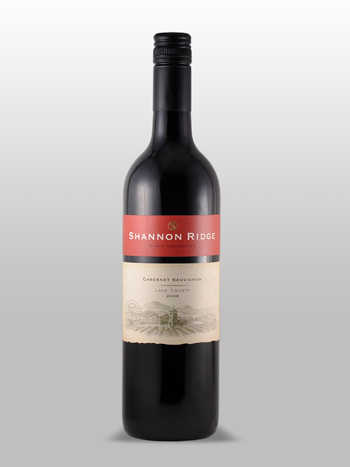
CLEARLAKE OAKS – This week Shannon Ridge Vineyards & Winery has taken one of its highest honors yet since its first release in 2003.
The winery, owned by local grape growers Clay and Margarita Shannon, has stepped away with a “Best of Class” and “Double Gold” award from the San Francisco Chronicle Wine Competition.
With 5,050 wines entered from 23 different states, that competition now holds the title of the largest competition of American wines in the world.
The Shannon Ridge 2008 “Ranch Collection” Cabernet Sauvignon won “Double Gold” which according to the competition officials means the five-member judging panel voted unanimously to give it a Gold Medal.
Shannon Ridge 2007 “Single Vineyard Collection-Home Ranch” Cabernet Sauvignon took an even larger award with its “Best of Class” in the category of mid-priced Cabernet Sauvignon. All Shannon Ridge wines are made from Lake County grapes sustainably farmed in both the High Valley and Red Hills Viticulture Areas.
“Taking such a high award in a Cabernet Sauvignon category is an outstanding achievement considering the number of entries,” said Linda Shields, Shannon Ridge’s Director of Marketing and Retail, “The 2007 will be a tasting room exclusive due to its small production amount … It will be a real treat for our visitors to try such a fine example of a world class wine here in Lake County.”
Additional awards were also received by Shannon Ridge at the San Francisco Chronicle Wine Competition including Silver Medals for 2009 Sauvignon Blanc, 2008 Wrangler Red, 2008 Zinfandel all from the Ranch Collection and 2007 Two Bud Block-Zinfandel, 2009 Morine Ranch-Viognier from the Single Vineyard Collection.
Winemaker Mike Wood, Shannon Ridge Director of Wine Production – who has also garnished the unofficial title of “Lake County King of Cab” due to his past numerous award winning Cabernet Sauvignons – crafted all of this year’s award winners including the top honored Cabernet Sauvignon.
Wood also took Gold Medals for his 2009 Sauvignon Blanc and Chardonnay under his own Shed Horn Cellars label.
The Shannon Ridge 2007 Cabernet Sauvignon-Home Ranch along with the other Single Vineyard Collection award winners are available at both the Shannon Ridge tasting room at 12599 E. Highway 20 in Clearlake Oaks and at the Shannon Family’s newly opened Vigilance Winery and Vineyards tasting room at 13888 Point Lakeview Road in Lower Lake.
The Ranch Collection winners can be found at the Shannon Ridge tasting room and all wines at available at various retailers and restaurants.
For more information call 707-998-9656 or go to www.shannonridge.com.