 How to resolve AdBlock issue?
Arts & Life
- Details
- Written by: Elizabeth Larson
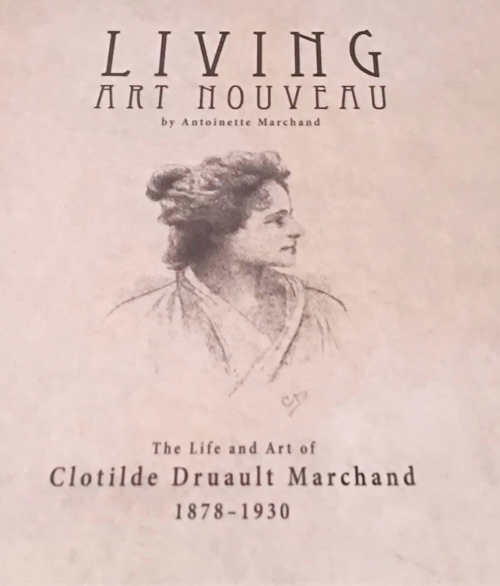
UPPER LAKE, Calif. – Lake County Wine Studio is hosting a book signing at 2 p.m. Saturday, Nov. 16, with Dr. Paul Marchand of Lakeport.
The book, “Living Art Nouveau, the Life and Art of Clotilde Druault Marchand, 1878-1930,” is a celebration of the life and art of Clotilde, Dr. Marchand’s grandmother, who lived during the time of the Belle Epoque, or “beautiful time.
The visual arts, painting and sculpture were only part of her story. She was also a musician, playing the mandolin when it was considered a classical instrument, playing with a symphony orchestra, as did her husband (Jules) Henri Marchand, a noted sculptor.
She was a wife, mother and an immigrant. She was in the first class in which women were allowed to study fine arts in the most prestigious art school in all of France, the Ecole de Beaux Arts de Paris. This placed her among the artistic giants of the era.
This was a time when art was no longer strictly representational. New arts no longer were needed to document reality. This was the birthplace of modern art. To be alive and in Paris at that time must have been extraordinary.
Understanding Art Nouveau and the title "Living Art Nouveau" requires a brief introduction to the Belle Epoque.
To really understand the changes in Paris of the latter half of the 19th century, a couple of important points must be understood.
The term Belle Epoque is often used to describe this period. Depending on who you read, this period is marked by the end of the Paris Commune (1871) to the beginning of the First World War (1914).
Other writers speak of Paris in the decade of 1890 to 1900 (certainly the height of the spirit of the time). Further confusion is the (less common) extension of this period to include the period between World War One and World War Two. Most people usually refer to the earlier time (1871 to 1914).
The Belle Epoque certainly was not universally beautiful for all people, but the economic rise of Western Europe, especially Paris, made it the epicenter of innovation.
After defeat in the Franco Prussian war in 1871, France – especially Paris – literally rose from ashes to become the intellectual, cultural, artistic and even fashion capital of the Western world.
The reasons were in part because of new technology. Advances in metallurgy meant steel strong enough to build massive structures such as the Eiffel Tower in 1887.
The economic power of the second industrial revolution provided Western Europe with a new upper middle class that was able to enjoy luxuries like newly invented electric lighting – in public streets and public buildings. Paris rightly became the “City of Light.”
Relative peace in Western Europe was contrasted with colonial conquests overseas; but the economic advantage of colonialism meant even more economic development. Mass transit transformed Paris into one of the most cosmopolitan cities in history. Because of the influence (in part) of the Paris Commune, relations among the church, state, and traditional authoritarian social values, became the focal point of intellectual discussion – setting a tone of rebellion.
The world of the liberal arts, from philosophy to fashion, flourished. This was a time when music, literature, architecture, poetry, sculpture and decorative arts were the order of the day. Consumerism was unashamed, with the advent of department stores from Printemps (1865) to Galaries Lafayette (1912) delighting the newly formed leisure class.
To be fashionable was to be refined. To be refined was to be educated and articulate, definitely not about frivolous diversions, and progressive. It was a time dominated by optimism and freedom from the constraints of previous social bias. Professional sporting events were begun, women's activism, including women entering the workforce, became much more common. The corset was shed in favor of the “femme sportive.” Photography had evolved enough to document newsworthy events in unblinking, if unforgiving, detail.
Clotilde Druault Marchand thrived because of talent and industry, but also the time in which she lived (1878 to 1930). Clues to the type of world she lived in are found in her work.
Join the Wine Studio in Upper Lake this Saturday afternoon to learn more and to see images of her works.
The Lake County Wine Studio is located at 9505 Main St., Upper Lake.
- Details
- Written by: Lake County Theatre Co.
Auditions will be held Wednesday, Nov. 13, at 6 p.m., and Saturday, Nov. 16, at 2 p.m. at the Kelseyville United Methodist Church, 3810 Main St.
Everyone age 10 to adult is encouraged to audition.
Performances of “Alice in Pantoland” will take place at the Upper Lake Middle School Theatre Feb. 28 to March 8.
Panto is a form of interactive theater, certain to give the whole family a rollicking good time.
“Panto takes a new look at old favorites with interaction between the performers and audience. Boo for the villians and cheer for the heroes of our story. This is a family friendly performance and fun for all ages,” said Director Dennis Fay.
Join Alice and her friends in a quest to find out what is happening in Pantoland.
The jam for the Queen’s tea-time tarts has gone missing. Who has stolen the jam? Will they find the culprit? Will the queen have jam for her tarts at tea-time?
All of your favorite characters are here in this wonderfully colorful and imaginative panto.
The Lake County Theatre Co. seeks actors, singers and dancers ages 10 and up for this original twist on “Alice in Wonderland that is sure to delight kids and adults alike.”
For more information, please call Director Dennis Fay at 707-278-9628.
- Details
- Written by: Elizabeth Larson
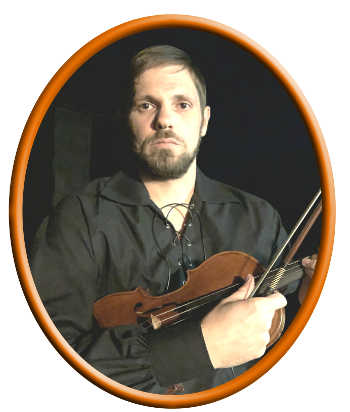
LAKEPORT, Calif. – The Lake County Symphony opens its 42nd season with its Fall Concert at the Soper Reese Theatre at 2 p.m. Sunday, Nov. 17.
The concert includes pieces by multiple composers and a solo performance by a local violinist.
It starts off with a performance by the LCSA Youth Orchestra, led by Conductor Sue Condit, performing “The Birthday Cantata No. 208” by J. S. Bach (Best of Bach), arranged by Jerry Brubaker. Their second selection is “The Moldau” by Bedrich Smetana, with arrangement by Richard Meyer.
The symphony begins its performance with “Radetzky March,” a well-known piece by Johann Strauss Sr (1804-1849). It was written by Strauss to commemorate the victory by Field Marshall Joseph Radetzky von Radetz at the Battle of Custoza.
When it was first played before Austrian officers, they spontaneously clapped and stamped their feet to the chorus. It soon became another unofficial Austrian national anthem – the second one composed by a member of the Strauss family. (The other unofficial anthem was the Blue Danube Waltz written by Johann Strauss Jr.) Its use in numerous promotional jingles and at major sports events makes it a recognizable piece for US audiences as well.
Franz von Suppe (1819-1895), an Austrian composer of light operas and other theater music, wrote the next selection, “The Jolly Robbers Overture,” a lively piece which should keep the audience moving.
Von Suppe studied flute and composed music as a teenager but was discouraged from a musical career by his father. He studied law to please his father, but privately pursued his musical interests, with encouragement from a distant relative, the great Italian opera composer Donizetti. After the death of his father in 1835, von Suppe moved to Vienna, and was able to carve out a successful niche as a composer for the stage by the 1840s.
Nathan Crozier then takes the stage as the violin soloist for Johann Sebastian Bach’s “Concerto for Violin in E Major.” Bach (1685-1750) is considered the most important composer of the Baroque period and the complexities of his compositional style continue to amaze musicians today.
This piece, which was written by Bach while he was in the service of the Prince of Anhalt-Cothen, has been described as being “full of an unconquerable joy of life.”
Following intermission, the final selection of the concert features Franz Joseph Haydn’s “Drum Roll” Symphony No 105 which takes about 30 minutes to perform. Haydn (1732-1809) is considered a leading composer of the Classical Period and has been called the “father of the symphony” and string quartet.
He composed the first well-known works in those genres and composed more than 100 symphonies over the course of his long career.
Born in Vienna, he began his career as a composer at age 16, taking pupils during the day and composing music at night. It was a poverty-stricken existence for awhile, but as his works began to attract attention, he was hired as a composer and conductor with Count Marzin.
Over time, he became more successful and his music established him as a celebrity in all of Europe. The “Drum Roll” Symphony is the next to the last of his “London Symphonies” written during the period when he lived in London.
The Soper Reese Theatre is located at 275 S. Main Street in Lakeport.
General admission is $25 and premium seating is $30. Symphony Association members receive a $5 discount. Tickets may be purchased at the door the day of the concert. For live concerts, the box office opens two hours before show time.
Tickets may be ordered at www.soperreesetheatre.com or by phone at 707-263-0577.
For those on a tight budget, the dress rehearsal starts at 11 a.m. for only $5, with no charge for those under 18.
Please arrive 30 minutes before show time to ensure a seat.
- Details
- Written by: Ted Kooser

We've published several poems by Washington, D.C., poet Judith Harris, who writes beautifully about her Jewish heritage. Bruno Bettelheim, writing about fairy tales, remarked on the closeness of the relationships between young children and elderly people, and this poem touches upon that. Harris's most recent book is Night Garden, from Tiger Bark Press.
Grandmother Portrait
Here's a small gray woman
in an enormous beaver coat
standing at the end of the curb
of a street in Brooklyn, her strapped heel
about to be lowered to asphalt.
I'm strolling beside her carrying a sack,
the sidewalk shaded by cranked out awnings:
butchers, bakeries, shoe repair shops
the smell of rotting eggs,
as we climb up to her sixth floor apartment
with its plastic slip-covered chairs,
the long chain for a toilet flusher,
pocks in the plaster ceiling.
She is my Romanian grandmother
who speaks little English,
but taught me to crochet,
now lost among the broken headstones
of the old gated Jewish cemetery
we passed by that day
after buying our milk and our bread.
American Life in Poetry does not accept unsolicited manuscripts. It is made possible by The Poetry Foundation, publisher of Poetry magazine. It is also supported by the Department of English at the University of Nebraska, Lincoln. Poem copyright ©2018 by Judith Harris, "Grandmother Portrait." Poem reprinted by permission of Judith Harris. Introduction copyright @2019 by The Poetry Foundation. The introduction’s author, Ted Kooser, served as United States Poet Laureate Consultant in Poetry to the Library of Congress from 2004-2006.