How to resolve AdBlock issue?
News
The transmission appears to have been from contact with a known case at an out-of-county workplace, Pace said.
Pace said there is no evidence of community spread of COVID-19 at this point.
The patient is currently doing well, following appropriate precautions, and is isolated, Pace reported.
Public Health nursing is communicating with the patient, and helping the person to safely follow the home isolation protocol. Pace said contact tracing is underway, as well.
“In order to slow community spread, we want to take whatever steps possible to identify any close contacts that could be infected, and separate the sick people from those that aren’t sick,” he said.
Pace said all of the efforts people have been making over the last month to avoid travel and unnecessary activity have paid off.
“Compared to Sonoma County and the Bay Area, we have had a few extra weeks to prepare for the presence of the virus in our midst. Almost certainly, we would have had cases earlier, and seen a sharper rise in numbers, had we been less proactive in recent weeks,” Pace said.
Pace said that now it is even more important that Lake County residents continue to follow the “shelter in place” order, which went into effect on March 19.
“Most likely, there will be more cases in the coming weeks. Since spread of the virus can occur for a few days before symptoms are evident, keeping out of the public and taking precautions continues to be extremely important, even if you ‘feel fine,’ or no one nearby ‘seems sick,’” he said.
He said adhering to the following strict practices will slow the spread of the virus in our community:
– Stay at home (and in contact with those in your immediate household, only) except for essential business;
– Isolate, even from family, if you develop symptoms;
– Wash your hands frequently; and
– Use cloth masks (not N95 or surgical masks) when out of the house.
Pace said people strictly following these rules will give us the best chance of keeping the spread slow enough it is manageable for local medical facilities.
“By ignoring the ‘shelter in place’ order, you run the risk of jeopardizing your family and friends’ health, and also the health of the vulnerable people in your area,” he said.
For Lake County-specific Coronavirus information, visit the Lake County Health Services Department’s website at http://health.co.lake.ca.us .
If you still have questions, send an email request to
To quote a favorite verse, “Flowers appear in our land; the season of singing has come.”
Spring is my favorite season, and I truly do feel like bursting into song (my heart sings, at least) when wildflowers spread madly in Lake County fields clamoring for our grateful attention. The colors are astonishing, a feast for the eyes and soul.
And as if that weren’t enough, the beauty of flowers in the field or garden can become part of what we create in our kitchens. Many are edible and can be used to add uncommon flavor to our dishes, as well as vivid color.
There are far too many edible blooms to chronicle completely here (a good internet search or thorough book can do that), but I’ve curated a diverse list of nine that can grace our plates.
Apple blossoms
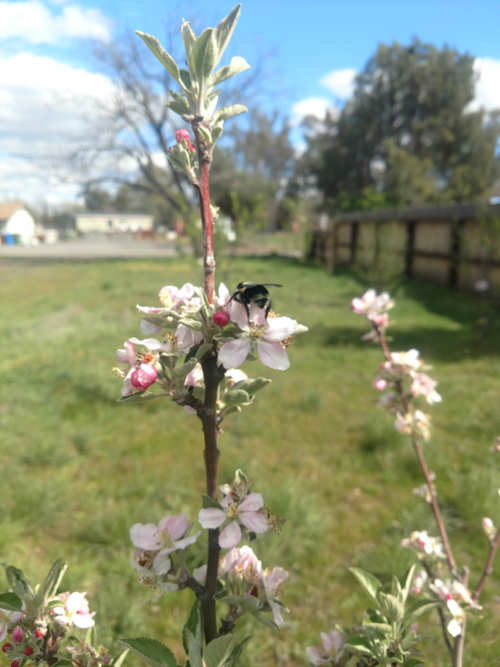
The pink-white blossoms of the apple tree are among the first to appear in our small orchard, and I think of them as harbingers of spring.
Like me, the bees are fond of these graceful blooms, and I occasionally find myself hypnotized as I watch them buzz from flower to flower.
Apple blossoms are quite aromatic, scented with nuances of wild rose, jasmine, water lily and honey. This isn’t surprising, as apple trees are relatives of the rose.
As to flavor, they’re described as being subtly like honeysuckle, with a delicate texture, making for a delightful addition to a fruit salad (they’re particularly nice with pear, apricot, lemon and quince) or as a garnish on any plate.
They may be dried and steeped as a tea (some claim apple blossom tea relieves stress and aids digestion), made into jelly or syrup, and even aged in vodka for an aromatic cordial.
As a plus, apple blossoms are high in antioxidants, which are important in ridding the body of free radicals, unstable molecules which can damage cells in the body.
Borage
Starflower and bee bread, two of the herb borage’s aliases, are inspired by its five-pointed flowers, which are immensely attractive to honeybees. If you happen upon a borage plant in bloom, chances are bees will be busy burrowing into its enticing blue blossoms.
Borage’s beautiful Wedgewood-blue blooms may be employed as an edible garnish for salads, fruit dishes, soups and desserts. They have a honey-like taste and are one of the few truly blue edible foods found in nature.
Borage is easily grown in one’s backyard. In fact, it reseeds itself so prolifically that it’s more likely to take over a garden space than fail to thrive. It’s a recommended companion plant for legumes, strawberries, spinach, strawberries, tomatoes, and brassicas such as broccoli and cauliflower.
Dandelions
Dandelions are prolific and can be found almost everywhere. Though often thought of as an invasive weed, dandelions can be quite useful, as every part is edible, from root to green to bloom. In addition, they’re highly nutritious and have been used in home remedies through the years.
As Ralph Waldo Emerson said, “A weed is a plant whose virtues have not yet been discovered.”
In contrast to the bitterness of dandelion greens, the flowers are sweet and crunchy. Dandelion blossoms can be made into wine, jelly or syrup, or infused into lemonade. The fluffy yellow petals can be a surprise ingredient in cookies or other baked goods. Blooms can be breaded and fried, made into fritters or simply sautéed in butter.
Unopened buds can be marinated and used in much the same way capers are.
Dandelion blooms are best harvested when the sun is shining and the blooms are fully open. When using, be sure to remove any green that remains under the flower, as it will impart a bitter flavor.
Lavender
There are many types of lavender (well over 25), but the lavender used in cuisine is the English variety, so called because the Romans brought lavender with them when they conquered southern Britain. What they planted there was the ancestor of the many varieties of English lavender we know today.
Though lavender is most widely known in the sunny Mediterranean region, it is speculated that this member of the mint family originated in Asia. It’s grown in gardens throughout the world, and since lavender cross-pollinates easily, there are countless variations within each species.
Lavender can be used in a wide swath of culinary genres, both sweet and savory.
It can be made into vinegars, salad dressings, flavored oils, and rubs for fish and meat. It flavors whipped cream and chocolate, is baked into scones and is added to lemonade. It’s added to stews, sauces and ice cream, makes a fragrant aioli, and is delicious when paired with goat cheese. It’s steeped for tea, flavors coffee and adds an aromatic element to spiced teas, such as lavender chai.
The trick to using lavender in cuisine is to have a light hand. It has a very strong flavor, and as lavender is also used to scent perfumes, shampoos, lotions and the like, too much lavender can make food tasty unpleasantly soapy.
My favorite pairing for lavender is lemon (think lavender lemonade or lavender-lemon scones), but its sweet, fragrant flavor complements a range of foods, including strawberries, pears, orange, honey, sage, rosemary, oregano, thyme, black pepper and chocolate.
Lilac
My love affair with lilac began when I was a child in upstate New York. Our rented farmhouse had glorious lilac bushes flanking our front porch and I was enticed by the smell of them.
More recently, I was thrilled to learn that we have lilac bushes at our current home. They surprised me by blooming during our first spring here, making a childhood dream unexpectedly fulfilled.
What makes it more wonderful is that the flowers of the lilac are edible. With a lemony and pungently floral taste, these blooms have a variety of culinary uses.
They can be made into jelly, infused into vinegar, tossed into salads or added to scones, cakes or cookies.
Blooms can be soaked in vodka for a few weeks to make lilac cordial or can be made into wine.
Lilac blossoms, whether fresh or candied, can beautifully decorate cakes and other baked goods, and delicate lilac-infused sugar is perfect for baking. Lilac flowers can be infused into a simple sugar syrup to flavor iced tea, lemonade or to make Italian sodas.
It’s lovely to see pink buds slowly sprouting into light purple blooms on our lilac bushes. I can’t wait to use them to create delicious lilac concoctions!
Nasturtiums
When I was a girl, my mother, a chef, garnished plates in our family restaurant with nasturtiums from our garden.
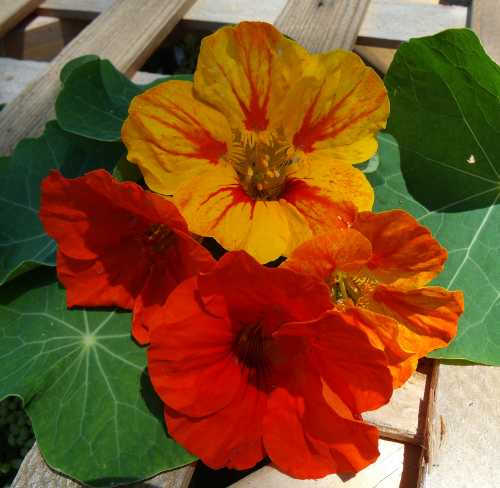
These relatives of watercress and mustard have been used in culinary applications through the centuries. Nearly every part of the plant is edible – blossoms, leaves, stems and seeds – making them a natural for edible landscapes.
If you’re lucky enough to have these bright beauties in your garden, they should be ripe for the culinary picking from late spring through early summer and beyond.
The blossoms can be added to salads, floated in drinks, made into vinaigrette, tossed atop pizza, become a star in risotto, and can even be featured in spring rolls along with carrots, cucumbers, mint and the like.
The blossoms have a somewhat peppery flavor (though mild and sweet) and they have far more to offer than their common use as a graceful garnish.
When stuffed with cream cheese and chives (or other herbs, if you like), they make a wonderful appetizer. Guacamole works well as a filling, too.
Nasturtium-lemon butter may be made by combining the blossoms with softened butter and a bit of lemon juice and lemon zest.
And lastly, when eating the blossoms out of hand in the garden, be sure to look for a longish spur just under the flower head. These are full of nectar and are a sweet treat when eaten. As kids, my brother and I used to pinch them off near the tip and suck the nectar out.

Redbud blossoms
This is the time of year when masses of bright magenta-pink blossoms sit like clouds on redbud trees throughout Lake County. It’s hard to drive anywhere without noticing them along the roadways.
The California redbud, namesake of local parks, is actually a member of the legume family. This shrub played an important role in California native culture for centuries, most significantly for basketry.
The bright pink blooms add color and flavor when tossed raw in salads. They can also be pickled or added to sorbets and baked goods like muffins.
Their flavor is interesting, best described as a green bean-like flavor with a lemony aftertaste.
Roses
The rose may be the most popular edible flower on our planet.
Recipes utilizing rose as an ingredient are quite diverse, including fresh tuna salad, pesto, rosewater rice, rose-basted chicken and a medieval bread with raisins. Rose is used to flavor sorbet, ice cream, jams and cookies.
It imparts a subtle, aromatic flavor to a diversity of dishes, both sweet and savory, and is popular throughout the world, especially in the cuisines of Middle Eastern countries, parts of Asia and Western Europe.
Fresh petals may be used for making tea, rose petal butter or rose sugar. The flavor may be extracted from the petals by making rose water or rose syrup, both ingredients used in cooking.
Rose petals can garnish vanilla ice cream or be mixed in a salad with baby greens. Whole petals can be floated in a punchbowl, and chopped petals can be frozen in ice cubes for an interesting drink accompaniment.
All rose varieties are edible and there are differences in flavor depending on the type. Not surprisingly, those with darker colors have more pronounced flavors.
Wild violets
When I think of violets, a lovely metaphor comes to mind: “Forgiveness is the scent of the violet on the heel that crushes it.” Authorship of this beautiful phrase is often attributed to Mark Twain, but there is no evidence that it was he who penned it.
One thing is certain: violets grace our nostrils with a fragrance as beautiful as forgiveness. They also please our palates with sweet flavor.
Many species grow wild throughout North America, including in California, typically blooming in the spring. Colors range from purple to yellow to white, and most have heart-shaped leaves. Thankfully these delicate-looking plants can be easily cultivated in a home garden, making them available to us without foraging in the wild.
Violets are often added to salads for color and flavor, but the culinary applications don’t stop there. They can be used to make vinegar, jelly, tea and syrup, and fresh or candied violets often decorate desserts.
Violet blossoms are rich in vitamins A and C (by weight they have more vitamin C than an orange), and the leaves, also rich in these vitamins, may be used as well as the flowers.
There is one note of caution, however. Wild violets should not be confused with African violets, a houseplant that is NOT edible. Though they share a name, they are unrelated. Edible violets are of the genus Viola, and the African violet genus is Streptocarpus.
Today’s recipe is for floral jelly, appropriate for many different varieties of flowers. Of the flowers covered here, I’d recommend apple blossoms, dandelions, lilac, roses or violets. You may combine types; just be sure the flavor profiles are compatible.
How to make floral jelly
Gather 2 cups blossoms. Apple blossoms, dandelions, lilac, roses or violets are recommended. (If using dandelion blooms, be sure all green under the flower is removed to avoid bitterness.)
Create a tea by pouring 4 cups boiling water over blooms.
Allow to cool, then place in refrigerator for 24 hours to fully infuse.
After steeping, strain well, squeezing out as much liquid as possible.
Measure out 3-1/2 to 4 cups of the floral-infused liquid and pour it into a large pot.
Add 2 tablespoons of lemon juice and 1 pouch of powdered pectin. Bring this to a boil.
Add 4 cups of sugar, stir well and return to a boil.
Boil the jelly for 1 to 2 minutes and remove from the heat.
Since flowers can lose their vibrant color when processed, add a little food coloring, if desired.
Pour the jelly into hot canning jars leaving 1/4 inch of headspace.
Run a spatula around the inside edge to remove any air bubbles. Then wipe the edge of the jar clean and place the lids and rings on tight.
Place the jars in a water bath canner and process for 10 minutes or according to your altitude.
Remove the jars from the canner and place on a towel. Allow them to sit undisturbed for 24 hours to let the seal harden.
Any jars that haven’t sealed need to be put in the fridge to use first or reprocessed.
Yield: About four cups of jelly
Esther Oertel is a writer and passionate home cook from a family of chefs. She grew up in a restaurant, where she began creating recipes from a young age. She’s taught culinary classes in a variety of venues in Lake County and previously wrote “The Veggie Girl” column for Lake County News. Most recently she’s taught culinary classes at Sur La Table in Santa Rosa, Calif. She lives in Middletown, Calif.
The website will allow individuals and companies to donate, sell or offer to manufacture 13 of the most essential medical supplies, including ventilators, N95 respirators and testing materials.
Gov. Newsom also announced the COVID-19 Testing Task Force, a public-private collaboration that will work with stakeholders across the state to quickly and significantly boost California’s testing capacity. The task force plans to scale up testing as demand increases.
“These actions marshal the generosity and innovative spirit of Californians to help us achieve two essential goals: getting more lifesaving supplies into our health care system and increasing our testing capacity,” said Gov. Newsom.
Gov. Newsom called on companies, organizations and individuals who have medical supplies to contribute, either for donation or purchase, to support California’s response to COVID-19 and visit www.covid19supplies.ca.gov .
Additionally, three specific collaborations have launched today as part of the testing effort:
– Collaboration with the University of California, San Diego and University of California, Davis to establish high throughput testing hubs.
– Collaboration with Stanford Medicine to launch the first serology test invented in California.
– Collaboration with Abbott Laboratories to deploy the first rapid point-of-care test across 13 health care delivery systems and 75 sites.
The task force, co-chaired by California Department of Public Health Assistant Director Charity Dean, M.D., M.P.H. and Blue Shield of California President and CEO Paul Markovich, will ensure the state has sufficient capacity and supplies to administer a significantly greater number of tests.
“The task force is connecting with laboratories across California to tap into unique technologies to improve and refine our testing capabilities to ensure we’re meeting the needs of patients across the state,” said Dr. Dean.
The Testing Task Force is focusing on:
– Ensuring California has lab capacity to rapidly turn around test results and increase capacity strategically to meet demand;
– Improving the supply chain to ensure that California can both collect samples and evaluate results without delay;
– Enabling new, high-quality tests to launch in California as soon as possible;
– Improving our ability to accurately track and evaluate COVID-19 testing capacity, results and reporting; and
– Building the workforce necessary to meet testing goals.
“The task force will work together with California academic systems, private systems, public health experts and others to ensure we’re creating the most streamlined and effective way to evaluate testing data,” Blue Shield of California President and CEO Paul Markovich said. “This kind of public-private collaboration will allow us to tap into the systems needed to get the results California deserves.”
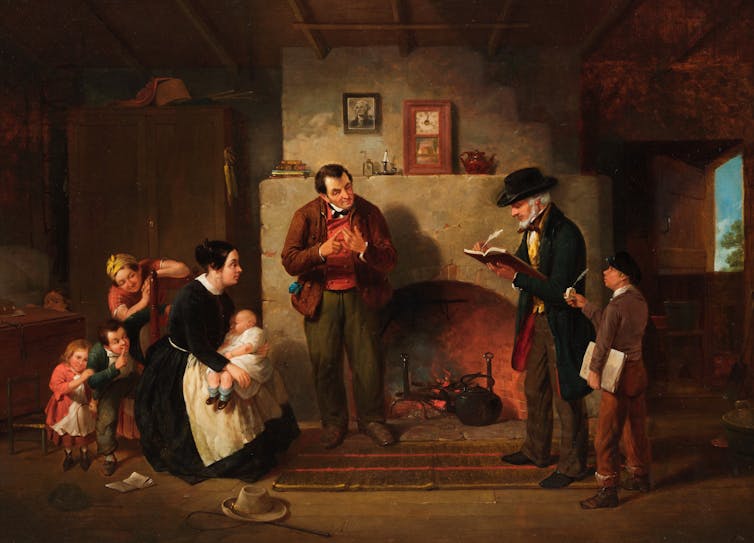
A few days ago, I completed my 2020 U.S. census form.
My latest book details the fundamentals and significance of the 2020 census. By April 1, every residence in the United States will be contacted, usually by mail, to answer only seven questions. This year you may respond online, although there are options for paper, telephone and even talking to a census worker.
Special efforts will be launched to reach the homeless, people in transit and those living in unconventional housing, such as a houseboat. The census will cost billions of dollars.
All this effort and expense raises the issue of whether there is an alternative. The short answer is no, not unless the U.S. Constitution is amended.
Other countries, however, have different ways of counting and tracking their populations. The U.S. system is moving in their direction.
Is there a better way?
The census is required by the U.S. Constitution to apportion the House of Representatives according to the population of the states. Census data are used to allocate federal funding, some US$1.5 trillion of it, to states and localities.
Undercounting just one child in poverty may cost a school district nearly $1,700 a year in Title I funds. According to one study, the people most likely to be undercounted are often the very people who would benefit the most from Medicaid and other programs.
The census is a snapshot of the country’s population. The nature of a snapshot is that it is fixed at a point in time. According to the U.S. Constitution, that snapshot is taken once every 10 years.
The census will not change or go away unless the U.S. Constitution is amended, a lengthy process requiring the agreement of a supermajority of both Houses of Congress and three-fourths of the state legislatures. However, a continuous population register would be one alternative, perhaps enhanced with an occasional “light-touch” census supplementing the register information with just a few questions asked at long intervals.
In reality, however, the population is more like a video, with people moving in and out as they are born and die and change residences in between those two events. A continuous population register is more like a video than a snapshot, with every birth, death and move tracked for every resident.
How population registers work
Population registers – which require citizens to keep a current address with the government and to register births and deaths – have existed for centuries in parts of Asia and Europe, especially in Scandinavia.
Population registration in China dates back at least to the Han dynasty (206 B.C. - A.D. 220). Later, birth and death registration laws were part of the T'ang codes, one of China’s earliest recorded legal codes.
The Japanese system of registration, which was adapted from China, featured distinctive household registries that were intended to be the basis of periodic land reallocation in the seventh century A.D. – though it isn’t clear that Japan ever used the data in this way. National registration was restored and strengthened during the Tokugawa shogunate in the 1600s.
The European origins of registries were parish records of baptisms, marriages and burials. Later, the nation-state coordinated the registry, including the movement of citizens from one place to another.
Today, the registries are digitized. As I note in my latest book, the Swedish tax authority, for example, maintains the registry for Sweden, and Swedes have unique PINs and the right to see anything in their file.

Just the census – for now
According to a working paper developed for the U.S. Census Bureau, the United States knows how many people are born and die every year with high accuracy.
For most of the U.S. population – at least those who are reached by the IRS, Social Security or Medicare – it is highly likely that the federal government has their address. There are some potential barriers to using a population register, because tracking births and deaths is a responsibility of individual states, but the states cooperate with the federal government in compiling vital statistics.
The biggest flaw with the population register is keeping accurate track of international migration.
Entry into the United States might go undetected, or a visa may expire. Emigrants are not required to notify the United States that they have relocated to another country, and the U.S. does not employ exit visas.
Even if “net migration” – immigrants minus emigrants – is estimated for the country as a whole, the state or locality where people have entered or left may be unknown. This would be important information for local governments that must provide roads, police and fire service, and other services for all.
This year, the U.S. Census Bureau will use an unprecedented amount of administrative data, such as Social Security records, to check the accuracy of census data, to edit missing information and to estimate the citizenship status of respondents. This latter use of administrative data has been mandated by a presidential executive order to ascertain citizenship, after the Supreme Court prevented a citizenship question being put on the 2020 census.
So, while there is not yet a population register, it might be at America’s doorstep. In the meantime, however, please complete your census form – it is your democratic duty.
[Like what you’ve read? Want more? Sign up for The Conversation’s daily newsletter.]
Teresa A. Sullivan, Interim Provost, Michigan State University and President Emerita and University Professor, University of Virginia
This article is republished from The Conversation under a Creative Commons license. Read the original article.
The California State Association of Counties is the voice of California’s 58 counties at the state and federal level.
That organization, along with the California Association of County Treasurers and Tax Collectors, on Saturday addressed the COVID‐19 crisis and the April 10 property tax deadline.
“Taking care of Californians is our top priority, and counties, cities, and schools are burning through local reserves to do so. Any delay in payments beyond the April 10 property tax deadline, for individuals or businesses that can pay, will tip local governments into insolvency at a time when our residents need us the most,” the associations said in a joint statement.
“Counties will use all existing authority to cancel penalties and other charges for homeowners, small businesses and other property owners that are unable to pay their property taxes due to circumstances caused by COVID‐19 on a case‐by‐case basis. However, property owners who can pay or that haven’t been directly affected by COVID‐19, including international corporations and out‐of‐state landlords, still need to pay on time to keep critical government services running,” the associations said.
The associations said property taxes only go to local governments – schools, counties, cities and special districts – not to the state or federal government, and directly fund education, health care, hospitals, welfare services, fire protection and efforts to address homelessness efforts, to name a few.
“Delaying the April 10 property tax payment would take tens of billions of dollars away from local
government, create cash flow problems, and cause some to default on their loans, which would have significant long‐term effects on all local agencies in California,” the associations said.
Gov. Gavin Newsom responded on Saturday with praise for the commitment to cancel penalties and other charges for those with demonstrated economic hardship.
“This is good news for Californians. I would like to thank the California State Association of Counties and the California Association of County Treasurers and Tax Collectors for committing to providing economic relief for residents and small businesses facing hardships due to COVID-19,” said Gov. Newsom.

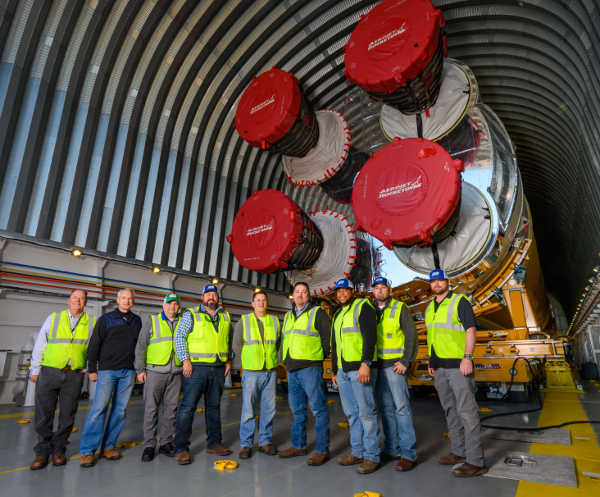
As NASA prepares for the first launch of Artemis I, the first mission of the agency’s Space Launch System, or SLS, rocket and Orion spacecraft to the Moon, one team will be there every step of the way: the aptly nicknamed “SLS Move Team.”
Based out of NASA’s Marshall Space Flight Center in Huntsville, Alabama, the move team ensures all the flight hardware for the SLS rocket’s core stage is safely and efficiently transported from the site where it was manufactured to various test facilities and – ultimately – to its future launch site. From the very beginning, the move team has been an integral part of the SLS Program.
“Marshall’s Ground and Marine Transportation teams are responsible for the handling and transportation of the SLS rocket’s core stage, which is the largest rocket stage NASA has assembled, tested and transported since the Apollo Program,” said Robert Rutherford, transportation and logistics engineering group lead at Marshall. “We started logistics planning for both the moves of structural test articles of the individual elements and for the entire Artemis I core stage early on in the program.”
While the full team is divided between ground and marine activities, together they typically operate as one cohesive unit to successfully transport the large hardware for the megarocket’s 212-foot-tall core stage. The huge stage includes two giant propellant tanks and four RS-25 engines, each the size of a compact car.
The teams’ coordination and efforts were prominently displayed as the first SLS rocket core stage was rolled out from NASA’s Michoud Assembly Facility in New Orleans to the agency’s Pegasus barge on Jan. 8, then transported by Pegasus from New Orleans to nearby NASA’s Stennis Space Center near Bay St. Louis, Mississippi, for the core stage Green Run test series.
Once the barge and flight hardware arrived at Stennis, the Ground Operations team was again at work, helping to prepare, lift and install the flight hardware into the B-2 Test Stand for the test campaign.
“The effort to move the SLS rocket’s core stage from Michoud to Stennis and installing it into the B-2 Test Stand is a result of extensive preparation,” said Bryan Jones, logistics engineering and ground transportation team lead at Marshall. “It was a true team effort. Without the support of all parties that play a part in the operations, we would not be able to be successful.”
The Ground and Marine Transportation teams have been vital in shipping four structural test articles from Michoud to Marshall for testing. The teams prepared for the move of actual flight hardware with SLS pathfinders during the spring and summer of 2019.
The ground and marine teams spend months meticulously planning and developing detailed transportation move procedures to ensure test articles and flight hardware alike are delivered without a mishap. They use a myriad of specialized equipment, including transporters specifically designed to accommodate and hold the hardware, and Pegasus.
The now 310-foot-long barge was modified and refurbished in 2015 to successfully ferry the SLS core stage, which is more than 50 feet longer than the space shuttle external tank and – when including ground support and transportation equipment -- more than 600,000 pounds heavier. The shuttle’s external tanks were frequent passengers aboard Pegasus during the shuttle era of space exploration.
“Each member of the team understands the privilege and responsibility that NASA’s ground and marine transportation teams have been given in handling hardware that will enable the United States to send American astronauts to the Moon and on to Mars,” said Alan Murphy, team lead of marine operations for Pegasus. “The key to preparation for the Pegasus crew is in the vessel itself. Pegasus has the capacity to carry each of the individual core stage elements in addition to the actual core stage.
The size of the SLS core stage pathfinder and the flight hardware core stage, although massive, did not intimidate the Pegasus crew as we leaned on our experience from shipping the four structural test articles,” he added.
Like their counterparts in ground transportation, the Pegasus crew prepared to ship the larger, much heavier fully assembled core stage by delivering structural test articles and pathfinders to different NASA centers. Pegasus made the first delivery of the Artemis program to NASA’s Kennedy Space Center in Florida with the core stage pathfinder, a full-scale replica of the stage, in September 2019.
The Ground and Marine Transportation teams coordinate their efforts with numerous other NASA organizations and dozens of agencies, including the Tennessee Valley Authority, Corps of Engineers, Coast Guard and National Oceanic and Atmospheric Administration, to get the hardware from one NASA facility to another.
“Before NASA transports any hardware, teams meet to consider every aspect of the move from the strength of the roadways to the weather the day of the move,” Rutherford said. “Because of the SLS core stage’s height, weight, width and length, special combinations and modifications had to be made to roads, docks, even power lines, and to the barge itself, to accommodate the total weight and width of the rocket hardware.”
Hours of work go into planning and executing the various dynamics of transporting, loading and handling the flight hardware. However, the final factor for consideration before any move begins is usually the most unpredictable: the weather. Following the arrival of Pegasus and the core stage for Artemis I to Stennis for the Green Run test series, crews spent several days assessing the wind and rain factors at and above ground level before lifting and installing the rocket stage into the test stand.
While the core stage undergoes Green Run testing at Stennis, Ground and Marine Transportation teams will be at work to ship the launch vehicle stage adapter, the part of the rocket that connects the core stage to the upper part of the rocket. The hardware will move from Marshall, where it is manufactured, on Pegasus to Kennedy, where engineers will prepare it for integration to the rest of the rocket ahead of the launch of Artemis I.
A rocket as large as the SLS rocket doesn’t arrive to the launch pad fully assembled. Teams will assemble, or stack, the various elements and stages of the SLS rocket inside Kennedy’s Vehicle Assembly Building before moving the fully assembled rocket to the launch pad. As they have done since the beginning, the men and women of Marshall’s ground and marine transportation teams will be on hand to plan and carry out the well-orchestrated effort it takes to transport the various pieces of hardware across the country — and waterways — to Kennedy for the first Artemis launch to the Moon.
NASA is working to land the first woman and the next man on the Moon by 2024. SLS, along with Orion, the human landing system, and the Gateway in orbit around the Moon, are NASA’s backbone for deep space exploration. SLS is the only rocket that can send Orion, astronauts and supplies to the Moon on a single mission.
For more on NASA’s SLS, visit https://www.nasa.gov/sls .