How to resolve AdBlock issue?
News
Scientists created light curves using the high-resolution images of the sun to understand what a sunspot would look like on a distant star. They studied different layers of the sun from the visible surface to the outer atmosphere using 14 different wavelengths, including the six shown here (top left to right: photosphere, magnetic flux of the photosphere, ultraviolet 304 angstroms; bottom left to right: ultraviolet 171 angstroms, ultraviolet 131 angstroms, x-ray). Credits: NASA/SDO/JAXA/NAOJ/Hinode.
NASA’s extensive fleet of spacecraft allows scientists to study the sun extremely close-up – one of the agency’s spacecraft is even on its way to fly through the sun’s outer atmosphere. But sometimes taking a step back can provide new insight.
In a new study, scientists looked at sunspots – darkened patches on the sun caused by its magnetic field – at low resolution as if they were trillions of miles away. What resulted was a simulated view of distant stars, which can help us understand stellar activity and the conditions for life on planets orbiting other stars.
“We wanted to know what a sunspot region would look like if we couldn’t resolve it in an image,” said Shin Toriumi, lead author on the new study and scientist at the Institute of Space and Astronautical Science at JAXA. “So, we used the solar data as if it came from a distant star to have a better connection between solar physics and stellar physics.”
Sunspots are often precursors to solar flares – intense outbursts of energy from the surface of the Sun – so monitoring sunspots is important to understanding why and how flares occur.
Additionally, understanding the frequency of flares on other stars is one of the keys to understanding their chance of harboring life.
Having a few flares may help build up complex molecules like RNA and DNA from simpler building blocks. But too many strong flares can strip entire atmospheres, rendering a planet uninhabitable.
To see what a sunspot and its effect on the solar atmosphere would look like on a distant star, the scientists started with high-resolution data of the sun from NASA’s Solar Dynamics Observatory and JAXA/NASA’s Hinode mission.
By adding up all the light in each image, the scientists converted the high-resolution images into single datapoints.
Stringing subsequent datapoints together, the scientists created plots of how the light changed as the sunspot passed across the sun’s rotating face. These plots, which scientists call light curves, showed what a passing sunspot on the sun would look like if it were many light-years away.
“The sun is our closest star. Using solar observing satellites, we can resolve signatures on the surface 100 miles wide,” said Vladimir Airapetian, co-author on the new study and astrophysicist at NASA’s Goddard Space Flight Center in Greenbelt, Maryland. “On other stars you might only get one pixel showing the entire surface, so we wanted to create a template to decode activity on other stars.”
The new study, published in the Astrophysical Journal, looked at simple cases where there is just one group of sunspots visible across the entire face of the sun. Even though NASA and JAXA missions have continually gathered observations of the sun for over a decade, these cases are quite rare.
Usually there are either several sunspots – such as during the solar maximum, which we are now moving toward – or none at all. In all the years of data, the scientists only found a handful of instances of just one isolated sunspot group.
Studying these events, the scientists found the light curves differed when they measured different wavelengths. In visible light, when a singular sunspot appears at the center of the sun, the sun is dimmer.
However, when the sunspot group is near the edge of the sun, it’s actually brighter due to faculae – bright magnetic features around sunspots – because, near the edge, the hot walls of their nearly vertical magnetic fields become increasingly visible.
The scientists also looked at the light curves in x-ray and ultraviolet light, which show the atmosphere above the sunspots. As the atmospheres above sunspots are magnetically heated, the scientists found brightening there at some wavelengths.
However, the scientists also unexpectedly discovered that the heating could also cause a dimming in the light coming from the lower temperature atmosphere. These findings may provide a tool to diagnose the environments of spots on the stars.
“So far we’ve done the best-case scenarios, where there’s only one sunspot visible,” Toriumi said. “Next we are planning on doing some numerical modeling to understand what happens if we have multiple sunspots.”
By studying stellar activity on young stars in particular, scientists can glean a view of what our young sun may have been like. This will help scientists understand how the young sun – which was overall more dim but active – impacted Venus, Earth and Mars in their early days. It could also help explain why life on Earth started four billion years ago, which some scientists speculate is linked to intense solar activity.
Studying young stars can also contribute to scientists’ understanding of what triggers superflares – those that are 10 to 1000 times stronger than the biggest seen on the sun in recent decades. Young stars are typically more active, with superflares happening almost daily. Whereas, on our more mature sun, they may only occur once in a thousand years or so.
Spotting young suns that are conducive to supporting habitable planets, helps scientists who focus on astrobiology, the study of the origin evolution, and distribution of life in the universe.
Several next-generation telescopes in production, which will be able to observe other stars in x-ray and ultraviolet wavelengths, could use the new results to decode observations of distant stars.
In turn, this will help identify those stars with appropriate levels of stellar activity for life – and that can then be followed up by observations from other upcoming high-resolution missions, such as NASA’s James Webb Space Telescope.
Mara Johnson-Groh works for NASA’s Goddard Space Flight Center in Greenbelt, Maryland.
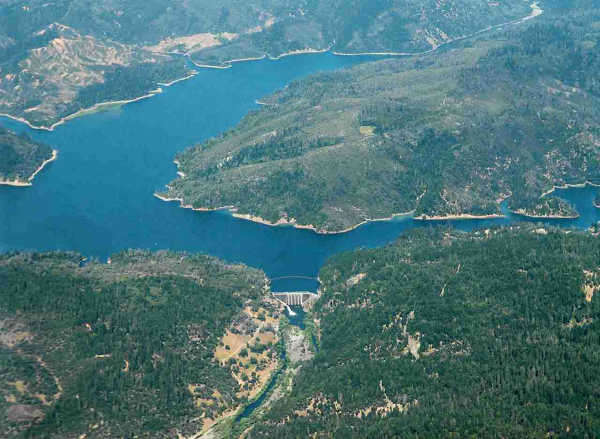
LAKE COUNTY, Calif. – Congressman John Garamendi, who represents the northern half of Lake County, on Friday submitted a formal comment to the Federal Energy Regulatory Commission opposing the proposed removal of Scott Dam at Lake Pillsbury and demanding that Lake County have an equal seat at the table for determining the future of Potter Valley Project and the lake.
Garamendi, who served as the deputy secretary of the Department of the Interior in President Bill Clinton’s administration, said the proposal to remove the dam was issued over the objections of Lake County residents as part of the Pacific Gas and Electric Co.’s divestment of the Potter Valley Hydropower Project.
“Lake County residents who have owned homes and property around Lake Pillsbury reservoir for decades have been shut out of planning for the future of the Potter Valley Project,” said Garamendi (D-CA). “Let me be clear: any decision-making for the Scott Dam and Lake Pillsbury Reservoir must include representatives from Lake County. Anything short of that is simply unacceptable.”
He said he strongly opposes draining Lake Pillsbury by removing the Scott Dam. “The planning process will not be adequate until every community impacted by this project has a voice in the process I expect FERC to give Lake County and Lake Pillsbury residents a full and equal seat at the table during this process. I stand ready with Lake County to create a version of the Potter Valley Project that works for every community involved, including cost-effective fish passage at Scott Dam.”
“We are extremely pleased that Congressman Garamendi is standing up for Lake County, Lake Pillsbury recreation and wildlife, and Lake Pillsbury homeowners,” said Carol Cinquini of the Lake Pillsbury Alliance.
Lake County denied a seat at the table
The Scott Dam is part of the hydroelectric Potter Valley Project, owned by Pacific Gas and Electric Co., which in May 2018 announced its intention to put the project up for auction.
North Coast Congressman Jared Huffman led an ad hoc committee promoting what it’s called a “two-basin solution” that includes decommissioning and removing the dam.
Mendocino County Inland Water and Power Commission, Sonoma County Water Agency, California Trout Inc., the county of Humboldt and Round Valley Indian Tribes, known as the “NOI Parties,” initiated Federal Energy Regulatory Commission proceedings to make a licensing proposal for the Potter Valley Project.
Lake Pillsbury sits within northern Lake County. As such, the county of Lake sought to be a part of the group but was denied membership, and county officials – including Supervisor EJ Crandell, who represents the Lake Pillsbury area – said Lake County’s concerns have been ignored or entirely dismissed.
In his letter to FERC, Garamendi said Lake County formally requested to join the NOI Parties, only to be rejected. “Apparently, the ‘notice of intent’ parties’ standing rules require approval of all current members before another party may join. CalTrout – a nongovernmental organization that will likely have no official role in the future governance of the Potter Valley Project under the to-be established regional entity – voted to block Lake County from joining its peer county governments (Mendocino, Sonoma, and Humboldt) as a ‘notice of intent’ party. This is not acceptable.”
CalTrout, earlier in 2019, had issued a report listing the Scott Dam as one of the five top dams in California that needed to be removed to benefit fish and habitat.
This past May, the NOI Parties filed a feasibility study in which they seek to gain control of the Potter Valley Project from PG&E. The plan included removing the Scott Dam and destroying Lake Pillsbury.
If the plan is approved, Lake County would have no operational control over the Potter Valley Project, including the Scott Dam and Lake Pillsbury reservoir. “This is just not right or acceptable,” said Garamendi.
“The Two Basin Partnership’s vision for a balanced future for people and wildlife who depend on the Eel and Russian rivers does so at the expense of those most directly affected by their proposal to remove Scott Dam,” said Cinquini. “Water supply reliability for downstream users has not been assured. The size and quality of Eel River habitat upstream of Scott Dam has not been ground-truthed. All fish mitigation enhancements need to be seriously considered before concluding that dam removal is the only path forward.”
On behalf of the county, Crandell has argued that there are many other ways to ensure fish passage, and provide environmental benefits to communities along the Russian and Eel Rivers and those that live near Lake Pillsbury, most at a fraction of the cost, but none of those options were considered.
The Lake Pillsbury Alliance, Crandell and the county, and now Garamendi, also have pointed out that Lake Pillsbury has for many years been a critical source of water for firefighting efforts.
“The Lake Pillsbury reservoir has been a feature of Lake County since 1922 and provides essential firefighting capacity for one of the most fire-prone regions in California,” Garamendi continued. “Cal Fire made extensive use of Lake Pillsbury reservoir for firefighting during the devastating Mendocino Complex fire in 2018, and again during this year’s fire season.”
This summer, firefighters also have drawn on the lake to fight the massive August Complex – which is the largest wildland fire in California history, at more than 1,030,000 acres – which resulted in evacuation orders for the Lake Pillsbury basin last month.
Crandell told Lake County News on Friday that he initially had filled Garamendi in on the situation when the congressman visited the Middle Creek Restoration project in October 2019. They spoke again briefly about it at his office in DC.
Then, on Sept. 16, the Lake County Chamber of Commerce set up a virtual meeting with Garamendi, Crandell said.
Crandell said he, Supervisor Bruno Sabatier and members of the Lake Pillsbury Alliance were invited to speak with the Garamendi about their struggles with the two-basin solution and share the history of Lake County’s interests not being taken seriously in regard to Scott Dam and most of Lake Pillsbury.
“Because of that meeting we were able to fill him in on the intricacies of this project,” Crandell said.
More study needed
In his letter to FERC, Garamendi said that a 2018 study prepared for the Sonoma County Water Agency – one of the parties now seeking to remove the Scott Dam – found that providing volitional fish passage both upstream and downstream of the Scott and Cape Horn dams would cost less than $64 million.
“By contrast, decommissioning the Scott Dam, removing or otherwise mitigating 12 million cubic yards of sediment stored within Lake Pillsbury reservoir, and other proposed project changes are estimated to cost upwards of $400 million, according to the parties’ feasibility study report,” Garamendi said, noting those “critical issues” are not addressed by the initial study report filed with FERC on Sept. 15.
Garamendi also referenced a Sept. 29 public meeting on the initial study report prepared by the parties, where he said it was summarily announced that the technical studies and future planning documents for the integrated relicensing process would no longer include an assessment of fish passage improvements at Scott Dam other than removal of the dam.
“How can FERC or the parties accurately assess the impact of the proposed removal of Scott Dam on federally protected fish species without considering those benefits, if any, relative to other potential fish passage improvements at the dam?” Garamendi asked.
In his letter, which can be seen below, he went on to point out inaccuracies in a FERC scoping document, and argued, “At a minimum, further independent study is needed to justify that the benefits of removing the Scott Dam outweigh the substantial costs, rather than just assuming this to be the case as the parties’ FERC filings do.”
He said he stands ready to help secure federal funding to improve fish passage at the Scott Dam and reservoir operations at Lake Pillsbury.
“I am truly grateful for Congressman Garamendi writing a letter for Lake County and the Lake Pillsbury residents,” Crandell said.
How to get involved
Members of the public can submit comments regarding the removal of Scott Dam and draining of Lake Pillsbury reservoir by:
1) Registering with FERC’s online public comment portal.
2) Once registered, check your email inbox. In the email from FERC, there will be a link to submit a public comment.
3) Enter docket number P-77-298 (not 285 as previously reported) and click “search.”
4) Click the blue + on the right side of the table to select the docket.
5) Submit your comments in the comment box.
Email Elizabeth Larson at
20201016 Garamendi to FERC Disagreement on Potter Valley Project ILP by LakeCoNews on Scribd
LAKE COUNTY, Calif. – Lake County had two more residents die of COVID-19-related illness this week and more than a dozen new cases confirmed on Friday, with Public Health releasing data showing the racial breakdown of the county’s cases.
Lake County’s COVID-19 cases increased to 658 on Friday, up 17 over the previous day and 30 over the previous Friday, according to Lake County Public Health’s COVID-19 dashboard.
Public Health said 55 cases are active and being monitored, and two patients currently are hospitalized, bringing the total of all cases hospitalized to 40. Another 588 have recovered.
This week, two additional deaths have occurred, bringing the total to 15, Public Health reported.
Public Health Officer Dr. Gary Pace said the 14th death was an individual older than age 65 who had a previous history of medical issues and was hospitalized at the time of death.
The 15th death, reported to Public Health on Friday, was an individual who was over age 60 and died following a lengthy COVID-related hospitalization, Pace said.
Statewide, county Public Health departments reported a total of 16,905 deaths as of Friday night, with more than 871,000 confirmed cases.
Lake’s neighboring counties reported the following total caseloads and deaths as of Friday: Colusa, 545 cases, six deaths; Glenn, 639 cases, three deaths; Mendocino, 1,080 cases, 21 deaths; Napa, 1,851 cases, 14 deaths; Sonoma, 8,717 cases, 129 deaths; and Yolo, 3,034 cases, 56 deaths.
The California Department of Public Health said Friday that local health departments have reported 41,984 confirmed positive cases in health care workers and 194 deaths statewide.
The state also said that as of Friday there have been 16,621,956 tests conducted in California, an increase of 104,144 over the prior 24-hour reporting period.
‘Significant disparities’ emerge
In his Friday report, Pace said directing additional resources to disadvantaged communities and essential front-line workers are critical in addressing the impacts of the virus.
“Despite our efforts, significant disparities have emerged. Those that live in crowded conditions, work in settings requiring close contact with people outside of their household, and those with little available paid sick time have been infected at higher rates,” he said.
He said moving to less restrictive tiers of the state’s COVID-19 framework and further invigorating the local economy will require targeted interventions. “Those at disproportionate risk need resources: additional testing, services, and education to help people stay off work and out of the public when they are infected.”
In response to new requirements from the state that case race and ethnicity data be reported, Pace said infection rates in Lake County are two to three times higher among the Latino or Hispanic population and two times greater in Native American communities as compared to the general population data.
He said 49.9 percent of Lake County’s cases have affected Latino or Hispanic individuals, and 6.2 percent of those infected have been Native American.
The latest American Community Survey data from the US Census Bureau shows that Hispanics or Latinos make up 20 percent of the Lake County population – which numbers just above 64,000 residents – while Native Americans account for 5.2 percent.
“Regrettably, these groups are facing more problems with access to services and greater pressures to work, even when exposed to the virus,” Pace said. “The county of Lake’s Health Services Department is committed to acting on these disparities, and we submitted a plan to the state this week.”
The California Department of Public Health reported that Latinos have accounted for 61.1 percent of the state’s total cases and 48.6 percent of all deaths. African Americans account for 4.2 percent of cases and 7.5 percent of deaths, Native Americans or Alaska Natives account for 1.1 percent of cases and 0.7 percent of deaths. Whites make up 17.4 percent of cases and 30.1 percent of deaths.
Pace said the state has also encouraged local jurisdictions to regularly publish data regarding caseloads in groups with the highest rates of COVID-19 infection, and Pace said Public Health will start doing that next week.
On Tuesday, the Board of Supervisors is set to approve a resolution accepting unanticipated funds, including $463,702 from the federal government, for COVID-19 testing and epidemiological surveillance-related activities, including enhancing Public Health surveillance systems and COVID-19 crisis response.
“Directing resources where the need is greatest just makes sense, and we are grateful federal and state funding is available to support enhanced effort,” Pace said.
Email Elizabeth Larson atThis email address is being protected from spambots. You need JavaScript enabled to view it. . Follow her on Twitter, @ERLarson, or Lake County News, @LakeCoNews.
Lake County’s COVID-19 cases increased to 658 on Friday, up 17 over the previous day and 30 over the previous Friday, according to Lake County Public Health’s COVID-19 dashboard.
Public Health said 55 cases are active and being monitored, and two patients currently are hospitalized, bringing the total of all cases hospitalized to 40. Another 588 have recovered.
This week, two additional deaths have occurred, bringing the total to 15, Public Health reported.
Public Health Officer Dr. Gary Pace said the 14th death was an individual older than age 65 who had a previous history of medical issues and was hospitalized at the time of death.
The 15th death, reported to Public Health on Friday, was an individual who was over age 60 and died following a lengthy COVID-related hospitalization, Pace said.
Statewide, county Public Health departments reported a total of 16,905 deaths as of Friday night, with more than 871,000 confirmed cases.
Lake’s neighboring counties reported the following total caseloads and deaths as of Friday: Colusa, 545 cases, six deaths; Glenn, 639 cases, three deaths; Mendocino, 1,080 cases, 21 deaths; Napa, 1,851 cases, 14 deaths; Sonoma, 8,717 cases, 129 deaths; and Yolo, 3,034 cases, 56 deaths.
The California Department of Public Health said Friday that local health departments have reported 41,984 confirmed positive cases in health care workers and 194 deaths statewide.
The state also said that as of Friday there have been 16,621,956 tests conducted in California, an increase of 104,144 over the prior 24-hour reporting period.
‘Significant disparities’ emerge
In his Friday report, Pace said directing additional resources to disadvantaged communities and essential front-line workers are critical in addressing the impacts of the virus.
“Despite our efforts, significant disparities have emerged. Those that live in crowded conditions, work in settings requiring close contact with people outside of their household, and those with little available paid sick time have been infected at higher rates,” he said.
He said moving to less restrictive tiers of the state’s COVID-19 framework and further invigorating the local economy will require targeted interventions. “Those at disproportionate risk need resources: additional testing, services, and education to help people stay off work and out of the public when they are infected.”
In response to new requirements from the state that case race and ethnicity data be reported, Pace said infection rates in Lake County are two to three times higher among the Latino or Hispanic population and two times greater in Native American communities as compared to the general population data.
He said 49.9 percent of Lake County’s cases have affected Latino or Hispanic individuals, and 6.2 percent of those infected have been Native American.
The latest American Community Survey data from the US Census Bureau shows that Hispanics or Latinos make up 20 percent of the Lake County population – which numbers just above 64,000 residents – while Native Americans account for 5.2 percent.
“Regrettably, these groups are facing more problems with access to services and greater pressures to work, even when exposed to the virus,” Pace said. “The county of Lake’s Health Services Department is committed to acting on these disparities, and we submitted a plan to the state this week.”
The California Department of Public Health reported that Latinos have accounted for 61.1 percent of the state’s total cases and 48.6 percent of all deaths. African Americans account for 4.2 percent of cases and 7.5 percent of deaths, Native Americans or Alaska Natives account for 1.1 percent of cases and 0.7 percent of deaths. Whites make up 17.4 percent of cases and 30.1 percent of deaths.
Pace said the state has also encouraged local jurisdictions to regularly publish data regarding caseloads in groups with the highest rates of COVID-19 infection, and Pace said Public Health will start doing that next week.
On Tuesday, the Board of Supervisors is set to approve a resolution accepting unanticipated funds, including $463,702 from the federal government, for COVID-19 testing and epidemiological surveillance-related activities, including enhancing Public Health surveillance systems and COVID-19 crisis response.
“Directing resources where the need is greatest just makes sense, and we are grateful federal and state funding is available to support enhanced effort,” Pace said.
Email Elizabeth Larson at
LAKE COUNTY, Calif. – The quick work of Mt. Konocti’s fire lookout volunteers and a large number of fire resources – including a passing strike team on its way home from the August Complex – led to the quick containment of a fire along Highway 20 on Friday.
Cal Fire Battalion Chief Mike Wink said the fire was dispatched at 11:42 a.m., just east of New Long Valley Road, east of Clearlake Oaks.
Wink credited the sharp-eyed volunteers of the Mt. Konocti Lookout for spotting the fire early on.
While the volunteers are no longer in the lookout tower due to safety issues, they continue to have a presence on the mountaintop to look for fires, he said.
And on Friday, “Their determination and hard work paid off,” Wink said.
That early report was particularly important because the fire was located in an area without cell phone service, said Wink.
Another fortunate factor: “Just by random coincidence there was a strike team of engines that were passing through the area of Highway 20,” Wink said.
Following the fire’s dispatch, Wink said a strike team of five engines from Cal Fire’s Amador-El Dorado Unit happened to be traveling along Highway 20, on their way home from an assignment in Covelo, where they had been working on the north zone of the August Complex.
That group of firefighters, monitoring the radio traffic, stopped and joined the firefighting effort, which Wink said included a wildland dispatch of five Cal Fire engines and local fire agencies, as well as another five engines from Mendocino County fire districts that has been staged in the city of Clearlake due to the red flag conditions.
Wink said tankers and helicopters – including Copter 104 from Boggs Mountain, plus another copter that had been staged there due to the red flag warning – were part of the response.
All of them “pounced” on the fire, which Wink said burned in grass along the highway.
Although the fire had a northwest wind on it, “Luckily, it didn’t jump the highway,” Wink said.
The firefighters held the fire to three acres and contained it very quickly, he said.
Radio reports indicated Highway 20 was closed for a short time as firefighters were working in the area.
Wink said the fire started on private property.
“The property owner is cooperating with the investigation and it is not suspicious,” Wink said of the fire’s cause.
Email Elizabeth Larson atThis email address is being protected from spambots. You need JavaScript enabled to view it. . Follow her on Twitter, @ERLarson, or Lake County News, @LakeCoNews.
Cal Fire Battalion Chief Mike Wink said the fire was dispatched at 11:42 a.m., just east of New Long Valley Road, east of Clearlake Oaks.
Wink credited the sharp-eyed volunteers of the Mt. Konocti Lookout for spotting the fire early on.
While the volunteers are no longer in the lookout tower due to safety issues, they continue to have a presence on the mountaintop to look for fires, he said.
And on Friday, “Their determination and hard work paid off,” Wink said.
That early report was particularly important because the fire was located in an area without cell phone service, said Wink.
Another fortunate factor: “Just by random coincidence there was a strike team of engines that were passing through the area of Highway 20,” Wink said.
Following the fire’s dispatch, Wink said a strike team of five engines from Cal Fire’s Amador-El Dorado Unit happened to be traveling along Highway 20, on their way home from an assignment in Covelo, where they had been working on the north zone of the August Complex.
That group of firefighters, monitoring the radio traffic, stopped and joined the firefighting effort, which Wink said included a wildland dispatch of five Cal Fire engines and local fire agencies, as well as another five engines from Mendocino County fire districts that has been staged in the city of Clearlake due to the red flag conditions.
Wink said tankers and helicopters – including Copter 104 from Boggs Mountain, plus another copter that had been staged there due to the red flag warning – were part of the response.
All of them “pounced” on the fire, which Wink said burned in grass along the highway.
Although the fire had a northwest wind on it, “Luckily, it didn’t jump the highway,” Wink said.
The firefighters held the fire to three acres and contained it very quickly, he said.
Radio reports indicated Highway 20 was closed for a short time as firefighters were working in the area.
Wink said the fire started on private property.
“The property owner is cooperating with the investigation and it is not suspicious,” Wink said of the fire’s cause.
Email Elizabeth Larson at
LAKEPORT, Calif. – In an effort to focus resources and respond to a challenge in recruitment, the Lakeport City Council has approved a plan for freezing two city committees and bringing forward new ad hoc committees to look at specific topics.
City Manager Kevin Ingram took the proposal to the council at its Oct. 6 meeting.
He said it’s the time of year to consider recruitment for the city’s committees and commissions. Over the past couple of years, the city has had trouble finding enough people to fill the seats and hasn’t had adequate agenda items for those who do serve.
As a result, Ingram was proposing a new option, which included freezing the Traffic Safety Advisory Committee and the Parks and Recreation Committee and instead forming ad hoc committees to deal with specific issues.
Ingram also suggested that at the beginning of the year the council would hold joint meetings with its committees to help members understand their roles and the council's direction.
“I think what’s important here is that the commissions and committees work in a manner that is beneficial for the council and for the city,” said City Attorney David Ruderman, who told the council that any resulting Brown Act concerns from creating the new committees would be handled by staff.
Council members offered their support for the plan, with Councilwoman Stacey Mattina noting that she liked the potential for having less staff time going into managing city committees that don’t meet regularly.
Ingram said the proposal was only dealing with the Traffic Safety and Advisory Committee and the Parks and Recreation Committee, as the Lakeport Planning Commission and Measure Z Advisory Committee have set roles, and the Lakeport Economic Development Advisory Committee has a strategic plan.
He said if it doesn’t work, in a year the city can return to its previous approach.
Councilman Kenny Parlet said that, ultimately, issues come back to the council anyway, and if there are problems community members usually call the council members directly.
Councilwoman Mireya Turner said everyone is strapped for time, so it made sense to focus resources where there’s the most energy and where they can get things done.
Turner moved to direct staff to review council goals, return with proposals for new ad hoc committees, and freeze the Traffic Safety and Advisory Committee and the Parks and Recreation Committee, which the council approved unanimously.
Ingram said he has talked to both the Traffic Safety and Advisory Committee and the Parks and Recreation Committee about the proposal and believed that the members are looking forward to participating in the new ad hoc committees.
In other council action on Oct. 6, the council presented a proclamation to Sheri Young of Lake Family Resource Center designating October as Domestic Violence Awareness Month, held a hearing and approved an ordinance to update the Lakeport Municipal Code’s emergency services chapter, made amendments to the fiscal year 2020-21 city budget and approved a resolution for approval that would authorize the city manager to submit an application for the Prop 68 Per Capita Program and execute any agreements necessary for the use of grant funds.
Email Elizabeth Larson atThis email address is being protected from spambots. You need JavaScript enabled to view it. . Follow her on Twitter, @ERLarson, or Lake County News, @LakeCoNews.
City Manager Kevin Ingram took the proposal to the council at its Oct. 6 meeting.
He said it’s the time of year to consider recruitment for the city’s committees and commissions. Over the past couple of years, the city has had trouble finding enough people to fill the seats and hasn’t had adequate agenda items for those who do serve.
As a result, Ingram was proposing a new option, which included freezing the Traffic Safety Advisory Committee and the Parks and Recreation Committee and instead forming ad hoc committees to deal with specific issues.
Ingram also suggested that at the beginning of the year the council would hold joint meetings with its committees to help members understand their roles and the council's direction.
“I think what’s important here is that the commissions and committees work in a manner that is beneficial for the council and for the city,” said City Attorney David Ruderman, who told the council that any resulting Brown Act concerns from creating the new committees would be handled by staff.
Council members offered their support for the plan, with Councilwoman Stacey Mattina noting that she liked the potential for having less staff time going into managing city committees that don’t meet regularly.
Ingram said the proposal was only dealing with the Traffic Safety and Advisory Committee and the Parks and Recreation Committee, as the Lakeport Planning Commission and Measure Z Advisory Committee have set roles, and the Lakeport Economic Development Advisory Committee has a strategic plan.
He said if it doesn’t work, in a year the city can return to its previous approach.
Councilman Kenny Parlet said that, ultimately, issues come back to the council anyway, and if there are problems community members usually call the council members directly.
Councilwoman Mireya Turner said everyone is strapped for time, so it made sense to focus resources where there’s the most energy and where they can get things done.
Turner moved to direct staff to review council goals, return with proposals for new ad hoc committees, and freeze the Traffic Safety and Advisory Committee and the Parks and Recreation Committee, which the council approved unanimously.
Ingram said he has talked to both the Traffic Safety and Advisory Committee and the Parks and Recreation Committee about the proposal and believed that the members are looking forward to participating in the new ad hoc committees.
In other council action on Oct. 6, the council presented a proclamation to Sheri Young of Lake Family Resource Center designating October as Domestic Violence Awareness Month, held a hearing and approved an ordinance to update the Lakeport Municipal Code’s emergency services chapter, made amendments to the fiscal year 2020-21 city budget and approved a resolution for approval that would authorize the city manager to submit an application for the Prop 68 Per Capita Program and execute any agreements necessary for the use of grant funds.
Email Elizabeth Larson at

After touching down on the Red Planet Feb. 18, 2021, NASA's Mars 2020 Perseverance rover will scour Jezero Crater to help us understand its geologic history and search for signs of past microbial life.
But the six-wheeled robot won't be looking just at the surface of Mars: The rover will peer deep below it with a ground-penetrating radar called RIMFAX.
Unlike similar instruments aboard Mars orbiters, which study the planet from space, RIMFAX will be the first ground-penetrating radar set on the surface of Mars. This will give scientists much higher-resolution data than space-borne radars can provide while focusing on the specific areas that Perseverance will explore.
Taking a more focused look at this terrain will help the rover's team understand how features in Jezero Crater formed over time.
Short for Radar Imager for Mars' Subsurface Experiment, RIMFAX can provide a highly detailed view of subsurface structures down to at least 30 feet underground. In doing so, the instrument will reveal hidden layers of geology and help find clues to past environments on Mars, especially those that may have provided the conditions necessary for supporting life.
"We take an image of the subsurface directly beneath the rover," said Svein-Erik Hamran, the instrument's principal investigator, with the University of Oslo in Norway. "We can do a 3D model of the subsurface – of the different layers – and determine the geological structures underneath."
While Mars is a frigid desert today, scientists suspect that microbes may have lived in Jezero during wetter times billions of years ago and that evidence of such ancient life may be preserved in sediments in the crater.
Information from RIMFAX will help pinpoint areas for deeper study by instruments on the rover that search for chemical, mineral, and textural clues found within rocks that may be signs of past microbial life.
Ultimately, the team will collect dozens of drill-core samples with Perseverance, seal them in tubes that will be deposited on the surface for return to Earth by future missions. That way, these first samples from another planet can be studied in laboratories with equipment too large to take to Mars.
Traveling back in time
Scientists believe the 28-mile-wide Jezero Crater formed when a large object collided with Mars, kicking up rocks from deep in the planet's crust. More than 3.5 billion years ago, river channels spilled into the crater, creating a lake that was home to a fan-shaped river delta.
Hamran hopes RIMFAX will shed light on how the delta formed. "This is not so easy, based on surface images only, because you have this dust covering everything, so you may not necessarily see all the changes in geology."
He and his science team will stack successive radar soundings to create a two-dimensional subsurface image of the crater floor. Eventually, data will be combined with images from a camera on the rover to create a 3D topographical image.
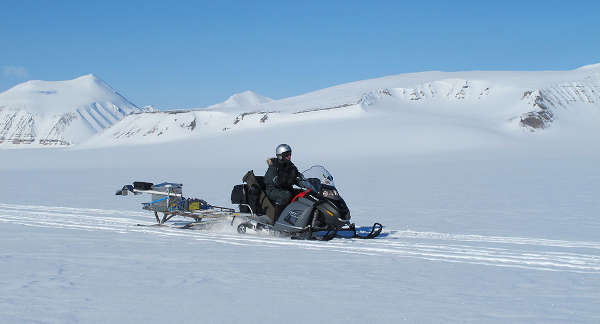
The instrument employs the same type of ground-penetrating radar used here on Earth to find buried utilities, underground caverns, and the like. In fact, Hamran uses it to study glaciers.
Tens of millions of miles away on Mars, however, he and his colleagues will be relying on Perseverance to do the work as it roams through Jezero Crater.
"We do some measurements while we are stationary," he said, "but most measurements will actually be gathered while the rover is driving."
More about the mission
A key objective for Perseverance's mission on Mars is astrobiology, including the search for signs of ancient microbial life.
The rover will characterize the planet's ancient climate and geology, pave the way for human exploration of the Red Planet, and be the first mission to collect and cache Martian rock and regolith (broken rock and dust).
Subsequent missions, currently under consideration by NASA in cooperation with ESA (the European Space Agency), would send spacecraft to Mars to collect these cached samples from the surface and return them to Earth for in-depth analysis.
The Mars 2020 mission is part of a larger program that includes missions to the Moon as a way to prepare for human exploration of the Red Planet. Charged with returning astronauts to the Moon by 2024, NASA will establish a sustained human presence on and around the Moon by 2028 through NASA's Artemis lunar exploration plans.
JPL, which is managed for NASA by Caltech in Pasadena, California, built and manages operations of the Perseverance and Curiosity rovers.
For more about Perseverance visit www.mars.nasa.gov/mars2020/ and www.nasa.gov/perseverance.
Amanda Barnett works for NASA.