 How to resolve AdBlock issue?
News
The Slide 1 fire in the Yolla Bolly Middle Eel Wilderness remains at 473 acres and 50% containment.
On Saturday, the fire stayed in its current footprint. As of 5 p.m. Saturday, the fire area was getting precipitation from storms moving through the area.
The remote, steep terrain is challenging, but firefighters are making steady progress on containment, forest officials said.
Firefighters have secured a containment line along the eastern edge of the fire. Two hotshot crews are working to secure the lines along the northern edge of the fire to keep it south of Buck Creek.
On the southern flank, aircraft are assisting crews working on that portion of the line. No new resources have been ordered, and several crews are being released.
There is a 30% chance of showers this evening and that weather will continue through the weekend with higher chances of showers Sunday afternoon. Temperatures are cooling and humidity is increasing gradually.
A wetter pattern is in the forecast for early next week. Higher humidity, cooler temperatures and precipitation can help keep fire behavior at low to moderate intensity, though gusty and erratic winds near thunderstorms remain a concern.
On the west side of the forest, thunderstorm activity will increase this evening, with high risk for lightning on dry fuels and potential for strong outflow winds in portions of Trinity, Mendocino and Lake counties.
Chances for rain will increase beginning Sunday night through Tuesday. Fire personnel are patrolling and monitoring for any new lightning starts.
This weekend the forest has seen an increase in visitors during the opening weekend of B zone archery hunting. Forest officials remind visitors that fire restrictions are in effect and a closure is in effect in the Slide 1 fire area.
Information about the Slide 1 Fire and other lightning-related fires is being updated on Inciweb at https://inciweb.wildfire.gov/incident-information/camnf-2023-slide-1.

Black women were more likely to die during pregnancy or soon after in every year from 1999 through 2019, compared with Hispanic, American Indian and Alaska Native, Asian, Native Hawaiian or other Pacific Islander, and white women. That is a key finding of our recent study published in the Journal of the American Medical Association. The risk of maternal death increased the most for American Indian and Alaska Native women during that time frame.
Maternal deaths refers to death from any cause except for accidents, homicides and suicides, during or within one year after pregnancy.
Notably, maternal mortality rates more than doubled for every racial and ethnic group from 1999 through 2019. Most maternal deaths are considered preventable because, in the U.S., maternal deaths are most often caused by problems that have very effective treatments, including bleeding after delivery, heart disease, high blood pressure, blood clots and infections.
Previous research has focused on high rates of maternal mortality in the Southern U.S., but our results showed that there are high-risk populations throughout the country.
For Black women in 2019, the states with the highest maternal mortality ratios – meaning the proportion of maternal deaths per 100,000 live births – were Arizona, New Jersey, New York and Georgia, along with the District of Columbia. Each had a maternal mortality ratio greater than 100 for Black women. In comparison, the national maternal mortality ratio for all women in the U.S. was 32.1 in 2019.
Among American Indian and Alaska Native women, the states with the largest increases in maternal mortality between the first half of the time period (1999-2009) and the second half (2010-2019) were Florida, Kansas, Illinois, Rhode Island and Wisconsin. In each of these states, risk of maternal death increased by more than 162%. Across the whole U.S., maternal mortality for American Indian and Alaska Native women was higher in 2019 than in all other years. Some individuals other than women, including girls, transgender men and people who identify as nonbinary, are also at risk of maternal death.

Why it matters
In order to prevent maternal deaths in the U.S., it’s crucial to understand who is most at risk. Prior to our study, estimates of maternal mortality for racial and ethnic groups within every state had never been released.
The U.S. has a high rate of maternal mortality compared to other high-income countries, despite spending more per person on health care. Disparities in maternal mortality have persisted for many decades.
Because most maternal deaths are preventable, interventions have the potential to make a significant difference. Better prevention of related events, such as preterm birth, is also necessary. We hope that our research continues to help policymakers and health care leaders put solutions in place to better prevent these deaths from happening.
Recently, U.S. Democratic Senators Cory Booker and Bob Menendez of New Jersey, Raphael Warnock of Georgia, and Alex Padilla of California reintroduced the Kira Johnson Act to improve maternal health outcomes for racial and ethnic minority groups and other underserved populations, citing our study.
What’s next
We would like to investigate how the most common causes of maternal death, such as blood clots, high blood pressure and mental health issues, are contributing to the overall estimates.
Understanding these trends will help clinicians and policymakers tailor solutions to be as effective as possible.
Our study did not include data from the pandemic years. So far, maternal mortality has only been reported at the national level for those years, but reports suggest that maternal mortality rates have increased since the start of the COVID-19 pandemic and that racial disparities have only gotten worse.
The Research Brief is a short take about interesting academic work.
Laura Fleszar, Public Health Researcher at the Institute for Health Metrics and Evaluation, University of Washington; Allison Bryant Mantha, Associate Professor of Obstetrics, Gynecology and Reproductive Biology , Harvard University; Catherine O. Johnson, Research Scientist in Public Health, University of Washington, and Greg Roth, Associate Professor of Medicine and Adjunct Associate Professor of Health Metrics Sciences, University of Washington
This article is republished from The Conversation under a Creative Commons license. Read the original article.
Dogs available for adoption this week include mixes of Anatolian shepherd, Belgian malinois, border collie, collie, Dogo Argentino, German shepherd, Great Pyrenees, hound, husky, kelpie, mastiff, pit bull, pointer and terrier.
Dogs that are adopted from Lake County Animal Care and Control are either neutered or spayed, microchipped and, if old enough, given a rabies shot and county license before being released to their new owner. License fees do not apply to residents of the cities of Lakeport or Clearlake.
The following dogs at the Lake County Animal Care and Control shelter have been cleared for adoption.
Call Lake County Animal Care and Control at 707-263-0278 or visit the shelter online for information on visiting or adopting.
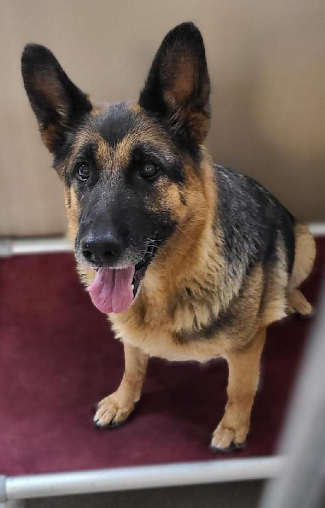
Female German shepherd
This 7-year-old female German shepherd has a black and tan coat.
She is in kennel No. 30, ID No. LCAC-A-5629.
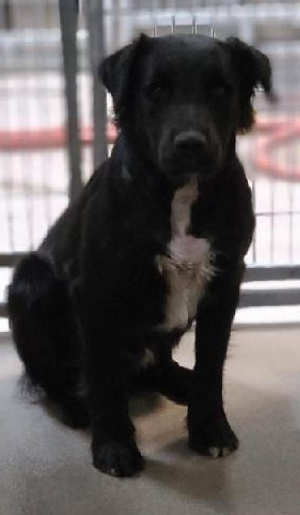
Male border collie
This 1-year-old male border collie has a black and white coat.
He is in kennel No. 9, ID No. LCAC-A-5643.
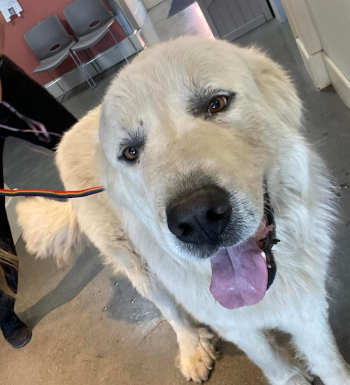
‘Cheetos’
“Cheetos” is a 6-year-old male Great Pyrenees with a white coat.
He is in kennel No. 17, ID No. LCAC-A-4849.
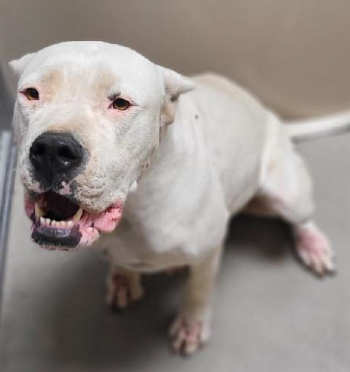
Female Dogo Argentino
This 3-year-old female Dogo Argentino has a short white coat.
She is in kennel No. 18, ID No. LCAC-A-5729.

Male pit bull terrier
This 4-year-old male pit bull terrier has a short gray coat.
He is in kennel No. 29, ID No. LCAC-A-5478.
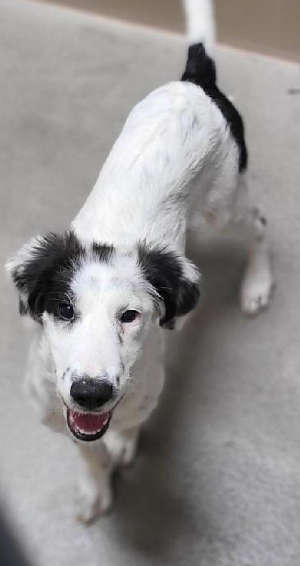
Female pointer puppy
This 3-month-old female pointer mix has a black and white coat.
She is in kennel No. 20, ID No. LCAC-A-5730.

Male Great Pyrenees
This 1 and a half year old male Great Pyrenees has a white coat.
He is in kennel No. 3, ID No. LCAC-A-5469.
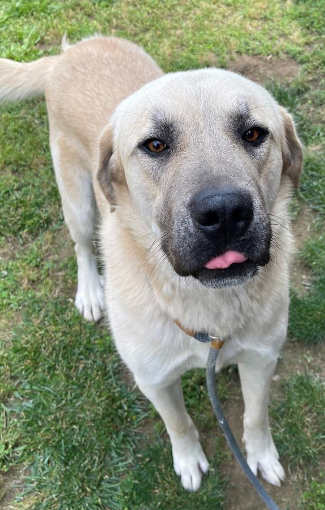
‘Jake’
“Jake” is a 3-year-old male Anatolian shepherd-mastiff mix with a short fawn coat.
He is in kennel No. 5, ID No. LCAC-A-5276.

‘Roasie’
“Roasie”is a 2-year-old female pit bull terrier with a short black and white coat.
She is in kennel No. 7, ID No. LCAC-A-5434.
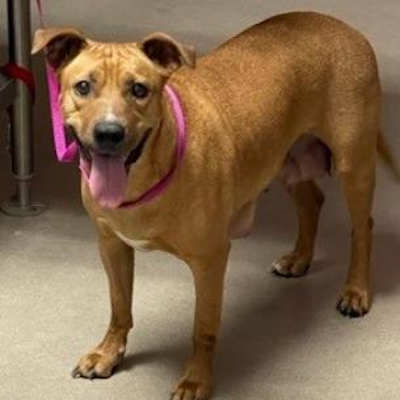
Female pit bull
This 3-year-old female pit bull has a short brown coat.
She is in kennel No. 8, ID No. LCAC-A-5505.

Female pit bull terrier
This 3-year-old female pit bull terrier has a brown and white coat.
She is in kennel No. 10, ID No. LCAC-A-5400.
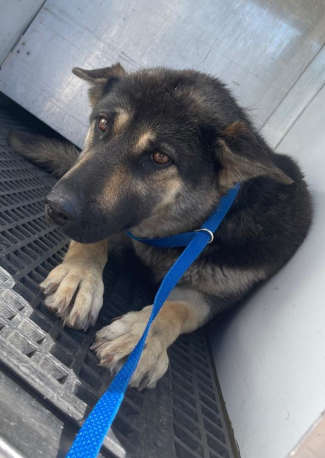
Female German shepherd
This 2-year-old female German shepherd has a black and tan coat.
She is in kennel No. 12, ID No. LCAC-A-5488.
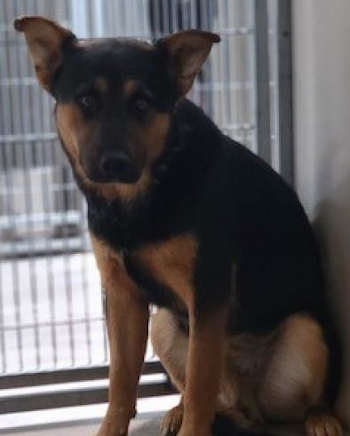
Male shepherd
This 2 and a half year old male shepherd has a short black and tan coat.
He is in kennel No. 14, ID No. LCAC-A-5479.

Female shepherd mix puppy
This 6-month-old female shepherd mix puppy has a short tricolor coat.
She is in kennel No. 15, ID No. LCAC-A-5659.
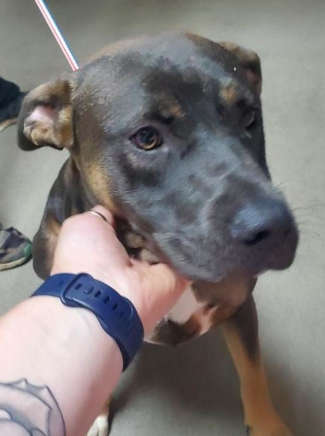
‘Zeta’
“Zeta” is a 1-year-old female pit bull terrier with a black and tan coat.
She is in kennel No. 16, ID No. LCAC-A-5427.

Male pit bull
This 1-year-old male pit bull has a short brindle coat.
He is in kennel No. 21, ID No. LCAC-A-5616.
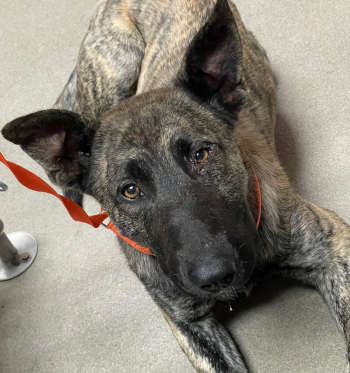
Male shepherd
This 2-year-old male shepherd has a black and tan coat.
He is in kennel No. 22, ID No. LCAC-A-5423.
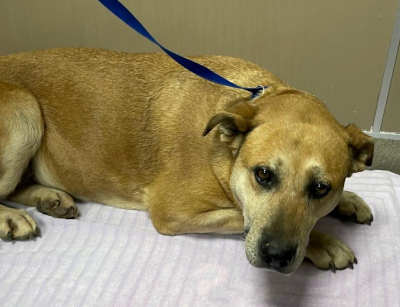
Female pit bull terrier
This 6-year-old female pit bull terrier has a short tan coat.
She is in kennel No. 24, ID No. LCAC-A-5410.

Male pit bull terrier
This 1-year-old male pit bull terrier has a short tan coat.
He is in kennel No. 25, ID No. LCAC-A-5628.
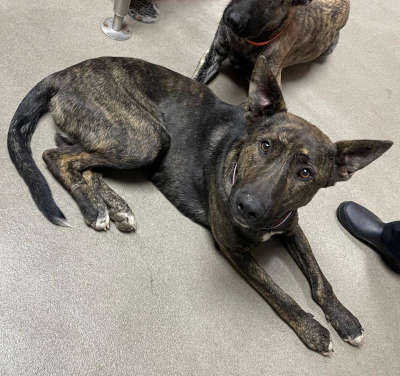
Male shepherd
This 1 and a half year old male shepherd has a short tricolor coat.
He is in kennel No. 26, ID No. LCAC-A-5424.
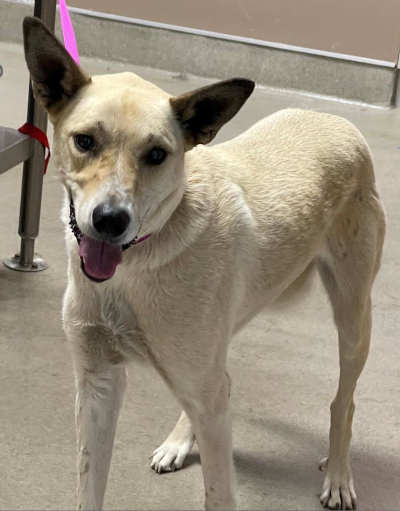
Female shepherd
This 2-year-old female shepherd has a short yellow and white coat.
She is in kennel No. 27, ID No. LCAC-A-5369.
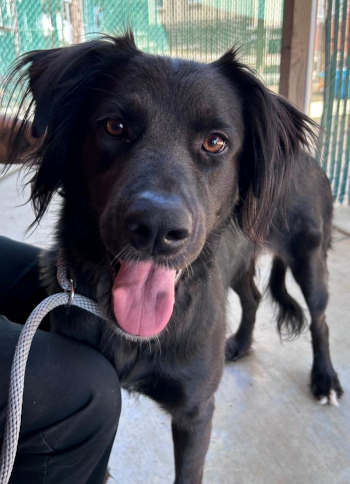
Female collie mix
This 3-year-old collie mix has a black coat.
She is in kennel No. 28, ID No. LCAC-A-5514.
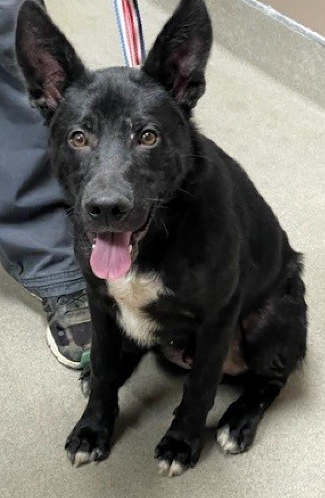
Male shepherd puppy
This 7-month-old male shepherd puppy has a short black coat with white markings.
He is in kennel No. 32, ID No. LCAC-A-5408.
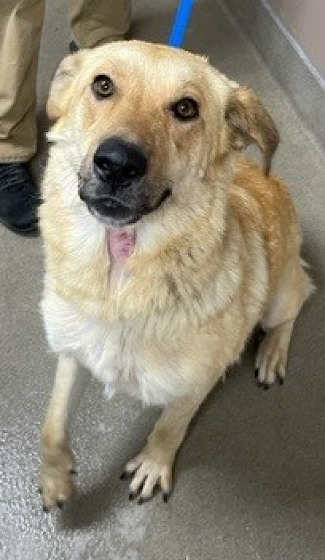
‘Nana’
“Nana” is a 2-year-old female shepherd mix with a short yellow coat.
She is in kennel No. 33, ID No. LCAC-A-5277.
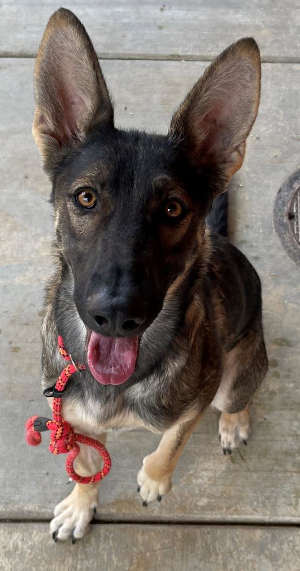
‘Dory’
“Dory” is a 1-year-old female German shepherd-Belgian malinois with a black and tan coat.
She is in kennel No. 34, ID No. LCAC-A-5323.
Email Elizabeth Larson at

NASA’s New Horizons team calls for the amateur astronomical community to augment the mission’s observations of Uranus and Neptune
NASA’s New Horizons spacecraft plans to observe Uranus and Neptune from its location far out in the outer solar system this fall, and the mission team is inviting the global amateur astronomy community to come along for the ride — and make a real contribution to space science — by observing both ice giants at the same time.
In September — in tandem with the Hubble Space Telescope — New Horizons will turn its color camera toward Uranus and Neptune. From New Horizons’ position in the Kuiper belt, more than 5 billion miles from Earth, these unique images acquired from “behind” the two giant planets will provide new insights into the atmospheres above and the energy balance within both worlds.
“By combining the information New Horizons collects in space with data from telescopes on Earth, we can supplement and even strengthen our models to uncover the mysteries swirling in the atmospheres of Uranus and Neptune,” said Alan Stern, New Horizons principal investigator from the Southwest Research Institute in Boulder, Colorado. “Even from amateur astronomer telescopes as small as 16 inches, these complementary observations can be extremely important.”
With New Horizons and Hubble focused on the details of the planets' atmospheres and the transfer of heat from their rocky cores through their gaseous exteriors, observers on Earth can measure the distribution of bright features on Uranus or characterize any unusually bright features on Neptune. They can also track those features much longer than either spacecraft.
Following the campaign, observers can post their images — as well as the details of when they were made and in what filter passbands — on X (formerly Twitter) or Facebook using the hashtag #NHIceGiants. The New Horizons team will see and collect the images and supporting information placed on these platforms using this identifying hashtag.
Full details on the campaign — including finder charts and observation tables — are available on the New Horizons website at (URL to come).
The Hubble images of Uranus and Neptune will be made publicly available in late September on the Mikulski Archive for Space Telescopes, or MAST, at https://archive.stsci.edu/.
The New Horizons team expects to receive the images of Uranus and Neptune from the spacecraft by the end of 2023 and will make them available as well.
The Johns Hopkins Applied Physics Laboratory in Laurel, Maryland, designed, built and operates the New Horizons spacecraft, and manages the mission for NASA's Science Mission Directorate. Southwest Research Institute, in San Antonio and Boulder, Colorado, directs the mission via Principal Investigator Alan Stern, and leads the science team, payload operations and encounter science planning.
New Horizons is part of the New Frontiers Program managed by NASA's Marshall Space Flight Center in Huntsville, Alabama.
Follow New Horizons on its incredible voyage at http://www.nasa.gov/newhorizons and http://pluto.jhuapl.edu.
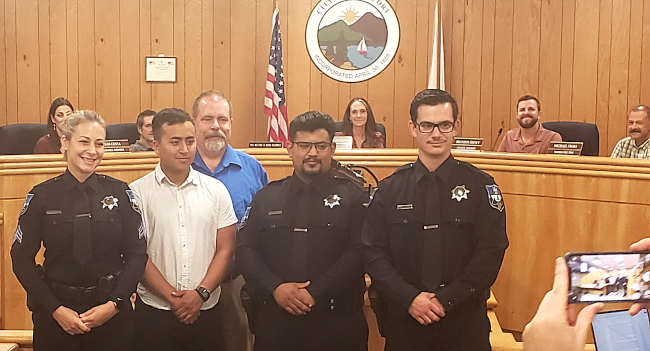
LAKEPORT, Calif. — After several particularly challenging years in which it struggled to find officers, the Lakeport Police Department is once again fully staffed.
During the Lakeport City Council’s regular Tuesday night meeting, Police Chief Brad Rasmussen introduced his department’s newest trainee and officers.
They include Alex Pizano, who is heading off to the police academy; officers Jonatan Moreno and Austin Eldred; and Sgt. Sarah Hardisty.
Before they were brought forward, Todd Freitas, the new president of the Lakeport Police Officer’s Association, spoke during public comment, telling the council, “Today is an important day,” with the introduction of the new department members.
Freitas said he’s pleased to see the new department members’ careers blossom, and he thanked city management for their work to fill the jobs.
“The last several years have been difficult times for law enforcement, not just locally but across the nation,” he said.
The police department is composed of a diverse group of law enforcement professionals, and Freitas commended Rasmussen, City Manager Kevin Ingram and Administrative Services Director/City Clerk Kelly Buendia, who he said have worked to provide open and honest communication with him and his association.
Freitas said his work is to ensure the association and the city retain quality staff. He added that he’s grateful to be a city of Lakeport employee, as he feels valued and supported.
Rasmussen, in his introduction of the new officers, thanked Freitas, the council, Ingram and Buendia, offering his gratitude for the help in restaffing his department, which has 13 sworn officers positions budgeted.
Rasmussen said Pizano is headed to the police academy in Santa Rosa, with an anticipated graduation date in December.
Pizano was born in Mexico and at age 2 came with his family to the United States, where he has grown up.
Rasmussen said Pizano was working at a local business when he applied for the Lakeport Police Department’s trainee program, testing well and being accepted. The program pays for the cost of a police officer candidate to attend the police academy.
Moreno is a veteran of the United States Navy, attended the police academy and had been working as a correctional deputy for the Lake County Sheriff’s Office when he was hired.
A community resident, Moreno is now in the field training process, required before he can go solo on the streets.
Eldred previously worked at the Ukiah Police Department.
Rasmussen said Eldred wanted to work in Lakeport since he lived here, so he also tested and was hired. He also is now in field training.
The fourth new hire is Hardisty, a 16-year law enforcement veteran who started her career with the Clearlake Police Department before moving on to the Lake County Sheriff’s Office for the last 15 years.
Hardisty found out the Lakeport Police Department was testing for sergeants and she applied, and was hired at that rank. Rasmussen said she started with his agency four weeks ago, and she required a shorter training before immediately being put to work training other officers.
“She is the first female that has ever held a supervisory position in our entire existence, which goes back to 1888,” Rasmussen said of the department.
Ingram said it wasn’t an accident that there were four new employees being introduced, as the city has been working very hard on recruitment.
“This is a national problem where we’ve seen shortages of officers,” Ingram said.
While it has been a challenge, Ingram said they have had success going out to the community to look for new hires. Trying out those new things “has been a huge help.”
He said it’s still a process, and it can take up to a year to get an officer on the street. With the new hires, “We’ve crossed a threshold that we haven’t been at in a long time,” he said, adding that all positions in the department are now allocated although the training requirements for the new officers mean they are still short of officers on the street.
Ingram added that Hardisty’s daughters have said she looks better in the blue uniform of the Lakeport Police Department. The sheriff’s office’s uniforms are tan and green.
“They are all a sight for sore eyes. We are really happy to have you,” Mayor Stacey Mattina told the new officers.
Councilwoman Kim Costa said she was glad they were there.
Later in the meeting, Costa recounted how she had seen a bull and cow heading onto the city streets near her home by Westside Park, and she called in the Lakeport Police Department.
The cows ended up heading back into the park. “Public safety was maintained,” Costa said.
She said police brought out a cowboy who she could hear calling to the cow, “Come on, Matilda.”
Hardisty responded to that incident. It was noted that the cows were owned by the same person who owned an emu that had escaped.
Costa said it was a lighthearted police interaction.
In other police department-related news, the council held a public hearing and unanimously approved a military equipment policy that is being updated to authorize the department to purchase a Daniel Defense SOCOMMK18 SBR CAL NATO 5.56mm x 45mm 10.3-inch barrel rifle.
Rasmussen also reported that the city will host its National Night Out event from 4 to 7 p.m. Oct. 3 at Library Park.
Email Elizabeth Larson at
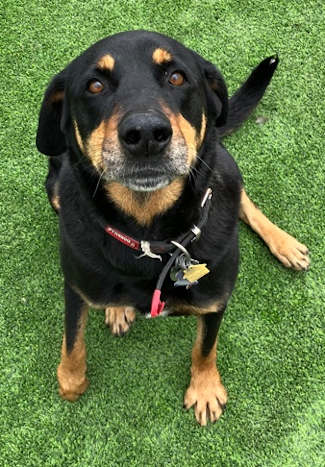
CLEARLAKE, Calif. — Clearlake Animal Control has many dogs of various breeds needing new homes.
The Clearlake Animal Control website continues to list 32 dogs for adoption.
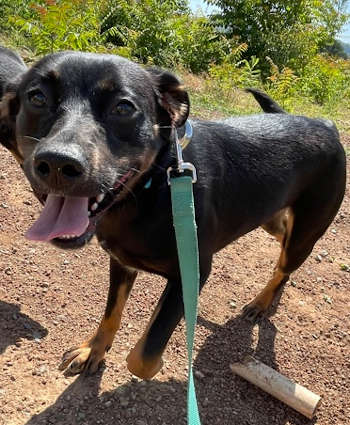
This week’s dogs include “Goliath,” a 6-year-old male Rottweiler mix.
“Emma” is another Rottweiler mix also available for adoption.
The shelter is located at 6820 Old Highway 53. It’s open from 9 a.m. to 6 p.m. Tuesday through Saturday.
For more information, call the shelter at 707-762-6227, email
This week’s adoptable dogs are featured below.
Email Elizabeth Larson at