 How to resolve AdBlock issue?
News
The Mike Thompson for Congress Committee will host the fundraiser from 5 p.m. to 7:30 p.m. at Lewis Hall at the Lake County Fairgrounds, 401 Martin St., Lakeport.
In November, Thompson elected to his sixth term in Congress with 68 percent of the vote.
The annual fundraiser will once again take electronics for recycling, and this year for the first time will donate reconditioned computers to local nonprofits, according to Thompson's staff.
Some local residents have stated that they plan to attend the fundraiser in protest as part of a series of tea parties that are springing up across the nation, targeting members of Congress as a sign of discontent with government performance and proposed new taxes. A nationwide demonstration is being organized for April 15.
The appearance locally follows Thompson's live telephone town hall for his constituents, which took place Wednesday.
More than 9,100 people participated in the call, according to Thompson's office. Thompson called the turnout for the meeting “inspiring.”
Because of high call volume, Thompson will respond in writing to the 200 voice mails left after the call by constituents.
Thompson told listeners on the call, “We're facing some of the toughest challenges that I've ever seen in my lifetime.”
California's unemployment is 10.5 percent, with many areas of his district surpassing that number.
Thompson assured North Coast residents that Washington is working to turn things around with the stimulus legislation, which he said is meant to add 3.5 million jobs to the nation's economy.
The stimulus funds have started to come in, with more than $32 million slated for education in the district, with $30 million set aside for transportation on the North Coast.
“Turning things around is going to be a big lift,” he said.
Thompson took questions from 11 constituents during the hour-long call.
Roberta from Kelseyville was unhappy that AIG's co-insurers were made whole on their investments. “I just feel that Congress has taken care of the wealthiest people in the world.”
She also asked about prosecutions of people who violated the US Constitution during the Bush administration. “We're still waiting.”
Thompson said he understands her frustration, but didn't believe just the rich are being helped.
If the economy had been allowed go go “over the cliff,” the recession would have turned into a depression, he said. AIG's situation is particularly galling due to the millions paid in retention bonuses. “That wasn't the intention,” said Thompson, adding that the government has received back between $50 million and $80 million of the bonus money.
Thompson said he believes the country is starting to see a return on its investment, with housing sales up and other signs of recovery appearing.
During the call Thompson also was confronted by a caller, who identified himself as James from Eureka, who challenged the congressman's votes for Israel, and asked when he was going to put America first rather than Israel.
“I put our district first, I put our country first, and I vote the best that I can” to help the district, state and the world, Thompson responded.
Thompson also was asked about health care – he said he supports affordable, universal health care – and addressing climate change. On the latter subject, Thompson said the stimulus bill has a number of provisions to move the country toward renewable energy. He said if climate change continues, the planet could see increases of between 3 and 10 degrees in temperature, which would lead to the death of three out of every five species, rising oceans, massive floods and dangers to water supply.
Pam from Humboldt said education is suffering, with so many teachers getting pink slips. “It's just devastating,” she said. “What can Congress do to help us?”
Thompson said $8 billion in the federal stimulus bill is meant to help education in California, including the $32 million headed for the First Congressional District. The California Congressional Delegation wrote Gov. Arnold Schwarzenegger to release the money quickly.
Sheila of Redwood Valley asked Thompson – a member of the Blue Dog Democrats, a coalition of fiscally responsible party members – what he thinks of President Barack Obama's budget.
Thompson said the budget has some things “that worry the heck out of me” but many thing he also supports.
“It's one of the first honest budgets I've seen in many years,” said Thompson, explaining that past budgets have excluded funding for the wars in Iraq and Afghanistan, instead tacking on the costs of those operations as emergency funding.
Obama promises that his budget will cut the deficit in half in four years, but Thompson said he's concerned about what happens after that.
John from Trinidad asked Thompson how he justified his vote for the TARP bailout, saying the congressman was in the same boat as the “drunken sailors” who got the country into its current mess.
“I didn't want to vote for that bill” Thompson said, adding that he didn't think anyone else wanted to, either.
At 6 p.m. on a Thursday last fall then-Treasury Secretary Henry Paulsen and Federal Reserve Chairman Ben Bernanke came to Congress and said, “We have a problem,” Thompson recalled.
The men told Congress that the economy was getting ready to implode and the only way to stop it was to give Paulsen $700 billion, with no strings attached and no oversight, to begin the fix.
Congress came back the next week and started assessing the problem. The alternative to the action Congress ultimately took was to let the entire economy crash, which Thompson said would have been irresponsible.
He voted against the initial bill that would have given Paulsen the money with no oversight. The rewritten bill, for which Thompson voted, has increased FDIC insurance. Thompson said he also received letters of commitment from Speaker of the House Nancy Pelosi and then-Sen. Obama that they would address the greater oversight issues.
Thompson said he met with experts from across the country in making his decision on the bill. “I don't think there was any other choice at the time, as terrible as it seems.”
He said that he's seeing positive signs in the current economy.
The state of California just sold $6.5 billion in government bonds, which is a pretty serious reversal from where the state was last fall, he said.
John from Davis asked how much of the president's budget will help small business, which has historically been shown to be a main creator of jobs.
Thompson said the Obama administration has proposals that would benefit small business, including making the research and development tax credit permanent, billions of funds to be distributed through the Small Business Administration, special funding for rural businesses and allowances that would give small business the ability to write off capital expenses in the same year as purchase.
“As tough as things may be right now, we're going to recover from this and we're going to do great things as we've always done,” Thompson said in concluding the call.
E-mail Elizabeth Larson at
{mos_sb_discuss:3}
The California Highway Patrol reported that the man, whose name was not released, was in a collision that was reported at 3:18 p.m. on Main Road, a few miles from Mill Creek Road on Cow Mountain.
The lone rider had screamed “Help!” to a passerby and was said to be trying to get back up to the road, according to the CHP report.
He had landed near his bike off the road after the collision. His leg reportedly hit a tree after he slid off the roadway, the CHP reported. Initially neither he nor his bike could be seen from the roadway.
Cal Fire responded to the scene with resources that included a helicopter, the CHP said.
CHP reported that the rider was transported to Ukiah Valley Medical Center.
No further information was available late Friday.
E-mail Elizabeth Larson at
{mos_sb_discuss:2}
March 31 has been designated by the CHP as a “Vehicle Occupant Restraint Day.”
“The goal of this campaign is to stress that seat belts save lives,” said CHP Commissioner Joe Farrow.
“More than 30 percent of all vehicle passengers killed statewide in 2007 and 2008 were not buckled up at the time of the collision,” Farrow explained. “We hope people will learn from it and take the extra seconds to put on their seat belt or properly restrain their child. There's no do over for someone killed because they failed to buckle up.”
CHP officers on grant-funded overtime, provided by the Office of Traffic Safety (OTS), will take to the road specifically looking for violations of seat belt and child safety restraint laws.
According to OTS, seat belt usage by California motorists is at a record high 95.7 percent. One of the CHP’s primary goals is to raise that number even higher, an effort that will require the public’s
cooperation.
Officer Steve Tanguay of the Clear Lake CHP office said the county had a 94.5 percent occupant restraint compliance in 2008.
In 2008, the California Highway Patrol (CHP) issued 204,187 citations to drivers and passengers who failed to buckle up.
That figure does not include the 17,076 tickets issued for child safety seat violations. California law requires children younger than age 6 or weighing less than 60 pounds to be properly secured in the back seat. Free child safety seat inspections and installation is provided at CHP offices throughout the state.
Locally, Tanguay said CHP issued 683 occupant restraint citations in 2008.
“We all need to have reminders,” said Farrow. “By having the black-and-whites out on the road, we want to educate the public to remind them to wear their seat belts. We all get a little careless sometimes, but in this case, carelessness can be deadly.”
{mos_sb_discuss:2}
The first publicly visible activity of the 2010 Census is ahead of schedule, officials reported this week.
The address canvassing operation will be conducted out of 151 local census offices across the U.S., including Northern California offices in Oakland, Stockton, San Francisco, San Jose and Santa Rosa.
Address canvassing operations will run from April 6 through June 12 in Oakland, San Jose, San Francisco and Stockton.
Later, address canvassing operations will run April 20 through June 26 in Santa Rosa.
In most cases, census workers will knock on residents’ doors to verify addresses and inquire about additional living quarters on the premises.
Nationwide, more than 140,000 census workers will participate in the address canvassing operation; a critically important first step in assuring that every housing unit receives a census questionnaire in March 2010.
In Northern California, approximately 5,400 people will carry out the address canvassing operation.
The countdown to the 2010 Census is officially one year out on April 1.
“The 2010 Census will be the largest peacetime mobilization in our nation’s history,” said Ralph Lee, Seattle Regional Director at the U.S. Census Bureau.
The Seattle Regional Census Center is headquartered in Bothell, Wash., and coordinates census operations for the five-state territory of Northern California, Oregon, Washington, Idaho and Alaska.
The Northern California area includes Watsonville along the coast as well as Stockton in the Central Valley.
The US Constitution requires that everyone living in the United States be counted every 10 years.
“The goal of the census is to count everyone once, only once, and in the right place,” Lee said.
The census is used for reapportioning seats in the U.S. House of Representatives and the distribution of more than $300 billion in federal dollars every year to state and local governments.
Over the last several years, the Census Bureau has been actively working on updating its geographic databases and master address files.
From implementing the Local Update of Census Address (LUCA) program where more than 11,500 tribal, state and local governments participated in a review of the Census Bureau’s address list for their area, to increasing the precision of the GPS mapping, many advances have been made to compile the most comprehensive listing of addresses in the nation.
The operation will use new hand held computers equipped with GPS to increase geographic accuracy. The ability to capture GPS coordinates for most of the nation’s housing units will greatly reduce the number of geographic coding errors caused by using paper maps in previous counts.
This is the first census to include group quarters (such as dormitories, group homes, prisons and homeless shelters) in the address canvassing operation, which should improve both the accuracy and coverage of the final count.
There will be one final opportunity to add new home construction in early 2010 prior to the mailing of the census questionnaires.
Census workers can be identified by the official Census Bureau badge they carry. During the address canvassing operation, census workers may ask to verify a housing structure’s address and whether there are additional living quarters on the property.
Census workers will never ask for bank or social security information. All census information collected, including addresses, is confidential and protected by law. By law, the Census Bureau cannot share respondents’ answers with the FBI, the IRS, CIA, Welfare, Immigration, or any other government agency. No court of law or law enforcement agency can find out respondents’ answers.
All Census Bureau employees — including temporary employees — take an oath for life to keep census information confidential. Any violation of that oath is punishable by a fine of up to $250,000 and five years in prison.
{mos_sb_discuss:2}
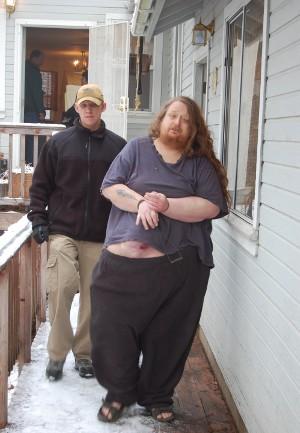
COBB – A local man is in custody in Utah, where he's facing federal prosecution for allegedly attempted to lure a 13-year-old Utah girl to travel to his home and have sex with him.
Robert Laverne Davison, 40, of Cobb was in federal court in Salt Lake City on Monday for his first appearance in the case before Judge Magistrate David Nuffer. At that time Davison pleaded not guilty.
A 12-week investigation conducted by the Centerville, Utah Police Department, the Utah Internet Crimes Against Children Task Force (ICAC) and the Federal Bureau of Investigations led to an indictment, issued Feb. 4, against Davison alleging the one count of coercion and enticement that took place between June 1 and Nov. 13, 2008.
If convicted, Davison faces a potential maximum penalty of life in federal prison with a 10-year mandatory minimum sentence, according to the US Attorney's Office in Utah.
The investigation began last November when the Centerville Police Department was contacted regarding a missing 13-year-old girl, the agency reported.
Law enforcement found the girl at a Salt Lake City bus station the same evening as she was reported missing. Officials reported the girl was waiting to board a Greyhound bus to California. The case alleges that Davison persuaded a third party to use a credit card to purchase the bus ticket in this state.
Officials found that the girl had been in contact with a man she knew only as “Bear” – alleged to be Davison – while playing an Internet game, “World of Warcraft.” The teen and Davison allegedly began chatting through instant messaging, and officials believed he convinced the girl to meet him in California.
The Centerville Police Department contacted the Utah Internet Crimes Against Children Task Force to assist in the investigation, which the FBI also joined.
Task force agents performed forensic scans on computers at the girl’s home and her cell phone. The information on the computers led investigators to believe that Davison was engaging in sexually explicit conversations and intended to have the girl travel to California for sexually related purposes.
The investigation led to the Feb. 4 indictment and a subsequent arrest warrant issued for Davison.
On Feb. 12, the FBI went to Cobb, where they arrested Davison.
Capt. James Bauman of the Lake County Sheriff's Office said sheriff's deputies assisted the FBI in the arrest and search warrant service.
During the search of Davison's house officials found two firearms, Bauman said.
Bauman said that Davison is a convicted felon and is not allowed to have firearms. He did not have information on Davison's previous conviction.
The FBI chose not to file charges against Davison for the firearms, but the sheriff's office plans to pursue it. “We have submitted a complaint to our local district attorney,” Bauman said.
Local officials have had two previous contacts with Davison, said Bauman, but neither involved him being charged with a crime. In a June of 2007 contact Davison reported being the victim of domestic violence.
Davison remained in custody in California for more than a month before being transported by the US Marshal's Office to his Utah court appearances, according to a March 17 letter to Kevin Barry, assistant US attorney for the Northern District of California, from Barry J. Portman, a federal public defender for the district.
In that letter, Portman also called attention to a large and inoperable hernia that Davison has “that could burst at any time, resulting in a life threatening situation.”
During the court appearance Monday, Judge Nuffer ruled that Davison will stay in the custody of the US Marshal's Service pending his trial due to concerns of flight risk, previous history and the discovery of the firearms. Nuffer also ordered that Davison been seen by Davis County, Utah medical staff.
U.S. Attorney for Utah Brett L. Tolman called the Davison case “another graphic reminder of the threats we continue to face in protecting our children from Internet predators.”
Davison is scheduled to go on trial June 1 before Judge Dale A. Kimball.
E-mail Elizabeth Larson at
{mos_sb_discuss:2}
The action comes at a time when the state’s official unemployment rate currently stands at 10.5 percent.
Here in Lake County, an initial Employment Development Department report for February shows that the county's unemployment rate is 15.9 percent, as Lake County News as reported.
AB 23 X3, authored by Assemblyman Joe Coto (D-San Jose), will provide an additional 20 weeks of unemployment insurance benefits to California workers who have already received benefits for the current maximum duration of 59 weeks.
The funding will come from federal stimulus dollars from the American Recovery and Reinvestment Act (ARRA) of 2009.
“This legislation enables California to gain up to $3 billion from the federal government in 2009 without creating an additional cost burden for our state,” said Senator Patricia Wiggins (D-Santa Rosa), who voted to pass AB 23 X3.
The bill, which was previously approved by the Assembly, cleared the Senate by a vote of 38-0, and now heads to the desk of Gov. Arnold Schwarzenegger for his signature.
The second bill, AB 29 X3 – co-authored Assemblyman Coto and Assemblyman Martin Garrick (R-Carlsbad), establishes an “alternative base period” to determine if jobless individuals have earned sufficient wages to qualify for unemployment benefits.
The ARRA will provide California $839 million in federal funds to support the unemployment program if this bill is implemented.
California's existing base period excludes earnings in the last three to six months of employment. AB 29 X3 specifies that unemployed persons who fail to qualify for benefits under the existing base period would then have their eligibility determined under the alternative base period, in which earnings as recent as one to three months may be counted.
“AB 29 X3 is essential for the tens of thousands of seasonal workers who are currently unemployed in California,” Wiggins said.
AB 29 X3, which passed the Senate on a 31-7 vote, also includes efficiencies in the dispute resolution process between employers and workers by allowing for telephone participation during hearings of the Unemployment Insurance Appeals Board.
The bill, which now heads to the Assembly for a final vote, also provides assurance that employers are notified when a former employee files for benefits.
“The most important thing we can do right now to help our economy and the day-to-day lives of Californians is to make sure those who are unemployed have the cash to pay their bills and feed their families,” said Senate President pro-Tem Darrell Steinberg (D-Sacramento). “The Legislature and the Schwarzenegger administration moved quickly and worked as a team to make the needed changes to guarantee these much needed federal funds. I look forward to continuing to build on this positive momentum.”
Last Saturday, the Employment Development Department began opening its unemployment insurance call centers on Saturdays from 10 a.m. to 2 p.m. in order to meet the higher demand.
The agency's staff also will remain available to file unemployment insurance claims or assist customers in submitting questions online for response. Claims will be filed and issues resolved within five days.
Call center phone numbers are 800-300-5616 (English) or 800-326-8937 (Spanish).
{mos_sb_discus:3}