 How to resolve AdBlock issue?
News
If you get your coffee on the run, perhaps you have a favorite coffee house or purveyor.
With a new, recently opened shop in Lakeport, residents of the county seat have several choices for satisfying their java cravings.
Harbor House Espresso Bar, Angelina’s Bakery and Kelsey Creek Coffee Co., all on Main Street, and Rico Aroma Coffee House on 11th Street offer a variety of coffee selections and specialty coffee concoctions.
They face corporate competition from Starbucks, a new line of coffee drinks at McDonald’s, and an economy that may have coffee lovers choosing less expensive options from mini-marts or brewing their own pots of caffeinated (or decaf) beverage at home.
How do the smaller, “mom-and-pop”-type coffee businesses attract new customers and attempt to keep a loyal customer base?
Owners of the four establishments surveyed say their success hinges on providing good customer service, excellent products, variety in food and drink, and community involvement.
“It is our philosophy to provide the highest quality products with passion, excellence and innovation,” said Angy DeSimone-Lundeen, who along with her husband Brian Lundeen owns and continues her parent’s family business, Angelina’s Bakery & Espresso.
She said she realizes customers have a choice. “They are in a sense voting with their dollars, promoting a sustainable economy when they choose to support locally-owned businesses.”
Martha and Ron Benway, owners of Harbor House Espresso Bar, agree, noting in their brochure that they have “a strong sense of community.”
Listing a number of local events in which they regularly participate, the Benways said “a community that helps one another and lives strong and independent” is what they strive to help accomplish. “We hope we can help keep Lakeport fun and lively.”
Harbor House is a drive-through espresso bar and offers delivery of their products as well.
“We offer great customer service and a friendly atmosphere,” says Brigette Lefort of Rico Aroma Coffee House.
Her parents, Saul and Debbie Lefort, are owners of the shop, where WiFi (wireless Internet connectivity), an in-house computer, and a 42-inch flat-screen television are available for customer use.
“Quality is No. 1” when it comes to customer satisfaction, said Saul Lefort. It is followed closely by “consistency,” he added, stating that consistency and quality apply to both products served and treatment of customers. The family-run business has to “keep a certain standard,” he said. “Customers are looking for high quality. People appreciate our products. They like our place.”
Saul Lefortt said his family relies on word of mouth and repeat business for attracting customers. However, he recently initiated a new promotional program. He introduced Rico Aroma’s new coffee cup sleeve which contains language inviting customers to return the sleeve for the next cup; purchase six drinks and get one free.
He said he is hoping the idea becomes popular with customers, saving them money and helping the environment at the same time.
At Kelsey Creek Coffee Co., the newest coffee house in Lakeport, owners Amanda and Bruce Beyer hope to entice customers by offering coffees roasted onsite, WiFi availability, live entertainment on a newly-built stage, and plans to offer another choice in beverage: micro-brews. The Beyers recently obtained approval for their liquor license and look forward to having a wide selection of micro-brews available to customers.
For the time being, coffee is the main menu item, and coffee lovers can purchase the organic java by the cup or by the bag for their own brewing.
“We fresh roast all of our own coffee. It is all organic and the freshest coffee you will drink,” said Bruce Beyer.
As the business grows, he said, additional products and services, such as extending the hours of operation, may be considered by the owners.
Like the Beyers, owners of Angelina’s, Harbor House and Rico Aroma stay competitive with drinks other than coffee and various selections of food. Angelina’s offers a full service scratch bakery, deli, artisan breads, and a catering company. Specialty drinks include espresso drinks, smoothies, blended and iced coffee. DeSimone-Lundeen said her business will soon open an ice creamery, a stone slab ice cream shop featuring fresh baked goods to mix into 16 flavors of ice cream.
Rico Aroma’s selections include all natural fruit smoothies, juice, tea and energy drinks. Specialty drinks on the menu include Mexican mocha, java chip, Milky Way, and other flavored coffees. Food choices include breakfast burritos, bagels, pastries and soft-serve ice cream.
At Harbor House, smoothies, frappes, chai and blended chai are among the drink favorites. Specialties include flavored mochas and lattes, cappuccinos, and coffee and espresso blends. Also available are hot and cold tea, Italian sodas, baked goods and fruit.
Angelina’s Bakery & Espresso
365 N. Main
Telephone: 707-263-0391
Hours: Monday through Friday, 7 a.m.-5 p.m.; Saturday, 8 a.m. to 2 p.m.
Time in business: Nine years in Lakeport following six years in Kelseyville.
Harbor House Espresso Bar
1151 S. Main
Telephone: 707-263-7004
Hours: Monday through Friday, 6 a.m. to 6 p.m.; Saturday, 7:30 a.m. to 4 p.m.; Sunday, 8 a.m. to 2 p.m.
Time in business: Nearly 12 years under current owners; originally opened in 1995.
Kelsey Creek Coffee Co.
930 N. Main
Telephone: 707-263-5600
Hours: 7:30 a.m. to 5 p.m. daily
Time in business: Four months in Lakeport, following 10 years in Kelseyville.
Rico Aroma Coffee House
1025 11th St.
Telephone: 707-262-0285
Hours: Monday through Friday, 6 a.m. to 6 p.m.; Saturday and Sunday, 7 a.m. to 6 p.m.
Time in business: Five years; also operates a coffee house in Clearlake.
For the first time in 33 years, the Russian River Blues Festival and the Russian River Jazz Festival merged into one event. Prior to this year, the RR Blues Festival was presented for two days in June while the RR Jazz Fest was historically held in September, both in the resort town of Guerneville.
Two years ago the festivals were sold to Omega Events. In a paring down move related to the economy in general, Omega decided to shave a day from each festival and make it a one-weekend affair this year. Jazz on Saturday, Sept. 12; blues on Sunday, Sept. 13.
Appearing at this year's Jazz Fest on Saturday were Jackiem Joyner, East Bay Soul, Jazz Attack featuring Rick Braun, Jonathan Butler and Richard Elliot, and Al Jarreau.
Sunday's blues lineup included The Delta Wires, The Legendary Rhythm & Blues review featuring Tommy Castro, Bernard Allison, Rick Estrin and Janiva Maness, Dr. John and The Neville Brothers.
I left Lake County before sunrise on Saturday under a dubious weather forecast for the weekend. Fair and warm with temperatures in the 80s on Saturday with the semi-ominous threat of showers and temps in the 70s on Sunday. As I wound around Highway 20 exiting Lake County I observed lightening strikes in the distance.
After picking up my companion and completing all the gender specific tasks that make a date of this magnitude possible we headed toward Guerneville. We had booked a room at the Sonoma Orchid Inn which we would actually pass en route to Johnson’s Beach where the festival(s) have been held all these years. My fiancée/companion/date wanted to see the joint in the daytime so I begrudgingly (I wanted to get to the festival) swung in to the grounds of the inn to take a peek.
When we finally got settled in on the beach – blanket down, chairs up, etc. – a very talented Jakiem Joyner was on stage. (We missed opening act East Bay Soul.)
Recently tagged the “Debut Artist of the Year” by Smooth Jazz News, the 28-year-old honed his chops on the road with the likes of Marcus Johnson, Bobby Lyle and Keiko Matsui.
A great sax player and showman, the Norfolk, Virginia native tantalized and teased the crowd with a set interspersed with selections from his recent Billboard charting CD, “Lil’ Man Soul.”
The climax of his set was convincing the crowd that he would attempt to reach a high note that he’d never done publicly before. Running up the scale three times then pausing, thus heightening the suspense, when he finally hit the note it was release and pandemonium. Mr. Joyner had convinced the audience that he is the real deal.
I must confess that I never liked the industry catchphrase “smooth jazz.” I preferred the East Coast edge of straight ahead jazz or hard bop. Of course, now some instrumental funk could always jerk my musical chain as well.
Early in his career, I didn’t pay much attention to Rick Braun as he was one of the first artists to be saddled with the smooth jazz description. Consequently, his performance at the RR was really the first time I gave Mr. Braun a serious listen.
Jazz Attack, the group he anchored with Jonathan Butler and Richard Elliot, really blew me away.
First of all, they bounded on stage with the same clothes on they’d worn on their twice-delayed, fogged-in plane. No matter. Later for the visual.
These cats touched my main auditory nerve with a “nothin’ but the funk” set of steamy R&B nuanced selections.
South African Jonathan Butler killed us with “Lies.” Former Tower Of Power saxman Richard Elliot apparently was on a different weather delayed flight. When he hit the stage 20 or so minutes into the set the aggregation launched into the title track from his latest CD, entitled “Rock Steady.” Their rendition of Curtis Mayfield’s “Move On Up” became part of a frenzied funky medley that had the crowd howling with delight as Jazz Attack ended their set.
Not only has Al Jarreau won five Grammies, he is the only singer ever to win them in three different categories.
Jarreau hit the stage early at the Russian River and stayed late. He mesmerized the crowd with his vocal effects. Jarreau delivered songs from his four decade repertoire that showcased his voice as a Jazz improvising instrument.
Midway through his set he noticed the kayakers on the opposite shore of Johnson’s Beach and playfully razzed them: “Boat people. Boat people.”
He then nuanced the lyrics to “Wade In The Water” to the folks in the river. “Wade in the waterrr children, cuz Al Jarreau wants his MONEYYY!”
It was hysterical. Jarreau performed over an hour and referenced the nonpaying “boat people” kindly, again in his encore.
The weatherman proved a little to accurate for our tastes on Sunday the 13th at the Russian River Blues Festival.
At showtime, there was a 10-degree drop in the temperature from the previous day and a light rain was falling before noon.
That didn’t stop Delta Wires from playing like men possessed. The band features the original horn section from Cold Blood, augmented by the supernatural harp playing of Ernie Pinata.
I’d heard of the Delta Wires before but had not really investigated how good they are. They played Chicago Blues. They played New Orleans Blues. They definitely played the Oakland Funk which they claim as there turf.
The great Tommy Castro fronted the Legendary Rhythm & Blues Revue which featured Bernard Allison, Rick Estrin, Kid Anderson and Janiva Magness. Those folks are all regulars on the Legendary Rhythm & Blues Cruise. They brought the Blues Cruise Party to the Russian River.
They closed with a tribute to the recently deceased Queen Of The Chicago Blues, Koko Taylor – a rollicking version of her signature tune “Wang Dang Doodle.”
The revered, Dr. John, The Night Tripper brought his New Orleans brand of funk to the stage next. His 2008 CD, “The City That Care Forgot” and was awarded a Grammy for Best Contemporary Blues Album. His playing was superb and his voice in good shape. The rain shortened his set, thought he did an encore, closing with “Right Place, Wrong Time.”
The amount of rain necessitated some stage changes before the Neville Brothers went on. Some of the fainthearted fans couldn’t stand the rain and headed for the exit. They missed a grand performance by the First Family of New Orleans.
Everybody is older now and baby brother Cyril Neville is more out front than ever before. Cyril is sportin’ a new CD, “Brand New Blues” that is not to be missed.
Aaron Neville, he of the angelic tenor, still makes the ladies go crazy. Charles Neville can still channel John Coltrane on sax. Art Neville, the keyboard wizard, the one they call Papa Funk still anchors that Neville sound.
Those tight harmonies rooted in first and second line New Orleans tradition, never fail to remind me that, the Big Easy is a musical nation unto itself. It reaches around the globe though as evidenced by the Neville’s’ closing medley, “One Love” and “People Get Ready.”
Keep prayin’, keep thinkin’ those kind thoughts.
*****
Upcoming cool events:
Monday, Sept. 21
Blue Wing Blues Monday. The Levi Lloyd Band, 6:30 p.m. to 9 p.m., Blue Wing Saloon & Café, 9520 Main St., Upper Lake. Information: 707-275-2233 or www.bluewingsaloon.com .
Tuesday, Sept. 22
Soulive w/ The Shady Horns, Nigel Hall and Fred Wesley at Yoshis Oakland. Call 510-238-9200 for showtimes.
Wednesday, Sept. 23
Soulive w/ The Shady Horns, Nigel Hall and Fred Wesley at Yoshis Oakland. Call 510-238-9200 for showtimes.
Thursday, Sept. 24
Open mike night, 6 p.m. Blue Wing Saloon & Café, 9520 Main St., Upper Lake. Information: 707-275-2233 or www.bluewingsaloon.com .
Friday, Sept. 25 through Sunday, Sept. 27
Stanley Jordan at Yoshis Oakland. Call 510-238-9200 for showtimes.
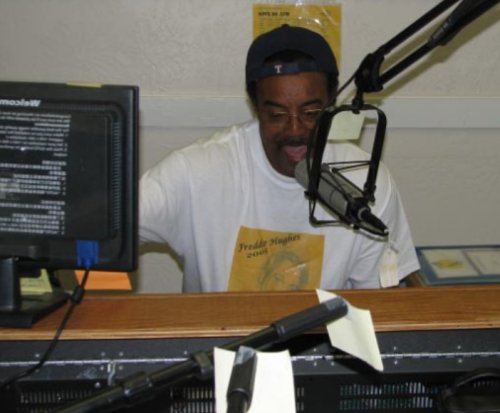
T. Watts is a writer, radio host and music critic. Visit his Web site at www.teewatts.biz .
The public can get a closeup look at float planes on Saturday, talk with pilots and witness a spectacle of aerial events including water-bombing contests, a parade of seaplanes, fly-bys and more.
Seaplanes and amphibians at the Splash-In will include Grummans, Republics, Lakes, Cessnas, Pipers, deHavillands and a variety of experimental aircraft modified with floats.
For pilots, registration is from noon to 5 p.m. on Friday, Sept. 25, at the Skylark Shores Resort, 1120 N. Main St.
The Skylark Shores Resort docks will serve fixed-float planes and the ramp at the Natural High School field is available for amphibious seaplanes. Land planes or aircraft unable to land on water more than once will be welcomed at Lampson Field, a few miles away.
Shuttle service will be available Saturday and Sunday from Lampson Field to the seaplane venues.
For more information, visit www.clearlakesplashin.com .

In the Bible, Genesis 42 chronicles the tale of Joseph, the famine in Canaan, and his brothers going to Egypt for food. I’ll stop there so I don’t spoil the ending for you.
Rome during the time of Caesar would have been crippled without Egyptian grain. With all of Rome’s men in the military off conquering the world they were lacking farmers and had to import their food.
Now if you are like me, at this point you might start to wonder: how is a country like Egypt, that consists of sand, camels, and pointy brick buildings, so full of food?
Nomadic people settled in ancient Egypt because it had a good climate, grassy fields, and was an excellent place to grow food. They raised livestock and crops, and hunted wildlife in this utopian land. Ancient Egyptians actually called their land “Kemet” which means “black land.” This was referring to the rich black soil that they grew their crops in.
Huh? What? Rich fertile soil? We were talking about Egypt right? I’ve seen the travel posters … lots and lots of sand! But Egypt wasn’t always hot, sandy and dry.
The Nile River flows northward from central Africa. Every year after the rainy season the Nile would overflow its banks and deposits the rich silt that nourished the soil. After the flood waters receded, an elaborate irrigation system kept the farms growing almost continuously under the cloudless skies.
Ancient Egypt was an agricultural economy. They even had the technology to turn unusable property into cultivatable land. Because of this technology they were the world’s bread basket. They had so much agricultural land that they could even grow papyrus to make paper.
I’m sure you are thinking, “So what happened?” The short answer: the Egyptians pushed the land too hard for too long to feed too many. The nutrients that were in the soil went into the grains, and then those grains were sent to other lands, such as to feed Joseph’s family in Canaan and Caesar’s armies all over the known world.
Nutrients to replenish the land weren’t sent back to Egypt. Eventually the land was so weak that it was easily swallowed by the nearby Sahara desert, and without technology from an advanced alien civilization from another galaxy or a touch from the finger of God, it will never be fruitful again.
Scientists have called the process of a rich land turning into desert “desertification.” They are noticing this process start in Central California and can see the conditions being ripe for it to consume the entire Central Valley. They are looking for ways to stop the process but are thwarted by people trying to change the situation by means of stop-gap technological proposals or useless programs. Nobody wants to admit that stopping the desertification is a problem that would need serious social, political and economic changes to occur.
Driving down Highway 5 through the Central Valley you’ll see acres and acres of dead trees. My daughter and I joked at the sad landscape and said, “It’s a firewood farm,” and “You don’t want to over water your firewood orchard!” The sad truth of the situation is that water to the Central Valley farmers is being severely rationed; they get only 10 percent of the water they need to keep their farms fully functioning.
Signs proclaiming the “Congress Created Dust Bowl” are posted along the highway every few miles. This rationing means that not only are we accidentally causing the process of desertification, we are behind it giving it a push.
The reasons for the water rationing have to do with endangered fish and pollution that are affecting the water availability and rights for the Central Valley, but I’m not going to get into all of that with this column.
Desertification has nothing to do with global warming; it has to do with straining the land, so driving a Prius won’t negate the process. Being in the midst of a drought does contribute to the process but it isn’t the only factor.
Just like Egypt shipped away its soil’s nutrients locked in their grain, water in the fruits and vegetables that once stayed in the valley are sent out and not returned. (Actually, we here living around Clear Lake DO return that water to the Central Valley from our lake and reservoir, but the rest of the nation and world does not.) By not remembering the history of Egypt we are repeating it.
Desertification of the Central Valley can only be stopped with water and nutrients being returned and the land replenished. Just like the Middletown Geysers were losing water and needed to be replenished the Central Valley needs replenishing of water and nutrients.
We would need to stop farming the Central Valley, let the water table return to its natural level and allow the soil to lay fallow to replenish, but I’m sure you’ll agree, that ain’t gonna happen. Elected officials will never ask people to sacrifice in order to save the Central Valley, because that won’t get them reelected.
We as a culture are too greedy and will continue to pull everything we can from the valley until it can give no more. We are unable as a species have the patience for a project that could very well take centuries to complete. But short of a desalinization plant in the ocean piping water to the valley and truckloads of compost coming from around the nation around the clock, the Central Valley won’t be able to continue to feed the nation.
I don’t want to sound alarmist but the Central Valley becoming a desert is going to happen; not in my lifetime and not in my daughter’s lifetime, but it IS going to happen. It may even take two or more centuries down the road, but the process has obviously started. Death Valley and the Mojave desert are watching us right now, plotting to join hands and skip merrily northward completely unopposed all the way to Chico.
Lake County will become the dividing line of the dry east and the coastal west of California, our mountains protecting us from becoming desert. Unfortunately, Sacramento will be able to change its name to “New Cairo,” and the Sacramento River can be renamed “Nile West.”
And if you think Yolo County wants Clear Lake water now, wait to see what happens over the next couple of centuries. I can hear the dry raspy voice in my head weakly saying, “Water, please.”
So what, if anything, can we do to at least slow the process of making this “New Egypt” that will run up the middle of the state?
Here are some options:
Eat locally grown foods from local growers. The less strain we put on the mass produced vegetable farms, the slower the Central Valley will deplete the soil.
Eat seasonal fruits and vegetables. It’s harder on a plant to produce out of season so it pulls more nutrients and water from the land to make a crop. For instance, eat tomatoes in the summer but not in the winter.
Don’t eat fast food, eat at locally owned restaurants. Major fast food chains rely on massive amounts of produce from large scale farms, while local restaurants generally use smaller amounts from more local sources.
Use less water. The more water you use, the less is available to return to the water table. With a low water table the plant roots can’t find water on their own so they must be irrigated, sending the water table lower. It’s a perpetual and disastrous circle.
For those of you who don’t understand the term “water table,” let me try to illustrate. Imagine you live on the shore of the lake. You could plant a tomato vine in the ground and never have to water it, because the tomato’s roots would grow down and find the water from the lake very easily.
However, if you were to plant that same tomato vine up in the Red Hills that tomato couldn’t find water because the lake level is 100 and more down. You would then have to water that plant on a regular basis to keep it alive.
The water table of the Central Valley was once right at the surface of the soil. Things grew well there and that’s how the Central Valley became the food basket it is. But after growing so much for so many people for the past hundred years, the water table is now over a hundred feet down in places.
Mark Twain once said, “Buy land, they aren’t making it anymore” but don’t worry if you don’t own a piece of the desert, we’re making it hand over fist.
If you would like to buy locally grown produce, visit this Web site for information on the local food movement in Lake County and various farmer’s markets and stands: www.co.lake.ca.us/Assets/Public+Information+Releases/Tomato+Face-off.pdf .
Ross A. Christensen is an award-winning gardener and gourmet cook. He is the author of "Sushi A to Z, The Ultimate Guide" and is currently working on a new book. He has been a public speaker for many years and enjoys being involved in the community. Follow him on Twitter, http://twitter.com/Foodiefreak .
The segment will premiere on KQED-9 (San Francisco) on Monday, Sept. 28, at 7:30 p.m.
McConnell is known to many as the well-respected host of the former “Bay Area Backroads” television series that aired for many years on KRON-SF.
His new series premiered on KQED back in April, immediately garnering impressive ratings, and recently receiving approval for syndication.
So far, stations from across the country have signed on to air the series, including stations in areas such as Portland, Las Vegas, Los Angeles, Chicago, Arizona, Hawaii, Minnesota and Florida, with syndication already in 40 percent of the nation’s markets and growing.
McConnell and his production team filmed the segment in Lake County back in May. The segment is included as part of the episode titled, “Surprising California,” which will air at the following times on
Bay Area public television stations:
KQED-9
Monday, Sept. 28, at 7:30 p.m.
Tuesday, Sept. 29, at 1:30 a.m.
Thursday, Oct. 1, at 2 p.m.
KTEH-54
Wednesday, Oct. 7, at 6:30 p.m.
“OpenRoad with Doug McConnell” is being broadcast on KQED on Monday evenings and randomly throughout the week. With a focus on travel throughout the West, the series features stories about nature and wildlife, destinations and road trips, and history and culture.
In addition, Lake County is featured with an on-air message at the beginning and end of each episode along with a presence on the show’s companion Web site, www.openroad.tv , which features more in-depth stories, videos and tips from McConnell’s extensive travels throughout the West.
For August, Lake County registered a 15.1-percent unemployment rate, according to the state Employment Development Department's latest report, issued Friday.
That rate is down from 15.4 percent in July and 15.7 percent in June, as Lake County News has reported. The August 2008 unemployment rate for Lake County was 10.1 percent.
While Lake County registered small improvements last month, the state's unemployment rate rose from 11.9 percent in July to 12.2 percent in August, the state reported. California's August 2008 unemployment rate was 7.6 percent.
The estimated 26,090-person Lake County labor force included 3,950 people out of work in August, the report showed.
Lake's neighboring counties posted the following unemployment rates for August: Colusa, 15.7 percent; Glenn, 15.6 percent; Mendocino, 10.4 percent; Napa, 9.1 percent; Sonoma, 10.2 percent; and Yolo, 11 percent.
Nationally, unemployment for August rose to 9.7 percent, up from 9.4 percent in July, and 6.2 percent in August 2008, according to the US Bureau of Labor Statistics.
The Employment Development Department reported that California lost 12,300 nonfarm jobs in August. In all, California's nonfarm jobs totaled 14,234,100 in August, a decrease of 5 percent or 741,500 jobs from August 2008.
A federal household survey estimated that the number of Californians holding jobs in August was 16,143,000, a decrease of 116,000 from July, and down 895,000 from the employment total in August of last year, the state reported.
The number of people unemployed in California was 2,248,000 – up by 49,000 over the month, and up by 851,000 compared with August of last year, according to the Employment Development Department.
Approximately 790,099 people were reported to be receiving regular unemployment insurance benefits during the August survey week, compared with 812,165 in July and 504,667 in August of 2008, the report noted.
At the same time, new claims for unemployment insurance were 69,488 in August, compared with 80,048 in July and 51,731 in August of last year, the state reported.
Employment categories adding jobs in August included information, educational and health services, and government, which saw a gain of 11,400 jobs, according to the Employment Development Department.
Posting the largest increase in those categories was the 6,000 jobs added by educational and health services, which also was the only category posting job gains over the past year, for a total of 14,200 jobs, an .08-percent increase, the report explained.
The state reported that eight categories reported job declines in August totaling 23,700 jobs. They included natural resources and mining; construction; manufacturing; trade, transportation and utilities; financial activities; professional and business services; leisure and hospitality; and other services. Trade, transportation and utilities had the month's biggest decline, showing 7,100 lost jobs.
Ten categories posted job declines over the year, down 755,700 jobs, the Employment Development Department said. They are natural resources and mining; construction; manufacturing; trade, transportation and utilities; information; financial activities; professional and business services; leisure and hospitality; other services; and government.
The state's report showed that trade, transportation and utilities employment showed the largest decline on a numerical basis, down by 190,700 jobs or 6.7 percent, while construction posted the largest decline on a percentage basis, down by 18.5 percent, totaling 142,000 jobs.
E-mail Elizabeth Larson at