 How to resolve AdBlock issue?
News

I was once a much healthier person. I was a marathon runner and a weight lifter. I ate very healthily and if you were to see pictures of me from that era I was quite thin and in great shape. Nowadays if you see me running you better look out, because shortly there will be a werewolf bounding up in hot pursuit.
I haven’t noticed any mysterious deaths that could be attributed to werewolves here in the county, but they might be subsisting off of deer and the kills are being blamed on cougars. We’re lucky here in America to only have werewolves; according to my Asian horror encyclopedia, Japan also has werecats and werebears.
Even though I’m not in the shape I once was, some of the credit for me being able to escape the werewolves is that I try to eat a lot of low fat or no fat foods. One example is that I have lots of jams and jellies in my refrigerator at home. Not only are they no fat, but they provide diversity for my daughter’s school lunches instead of just lunch meat and cheese on bread everyday. I have to keep her in shape to be able to outrun the werewolves, too.
Another reason that I like jam is that it is an almost magical food to me. It’s a mixture of fruit juices and sugar that, through some sort of magic spell, transforms into a solid. It’s the magic of the pectin in the fruit cells. Just how that happens I’ll describe a little later.
The pectin that causes jams and jellies to be a solid is a soluble dietary fiber that has been found to lower blood cholesterol. Pectin is also an intestinal “lubricant” and is frequently used to cure both constipation and diarrhea. Up until recently pectin was a main ingredient in over-the-counter intestinal medications.
But what is the difference between jams, jellies and preserves? Is it just local dialect, or are there differences in the recipes, production, and products? There are also many different types of jellies, jams, and preserves made with meat, of which duck confit is the most familiar. Today we’ll just focus on those made with fruit.
Jelly is a “clear” fruit juice that either sets naturally or with the addition of pectin or occasionally gelatin. Jam is a jelly with the addition of fruit pulp, which is normally pureed or mashed. Preserves are typically a jam or jelly with whole or chunks of fruit. “Conserves” hold no legal definition but the term is occasionally used in the place of “preserves” but can include multiple different fruits, nuts, and other additions. Marmalade is jelly with the addition of fruit peels. Most marmalades are made with citrus fruits of all varieties. Citrus peels are very high in pectin.
And to add to your international food education, in the UK the word “jelly” actually refers to a gelatin dessert or what we call jello. The French word “gelee” is the root for jelly. The Greek word for the tomato is “Lycopersicum” and translates to “wolf’s peach.” The root word for pectin means “congealed.”
The U.S. Food and Drug Administration actually considers jams and preserves the same, but differentiates them from jelly. The United States Department of Agriculture requires that 45 percent of a jelly or jam be fruit.
The United States makes about one billion pounds of fruit spreads per year and the average American eats over two pounds of it in that same year. Your average child will eat 1,500 peanut butter and jelly sandwiches by the time they graduate high school.
Nobody knows the true origin of jellies but it is believed they originated in the Middle East. This makes sense because they had sugar cane to work with and would be able to preserve their fruit for long term use. European soldiers returning from the Crusades brought jellies and jams home with them. Oddly enough, the oldest book known to man, “The Epic of Gilgamesh,” which also originates from the Middle East, has a primary character named Enkidu who is a “man-beast.” Could this just be a coincidence? Did the crusaders bring lycanthropes to Europe from Jerusalem? You will have to judge for yourself.
There are several methods used in the making of jams, but since I’m not actually skilled in doing it I won’t go into recipes or describe how to make it. I’d probably leave out a very small but vital step and you’d wind up with strawberries all over your ceiling. The basic process comes from heating fruit which releases the pectin from the cells. The pectin binds together, trapping the juice and any fruit pulp in the matrix. There are “freezer jams” and no-cook type processes, but they aren’t as common or generally as successful as the heating method.
I have known Sabine Hue De La Roche for many years, and she has become a jam and jelly maker here in the county that is becoming quite popular. I have six jars of her different preserves in my refrigerator right now because my family likes them so much, and you know I am very interested in supporting local businesses.
She has a red bell pepper jam that is fantastic on a bagel with cream cheese, among its many other uses. There is also yellow bell pepper jam that has a little kick, and an orange bell pepper jam that has a real heat to it. She also makes pear, pear/cranberry, pear/rhubarb, plum, cherry/plum, peach, blackberry, pumpkin and, my personal favorite, kiwi/banana flavor.
I use the Hue De La Roche Farms jellies and jams in some unorthodox manners also, but I’m sure you were expecting something like that from me. I use them on various meats for braising, basting, even marinating in them. If you should want to experiment with them just keep in mind that straight jelly can and will burn easily due to the sugar content.
Dinner on a recent evening was chicken breasts with a red bell pepper jam, sour cream and garlic sauce. It was very good, although the mashed plantains as the side dish wasn’t as popular. I’ve also marinated beef in the red pepper jam mixed with soy sauce to make beef jerky, which was simply delicious.
You can purchase her jellies and jams at the High Valley Wines and Steele Winery tasting rooms, Nylander’s Red and White in Clearlake Oaks, and Seely Produce stand in Upper Lake. She can also be found at farmers markets around the lake. On Tuesdays, Kelseyville Lumber in Kelseyville; on Thursdays, Coyote Valley (Middletown), behind Hardester’s; Fridays, Redbud Park, Clearlake; and Saturdays: Steel Winery, Farmers Finest.
If you’re from out of the area, Sabine does ship. You can contact her for her full product line and pricing by sending an e-mail to
I don’t think I have to tell you, but if you eat too many fatty foods you can really do some shape shifting in your own way. So, eat more jam and keep the werewolf at bay.
Ross A. Christensen is an award-winning gardener and gourmet cook. He is the author of "Sushi A to Z, The Ultimate Guide" and is currently working on a new book. He has been a public speaker for many years and enjoys being involved in the community. Follow him on Twitter, http://twitter.com/Foodiefreak .
Home fires result in hundreds of people being burned and even killed in Californian each year. That’s why Cal Fire is teaming up with fire departments across the country for Fire Prevention Week 2009 to urge all residents to “Stay Fire Smart! Don’t Get Burned.”
This year’s fire prevention week campaign runs Oct. 4 through the 10 and focuses on ways to keep
homes fire safe and prevent painful burns.
The statistics are staggering. Each year roughly 3,000 people die nationwide as a result of home fires and burns, and more than 200,000 individuals are seen in the nation’s emergency rooms for burn injuries.
“Firefighters wear protective equipment to keep them from getting burned,” said Cal Fire Chief Del Walters. “This week we want to equip the public with knowledge to keep them safe from fire and prevent devastating burn injuries.”
By following simple safety rules, you can “Stay Fire Smart! Don’t Get Burned.”
– Keep hot foods and liquids away from tables and counter edges so they cannot be pulled down or knocked over.
– Have a 3-foot “kid-free” zone around the stove.
– Never hold a child in your arms while preparing hot food or drinking a hot beverage.
– Be careful when using things that get hot such as curling irons, ovens, irons, lamps and heaters.
– Never leave a child alone in a room with a lit candle, portable heater, lit fireplace or stove, or where a hot appliance might be in use.
For more fire safety tips visit the Cal Fire Web site at www.fire.ca.gov .

KELSEYVILLE – Now that it's the proud owner of a facility to house its administration offices and new domestic violence shelter, Lake Family Resource Center is getting settled into its new location.
The shelter and administration facility, which will include community classrooms and meeting rooms, is located at 5350 Main St. in Kelseyville.
“It's exciting to be actually on site,” said Executive Director Gloria Flaherty.
Following three years of fundraising and planning, escrow on the $1.1 million property closed in July, as Lake County News has reported.
Work is under way around the former motel property, which has several small cottage-type buildings that will temporarily house families seeking refuge from violent home environments. In all the facility will have 35 beds.
Flaherty said the domestic violence shelter isn't expected to be in place and ready for service until November.
Right now, however, the agency's administrative offices have relocated in the roughly 1,500-square-foot main building.
Next door is the Kelseyville Unified School District and Kelseyville High School, and the back of the administrative offices opens up into a large grassy area where birds can be heard loudly singing in the middle of town.
Flaherty said they're seeking assistance from service clubs to help landscape the grounds.
Contractors are busy at work around the grounds, preparing the shelter portion. Flaherty said Dave Meek is acting as general contractor on the project.
When it's done, the facility will have walk-in services and counseling for domestic violence victims on site in a separate building, said Flaherty. Another of the buildings will include community classrooms and storage.
While the facility is a nonconfidential shelter, with the idea being that the community will help monitor it, it will still be secured with cameras and a fenced parking area.
The shelter also will have a courtyard, a community area including laundry and kitchen facilities, and a children's playground at the back of the property, said Flaherty.
She said they're also seeking a grant to support placing pet kennels on the property. Flaherty explained that many people trying to escape a violent domestic environment are afraid to leave if they can't take their pets, because the animals also are in danger.
She added that the town of Kelseyville has been fantastic and supportive.
Just down the street, Lake Family Resource Center has rented a building to house its teen parenting, Healthy Families programs, and sexual assault and other programs.
Services also continue to be offered from it location on Lakeport Boulevard.
“We're pretty excited about it all,” said Flaherty.
E-mail Elizabeth Larson at

Reginald Lewis Azbill, 26, received the sentence in Mendocino County Superior Court, according to the Mendocino County District Attorney's Office.
Azbill had pleaded guilty to one felony count of carjacking on June 5, 2008, officials reported.
While waiting for his sentencing date, Azbill was granted a one-day pass by Judge David Nelson to attend a funeral, according to the report.
Officials said Azbill absconded and was finally arrested and convicted in Lake County for possession of a dangerous weapon, and sentenced to the Department of Corrections on a parole violation.
After serving a year in prison, Azbill was returned to Mendocino County on the carjacking case, the Mendocino District Attorney's Office reported.
While the Probation Department recommended three years in state prison, the district attorney argued for the aggravated term because Azbill’s record was extensive, and the victim of the carjacking was a minor who was traumatized by the incident.
Judge Clayton Brennan agreed and ruled that the longer term was appropriate.
Daniel McConnell prosecuted the case for the District Attorney’s Office. Christina Briles of the alternate public defender's office represented Azbill.
Who is eligible for Medi-Cal? Becoming eligible is a two-step process: First, one must be linked to Medi-Cal; and, second, one must not exceed Medi-Cal’s strict resource limitations.
How is one linked? The following three classes of persons are linked to Medi-Cal: “seniors,” “persons receiving SSI benefits” and “disabled persons.” Seniors, persons 65 years or older, are automatically linked, as are persons receiving any monthly SSI payments, regardless of age. Lastly, “disabled persons” are persons found to be disabled under Social Security standards. Usually a Social Security Administration disability hearing is used to establish disability, but sometimes the Department of Social Services may use its own physicians.
How much may one own? One cannot own more than a very limited dollar amount of available, countable resources (assets). That threshold is presently $2,000 for an individual, and $3,000 for a family. Countable resources do not include exempt assets, such as a primary residence, personal property (unlimited value), business assets (a time-limited exemption), musical instruments, marriage rings, a vehicle (one per family), a burial plot, and retirement accounts (provided they are paying required minimum distributions if the participant is age 70 ½ or older).
In the case of a couple, where one spouse is receiving Medi-Cal for residential skilled nursing care, the stay-at-home well spouse (i.e., so-called “community spouse”) is entitled to retain further (otherwise countable) resources equal to the so-called “Community Spouse Resource Allowance” (CSRA) – currently around $110,000 (2009). The CSRA is most commonly used to shelter cash and investment accounts and helps to provide the stay-at-home (well) spouse with an income stream on which to continue to live at home.
How does one deal with excess assets? To qualify, many persons convert their excess available, countable – nonexempt assets into exempt assets, gift assets, spend-down other countable resources on necessities (although any purchase for fair value received counts for spend down); or they make the assets non-available (by placing it up for sale, e.g., listing real property with a broker).
This can become complicated when a person with dementia is involved. Often, court approval to gift assets between spouses is necessary. Furthermore, and very importantly, gifting of countable resources done within Medi-Cal’s so-called “look-back” period will create periods of ineligibility. The current look-back period is thirty-six months for gifts made directly between persons and sixty-months for gifts made from a trust.
Next is determining one’s share of cost – i.e., how much one must pay before Medi-Cal (a payor of last resort) pays. For persons living in residential skilled nursing facilities, all income, except a $35 a month allowance goes to pay share of cost. There is an exception when the stay-at-home spouse receives less than the so-called “Minimum Monthly Maintenance Needs Allowance” (‘MMMNA’), currently around $2,700/month, in which case the shortfall may be deducted from the incapacitated spouse’s income (i.e., before paying share of cost) to bring the well spouse’s income up to MMMNA, so far as possible.
After the Medi-Cal recipient dies, the Estate Recovery Unit must be notified, and the State has 90 days to “bill” for what Medi-Cal paid-out. Interestingly, medical services received before age 55 years of age are not subject to recovery. That exception, however, does not apply to skilled nursing home services.
Lastly, Medi-Cal applications involve stringent scrutiny. All bank statements need to be submitted going back three months before application, as well as ‘back-up’ documents to entries such as ‘income’ deposits, or payments when spend-down is involved. Also, documents such as birth certificate, driver’s license and social security cards must be provided.
Dennis A. Fordham, attorney (LL.M. tax studies), is a State Bar Certified Specialist in Estate Planning, Probate and Trust Law. His office is at 55 1st St., Lakeport, California. Dennis can be reached by e-mail at
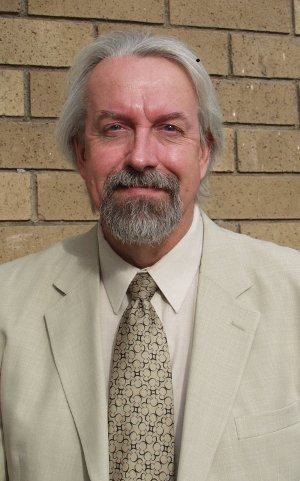
LAKE COUNTY – Another hat is being tossed into the ring for the office of district attorney.
Lakeport attorney Doug Rhoades has announced his candidacy for district attorney in the 2010 election.
Rhoades, 56, will join another Lakeport attorney, Don Anderson, 57, in challenging incumbent Jon Hopkins, who has indicated he'll seek reelection next year. Hopkins, 63, was elected after running unopposed in 2006.
A Lake County resident since 1962, Rhoades has extensive experience both in law enforcement and in legal practice.
Rhoades worked for the Lake County Sheriff’s Office, serving as a correctional officer, deputy sheriff and sergeant, for more than 21 years.
After obtaining an administration of justice degree from Mendocino College, he attended Sonoma State University where he received a bachelor’s degree.
In 1996, Empire School of Law in Santa Rosa awarded a juris doctor degree. He began his law practice the following year.
Rhoades is active in the local community and many civic organizations.
He is past president of the Lake County Arts Council, the Lake County Deputy Sheriff’s Association and served on the Kelseyville Unified School District’s Board of Trustees.
“Many good things have happened in Lake County since I was a young boy here,” Rhoades said. “But I have seen what occurs when poor decisions are made. Prosecutorial decisions need to benefit our entire community, but many recent actions have been detrimental to Lake County’s reputation.
“That’s one reason I am seeking the office of District Attorney,” Rhoades said. “The other is a desire to continue to serve the public. I am fortunate to have received the support of many friends in the community who have asked me to run.”
Anderson welcomed Rhoades to the race. “I know Doug well,” he said.
“The more competition, the better,” and the more issues that will come out, Anderson added.
Hopkins responded to Rhoades' announcement and his criticism of the District Attorney's Office with strong statements of his own.
“This is not a political job, it is a professional job,” Hopkins said.
He said the district attorney is the last person who should make decisions based upon which way the political wind is blowing. “We make thousands of decisions a year, and they have to be based upon a professional opinion of what should be done to protect the public and accomplish justice.”
There are several key issues to the effective and fair administration of justice, according to Rhoades.
“The right to a jury trial is guaranteed to all criminal defendants. But that can mean no other settlement was possible. When the prosecuting agency refuses to discuss resolution of a case, the defendant is left with little choice but to put it before a jury,” Rhoades said.
“As district attorney, I would seek to resolve appropriate cases through serious negotiation of the charges and consequences,” he added.
Hopkins responded that his office never refuses to discuss resolution in a case, but it won't sentence bargain with accused felons, which is a longheld stance.
“We have seen a succession of defense lawyers advocate a run for district attorney on this platform that urges a policy of greater leniency on felony cases, and the people of Lake County consistently say no,” Hopkins said.
Rhoades said the District Attorney's Office's current administration wastes resources that should be devoted to the most serious crimes, such as drug trafficking and production, crimes against the elderly and all crimes of violence, domestic or otherwise.
“In our current economy, resources will be even more scarce,” Rhoades said. “We must focus on violent crimes and those that cause significant economic loss, rather than devote those resources to incidents that do not put the public at risk.”
Hopkins said Rhoades' claim of wasted resources is not true. He said he has two senior deputy district attorneys who devote most of their time to prosecuting drug trafficking and prosecution, as well as a team comprised of a prosecutor, investigator and victim advocate assigned to elder abuse cases, both financial and physical abuse.
In addition to receiving new grants for pursuing domestic violence and driving under the influence prosecutions, Hopkins also has a team dedicated to child molestation and abuse cases, which he said are priorities for his office. That led to the creation of the multidiscipline interview center (MDIC), completed last year, to serve child victims in a more secure, comforting environment.
Rhoades, who also handles court-appointed cases for indigent defendants, emphasized the inconvenience and cost to the public that a failure to resolve cases produces.
“Many people respond to a jury summons only to find a case has settled on the day of trial or been continued,” he said. “That wastes time for each juror, not to mention lost wages and travel costs. Those reporting for jury service should expect their time to be respected and reserved for serious cases that cannot be resolved in any other manner.”
Hopkins said there are many reasons for continuances and delays – some of which result from the actions of defense attorneys – and it wouldn't be helped by adopting a policy of sentence bargaining with felons.
“An investment of a juror's time in sitting on a criminal case is always a sacrifice, but it is a sacrifice that makes our system the best in the world, and it makes our communities safe,” he said.
Rhoades, Anderson and Hopkins will begin the bulk of the paperwork for the election process early next year, when petitions for signatures in lieu of filing fees will start in January, to be followed the next month by declaration of candidacy and nomination papers.
The primary will be held June 8. If no candidate wins a 50 percent plus one majority, the two top vote getters will take part in a runoff election in November 2010.
E-mail Elizabeth Larson at