 How to resolve AdBlock issue?
News
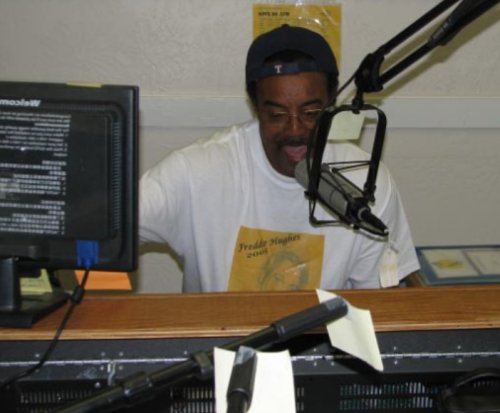
one day baby
I’ll be in the blues hall of fame …
Sugar Pie Desanto
The Queen of the West Coast Blues, Sugar Pie DeSanto, turned 74 years young this past Friday. Earlier in the week, on Oct. 12 and 13, she gigged at the Dakota Jazz Club & Restaurant in Minneapolis, Minnesota. Your CyberSoulMan was road manager for Madame DeSanto’s four-show excursion.
Show biz logistics are a trip. The age old adage that the show must go on is somewhat akin to death and taxes. In order to execute my duties as road manager, I had to leave home at 1:50 a.m. on Sunday, Oct. 11, for the three hour drive to Jim Moore’s (Ms. DeSanto’s manager) home in Oakland. I parked my car at Jim’s and we swung over to the House of Sugar, swooped her up and headed for San Francisco Airport. Did I mention that I had to place a wakeup call at 4 a.m. to the Queen? It was the only scheduled call on the trip that I made that she didn’t beat me to the punch and call me first.
We flew out of San Francisco on schedule and through the wonder of time and space travel landed in Minneapolis at about 1:30 p.m. The temperature was an unsizzling 34 degrees. I fondly remembered the day before in Lake County when the midday temperature was in the 80s.
After we deplaned and headed toward baggage claim, I called the club owner who patched me into a three way conversation with our driver Johannes who was waiting for us at carousel 14. Johannes welcomed us to Minnesota and whisked us to our hotel. Yes, it was a five star.
When I finally reached my room after securing Sugar Pie DeSanto in hers, I called the band director, one Curtis Obeda, a left-handed guitar slanger, whose band the Butanes had backed Sugar Pie 12 years ago in St. Louis. I was soon to find out that the Butanes had been voted best Blues band in Minnesota, seven years running.
It was my job to coordinate a rehearsal but it wasn’t gonna happen on Sunday. It seems that the rest of the band was working other jobs though they had rehearsed the material three times using the charts Jim Moore had sent. A tentative plan was made to rehearse on Monday.
Coincidentally, Curtis Obeda’s wife Lolly was being honored as Blues DJ of the year and the festivities courtesy of the Minnesota Blues Society, was being held that very night. Curtis invited Sugar Pie and I. Of course we said of course.
The affair was held at Famous Dave’s Barbeque and we had a rollicking good time. The food was great as was the music. Many folks came to our table and acknowledged Sugar Pie. At about 10 p.m. Curtis took us back to the hotel. I was pretty well done for the day. Of course Sugar Pie the artist needed good rest too. Tomorrow was a big day.
To be continued next week ...
Keep prayin’, keep thinkin’ those kind thoughts.
*****
Upcoming cool events:
Monday, Oct. 19
Side of Blues with Jim Switzer. 6:30 p.m. to 9 p.m. Blue Wing Saloon & Café, 9520 Main St., Upper Lake. Information: 707-275-2233 or www.bluewingsaloon.com .
Thursday, Oct. 22
Open mike night, 6 p.m. Blue Wing Saloon & Café, 9520 Main St., Upper Lake. Information: 707-275-2233 or www.bluewingsaloon.com .
Sunday, Oct. 25
Sunday brunch at the Blue Wing Saloon & Café from 10 a.m. to 3 p.m. Don Coffin (bluegrass guitar and mandolin) performs from 11:30 a.m. to 2 p.m. 9520 Main St., Upper Lake. Information: 707-275-2233 or www.bluewingsaloon.com .
West Fest 40th Anniversary of Woodstock, 9 a.m. to 6 p.m. Golden Gate Park, San Francisco. Free event. Acts too numerous to list. For more information go to 2b1records.com .
T. Watts is a writer, radio host and music critic. Visit his Web site at www.teewatts.biz.
The information collected will be used to inform a local food guide and an effort towards a coordinated online ordering and distribution system for local food producers and buyers.
The surveys can be taken online at http://lccfa.wikispaces.com . Those without Internet access may take the survey or request a copy by contacting Lake County Community Food Assessment information line at 707-995-9060.
Copies of the producer survey is also available at the Agricultural Commissioner’s office at the Lake County Agricultural Center in Lakeport and both surveys are available in the Lake County Administration office at the Courthouse in Lakeport, or downloaded from the Web site.
Deadline to fill out the surveys is Oct. 25.
Having the surveys completed by all Lake County producers and buyers is critically important for the success of this project.
For more information about the Lake County Community Food Assessment, contact JoAnn Saccato at 707-350-1719, or Terre Logsdon at 707-263-2580.
With a grant award to Sutter Lakeside Hospital from the California Endowment on behalf of the Health Leadership Network (HLN), the HLN is able to fund this project with administrative support provided by the Lake County Marketing and Economic Development Program.

LUCERNE – Photographer Ron Keas caught a great October sunset as it went through a variety of colors on Saturday.


Frank Toney was one of 20 Caltrans employees – out of 20,000 statewide – to receive the Governor's Safety Award this month.
This coming February will mark Toney's fourth year with the agency. He is a highway maintenance worker whose duties include traffic control, mowing, paving, plowing snow, picking up dead animals, responding to vehicle wrecks and hazardous materials spills.
He's one of 10 Caltrans workers at the Clearlake Oaks yard; another 10 are based in Lakeport.
Toney, a 35-year Clearlake Oaks resident, received the award for his quick thinking and fast action that he took on July16, 2008.
At the end of the day he'd left the Clearlake Oaks maintenance yard but had to go back.
“I was returning to work because I had forgotten my lunchbox,” he said.
That put him at the scene of a vehicle crash involving a Mediacom truck and a plumbing van. The crash had trapped a 13-year-old boy in the van's front passenger seat.
Toney said he pulled over and spoke to the boy's father, who told him about the child being trapped.
A longtime emergency medical technician, Toney found a crowbar and started prying open the van's back door open.
“The only way to get to him was through the back area,” said Toney.
When he got to the child, who was complaining of abdominal pain, he put a cervical neck brace on him and helped keep him in place until the ambulance arrived.
Toney said a helicopter was needed to transport the child to the hospital.
Rather than landing on the highway and potentially causing a major traffic backup, Toney suggested the helicopter land in the Caltrans yard, and left the boy in the care of a paramedic while he went to move a dump truck to make room for the helicopter. It was the first time Toney remembered the yard being used for a helicopter landing.
“Mr. Toney’s quick actions aided in providing prompt medical evacuation of the injured teenager and prevented closing of Highway 20 during peak vehicular traffic hours,” said the nomination that his supervisor submitted to the state on his behalf.
A few weeks after the crash the boy and his family came to visit with Toney and thank him. The child was doing OK after having sustained a lacerated liver and a concussion.
It was around this past Labor Day that Toney found out he was to receive the award.
Toney said he's especially grateful to his superintendent, Dan Ramirez, and his supervisor, Brennan Ladao, for nominating him.
“I was really excited about going to meet the governor,” he said.
He wouldn't get the chance, because, due to budget cuts the ceremony with the governor was canceled. Instead, a party was planned at the Ukiah maintenance yard, where Caltrans District 1 Director Charles Fielder was scheduled to give him the award.
However, Toney said he wasn't able to attend, because he was on jury duty in a trial lasting three weeks, which ended about two days after the Oct. 6 party.
He said he enjoys his work with Caltrans, noting, “Every day we're doing something different.,” and he gets to work outdoors. “It's an exciting job.”
If he could ask for one thing, it's that people would slow down when they come into Caltrans work zones. Toney said he sees many people drive too fast when Caltrans workers are nearby, making the situation dangerous for workers.
E-mail Elizabeth Larson at
“Pot Stickers are the kindest, bravest, warmest, most wonderful food I’ve ever known in my life.”
OK, that’s paraphrasing a line from one of my favorite movies, “The Manchurian Candidate,” but I really mean it. They’re my idea of a comfort food.
I don’t remember when I had pot stickers for the first time in my life but it was probably when I was in the military. I experimented with a lot of different cuisines back then. I hadn’t yet started to do much cooking, but these little Asian dumplings were really enchanting.
Pot stickers got their name because the dumplings are typically fried and they stick to the pot. Removing them involves steaming them in the covered pan until the pan releases them.
I enjoy them so much that a few years ago I started making them at home. The salty sour sauce that is served along side of them (try saying that three times fast) infatuates me so much that I want to drink it when the pot stickers are all gone.
Pot stickers are so popular and have infiltrated the mainstream cuisine so thoroughly that they can even be found premade in the frozen foods section of many grocery stores. This fact gives me the giggles, since pot stickers are rumored to have been invented by a famous Chinese herbalist as a treatment for frost bitten ears.
Another story about the creation of pot stickers tells of a cook for a Chinese emperor who accidentally overcooked them. He knew the potentate wouldn’t be pleased with improperly cooked food, so he told him that the crispy part was done on purpose (trust me, the phrase “I meant to do that” marks the creation of many popular recipes and is the mantra of many chefs). The ruler ended up liking the crisp bottom and the recipe lived on. And so, I imagine, did the cook.
The creation of pot stickers is said to have taken place over 7,000 years ago in China. Because of this long history in a well-traveled culture, they have had a chance to be introduced to many countries that adopted them and adapted them to local ingredients and tastes.
In China they are called “jiaozi,” but also and more accurately “guotie” (which means pot stick). In Japan they are called “gyoza” and in Korea “mandu”; there is the Mongolian “buuz,” the Turkish “manti” and even the Slavs have “pierogi.” Joyce Chen coined the term “Peking Ravioli” in the 1950s in her restaurant as a way to sell pot stickers in the mainly Italian neighborhood where her restaurant was located. The list goes on and on. Among each cultures’ versions there are great variances to the recipe, and even several different types within a culture.
Pot stickers are often confused with Chinese dim sum. They are both a type of dumpling, but the main difference is in the cooking method. Dim sum are steamed, while pot stickers are first pan fried and then steamed.
Chinese dim sum also often have numerous fillings to choose from, so you can really enjoy a variety of them more or less – “I could never figure out what that phrase meant, ‘more or less.’” While pot stickers aren’t technically dim sum, they are usually served along side them.
Pot stickers were introduced into Japanese cuisine around the 17th century, and just like the Chinese pot stickers they branched into several types: sui-gyoza (boiled), mushi-gyoza (steamed), age-gyoza (deep fried) and yaki-gyoza (pan fried), just to name a few varieties.
Pot stickers can contain many different types of meats, fish or vegetables, and in the case of pierogi, mashed potatoes and cheese. There are even different thicknesses in the pasta wrapper that the filling is packed in. The thickness of the wrapper many times is what determines the name of the dumpling.
Almost every major grocery store carries won ton wrappers and those are the very same ones used for pot stickers. Many stores even carry both circles and squares, and different sizes of these as well. Pot stickers and gyoza are typically made from very thin, circular shaped wrappers, but feel free to use any of these to make your own. You are only limited by your imagination.
Pot stickers are typically sealed with a decorative fold or crimp but don’t worry if you have trouble making it look just right. I’m not an expert in doing this either; I still practice it from time to time, but I usually wind up getting frustrated and just fold them in half without the decoration. The important thing is just to make sure the seal is tight.
If you are like me and aren’t a skilled wanton wrapper crimper but really want them to look perfect, there is good news. There is actually a gyoza maker where you place your wanton wrapper then your fillings then fold the mold over it seals the pot sticker and gives a somewhat crimped traditional look to the final item. Look for a “gyoza press.”
Here are a few tips on making pot stickers:
3 ½-inch gyoza skins can be found locally in packages of 60. They are smaller, thinner and more delicate than other wonton wrappers, so you may want to try making larger pot stickers for practice.
Shred the cabbage for the filling finely while you bring a pot of salted water to a boil and boil the cabbage for two to three minutes (until tender) then immediately drain and cool the cabbage. This ensures a nice texture in the finished pot sticker.
Lightly moisten two paper towels and place the gyoza wrappers between them as you make the pot stickers. This will keep the wrappers from drying out and yet keep them handy during the assembly process.
When you’ve put the filling into the wrapper use your middle finger (since your index finger will most likely have bits of filling on it) to dip into the water and wipe halfway around the edge of skin. Then fold over while gently trying to push out any air bubbles.
You can replace the steaming water with chicken stock if you would like to add more flavor.
Steaming the pot stickers will typically release them from the pan but you may want to have a fish spatula handy just in case.
Your average pot sticker has about 50 calories, with roughly half of those calories being from fat. If you are interested in entering the International Gyoza Eating Championship in Los Angeles (Aug. 22, 2010), just keep in mind that the record is 231 gyoza eaten in – get this – 10 minutes.
This recipe also will work well with ground chicken, fish, shrimp or lobster (beef and lamb are just too heavy, and turkey might be a little dry).
Now I just have to figure out “How did the old ladies turn into Russians?”
Pot stickers/gyoza
1 pound ground pork
1/2 cup shredded and boiled green cabbage
1/4 cup chopped green onion tops
4 teaspoon soy sauce
2 teaspoon sesame oil
2 teaspoon sugar
2 teaspoon fresh ginger grated or smashed
1 teaspoon garlic powder
60 3 ½-inch round gyoza or wonton skins
A couple of teaspoons vegetable oil for frying
Small bowl of water for sealing
Water for steaming.
Thoroughly combine the first eight ingredients; set aside.
Have a sheet pan or other large dish or area to place your completed pot stickers. Put one wonton skin onto your work surface and, using a teaspoon as a measure, scoop up one spoonful of the meat mixture and place it in the center of the wonton.
Dip one finger in water and use it to moisten the edge of one half of the skin. Fold the wonton wrapper over and push out as much air as possible without tearing the skin, and press the edges firmly together forming a seal. Set onto the sheet pan with the seam pointing up like a fin.
When finished assembling all of the pot stickers, prepare a large frying pan with a cover by pouring in about a teaspoon of vegetable oil. Heat the pan over medium heat and add the pot stickers in a single layer, not touching each other. Let cook for two to three minutes until they get a crispy bottom or are firmly stuck to the pan. Add about a quarter to a half a cup of water or stock to the pan and cover, and let steam for two to three minutes more or until the pot stickers no longer stick to the pan.
Remove gently with a spatula and add the next group of pot stickers, repeating the process until complete. Serve immediately with the dipping sauce below.
Simple pot sticker dipping sauce
One part soy sauce
One part rice vinegar
One part water
A couple of drops of sesame oil (or sesame chili oil)
Ross A. Christensen is an award-winning gardener and gourmet cook. He is the author of "Sushi A to Z, The Ultimate Guide" and is currently working on a new book. He has been a public speaker for many years and enjoys being involved in the community. Follow him on Twitter, http://twitter.com/Foodiefreak .
Due to rain and cooler temperatures the unit is beginning the transition from summer staffing levels to winter staffing.
The unit includes the State Responsibility Areas (SRA) within the counties of Sonoma, Lake, Napa, Yolo, Solano and Colusa.
The transition from summer staffing to winter staffing results in the release of seasonal fire suppression employees, down staffing some fire equipment, and the termination of contracts for fixed wing aircraft such as air tankers.
Chief Ernie Loveless points out that “the reduction in staffing and resources is indicative of a major reduction in the wildland fire danger. However, residents need to remember that even with the welcome rains, a period of dry windy conditions could dry fuels to the point where wildland fires are possible.”
Cal Fire is prepared to quickly “ramp up” if conditions here or elsewhere in the state dictate.
The transition to winter staffing however, does not signal the end of fire protection responsibilities for Cal Fire locally.
Cal Fire provides year round emergency response as the fire department for Napa County, the town of Yountville, the South Lake Fire Protection District and The Sea Ranch. Additional response is also provided by contract to the Cloverdale Fire Protection District and to Sonoma County in both the western and southern portions of the county.
The agency also provides personnel and incident management expertise for emergencies statewide, including earthquakes and floods.