 How to resolve AdBlock issue?
News
The Christmas Bird Count (CBC) is a traditional project of Audubon societies around the country and takes place between Dec. 14 and Jan. 5.
Each December birders gather to record every individual bird and species encountered during the day. Each count group has a designated circle of 15 miles in diameter and tries to cover as much ground as possible within a certain period of time.
The data collected by each count group are then sent to the National Audubon Headquarters in New York.
Count data is published in a special book-size edition of National Audubon Society Field Notes magazine.
Redbud Audubon invites all birders and nature enthusiasts to join in the upcoming Christmas Bird Count. Birders of all skill levels are encouraged to participate. This is Audubon’s longest running wintertime tradition and is the 35th year the Count has taken place in Lake County.
After the count, participants are invited to a Pizza dinner at 5:30 p.m. at DJ’s Pizza on State Street in Kelseyville to join in the Count Compilation where the tally of the day’s sightings is compiled.
Previous to the bird count, at the Thursday, Dec. 17 meeting, Redbud Audubon will present an extensive slide show and discussion of distinguishing features of birds that are often seen during the annual count.
If you are interested in participating in the bird count, call Darlene Hecomovich, at 707-928-5591 or Jeannette Knight, 707-928-4233.
The Christmas Bird Count began more than a century ago when 27 conservationists in 25 localities, led by scientist and writer Frank Chapman, changed the course of ornithological history.
On Christmas Day in 1900, the small group posed an alternative to the “side hunt,” a Christmas day activity in which teams competed to see who could shoot the most birds and small mammals. Instead, Chapman proposed to identify, count, and record all the birds they saw, founding what is now considered to be the world’s most significant citizen-based conservation effort – and century-old institution.
Follow Lake County News on Twitter at http://twitter.com/LakeCoNews and on Facebook at http://www.facebook.com/pages/Lake-County-News/143156775604?ref=mf .
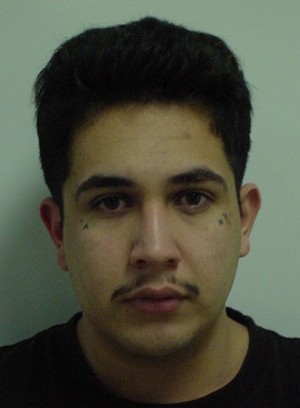
LAKEPORT – A Kelseyville teenager who earlier this year was cleared of a murder charge in Sonoma County is facing numerous felony charges for an incident that occurred the same day as the shooting for which he had been charged in Santa Rosa.
Marco Antonio Meza, 18, is set for an appearance in Lake County Superior Court this Friday, at which time his defense attorney, William Conwell, will argue for reducing the $100,000 bond that's keeping Meza in the Lake County Jail.
The case's preliminary examination likely will be scheduled at the hearing this Friday as well, Deputy District Attorney Dan Hurst told Lake County News.
Meza faces eight charges – four for assault with a deadly weapon other than a firearm; participating in a criminal street gang; making threats to commit a crime; selling, importing or keeping a weapon; and disturbing the peace for his alleged part in an April 6 assault in Kelseyville.
Meza is alleged to be an Angelino Heights Sureno gang member, according to court records, and is reported to have several “A” and “H” tattoos on his body.
On April 6 Meza, then 17, and several other people – some of them reportedly gang members and Meza's relatives, including his sister – allegedly assaulted a man who is a validated Norteno and his girlfriend as they were walking along Gold Dust Drive.
The female victim, who was pregnant at the time, was hit in the stomach with a baseball bat. Her child, born some time later, was reported to be OK.
Before the confrontation began, one of the subjects reportedly taunted the male victim to try to get him to fight, calling out “Angelino Heights.”
Later that same day, 18-year-old Santa Rosan Luis Suarez, said to be affiliated with the Nortenos, was killed in a driveby shooting in Santa Rosa at around 9:30 p.m. Two days later, Santa Rosa Police arrested Meza, as Lake County News has reported.
The Lake County District Attorney's Office initially charged Meza in the Kelseyville assault case in June, while he was still being held in Sonoma County.
Then, in September Sonoma County District Attorney Stephen Passalacqua dropped the murder charge against Meza and announced that he would charge with murder 21-year-old Santa Rosa resident and suspected Sureno gang member Fernando Mendoza, who had been arrested at the same time as Meza on a parole violation.
At a Dec. 5 court appearance, officials reported that Meza is still being prosecuted as an accessory in the Suarez murder.
During that hearing, Conwell objected to Meza's bail remaining at the $100,000 level, saying that no new evidence in the case had been presented.
But the prosecution replied that the case in Sonoma County, in which Meza is alleged to be an accessory, is still pending. “If someone was killed it still makes a huge difference in my mind,” said Judge Richard Martin.
Martin left the $100,000 bail in place until this Friday's bail review hearing.
Hurst said later that, despite the fact that Meza was under age when the alleged incident took place, the case is being direct filed in adult superior court under the auspices of Proposition 21, passed in 2000.
That law allows for direct filing on juveniles age 16 and over for some serious violent crimes as well as those involving gang activity.
Records submitted to the court as part of the Kelseyville assault case showed that Meza had a lengthy juvenile criminal history, including involvement in a strong arm robbery in Kelseyville in March of 2007, a car theft and burglary in July of 2006 and, in October of 2005, he was found to have tossed a loaded Derringer pistol from a car during a traffic stop.
E-mail Elizabeth Larson at
We’re havin’ a party
everybody’s swangin’
dancin’ to the music
played by the DJ, on the radio.
Cokes are in the icebox
Popcorn’s on the table
and I’m havin’ such a good time
dancin’ with my baby ...
I remember hearing it announced on radio station KSOL AM 1450 Dec. 12, 1964, that Soul icon Sam Cooke had been shot to death the night before in Watts, Calif. I was on my way to school that morning and the surreal news that “Mr. Soul” was gone weighed heavily on my 14-year-old sense of teen angst.
Sam Cooke was the man. Many of us became hip to him, through his evolution from “matinée idol” gospel star to certified rock and roll pop/soul superstar status.
In truth, many of our parents had witnessed that complete evolution and had no problem bringing his music into our homes. Of course, initially, certain elements of the church resisted Sam Cooke, Sister Rosetta Tharpe, Ray Charles and others who bridged the gap between gospel and secular, my generation heard Sam as a pop star. Over time, I went back and discovered his gospel roots and history.
Sam Cook (without the e) was born on Jan. 22, 1931, in the cradle of Blues Music, Clarksdale, Miss. The Cook household was one whose spiritual belief system was based on the credos of the Holiness Church. Sam’s father Charles Cook was a reverend in the church and the Cook children’s upbringing was steeped in the rules and traditions of the church – no movies, sports or gambling, and if you tapped your foot to the music, it had better be Holiness music, according to Sam’s brother Charles.
Like many before and after them the Cook family left the oppressive South and migrated north to Chicago in search of less oppression and more opportunity. The Rev. Charles Cook started a church called Christ Temple and it was there that middle sibling Sam started singing at an early age in his family’s group called the Singing Children.
They were quite popular in and around the Chicago area singing at different churches. By the time Sam reached high school, the novelty and grind of the singing life on the gospel circuit had worn off for his older siblings and the Singing Children disbanded.
Sam, for whom singing – he had declared at 9 years of age – was his destiny, was recruited into another gospel group, the Highway QC’s. The QC’s through incessant practice became polished and professional on the “junior” gospel circuit.
True to his declaration, Sam studied his craft diligently. He learned the secrets of voice control and the theories of harmony. Occasionally the legendary Soul Stirrers would invite the QC’s onstage for one number and one number only. With Sam Cook singing lead the QC’s had the ability to wreck the house. The seasoned, well traveled Soul Stirrers took secret notice of Sam’s charisma and ability.
The Soul Stirrers are one of the most influential pioneers of the quartet style of gospel music. Though originally formed in the late 1920s, they have endured all the trends and still stand as the most popular, if not the best gospel groups ever. They were inducted into the Rock& Roll Hall of Fame in 1989 as one of rock’s early influences. Additionally, they were inducted into the Vocal Group Hall of Fame in the year 2000.
In the year 1950, the Soul Stirrers revered and charismatic lead singer R.H. Harris resigned from the group. There were in a sensitive situation in that they had just signed a new contract with Specialty Records and needed to produce the goods to validate the contract.
The Stirrers asked 19-year-old Sam Cook to replace Harris and the rest is history. With Sam Cook in the group the Stirrers sold more records than they ever had. By 1955 with Sam Cook singing lead and writing songs for the group he had risen to the top of the heap in the world of gospel music. Sam became the No. 1 marketable “matinée idol” of the whole industry.
But the payoff in the gospel music world was shrinking. America’s taste in music was examining this new thing called Rock & Roll. Sam decided to test the pop music market by releasing a couple of sides under the moniker Dale Cook with moderate success. He gradually left the Soul Stirrers and in 1957 released the monster hit “You Send Me” as Sam Cooke.
Sam Cooke had 29 Top 40 hits between 1957 and 1964. Songs like “I Love You (For Sentimental Reasons),” “I’ll Come Running Back To You,” “Only Sixteen,” “Another Saturday Night,” “Wonderful World,” “Chain Gang,” “Twistin’ The Night Away,” “Bring It On Home To Me” and the posthumously released “A Change Is Gonna Come” cemented Sam’s Legacy in the landscape of American popular music.
In addition he was the first African-American to own a record label in modern times. He also had a publishing house and management firm to control the lucrative publishing of his music and artists signed to his label. This all occurred before the advent of Berry Gordy’s Motown.
The circumstances of the shooting death of Cooke have remained in dispute for years.
The official version states that a drunken Cooke, in search of the prostitute who had robbed him of his pants and wallet, burst into the office of the manager of the Hacienda Motel, wearing only a sport coat and a shoe. The 33-year-old Cooke then allegedly tussled with the manager, 55-year-old Bertha Franklin, who shot him to death in the struggle.
Though the coroner’s office officially called it a justifiable homicide, there seem to be many contradictory elements to the investigation, i.e., Sam Cooke’s badly mangled body, the disappearance of his will and many more theories too numerous to mention here.
The two books I’ve read on Sam Cooke are music journalist Peter Guralnick's “Dream Boogie: The Triumph of Sam Cooke” and “Our Uncle Sam” by Cooke’s nephew Erik Green. I met Erik Green in 2007 and it is evident in his story that Sam’s family firmly believes he was murdered. There is also a book by Daniel Wolff entitled, “You Send Me: The Life and Times of Sam Cooke."
Sam Cooke was an extraordinary talent. I enjoy listening especially to a recording entitled “The Great 1955 Shrine Concert,” done when he was still a Soul Stirrer. It is a breakthrough recording in that prior to that live recordings of gospel singing were hard to produce simply because when a singer was possessed of the Holy Ghost, they were inclined to go “off mic” and much quality of the recording endeavor lost.
The sound engineer of this recording invented a device that allowed the microphone to follow the singer, thus ensuring for all times great moments in gospel music. Indeed, after the guitarist strums the opening chord to the song, “I Have A Friend Above All Others,” Sam sings the words, “Somebody knows …,” then pauses. A female voice from the audience shouts, “Sing Sam!”
Yeah, Sam Cooke could melt the hearts of women and praise the Lord at the same time.
Keep prayin’, keep thinkin’ those kind thoughts.
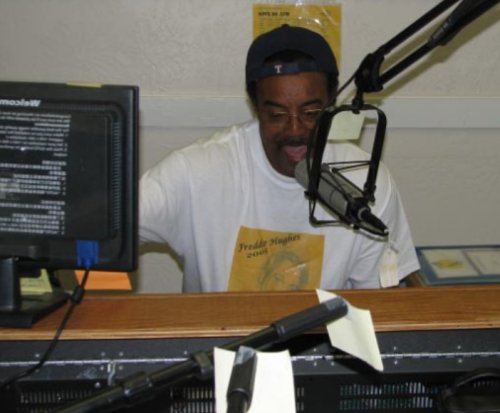
T. Watts is a writer, radio host and music critic. Visit his Web site at www.teewatts.biz .
Follow Lake County News on Twitter at http://twitter.com/LakeCoNews and on Facebook at http://www.facebook.com/pages/Lake-County-News/143156775604?ref=mf .
The broadcast will begin at 5:30 p.m. on KPFZ 88.1 FM.
Just about everyone is very familiar with one version or another of Charles Dickens’ “A Christmas Carol,” but have you ever had the story read to you? This “ghost story of Christmas” is particularly well suited to the medium of radio – where your imagination provides unlimited special effects.
By the way, did you know it was an English custom in the 1800s to tell ghost stories on Christmas Eve? This came from the old pagan Yule celebrations of Saturnalia and the Winter Solstice.
This year’s radio adaptation of “A Christmas Carol,” based on the production done by Orson Wells in 1939 starring Lionel Barrymore, seeks to play up the ghostly aspects of the story – but in the context of the 19th century Christian beliefs.
Ebenezer Scrooge holds terrible, anti-social attitudes. His character is based upon Charles Dickens’ regrets for his own personal behavior – in not being kind enough to his fellow man, in not being charitable enough to unfortunates; in fact, Scrooge’s history is a reflection upon Dickens’ early life.
Dickens’ major literary themes were memory and forgiveness. He believed that through experiencing the joy and sorrow of memory, you could learn to live properly in this world; hence Ebenezer Scrooge’s redemption is carried out by memory, example, and fear.
On the stage, before the actual reading, demonstrations will be given showing how the sound effects are made and there will be a little background about how radio dramas are produced. The artists will read the script and technicians will produce onstage sound effects.
A cast of 14, directed by the Soper-Reese Artistic Director Bert Hutt, will present the live radio broadcast of this classic tale of redemption performed live on stage of the Soper-Reese Community Theatre and broadcast on KPFZ 88.1 FM, Community Supported Radio for Lake County.
This program is underwritten by the generous donations of Kelsey Creek Coffee Co., Disney’s Trophies & Awards and the Lake County Chamber of Commerce, and is free for everyone who comes to the theater or has a radio.
The Lake County Arts Council and KPFZ radio thanks you, the community, for your support.
Please join us for this free presentation.
Bert Hutt is artistic director of the Soper-Reese Community Theatre.
Follow Lake County News on Twitter at http://twitter.com/LakeCoNews and on Facebook at http://www.facebook.com/pages/Lake-County-News/143156775604?ref=mf .
On Dec. 19, officers with the Lakeport Police and Clearlake Police Departments will team up with members of the Lake County Sheriff’s Office to conduct a Driving Under the Influence (DUI) checkpoint in the city of Lakeport, according to Capt. James Bauman of the Lake County Sheriff's Office.
Office of Traffic Safety (OTS) Director Christopher J. Murphy reported that California has worked very hard over the past five years to reverse the trend of increasing alcohol-related traffic fatalities.
Murphy said the state is getting these dangerous drivers off the road through an aggressive combination of sobriety checkpoints, saturation patrols and greater vigilance on the part of the public by calling 911 when they see a drunk driver.
As an important part of the campaign, Lake County public safety agencies and the OTS are calling for public assistance by calling 911 to report suspected drunk drivers.
The public is asked to consider how many times they have seen someone driving erratically or in an unsafe manner and wished there was a “cop” around. Law enforcement can’t be everywhere at once and they need help from the public to find impaired drivers and get them off the roads promptly.
The following clues can help motorists detect a drunk driver:
Weaving/swerving in and out of the lane;
Weaving within the lane quite noticeably;
Traveling at speeds much slower than the flow of traffic;
Braking erratically or stopping in the lane;
Sudden stops for signal lights and slow start once they change;
Remaining at the signal lights once they turn green – asleep at the wheel;
Making wide turns and/or cutting the corner, striking the curb;
Headlights off at night or on high beams;
Driving with the turn signals on;
Straddling the center line of the road or lane lines;
The driver looks intoxicated – starring straight ahead, face close to the windshield, and appears to by quite sleepy;
Aggressive driving – speed, tailgating and multiple lane changes or unsafe passing may also be the tell-tale signs of intoxication.
California’s effort coincides with the national “Drunk Driving – Over the Limit, Under Arrest” campaign taking part across the country.
Grant funding for the regional AVOID Program includes officer overtime for sobriety checkpoints and saturation patrols and is provided by the California Office of Traffic Safety, through the National Highway Traffic Safety Administration.
Follow Lake County News on Twitter at http://twitter.com/LakeCoNews and on Facebook at http://www.facebook.com/pages/Lake-County-News/143156775604?ref=mf .
Education
Health
Business
Obituaries
Veterans
Recreation
Religion
Arts & Life
Government & Politics