 How to resolve AdBlock issue?
News
The burros are the last of a herd of 69 wild burros found stranded without water and outside their normal herd management area.
BLM Needles Field Office Manager Rusty Lee said BLM was notified by a local rancher on Aug. 20 that he had come across a number of burros that apparently had died of dehydration, but there were also others that were still alive at Fenner Spring, in the Piute Mountain Wilderness Area, about 35 miles west of Needles, Calif.
The herd was about 40 miles from the Chemehuevi Herd Management Area, the nearest BLM herd management area.
The rancher, who grazes livestock in an allotment covering the area, said the dead animals had clogged the spring in the pursuit of water in the 110-degree heat, preventing other burros from getting to the spring. He attempted to pull out as many as he could with his horse, but wasn’t able to reopen access to the spring.
The nearest alternative source of water is 12 miles away; Fenner Spring, an abandoned mine adit, is the only reliable source of water in the Piute Mountains.
Lee said BLM immediately mobilized a helicopter, a county water tender, folding water tanks, and other equipment needed to rescue the remaining burros. Although the site is in a federal wilderness area, BLM has authority to use “minimum tool” equipment in the case of emergencies, he said.
A BLM fire crew was dispatched to the area and deployed portable water troughs. Corral staff from the BLM Ridgecrest Wild Horse and Burro Facility were also dispatched.
A contract fire helicopter reached the scene later that afternoon and began moving water from large portable troughs by the highway to a smaller water "pumpkin" near the spring.
Thirteen live burros watched a helicopter deliver 750 gallons of water. BLM personnel then backed off at sunset to allow the burros to approach the water.
Upon returning in the morning, 13 live burros were seen in the area and the water trough was empty.
Corral staff then ordered another 1,000 gallons delivery by helicopter and also set up secondary troughs for more water. The county water tender delivered another 3,000 gallons to the helicopter drop point to be readily available as needed.
Corral crews have been on-site to stabilize the surviving burros for further recovery and later transport to the Ridgecrest Corrals.
Lee said the rancher’s discovery and rapid reporting of the situation “saved the lives of the remaining burros.” He said range specialists were unsure how the animals wandered into this area although burros are adept at finding water sources in the desert.
Lee said the agency took special precautions to minimize impacts to the wilderness and to rehabilitate the area, which was already disturbed due to the previous mining operation.
BLM California Deputy Director Tom Pogacnik said BLM will conduct an inquiry into the incident and credits Lee and all others involved with “a fast response and plan that undoubtedly saved the lives of the remaining animals.”
The preliminary findings from the veterinarian brought to the site to check both living and dead burros were that the animals died from dehydration. The remaining animals are in fair condition and with an adequate supply of water on hand are expected to survive.
Follow Lake County News on Twitter at http://twitter.com/LakeCoNews and on Facebook at http://www.facebook.com/pages/Lake-County-News/143156775604?ref=mf .
The incident was reported just after 11 p.m. on Highway 29 near Kelseyville Auto Salvage, according to the California Highway Patrol.
Several CHP officers along with firefighters and sheriff's deputies responded to the scene, where a single vehicle was reported to be on fire and completely blocking the roadway.
Witnesses reported the vehicle had been involved in a traffic collision prior to the fire, according to the initial reports.
The fire also got into nearby vegetation but was reportedly quickly stopped by the first firefighters who arrived on scene.
Traffic was diverted while authorities handled the scene. A person was said to have been trapped in the vehicle, and a coroner later was summoned to handle a reported fatality.
Caltrans later reportedly responded to the scene, where CHP had opened one-way traffic just before midnight.
Other specifics about the incident were not immediately available early Sunday morning.
E-mail Elizabeth Larson at
The quake, which occurred at 4:49 a.m., was centered 11 miles southeast of Lake Pillsbury, 25 miles east northeast of Ukiah and 25 miles north northwest of Clearlake, according to the US Geological Survey.
Survey records showed the quake occurred at a depth of 9.1 miles.
As of Saturday night, no shake reports for the quake had been submitted to the US Geological Survey.
A 3.0-magnitude earthquake occurred 10 miles southeast of Lake Pillsbury on July 30, and a 3.4-magnitude quake took place 11 miles northwest of the lake on July 27, as Lake County News has reported.
E-mail Elizabeth Larson at
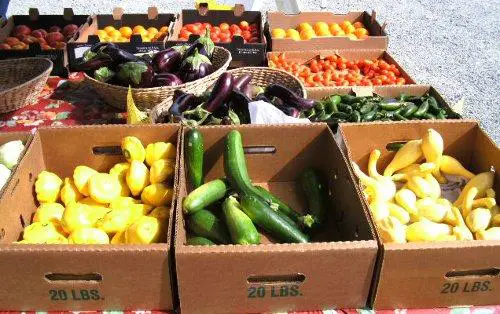
My husband came home Saturday morning with an armload of summer squash from the farmers’ market in Kelseyville. He had visions of grilled vegetables for dinner, and I certainly didn’t argue!
Laid out on our kitchen counter, they were a cornucopia of colors and shapes – squat, scalloped patty pan, two-toned crooknecks that were half yellow, half green, and chubby straight necked squash with dramatic dark and light striations.
Almost every farmer there had some form of summer squash to offer, and most were grown organically.
If you’re a home gardener, you’ve probably heard the jokes about getting rid of overzealous summer squash this time of year. Here are a couple of examples.
How do you know someone’s got no friends? When you see him shopping for zucchini in summertime.
Or, when do small town folks lock their doors? In the height of summer, for fear someone might slip a bag of zucchini in their car.
You get the idea.
A single squash plant can produce dozens of fruits over the course of a couple of months, prompting stealth gifts to neighbors and friends.
The truth is, young, tender, recently-picked summer squashes are a magnificent treat, whether grilled, sautéed, added to recipes, grated into salads or eaten in raw spears with a dip.
Thankfully, they can also be frozen for later use in recipes, and I’ll share that method below.
Modern day squash, whether summer or winter varieties, originated in Mesoamerica, in an area between Mexico and Guatemala, gradually spreading throughout the Americas. They were brought to Europe from the Americas by explorers.
Squash has been consumed for more than 10,000 years, but it was initially cultivated only for its seeds, as the ancestor of the squashes we know today had very little flesh, and what it did contain was bitter.
Squash is one of the “Three Sisters” planted by American Indians, with the others being maize (corn) and beans. All indigenous, they formed the basis of their agriculture. The cornstalk provided support for the climbing beans, and the beans shaded the squash, whose vines spread to provide ground cover against weeds. The beans also provided needed nitrogen for the soil.
The English word “squash” derives from the Native American “askutasquash,” a word from the Narragansett language, spoken in what is now Rhode Island. It literally means “a green thing eaten raw.”
In contrast to winter squashes, which are harvested in their fully mature state, summer squashes are harvested and consumed while immature. Otherwise, the skin becomes hard and the seeds bitter. Perhaps you’ve seen mature yellow crookneck squashes left on the vine resembling gourds, with thick, bumpy skin.
Summer squashes are generally divided into four main categories: crookneck (such as the yellow variety), straight neck, scallop (or patty pan) and zucchini (also known as Italian squash, or “courgettes” by the French and British). Plant breeders develop new strains each year, making for an interesting variety.
The best tasting summer squashes have been harvested when young, though not too young to have undeveloped flavor. They should be picked just as the blossom on the end of the squash begins to turn brown. Zucchini, crookneck and straight neck varieties should be between 4 and 6 inches long, and patty pan should measure 2 to 3 inches across.
Low in calories and high in water content, summer squashes are a good source of manganese, vitamin C, magnesium, vitamin A, fiber, potassium, vitamin K and folate. These nutrients have been shown to be beneficial for the prevention of atherosclerosis (hardening of the arteries due to fatty deposits), high blood pressure and diabetic heart disease.
Although phytonutrient research on summer squashes is limited, in studies they’ve shown a mild benefit in the prevention of cancer-like changes in cells. Other studies have shown them to be useful in reducing symptoms associated with prostate enlargement in men.
Zucchini is delightful prepared on the grill. Simply slice them into half rounds and thread them on a skewer so they lie flat on the grill. Brush them with a bit of olive oil, season with salt and pepper, and sprinkle chopped fresh rosemary or tender thyme tips on top. Grill until they’re seared and tender. Cherry tomatoes make for a nice contrast of color and flavor when threaded between the zucchini slices.
I enjoy yellow crookneck squash prepared in the simplest of ways. It develops such a tender sweetness – almost like a dessert – when gently sautéed with a bit of olive oil, garlic and a sprinkling of salt and pepper. If sautéing zucchini, sun-dried tomatoes (along with their oil, if jarred) pair well with them in the pan.
Being the quintessential versatile vegetable, summer squashes can be added to breads, muffins, pasta sauces, soups, stews, quiches, lasagna and casseroles, either as a complement to the recipe or the star of the show.
They can be sliced to make a crust for a vegetable or meat pie, and can be used in lieu of eggplant in your favorite Eggplant Parmigiana recipe.
Try it sliced thin on pizza with feta cheese, grated as an addition to potato pancakes, or in a hearty grilled veggie sandwich or wrap.
For a vegetarian treat, small zucchini may be roasted till tender in the oven and used in lieu of hot dogs in a bun.
When summer squash is frozen, it softens and is not ideal on its own, but since it serves as a component of so many recipes, it’s wonderful to have a supply on hand in your freezer.
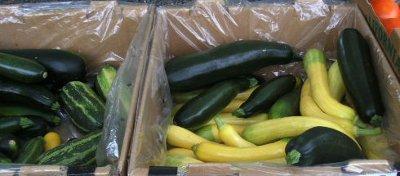
To freeze, wash and slice the squash and blanch in boiling water for two to three minutes. Remove from the boiling water and place in an ice water bath to cool it down. Once cooled, drain the squash thoroughly and place in freezer safe zipper locked bags. Remove as much air as possible, seal partially and suck the remaining air out with a straw before sealing all the way. Lay bags flat in the freezer until frozen through.
I freeze grate zucchini raw in quantities needed for bread or muffin recipes, and allow it to thaw and drain before I use it.
A delightful benefit of summer squash is that their blossoms also are edible, with a plethora of creative ways to use them in cuisine.
They are sometimes available at farmers’ markets, but if you have a home garden, this tasty treat is at your fingertips. They’re quite perishable, so should be used within hours of harvest or purchase.
If you harvest them yourself, do so in the early morning before the blossoms have twisted shut. Male squash blossoms appear on long stems and can be harvested without curtailing production of squash. They should be picked with a length of stem attached. Female squash blossoms are attached to the end of the squash itself. Be sure to remove the bitter stamen in the center of each blossom before using them.
They’re a tasty and colorful addition when added raw to salads or as a garnish for soup. They can be added to the pan when sautéing summer squash, paired with cream cheese in an omelet or with Asiago cheese in a frittata, with cream cheese and chives for a spread, or with queso fresca (Mexican cheese) for a unique quesadilla.
Squash blossoms often are battered and fried, sometimes with stuffing, and I offer such a recipe today. They can be made with or without stuffing in this recipe, and either way is delicious. Enjoy!
Battered squash blossoms
The batter:
1 cup flour
1/2 cup cornstarch
1/2 teaspoon salt
1 cup fat-free chilled milk, beer or water
Cheese-mushroom stuffing:
1/4 cup ricotta cheese
1 garlic clove, minced or pressed
1/4 teaspoon each salt and pepper
2 tablespoon mushrooms, finely chopped
1 tablespoons fresh basil or parsley, minced
16 large squash blossoms, washed
Canola oil for frying
1. Prepare the batter first. Sift together dry ingredients, then whisk in milk, beer or cold water until smooth. Cover and set in the refrigerator for 30 minutes. Leftover batter can be stored for up to two days. If it is too thick after refrigeration, add a few drops of water to return to original consistency.
2. Meanwhile, prepare the stuffing. In a bowl combine the ricotta cheese, garlic, salt, pepper, mushrooms and basil. Open the blossoms and spoon about one 1/2 teaspoon of the mixture into the center of each. Avoid overfilling the blossoms. Twist the top of each blossom together to close. Place on a baking sheet and refrigerate for 15 minutes.
3. Pour the oil into a skillet to a depth of 1/2 inch. Heat over high heat until a small cube of bread dropped into the oil turns golden brown within seconds.
4. Briefly dip each stuffed blossom into the batter, then carefully slip into the hot oil. Cook until golden on all sides, about three minutes total cooking time. Add only as many blossoms at a time as will fit comfortably in the skillet. Transfer with a slotted utensil to paper towels to drain briefly.
5. Sprinkle with salt, if desired, and serve immediately.
Esther Oertel, the "Veggie Girl," is a personal chef and culinary coach and is passionate about local produce. Oertel owns The SageCoach Personal Chef Service and teaches culinary classes at Chic Le Chef in Hidden Valley Lake. She welcomes your questions and comments; e-mail her at
Follow Lake County News on Twitter at http://twitter.com/LakeCoNews and on Facebook at http://www.facebook.com/pages/Lake-County-News/143156775604?ref=mf .

The request comes in the wake of criticism from animal rights groups who also have filed federal injunctions to try to stop horse and burro roundups in California and Nevada, as Lake County News has reported.
Earlier this month, the Animal Welfare Institute also called on Congress to take swift and decisive action “to prevent the BLM from 'managing' our nation's wild horses into extinction.”
That call followed a bipartisan letter, signed by 52 members of Congress in late July to Department of Interior Secretary Ken Salazar, calling for a National Academy of Sciences study.
The letter cited concerns about animal deaths and pointed out that the BLM was repeating mistakes from previous roundups in which deaths occurred. It also drew attention to the expense of the roundups.
“We are concerned by the inability of your agency to acknowledge these disturbing outcomes, change what seems to be deeply flawed policy, and better manage the gathers so as to prevent the unnecessary suffering and death of these federally protected animals,” the letter stated.
The NAS/NRC has previously reviewed the BLM’s management of the Wild Horse & Burro Program and produced three separate reports, which the BLM reported are now 20 to 30 years old.
In those reports, the NAS/NRC summarized what was known about wild horses and burros and made recommendations to the BLM for the Wild Horse & Burro Program management, population estimation and further research.
In the proposed effort, the BLM said many of the topics discussed in the earlier reports would be included, such as population estimation methods, annual herd growth rates, population control measures, and whether populations will self-limit, as well as other subjects needing new research.
The BLM said it must continue to base its decisions on the best available science and involve the public in its decision-making process in order to “sort through the many diverse and often conflicting opinions about how wild horses and burros should be managed.”
Commissioning the NAS/NRC to review their three earlier reports and the current available information and research about wild horses and burros is a first step, the BLM said. The second step is to ask the NAS/NRC to make recommendations about future Wild Horse & Burro Program management and needed research. A third step is to take the NAS/NRC findings and recommendations and make them available to the public in a variety of ways, perhaps to focus groups or science forums.
Both the BLM and NAS/NRC will negotiate the terms and outline for the research study, the BLM reported.
The proposed study would tentatively begin about Jan. 1, 2011, and would cost the BLM about $1.5 million and take about two years to complete.
Congress created the NAS/NRC to be a non-federal, not-for-profit source of scientific advice. The NAS/NRC enlists the nation’s foremost scientists, engineers, health professionals and other experts to address the scientific and technical aspects of society’s most pressing problems. Each year, thousands of these experts are selected to serve, without pay, on hundreds of study committees.
The letter from the members of Congress to Salazar stated, “We strongly urge you to refrain from any further action until a clear plan is in place to sustainably manage and protect our wild herds. Only then can we move forward with a more informed, open and deliberate process, based on input from all who are concerned with the health, well being, and conservation of this animal which embodies the spirit of our American West.”
Currently, a roundup in the Twin Peaks Herd Management Area near Susanville, Calif., is under way, one of the largest the BLM will conduct this year, and the largest in California alone, as Lake County News has reported.
Follow Lake County News on Twitter at http://twitter.com/LakeCoNews and on Facebook at http://www.facebook.com/pages/Lake-County-News/143156775604?ref=mf .
Education
Health
Business
Obituaries
Veterans
Recreation
Religion
Arts & Life
Government & Politics