 How to resolve AdBlock issue?
News
MENDOCINO COUNTY, Calif. – The Mendocino County District Attorney's Office is stepping up the effort to find a suspect who fled the scene of a fatal 2002 car crash.
District Attorney C. David Eyster said in a Monday statement that he is seeking information about Elio Carrillo, 33.
A report issued by Eyster's office explained that just after 2 a.m. Nov. 28, 2002, Fort Bragg Police officers were called to an injury traffic collision that occurred on the Noyo River Bridge.
The investigation revealed that a white 1994 White Ford Probe driven by Carrillo rear-ended a red Toyota Pickup, pushing it into the opposite lane of traffic and into an oncoming vehicle.
The red Toyota Pickup was hit broadside by the oncoming vehicle and the passenger, Eli Herrick, suffered major injuries as a result of the collision.
Herrick was transported to Santa Rosa Memorial Hospital where he later died from his injuries.
Carrillo fled the scene on foot and to this date has not been located, Eyster said.
On Dec. 2, 2002 the Mendocino County District Attorney’s Office obtained an arrest warrant for Carrillo. It is believed that Carrillo may have fled to Mexico.
District Attorney Investigator Andrew Alvarado said Eyster – who took office earlier this month – is going through several older cases like this one in the hopes of bringing them to a conclusion.
Anyone with information about Carrillo’s whereabouts is asked to contact the Mendocino County District Attorney Investigations Bureau at 707-463-4211.
Follow Lake County News on Twitter at http://twitter.com/LakeCoNews , on Facebook at http://www.facebook.com/pages/Lake-County-News/143156775604?ref=mf and on YouTube at http://www.youtube.com/user/LakeCoNews .
LAKEPORT, Calif. – The decadent and delicious annual Wine & Chocolate Festival will be held at Mt. Konocti Growers on Saturday, Feb. 19, from noon to 4 p.m.
An extensive offering of ultra-premium Lake County wines – everything from pear champagne to award-winning Syrah and Port – will be masterfully paired with luscious chocolates and other tasty food bites by Sommelier Stephanie Green, owner of Focused on Wine in Kelseyville.
Green will lead workshops on wine sensory and pairing food with wines and a variety of other classes and demonstrations will be held, such as olive oil sensory, chocolate demonstrations, and biodynamic vineyards.
This year’s event also will feature a silent auction with wine, dining, travel and art packages, as wells as an array of olive oils and appetizers to stimulate the palate.
Event-goers will stroll through the venue tasting wines from more than 30 area wineries, nibble on delicious chocolates, and can purchase a “wine country” lunch.
Wines from the event also will be available for sale. Auto enthusiasts and admirers will have an opportunity to see vintage cars and trucks up close throughout the event, weather permitting.
Proceeds from the Wine & Chocolate Festival benefit the programs and services of the Lake Family Resource Center.
Mt. Konocti Growers, 2550 Big Valley Road, Lakeport. Admission is $35 per person in advance; $40 at the door. Noon to 4 p.m. For information, call 707-279-0563.
Follow Lake County News on Twitter at http://twitter.com/LakeCoNews , on Facebook at http://www.facebook.com/pages/Lake-County-News/143156775604?ref=mf and on YouTube at http://www.youtube.com/user/LakeCoNews .

BARKSDALE AIR FORCE BASE, Louisiana – The son of a Lakeport man is helping rewrite military history books as a competitor in a competition within the Air Force's newest command shouldered with the responsibility for nuclear missiles and bombers throughout the nation.
Air Force Staff Sgt. Matt M. Gerrits, son of Thomas Gerrits, is an aircraft armaments technician who converged on this traditional B-52 bomber base in northern Louisiana to compete in Global Strike Challenge 2010.
It is the new Global Strike Command's competition to determine the best missile, bomber and security forces teams within the command.
It began back in April with a bomb loading competition at a bomber base in North Dakota and ended with the security forces competition at Barksdale.
“The competition was a lot of hard work,” said Gerrits, a 2003 graduate of Kendrick High School, Columbus, Ga. “We worked really hard to show the world that we're the best.”
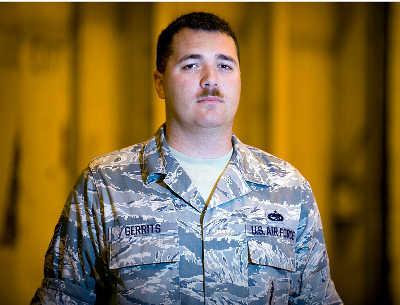
All of the nearly 400 competitors, including Gerrits and his teammates, were highly trained in their specialties and tested extensively in their knowledge and abilities in their field.
In addition to active duty airmen, members of all of the Air Force's National Guard and Reserve elements also participated in the competition.
“We didn't actually do any special training for the competition,” said Gerrits, who is assigned to the 2nd Aircraft Maintenance Squadron, Barksdale Air Force Base, La. “We train on what the competition covered monthly. We were ready for it.”
This year's competition is a combination of two older competitions, a bomb competition and a missile competition, that date back to the 1940s.
From 1948 to 1992 Strategic Air Command (SAC) held a bombing and navigation competition to test its best crews.

In 1966 SAC held their first missile combat competition. Today, Global Strike Challenge combines both of these storied contests into a single highly competitive whole.
Air Force Global Strike Command, activated in April 2009, puts the command and control of the Air Force's nuclear assets under the control of a single organization.
Its creation began in 2008 when Air Force leaders took a critical look at its nuclear mission after discovering shortcomings in its procedures. They decided the service needed a single command focused on nuclear operations.
“This competition allows all of the participating units to increase their readiness and capabilities,” said Gerrits, who has been in the Air Force for seven years. “But it's also important to the competitors because it lets us exercise our competitive sides and try to take home as many awards as we can.”
Follow Lake County News on Twitter at http://twitter.com/LakeCoNews , on Facebook at http://www.facebook.com/pages/Lake-County-News/143156775604?ref=mf and on YouTube at http://www.youtube.com/user/LakeCoNews .




I’ve spent the last week immersed in the rustic cuisine of root vegetables. Turnips and rutabagas have been on my menu, not to mention a parsnip or two.
It all started innocently enough, with a dare from an old college friend. He expects to be pulling a large number of turnips from the ground over the next couple of months, and he challenged me to share five recipes using this rustic root. Loving a rousing bit of food research, I was happy to comply.
Shortly afterward, I received a plea from a high school friend who’s got rutabagas spilling forth from her coastal garden.
“What can I do with them?” she wondered.
I decided it was only right to add rutabagas to my recipe odyssey.
You would be surprised how many cookbooks ignore these humble roots, but I did manage to find a few that gave them mention. At times turnips were honored while rutabagas were not; other cookbooks had both included.
While thumbing through Julia Child’s classic, “Mastering the Art of French Cooking,” in search of rooty inspiration, my husband joked (while imitating her fluty voice) that surely she would recommend smothering them in butter and animal fat.
When I opened the page with general information on turnips, I found this: “The turnip is a wonderful vegetable when given the treatment required to bring out its delicious qualities. It wants and needs to absorb butter or meat fats …”
Uncanny, isn’t it?
She goes on to say this is why they’re particularly succulent when finished off in a stew or braised dish, or in the juices of roasting meat.
She also mentions that in France rutabagas are practically unheard of as food for humans (my mother, once a French chef, says they use them as animal fodder), but they may be used interchangeably with turnips.
Substituting rutabagas and turnips for one another in recipes was a theme I found in my research. This makes sense, as they have quite a bit in common.
Both are in the brassica family, along with cabbage, kohlrabi, Brussels sprouts, broccoli, mustard and cauliflower. It’s believed that rutabagas originated in the wild as a cross between turnips and wild cabbage. They’re sometimes referred to as the yellow turnip.
While turnips have broad appeal worldwide (they’re pickled in Japan, used to flavor a Turkish juice made from carrots, boiled in Iran as a remedy for fever, used in a variety of dishes in India, and were well established in ancient Rome), the geographical popularity of rutabagas doesn’t seem to extend too far beyond northern Europe. Maybe that’s because its history as a vegetable is not as long.
While they’ve been cultivated in the U.S. for nearly 200 years, they’re rarely found on our tables, though my mother maintains that it’s impossible to make a proper pot roast without them.
Rutabagas are so closely associated with Scandinavia that in many parts of the English speaking world they’re referred to as Swedes. In the U.S. and Canada, the term rutabaga is employed, which derives from the Swedish word “rotabagge.”
The rutabaga, with yellowy flesh and a bit of purple on its shoulders, is full of beta carotene in the form of vitamin A. As well, it contains vitamin C and good stores of minerals like calcium, magnesium and iron.
Its stepfather, the turnip, with its white flesh (also accented with purple) is high in vitamin C, but doesn’t share the other nutritious reserves of the rutabaga.
The greens of both vegetables are extremely nutritious, however, more so than the roots. Young tender leaves are preferred, as they don’t have the bitterness that can develop as leaves mature and age. If the greens you have are older, you may remove bitterness by boiling them first, discarding the water and then using them as you would normally.
So what can you do with these rustic and nutritious roots?
In addition to using them in a stew or braising with meat, Julia Child has a few other recommendations for turnips (or, alternatively, for rutabagas), such as blanching them and tossing them with butter, lemon juice, and parsley; mashing them with potatoes; glazing them with butter and sugar; and, finally, making a turnip casserole with bacon and onions, flavored with sage.
The Finns use rutabagas in any recipe that calls for root vegetables. There they’re the major ingredient in a traditional Christmas casserole; they flavor soups with them; and they thinly julienne raw rutabagas as a side dish or salad.
Like Julia Child, the Swedes and Norwegians mash rutabagas with potatoes, but they add carrots for color. This puree – with the occasional addition of onion – is a popular accompaniment to many regional dishes.
In Scotland, rutabagas are endearingly referred to as “neeps.” The Scots mash them and potatoes separately for a dish they call “neeps and tatties” (with tatties being their word for potato).
Bubble and squeak, another cutely-named dish from the British Isles, is a pancake of sorts made with mashed winter vegetables. It was developed to use the veggies left over from the roast served for Sunday dinner.
To get the consistency right, it’s recommended that potatoes make up about 60 percent of the mixture. The rest can be any winter vegetables, including turnips, rutabagas, leeks, onions, carrots, Brussels sprouts or cabbage. Simply mash up soft veggies, form into a patty and cook in a hot pan with olive oil or butter.
And what of my own research? I used them in stews and soups, mashed them in varying quantities with potatoes and other vegetables, and found some subtle differences between the two.
I recommend using small to medium roots, though extra large specimens, especially of rutabagas, are sometimes stocked in the produce aisle.
Rutabagas are a bit denser and more fibrous than turnips. I enjoyed eating turnips raw, but not so much rutabagas.
The raw crunch of turnips, with their rather mild flavor and subtle peppery note, appealed to me.
Rutabagas, in my opinion, hold up a bit better when cooked and add more substance than turnips to mashed potatoes.
If you have an extra large rutabaga, you might be interested to know that the Scots and Irish carved faces into them and used them as candle lanterns in their inaugural Halloween festivals.
I’ll leave you with a recipe I developed for a root vegetable pot pie. As with bubble and squeak, any combination of root vegetables may be used. (I just wish I could think of a name for it that’s as clever!) The leftovers are nice warmed up the next day as a stew or thick soup. Enjoy!
Root vegetable pot pie
2 or more tablespoons olive oil1 large yellow onion, sliced
½ pound of mixed mushrooms (e.g., white button, crimini, Portabellas), sliced or roughly chopped
4 garlic cloves, minced
4 cups vegetable or chicken stock, homemade or otherwise
2 parsnips, peeled and diced
2 medium turnips, peeled and diced
2 medium rutabagas, peeled and diced
2 medium carrots, peeled and diced
2 ribs celery with leaves, sliced
¾ cup dry sherry
1 cup frozen green peas, thawed
2/3 cup all purpose flour
1 ½ cups milk of your choice
¼ cup chopped fresh parsley
2 tablespoon chopped fresh thyme
1 ½ teaspoon salt (more to taste, if needed)
Freshly ground black pepper
Cooking spray
1 sheet frozen puff pastry dough, thawed
Preheat oven to 400 degrees F.
Bring broth to boil in pot and add parsnips, turnips, rutabagas, carrots, and celery; cover, reduce heat and simmer about five minutes.
Meanwhile, sauté onion and mushrooms in very large skillet or soup pot until just tender.
Add garlic and sauté a minute or so longer; add sherry and sauté another minute or so.
Add broth and vegetables to mushroom mixture.
Mix milk and flour; add to mushroom mixture. Stir to blend and cook for about five minutes or until thickened.
Stir in parsley, thyme, salt, pepper and peas, if using. Taste and adjust seasonings.
Spray individual ramekins with cooking spray and spoon mixture into them.
Place puff pastry dough on floured surface and cut rounds that will fit over ramekins.
Place dough over each ramekin and cut slits in dough to allow steam to escape. Coat dough lightly with cooking spray.
Place ramekins on baking sheet and bake for 16 minutes or until pastry is browned and filling is bubbly. Allow to rest for a few minutes before serving.
Note: In lieu of ramekins, this may be made in an 8-inch by 13-inch oblong pan. Roll out the puff pastry to fit and lay it over the top of the vegetable mixture, making slits in the dough for steam to escape.
Recipe by Esther Oertel.
Esther Oertel, the “Veggie Girl,” is a culinary coach and educator and is passionate about local produce. Oertel teaches culinary classes at Chic Le Chef in Hidden Valley Lake, Calif., and The Kitchen Gallery in Lakeport, Calif., and gives private cooking lessons. She welcomes your questions and comments; e-mail her at
Follow Lake County News on Twitter at http://twitter.com/LakeCoNews , on Facebook at http://www.facebook.com/pages/Lake-County-News/143156775604?ref=mf and on YouTube at http://www.youtube.com/user/LakeCoNews .

For years researchers have been debating whether Enceladus, a tiny moon floating just outside Saturn's rings, is home to a vast underground ocean. Is it wet – or not?
Now, new evidence is tipping the scales.
Not only does Enceladus likely have an ocean, that ocean is probably fizzy like a soft drink and could be friendly to microbial life.
The story begins in 2005 when NASA's Cassini probe flew past Enceladus for a close encounter.
“Geophysicists expected this little world to be a lump of ice, cold, dead, and uninteresting,” said Dennis Matson of NASA's Jet Propulsion Laboratory. “Boy, were we surprised!”
Cassini found the little moon busily puffing plumes of water vapor, icy particles and organic compounds out through fissures (now known as “tiger stripes”) in its frozen carapace.
Mimas, a nearby moon about the same size, was as dead as researchers expected, but Enceladus was precociously active.
Many researchers viewed the icy jets as proof of a large subterranean body of water. Near-surface pockets of liquid water with temperatures near 32o F could explain the watery plumes. But there were problems with this theory. For one thing, where was the salt?
In initial flybys, Cassini's instruments detected carbon, hydrogen, oxygen, nitrogen and various hydrocarbons in the plume gasses. But there were none of the elements of salt that ocean water should contain.
In 2009 Cassini's cosmic dust analyzer located the missing salt – in a surprising place.

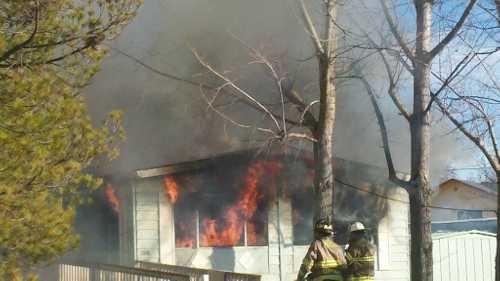
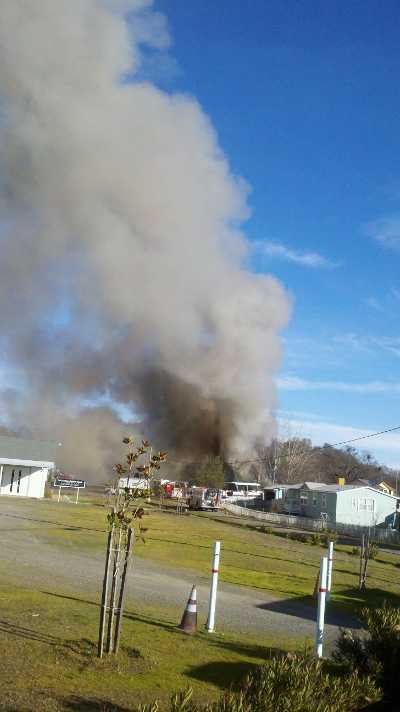
LAKEPORT, Calif. – A Friday afternoon fire destroyed a Lakeport home.
The fire, reported just after 3 p.m., occurred at 1100 Park Way at Hill Road East.
Lakeport Fire Chief Ken Wells said the fire in the doublewide mobile home began in rear of the structure and went through it.
“It was a total loss,” he said.
No humans were injured but a family dog perished in the blaze, Wells said.
Two engines and a ladder truck from Lakeport and an engine from Kelseyville responded, along with about 18 firefighters, according to Wells.
He said it took about 30 to 45 minutes to contain the fire, but mop up was still going on well after 7 p.m.
The cause of the fire is not known, Wells said.
On the Northshore, there was a happier ending for a man whose cabover camper caught fire later in the day.
At around 4:30 p.m. a fire was reported in the camper in space No. 14 at Len-Lee Trailer Resort, located at 3427 East Highway 20 in Nice.
Northshore Fire Battalion Chief Steve Hart said a small propane explosion ignited the fire.
The owner, who is deaf and cannot speak, got distracted and walked outside, and when he returned the fire ignited and burned a small 1-foot by 1-foot area of insulation behind the stove, Hart said.
Firefighters didn't have to use any water but were able to pull out the burned material by hand, which Hart said pleased the owner, who was afraid of losing all of his possessions in case a fire hose was brought in.
Hart estimated total damage to be between $100 to $150.
E-mail Elizabeth Larson at

Education
Health
Business
Obituaries
Veterans
Recreation
Religion
Arts & Life
Government & Politics