 How to resolve AdBlock issue?
News
Gerald Stanley, 66, claiming ill health, appeared via video conference from San Quentin State Prison, where he's been on death row since February 1984.
Stanley was convicted of shooting his wife, Cynthia Ann Rogers, in August 1980.
In March 2008 federal Judge Frank C. Damrell ruled there had been juror misconduct during the trial's death penalty phase because a female female juror who had been a domestic violence victim didn't disclose that to the court, as Lake County News has reported.
That's put Stanley's death sentence on stay and is leading to a retrospective competency hearing, which District Attorney Don Anderson estimated Monday likely will occur this summer.
Stanley's trial was moved to Butte County due to pretrial publicity, but earlier this year Judge Gerald Hermansen ruled the case could return to Lake County, and Stanley supported the move.
The case is being heard by retired Alameda County Superior Court Judge William McKinstry.
Anderson said most of the local superior court judges have recused themselves from hearing the case.
Retired Judge Robert Crone, who still hears cases locally, was the district attorney who prosecuted Stanley, with Judge Stephen Hedstrom also working in the Lake County District Attorney's Office at that time.
The other judges who recused themselves – Richard Martin and Andrew Blum – also served in the Lake County District Attorney's Office under Hedstrom's tenure as district attorney in the years following the Stanley case.
Stanley had previously asked to represent himself or to have Berkeley-based attorney Jack Leavitt represent him. Leavitt was appointed to the task at the Monday hearing.
Anderson said another hearing is planned for May 23, at which time he said that any stipulations he and Leavitt have in the case will be announced in preparation for moving forward with the competency hearing.
E-mail Elizabeth Larson at
Earlier this month, Gov. Jerry Brown and Congressman Mike Thompson (D-St. Helena) both sent letters to Obama asking him for a major disaster declaration for California because of the tsunami generated by a 9.0-magnitude earthquake off the coast of Japan on March 11.
The Federal Emergency Management Agency is still reviewing Brown’s requests for other affected communities, which include neighboring Mendocino County.
“Last month’s tsunami caused significant damage to infrastructure up and down California’s coast,” Thompson said Monday.
He said he was pleased that the president recognized the devastation in Del Norte and Santa Cruz counties and approved a federal disaster declaration for both areas.
“However, there are still other coastal communities that need assistance,” Thompson said. “That’s why I’m urging President Obama to issue disaster declarations for all affected areas so they can continue the process of rebuilding.”
Officials have estimated that the water surge that hit the coast of California caused a total of $48 million.
Follow Lake County News on Twitter at http://twitter.com/LakeCoNews, on Facebook at http://www.facebook.com/pages/Lake-County-News/143156775604?ref=mf and on YouTube at http://www.youtube.com/user/LakeCoNews.
The County Health Rankings, released late last month by the University of Wisconsin Population Health Institute and the Robert Wood Johnson Foundation, assessed a number of factors in arriving at county-by-county health snapshots of the more than 3,000 counties in all 50 states.
“This report shows us that there are big differences in overall health across California’s counties, due to many factors, ranging from individual behavior to quality of health care, to education and jobs, to access to healthy foods, and to quality of the air,” says Patrick Remington, MD, MPH, associate dean for Public Health, University of Wisconsin School of Medicine and Public Health.
Out of 56 California counties examined in the report – Alpine and Sierra weren't ranked – Lake County ranked 53 in overall health outcomes, which researchers said was a slight improvement from 2010, when Lake County ranked 54.
“They don't intend for it to be a judgment about how good or bad we are,” said Lake County’s Health Officer Dr. Karen Tait. “It's really intended to point out where the significant areas are so we can look at ourselves and basically mobilize to try to address some of those issues.”
She said the report doesn't compare all counties against each other. “They rank them state by state.”
Tait said this is the second year for the report, which uses many of the same data sources as the 2010 Lake County Community Health Needs Assessment, which was completed last year.
As such, Tait said the two reports arrive at many of the same conclusions, and so she found the County Health Rankings didn't include any major surprises. “I think it just really, for me, validated what we saw in the health needs assessment,” and also helps give an idea of where the county needs to focus its efforts, she added.
The basis of the report was what organizers called “a standard formula to measure how long people live and how healthy they are.”
The report's key measures used to assess overall health levels – what the researchers termed “health outcomes” – were the rate of people prematurely dying before age 75, the percent of people who report being in fair or poor health, the numbers of days people report being in poor physical and poor mental health, and the rate of low-birthweight infants.
“The kind of unique thing about this is the way they weight some of the factors,” Tait said, and how the report makes certain judgments about what's important to health.
For premature death, or mortality, the county ranked No. 54, but did slightly better, ranking No. 43, for morbidity, the term for how people feel overall.
Also assessed were health behavior, clinical care, social and economic factors, and physical environment. Lake ranked 52 in health behavior, received a 31 in clinical care and a 46 in social factors, and had its best ranking, 26, in physical environment.
The report also looked at counties' rates of adult smoking, adult obesity, binge drinking and teenage pregnancy; the number of uninsured adults, availability of primary healthcare providers and preventable hospital stays; rates of high school graduation, number of children in poverty, rates of violent crime, access to healthy foods, air pollution levels and liquor store density.
Important factors cited by researchers in arriving at Lake County's health picture included its high rate of unemployment, at 19.5 percent in March, compared to the statewide rate of 12 percent.
In addition, 23 percent of the county's adults report being cigarette smokers, while 21 percent of adults report regular heavy alcohol use and/or binge drinking, the report found.
Those findings relating to smoking were similar to those reported in the 2010 Lake County Community Health Needs Assessment, which found that 25.9 percent of the county's adults reported being smokers, compared to 14.5 percent statewide.
The county's death rate associated with motor vehicle crashes was 28 out of 100,000, a rate that researchers said was twice California's rate.
That also is similar to findings in the health needs assessment which, based on the California Department of Public Health's County Health Status Profiles for 2010, reported that Lake County was ranked No. 52 statewide for deaths in motor vehicle crashes, with an age-adjusted death rate more than twice the state average and just under twice the national average.
Other factors causing a lower ranking for the county included findings of the availability of only one primary care healthcare provider for each 1,228 Lake County residents, compared to one for each 847 Californian statewide.
The report did note that that number was “slightly improved” compared to 2010 and Lake County fared as well or better than other Californians when it comes to preventable hospital stays, and for diabetes and mammography screenings.
How Lake compares with the region
Many of the state's rural counties ranked lower in the study, with Bay Area, coastal and some mid-state counties bordering on Nevada ranking higher.
Marin County had the best overall ranking statewide, and Trinity County the lowest, according to the report.
Lake's neighboring counties had, for the most part, better rankings: Colusa, 8; Yolo, 9; Sonoma, 12; Napa, 14; Glenn, 32; and Mendocino, 33.
The report also used a county health calculator, http://chc.humanneeds.vcu.edu/#106045/56/education , to look at peoples' level of education and income, and how those factors impact health.
That county health calculator put Lake County's percentage of adults with some college education at 51 percent, below the statewide average of 57 percent.
Sixty percent of the county's population has a “basic income” – at least twice the federal poverty level, which in 2009 for a family of four was $44,980. That's below the statewide average of 68 percent.
Tait pointed out that the report had limitations.
“Last year we did very well on the physical environment” because it was largely based on air quality, she said.
However, this year the report added a new category, access to recreational facilities, which caused the county's overall score in physical environment to drop. Tait said that's because that category considered things like athletic clubs and other more business-related facilities, rather than the lake and the outdoors.
“We were a little bit sensitive” about that finding, she said.
Tait said there were several areas of good news, including a slight improvement in preventable hospital stays, fewer children in poverty and a reduced teen birth rate.
“Any progress at all is good,” said Tait, noting, “I'm the perpetual optimist.”
Overall, Tait said there are many factors that affect lifestyle, which correlate to the state of the economy and the choices people are making.
“We know we just have a lot of challenges in that area,” she said.
One of the challenges is how to speak effectively to those health issues with the community, especially at a time when the economy is so difficult, said Tait, who suggested that community involvement is the most effective way to reach the larger population.
Putting out brochures, she said, doesn't always speak to everybody. “When you're dealing with behavioral issues it's complex,” she said.
If people are struggling with the economy and unemployment, it's very easy to tell them to stop smoking or drink less, “but it's not really realistic” because they're not in a place to feel motivated, Tait explained.
“I think we need to find some creative ways to motivate and influence healthful behaviors more effectively than we have,” she said.
Tait said several organizations and programs in Lake County are working to improve the county's health, and county health officials are partnering with those organizations.
Those organizations include the Health Leadership Network, which works on obesity prevention and promotes physical activity, and now is turning new attention to smoking-related issues, “because that's such a common thread with so many of these health conditions,” Tait said.
The Lake County/City Area Planning Council is studying transportation, as they're aware of the health effects of transit planning, and Tait said the Lake Family Resource Center has many programs that promote health, including smoking cessation and tobacco education.
The rankings, according to Risa Lavizzo-Mourey, M.D., president and chief executive officer of the Robert Wood Johnson Foundation, demonstrate that “health happens where we live, learn, work and play,” with many of those influences found outside the doctor's office.
Lavizzo-Mourey added, “We hope the County Health Rankings spur all sectors – government, business, community and faith-based groups, education and public health – to work together on solutions that address barriers to good health and help all Americans lead healthier lives.”
The rankings will be presented during a congressional briefing in Washington, DC, on Tuesday, April 19.
To see the full report visit www.countyhealthrankings.org.
E-mail Elizabeth Larson at
Committee Republicans, searching for ways to curb federal deficits and rein in galloping VA costs, are targeting 1.3 million veterans who claim Priority Group 7 or 8 status and have access to VA care.
Priority Group 8 veterans have no service-connected disabilities and annual incomes, or net worth, that exceed VA means-test thresholds and VA “geographic income” thresholds, which are set by family size.
Priority Group 7 veterans also have no service-connected disabilities and their incomes are above the means-test thresholds. But their incomes or net worth fall below the geographic index. In other words, because of where they live, in high cost areas, they likely struggle financially.
Joseph Violante, national legislative director for Disabled American Veterans, said he first learned of the committee’s interest in possibly narrowing access to VA clinics and hospitals from a DAV member from Wisconsin, chairman Ryan’s home state.
Violante and other DAV officials arranged their own meeting with a staff member for the committee. He confirmed growing interest in a cost-saving initiative to push priority 7 and 8 veterans out of VA health care.
As this budget committee staffer reminded Violante, proponents for opening VA health care to all veterans had argued it would be cost neutral to VA. That’s because VA would charge these vets modest co-payments for their care. Also VA would bill these veterans’ private health insurance plans for the cost of their VA care.
That argument from 1996 turned out to be wrong. Co-payments collected from low-priority veterans and private insurance plan billings today cover only 18 percent of the cost of care for group 7 and 8 veterans. By 2009, the annual net cost to VA to treat these veterans totaled $4.4 billion or 11 percent of VA’s annual medical appropriation.
The figures come from the Congressional Budget Office’s annual report to Congress, “Reducing the Deficit: Spending and Revenue Options.”
Among options it presented this year to the new Congress for reducing VA spending is one to close enrollment in VA care for all veterans in groups 7 and 8 and to cancel the enrollment of veterans currently in two low priority groups.
CBO said this would save VA $62 billion in the first 10 years, from 2012 to 2021. But the net savings to the government over the same period, CBO said, would be about half that amount. That’s because many of the veterans bumped from VA are old enough or poor enough to use Medicare or Medicaid, which would drive up the cost of those programs.
We asked a committee spokesman for comment, both by e-mail and voice mail, but none came in time for this column’s deadline.
Until the mid-1990s, VA had denied health care to priority 7 and 8 veterans. Congress changed that during the Clinton administration, enacting the Veterans' Health Care Eligibility Act of 1996.
The law directed VA to build many more clinics across the country. To ensure enough patients to fill these clinics, the VA secretary was given authority to expand care eligibility.
The ban on group 7 and 8 veterans was ended by 1999. Over the next three years their enrollment climbed to 30 percent of total enrollees.
By 2003, then-VA Secretary Anthony Principi stopped allowing any more group 8 enrollments, saying their numbers strained the system for higher priority veterans, including wounded returning from Afghanistan and Iraq.
It’s possible that, in sharing what the budget committee eyed due to lower VA health costs, the professional staffer assumed DAV would embrace cancellation of 7 and 8 enrollments because few DAV members would be impacted. But Violante said DAV is concerned, for two reasons.
One, some DAV members separated from service with disabilities rated at zero percent do have access to VA health care as group 7 or 8 veterans.
A bigger concern for his members, Violante said, is that tossing 1.3 million veterans from VA care would leave the system without the “critical mass” of patients needed to provide “a full continuum of care.”
DAV officials worried that an initiative to narrow VA enrollment would be included in the House Republican budget plan unveiled this week. Ryan titled it “Path to Prosperity” and the full committee endorsed it on a straight party line vote April 6.
The budget package, however, doesn’t mention any change to enrollment eligibility nor call for significant cuts to VA budgets. Violante said DAV wants to talk House committees out of taking any action to reduce VA enrollment.
CBO presented pros and cons for canceling 7 and 8 enrollments. An advantage is VA could refocus services on “its traditional group of patients – those with the greatest needs or fewest financial resources.”
It noted 90 percent of group 7 and 8 enrollees had other health care coverage, either Medicare or private insurance. So the “vast majority” cut loose would have ready access to other coverage. Those who don’t could be eligible for health insurance exchanges to be set up in the future said CBO.
One disadvantage is that many veterans who have come to rely on VA for at least part of their medical care would see that care interrupted.
The Obama administration and Congress actually had been moving in the opposite direction, to expand VA enrollment, until Republicans won the House.
As Obama took office in 2009, VA announced that up to 266,000 veterans with no service-connected health conditions would be allowed to enroll in VA health care. Rep. Chet Edwards (D-Texas) had fought successfully to add $350 million to the 2009 VA budget so income thresholds controlling priority 8 enrollments could be raised 10 percent.
Edwards lost his reelection bid last year. And new priority 8 enrollees haven’t rushed to join the system as VA officials had expected.
Group 8 and 7 veterans using VA care pay $15 per outpatient visit and a little more for specialty care. Inpatient fees also are modest. The most popular benefit for many of enrollees is discounted prescription drugs. The co-pay usually is $8 for a 30-day supply.
Tim Tetz with American Legion said his organization and many veterans groups would strongly oppose tossing out group 7 and 8 veterans. He credits their enrollment since 1999 as helping to improve VA care.
“If as great of a health care system as we have, shouldn’t we let all of our veterans have access to it, in some manner,” Tetz asked.
While deficit hawks weigh this issue, VA still is enrolling new group 8 veterans who fall below its income thresholds. Those without dependents and living outside high-cost areas, for example, must have income below a means test threshold of $32,342.
More information on group 8 enrollment is online at www.va.gov/healtheligibility or call 877-222-VETS (8387).
To comment, send e-mail to
Follow Lake County News on Twitter at http://twitter.com/LakeCoNews , on Facebook at http://www.facebook.com/pages/Lake-County-News/143156775604?ref=mf and on YouTube at http://www.youtube.com/user/LakeCoNews .
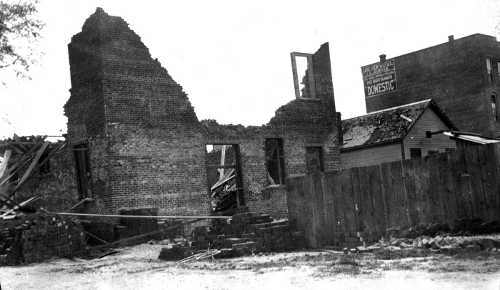
In commemoration of the 150th anniversary of the founding of Lake County this year, Lake County News is publishing a series of historical stories about the county, its people and places. With Monday, April 18, being the 105th anniversary of the great San Francisco earthquake of 1906, this week's story looks at the impact of that quake on Lake County.
The date April 18, 1906, is marked by one of the worst natural disasters in U.S. History.
Many, although born at a different time, recognize the significance of this date. It is the day that San Francisco experienced a devastating earthquake.
At 5:12 a.m., many San Franciscans were still asleep, and others were on the road commuting to their places of employment when the city was shaken violently for about 45 to 60 seconds.
The earthquake shifted the ground at about four to five feet per second. The rupture traveled approximately 5,900 miles per hour and left its imprint on 375,000 square miles.
The earthquake traveled to Northern California areas such as Lake County, Santa Rosa, San Jose and Santa Cruz. It went as far inland as Nevada.
The US Geological Survey and Berkeley Seismological Laboratory have estimated that the quake's magnitude ranged between 7.7 and 7.9 and did $400 million in damage in 1906 dollars.
The aftermath of the earthquake left 225,000 people homeless and about 3,000 dead.
What wasn’t utterly demolished by the earthquake was quickly obliterated by raging fires. Fires burnt about 28,000 buildings and 500 blocks – or one quarter of San Francisco.
Some fires were as hot as 2,700 degrees Fahrenheit and were more catastrophic than the earthquake itself.
The water supply in San Francisco was completely cut off. Citizens began receiving their food from soup lines and many sought shelter at Golden Gate Park or at the beach.
It took approximately three minutes for the aftershock of the quake to reach Lake County.
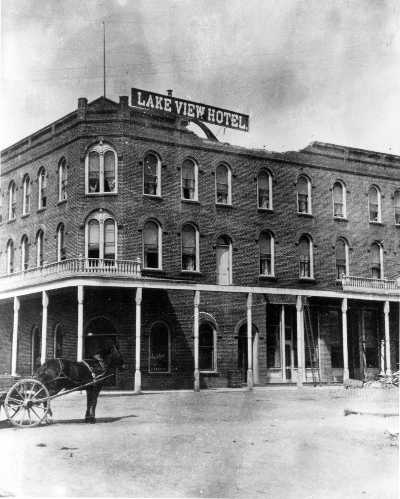
Although the effects of the quake weren’t as catastrophic as in other areas it still impacted many.
While Upper Lake for the most part was spared from the quake, other Lake County towns were not.
In Lakeport, the quake shook down the brick walls of the two-story Masonic Hall and both the Lakeview and Giselman Hotels were damaged. Many school chimneys toppled and residences were knocked down.
Some Lower Lake and Middletown residents had chimneys knocked down and household items destroyed. The bell tower and roof at the Lower Lake Schoolhouse were badly damaged as well.
The Lower Lake bell tower played an important part in the functioning of the town and even then had historical significance. The bell was not only used to signify the beginning and end of school, but also was used to alert townspeople of fires and other emergencies.
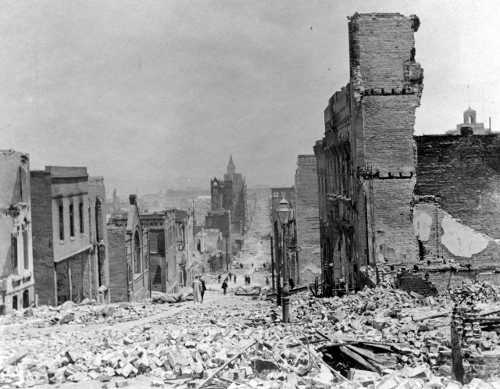
After the quake knocked the bell tower down, the bell itself became overlooked and it is speculated that it was melted down and the metal reused during World War II. The loss of both the bell and bell tower was felt by all Lower Lake residents.
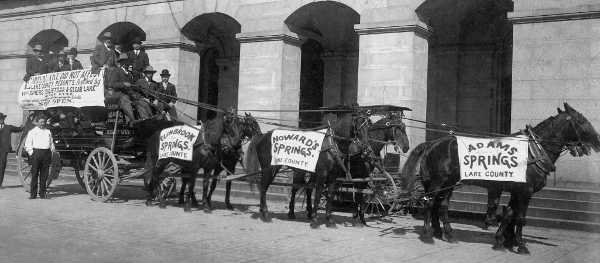
The county economy suffered as well, but Lake County was still among the many counties that responded to the request for aid by those in San Francisco.
For more information about the Lake County Sesquicentennial, visit www.lc150.org, join the celebration at https://www.facebook.com/home.php#!/pages/Lake-County-Sesquicentennial/171845856177015 and follow it on Twitter at http://twitter.com/LakeCo150 .
Follow Lake County News on Twitter at http://twitter.com/LakeCoNews , on Facebook at http://www.facebook.com/pages/Lake-County-News/143156775604?ref=mf and on YouTube at http://www.youtube.com/user/LakeCoNews .


Education
Health
Business
Obituaries
Veterans
Recreation
Religion
Arts & Life
Government & Politics