 How to resolve AdBlock issue?
News

UPPER LAKE, Calif. – A man was killed and a woman seriously injured in a single-vehicle crash that occurred along Highway 20 on Sunday night but wasn't discovered until Monday morning.
The collision, which took place west of Witter Springs Road, was first reported to the California Highway Patrol at 11 a.m. Monday via a 911 call from the surviving crash victim, the agency reported.
The 40-year-old male driver – a resident of Portland, Maine, whose name was not released – died, and his 43-year-old passenger, a woman from South Freeport, Maine, suffered major injuries, according to a report from CHP Officer Matthew Norton, who is leading the crash investigation.
Initial reports from the scene on Monday indicated that the crash occurred the previous night, which CHP Officer Kevin Domby confirmed to Lake County News later in the day.
Domby said the female crash victim extricated herself from the vehicle – a rented canary yellow 2012 Chevrolet Corvette – and called in the crash on her cell phone.
The woman remained on the line while the dispatcher listened for the sirens. When the sirens were close by, the dispatcher notified Northshore Fire that they were in the right area, Domby said.
At 11:15 a.m. emergency personnel located the Corvette down an embankment, Norton reported.
Based on the investigation so far, Norton said speed appears to be a factor in the collision's cause.
Norton said the Corvette was traveling westbound on Highway 20 when the driver failed to negotiate a right curve in the road and went off the road's south edge.
The Corvette hit an oak tree, ejecting the driver, who was not wearing his seat belt, Norton reported. The driver died at the scene.
The female passenger, who was wearing her seat belt at the time of the crash, sustained major injuries. Norton said she was transported by REACH air ambulance to Santa Rosa Memorial Hospital.
Norton said the collision investigation is continuing.
John Jensen contributed to this report.
E-mail Elizabeth Larson at

CLEARLAKE, Calif. – There is sufficient evidence to try three men for the murder of a child and the attempted murders of five other people, according to a local judge's Monday ruling.
Judge Stephen Hedstrom ruled that Paul William Braden, 21, and Orlando Joseph Lopez, 23, of Clearlake Oaks, and 29-year-old Kevin Ray Stone of Clearlake will stand trial for the June 18 shooting in Clearlake that killed 4-year-old Skyler Rapp.
The shooting, the worst in the city's history, also wounded and permanently disabled the child's mother, Desiree Kirby, and wounded Kirby's boyfriend, Ross Sparks, and his brother, Andrew Sparks, and friends Ian Griffith and Joseph Armijo.
The group was in the yard of Kirby's and Sparks' home on Lakeshore Drive on the evening of June 18 when armed assailants – who the shooting victims couldn't see due to the darkness – shot through and over a fence separating the home from a neighbor's residence.
In a hearing that ran just short of an hour, Hedstrom explained his conclusion that the three men could be tried on the 16 felony counts they're facing, including murder, mayhem, multiple counts of attempted murder and assault with a deadly weapon, and many more special allegations.
Hedstrom's decision followed the conclusion last Friday of the mens' eight day preliminary hearing, which stretched over three weeks, and saw 14 witnesses – including Kirby, Ross and Andrew Sparks, and Griffith – testify, with police offering statements of another 14 witnesses who did not take the stand themselves.
In reviewing the testimony and evidence, Hedstrom said a June 9 fight between the Sparks' cousin, Josh Gamble, and members of the “Avenue Boys” – a gang of young men who live in the city's Avenues area – at an adult school graduation at Lower Lake High School was a “triggering event.”
He explained that the fight led to a chain of other events that brought tensions to a head.
Those events included a confrontation between Kirby and Lopez's younger brother, Leonardo, at Walmart several days before the shooting; what had appeared to be a friendly discussion between Ross Sparks and Orlando Lopez about the adult school fight, which also occurred in the days before the shooting; and then, on June 18, the exchange of angry text messages between Sparks and Orlando Lopez, who had been planning to meet for a fight, based on testimony.
During the preliminary hearing, police officers, detectives and witnesses testified to differing statements by the three men about who was responsible for the shooting.
Hedstrom noted, “We have three defendants pointing in all different directions as to who was the shooter or shooters.”
As part of his case, District Attorney Don Anderson had presented evidence and witness statements that double ought buckshot and bird shot were the two types of ammunition found at the scene.
Hedstrom said that, based on his review of pictures submitted into evidence, the expended shotgun shells found at the scene appeared to match an unexpended shell found in a borrowed vehicle Stone allegedly had crashed near the shooting location.
“When one looks at this broad overview of the evidence, this is much more than any one defendant simply being in the wrong place at the wrong time,” said Hedstrom.
He went on to add, “When you take all this evidence, it's very easy for the court to come to the conclusion, based on the aiding and abetting concept, that all three defendants are responsible for these substantive charges that have been brought against them … It's just eminently clear to the court.”
While the defense – including Stephen Carter, Komnith Moth and Doug Rhoades, representing Lopez, Stone and Braden, respectively – had asked for factual findings about the lack of credibility of some of the witnesses, Hedstrom wouldn't take that step.
Acknowledging, “We certainly have a lot of conflicting evidence,” Hedstrom continued, “The court declines at this point to try to unravel the inconsistencies and make judgments as to credibility.”
His reasons, he said, included insufficient evidence to make solid determinations of credibility. He said he hadn't heard all of the evidence, mostly because many witnesses hadn't taken the stand in the hearing.
But he said there was a “reasonable suspicion” – a standard of proof appropriate for a preliminary hearing, but less than would be required at trial – to hold Braden, Lopez and Stone to answer.
Hedstrom asked the defense attorneys if there was an objection to combining the three suspects' cases going forward.
Carter said it was highly likely the three men would be tried separately. Moth added he anticipated severing Stone's case from the combined case.
The next step will be a new arraignment, scheduled for 8:15 a.m. Tuesday, Oct. 25, in Hedstrom's Clearlake courtroom.
E-mail Elizabeth Larson at
The community program planning meeting will take place from 12:30 p.m. to 3:30 p.m. at the Historic Courthouse Museum, 255 N. Main St. in Lakeport. Lunch will be served at 12:30 p.m.
The Mental Health Services Act has been providing funding to Lake County since 2005 to support a variety of initiatives to assist consumers of mental health services and their families in the local community.
These initiatives include direct services and supports as well as prevention and early intervention programming.
Input from consumers and their families, partner agencies, and representatives from cultural and ethnic populations in Lake County aided in the development of these programs through the Community Program Planning process as required by the act.
At this time, stakeholder participation is requested to further develop workforce education and training, innovation, and capital facilities and technological needs plans.
Transportation and childcare will be provided upon request to those who qualify.
Please RSVP to Sarah Deng, MHSA analyst, at 707-263-4338 or by e-mail at
Follow Lake County News on Twitter at http://twitter.com/LakeCoNews, on Tumblr at www.lakeconews.tumblr.com, on Facebook at http://www.facebook.com/pages/Lake-County-News/143156775604?ref=mf and on YouTube at http://www.youtube.com/user/LakeCoNews .
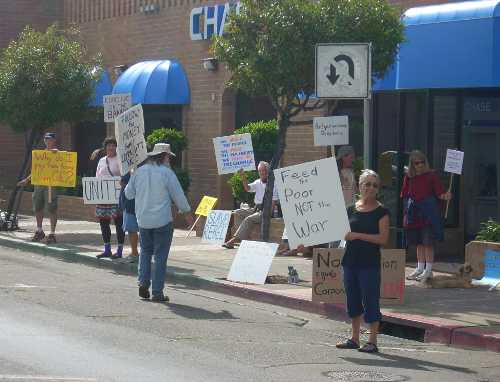
Increased water monitoring data shows the number of rivers, streams and lakes in California exhibiting overall toxicity have increased 170 percent from 2006 to 2010.
About two dozen water bodies were added to the list – including the San Joaquin River and several reaches of the Santa Ana River.
Clear Lake has been listed for several years. Other local water bodies that are listed by the EPA include Indian Valley Reservoir, the lower and north forks of Cache Creek, and McGaugh Slough.
The agency said that California has some of the most magnificent rivers, lakes and coastal waters in the country. However, of its three million acres of lakes, bays, wetlands and estuaries, 1.6 million acres are not meeting water quality goals, and 1.4 million acres still need a pollution clean-up plan, known as a Total Maximum Daily Load (TMDL).
Of the 215,000 miles of shoreline, streams and rivers, 30,000 miles are not meeting water quality goals, and 20,000 miles still need a TMDL. The most common contaminants in these waterways are pesticides and bacteria, followed by metals and nutrients.
“Clean water is vital to California's pubic health, economy, recreation and wildlife,” said Jared Blumenfeld, EPA’s Regional Administrator for the Pacific Southwest. “California has done an excellent job of increasing the amount of water monitored. Unfortunately, much of the new data points in the wrong direction. This list of impaired waters is a wake-up call to continue the critical local and statewide work to needed to heal California's damaged waters. “
The Clean Water Act requires states to monitor and assess their waterways and submit a list of impaired waters to EPA for review. The 2010 list is based on more comprehensive monitoring as well as new assessment tools that allow the state to evaluate larger quantities of data.
The data showed several important trends including:
Many more beaches, both inland and coastal, are on the 2010 list because bacteria reached unsafe levels for swimming. This increase is largely driven by a more extensive review of data collected by counties.
Better reporting of trash in waters has led to an increase in trash impairments by 76 percent from 2006 to 2010. California’s statewide Trash Policy is under development and will address trash impacts to both local wildlife and reduce California's contribution to the Great Pacific Garbage Patch.
The numbers of listings showing pollutants in fish are at levels too high for safe human consumption has increased 24% from 2006 to 2010, with the greatest increases seen in mercury. Rather than signaling an increase in fish contamination, this trend is due to California's recent statewide sport fish monitoring effort. Additionally, some pollutants such as DDT are no longer manufactured and are slowly decreasing in concentration over time.
Waters identified as impaired by pesticides showed a 36 percent increase from the prior list, likely a result of the more thorough monitoring required under the State's Irrigated Lands Regulatory Program. Under this program, close collaboration between the Water Boards and the Department of Pesticide Regulation has resulted in reduced pesticide discharges to surface and groundwater.
Last year, California submitted to EPA for approval its list of polluted rivers, lakes and coastal waters. EPA added several waterways to the list, including portions of the San Joaquin River, where increasing temperatures and salinity imperil salmon and trout populations. Following public comment, EPA finalized the additions Tuesday.
Last week's action leads to the development and adoption of hundreds of pollution cleanup plans by California to restore waters to swimmable, fishable and drinkable conditions.
Work is already under way in California to address hundreds of waters previously listed as impaired. EPA will continue to work with the state to develop and implement additional TMDLs to address the remaining waters.
Follow Lake County News on Twitter at http://twitter.com/LakeCoNews, on Tumblr at www.lakeconews.tumblr.com, on Facebook at http://www.facebook.com/pages/Lake-County-News/143156775604?ref=mf and on YouTube at http://www.youtube.com/user/LakeCoNews .
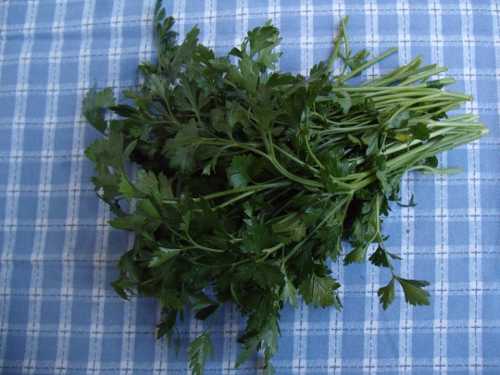
Parsley may be in need of an image makeover. This wonderful herb is thought of by some as nothing more than a bright little garnish or flecks of green in a side dish, but it brings far more to the table.
As the herbal adage states, “Parsley is the jewel of herbs, both in the pot and on the plate.”
It’s amazing how often I add copious amounts of fresh parsley to the meals I make.
Last evening I added a handful to pungent pasta puttanesca, I tossed it in a mushroom omelet the night before and over the last few days I’ve been happily devouring one of my favorite salad dressings, a puree of parsley with apples and ginger.
Parsley is native to the southern Mediterranean region and grows wild from Sardinia east to Lebanon, as well as in the northern African nations of Algeria and Tunisia. It’s naturalized throughout much of Europe and figures heavily in the cuisines of that continent, as well as in the Middle East.
While it’s been cultivated for more than 2,000 years, it was used medicinally prior to its popularity in cooking. The ancient Greeks viewed parsley as sacred, and used it to adorn winners of athletic contests, as well as the tombs of the dead.
Parsley’s name is derived from the Greek word for “rock celery,” with celery being one of its relatives.
It’s unclear when it became popular as an addition to food. Some historians claim the practice goes back as least as far as the time of Charlemagne in Medieval Europe, as it was grown in his gardens. Prior to this it was used as a garnish in ancient Rome, but there’s no record of its being added as a flavoring to food in that culture.
The two best known varieties of leaf parsley are curly parsley and flat leaf or Italian parsley. While some prefer the curly variety, especially as an attractive garnish, the latter is more popular with chefs as most feel the flavor is superior.
A lesser known type of parsley is grown as a root vegetable and has a much thicker root than the parsley cultivated for its leaves. It looks similar to the parsnip, a relative, but the taste is dissimilar. Root parsley is largely unknown in the U.S., but is a common addition to soups and stews in central and eastern Europe.
In my opinion, the bright, fresh taste of parsley purveys summer on a cold winter’s day. It can be used in cuisine in much the same way, meaning it brings a light flavor to an otherwise heavy dish.
An example of this is the use of gremolata, an Italian condiment made with fresh parsley, garlic, and lemon zest, as a classic pairing with osso bucco, a Milanese dish of braised veal shanks. The bright taste of the condiment balances the heaviness of the dish.
I found this to be true in my own kitchen when I made a spaghetti sauce with plenty of tomato paste and a rich red wine. I was happy with the flavor, but it was heavy on the palate. I remedied this by sprinkling gremolata over the dishes of pasta and sauce as I served them. It was the perfect accompaniment.
Gremolata may also be used on fish or vegetables. It’s especially good with roasted asparagus.
The French have a similar condiment made with parsley and garlic, but sans the lemon zest, called persillade.
Parsley is a component of bouquet garni, a grouping of fresh herbs tied together with kitchen string and used to flavor soups and stews. Other herbs that are commonly used include bay leaves and thyme.
This practice is utilized throughout southern and central Europe, particularly in France. I often tie the herbs in a cheesecloth bundle, an alternative to using the string. The herbs may be varied depending on the dish, but parsley is almost always included.
Linguine and clams is a dish that benefits from large amounts of parsley. It adds lively color to an otherwise monochrome arrangement, but the real addition is its flavor. That’s true of so many uses of parsley, including when it graces boiled potatoes or carrots along with butter.
This herb is a veritable powerhouse of nutrition, absolutely full of antioxidants. It’s one of the healthiest foods you can eat.
Just one ounce supplies over 60 percent of our daily need for vitamin C, 30 percent of vitamin A, excellent stores of folate and iron, and many trace elements.
Its volatile oils have been shown to have anticancer, antioxidant, and cardio-protective potency. To top it off, its massive stores of chlorophyll are a fantastic breath freshener!
Parsley is delicious juiced with carrots, kale, beet, and chard as a health drink and pick-me-up.
In the garden, parsley produces leaves from mid-June to late fall, and is available in the supermarket year round. When shopping, choose bundles that aren’t limp and look freshly picked.
Fresh parsley may be stored one of two ways in the fridge, either upright in a glass of water (clip the ends first) or wrapped loosely in a paper towel in a zipper sealed bag.
Today’s recipe is one of my favorites, Middle Eastern tabbouleh, which I enjoy often with its frequent companion, hummus. Both are wonderful in pita bread together.
It seems appropriate to consume this delicious cold salad now with October’s current warmth, and it’s a good way to use those late tomatoes ripening in the garden.
To me, it tastes like health personified with much mint and plentiful parsley. For those sensitive to wheat, it’s wonderful when made with quinoa.
Enjoy!
Minty tabbouleh with plenty of parsley
1 heaping cup bulgur
1 cup water
½ cup fresh lemon juice
2/3 cup extra virgin olive oil
1 cup coarsely chopped fresh mint leaves
1 cup coarsely chopped fresh Italian (flat-leaf) parsley
½ cup sliced scallions, white and green parts
2 cloves finely minced garlic
½ teaspoon salt and pepper to taste
4 ripe plum tomatoes, seeded and cut into ½ inch dice
1 large cucumber, seeded and cut into ½ inch dice
Fresh mint and parsley leaves for garnish
Combine the bulgur, water, lemon juice, and 1/3 cup of the olive oil in a large bowl. Mix well, and set aside for 30 minutes with a fork. Fluff the mixture with a fork. (The bulgur absorbs the liquid and softens.)
Add the mint, parsley, scallions, garlic, salt, pepper and remaining 1/3 cup olive oil. Toss well with a fork.
Add the tomatoes and cucumber and toss again.
Adjust the seasonings, if necessary, and allow to stand, loosely covered, for at least 30 minutes for the flavors to combine.
Garnish with fresh mint and parsley leaves, and serve.
Makes six to eight portions.
Esther Oertel, the “Veggie Girl,” is a culinary coach and educator and is passionate about local produce. Oertel teaches culinary classes at Chic Le Chef in Hidden Valley Lake, Calif., and The Kitchen Gallery in Lakeport, Calif., and gives private cooking lessons. She welcomes your questions and comments; e-mail her at
Follow Lake County News on Twitter at http://twitter.com/LakeCoNews, on Tumblr at www.lakeconews.tumblr.com, on Facebook at http://www.facebook.com/pages/Lake-County-News/143156775604?ref=mf and on YouTube at http://www.youtube.com/user/LakeCoNews.
Education
Health
Business
Obituaries
Veterans
Recreation
Religion
Arts & Life
Government & Politics