How to resolve AdBlock issue?
News
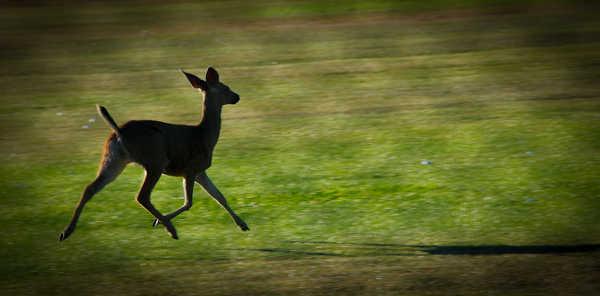
HIDDEN VALLEY LAKE, Calif. – It’s one of the perks of rural life; seeing animals. In the Hidden Valley Lake subdivision, deer are as much a part of the landscape as golf carts.
They glide through the oaks, doze in yards alongside cats and browse next to the security gate. Their biggest threat may be cars, and the deer seem to know it as they wait like pedestrians at crosswalks before stepping out. Last spring the fawns arrived and the suburban herd grew that much larger.
“That's how it used to be all over the county,” said California Department of Fish and Game Warden Lynette Shimek. Then comes the surprise for those who think the area is overrun by deer: “Now I get excited if I see one on a remote hillside,” she said.
According to Shimek, deer are definitely not overpopulated anywhere except subdivisions like Hidden Valley Lake. “They are there because they were born there and have lost the ability to live in the wild … generation after generation,” she said. The phenomenon of suburban wildlife occurs everywhere from urban to remote areas. As development displaces their turf, some animals adapt to these niches. Biologists say that deer are one species that can thrive in “edge” ecosystems.
The overlapping of natural and less-natural habitat is especially noticeable in Lake County, where forests abut residential developments – and some might say the deer prefer the subdivisions. But there’s a larger pattern at work, one that has sent wildlife experts into the Mendocino National Forest to hunt for answers: deer are declining.
Another ‘deer problem’
In the 1990s biologists worried about a very different "deer problem" that existed from the Rockies to New England and the Deep South.
Both rural and suburban areas were accosted by whitetail deer devouring shrubbery and crops, spreading disease and causing hundreds of thousands of auto wrecks, newspapers reported.
Back then, fast-multiplying herds were altering the ecology of forests by stripping native vegetation and eliminating niches for other wildlife.
The problem was spotty in the West. It was mainly caused by whitetails in densely suburbanized areas in the East and Midwest.
Now, if hunter harvest is the yardstick, Eastern deer are also facing challenges. The 2009-10 whitetail deer harvest was down by 11 percent in Virginia and 8 percent in Pennsylvania.
That trend has been noticed in Western deer on a dramatic scale for decades.
In California’s eastern Sierra Nevada, mule deer have reportedly declined 84 percent from 1985 to 1991.
Arizona’s mule deer herd is about half what it was in 1986, according to the Arizona Game and Fish Department.
Estimates by the Colorado Division of Wildlife show the mule deer population on the Uncompahgre Plateau also dropped by half between the early 1980s and the late 1990s, a decline biologists consider “indicative of a much larger problem related to overall ecosystem health.”
In Wyoming, where heavy energy development is under way, mule deer reached a threshold of decline last year that triggers a mitigation response, according to Game and Fish biologists, who fear that intervention like winter feeding may not halt declines.
In Oregon, Fish and Wildlife has launched a Mule Deer Initiative, and in Utah, where mule deer have been in decline for 35 years, the Utah Wildlife Board decided to issue fewer hunting permits for the 2012 season.

Studying the decline’s factors
Deer are definitely declining, especially in the West, “but it’s not the end of the species,” said Tavis Forrester, a University of California, Davis doctoral candidate in ecology who leads the Mendocino Black-tailed Deer Project.
Now in its third year, the study – which encompasses Mendocino, Glenn and Lake counties – is funded mainly by the California Deer Association; a hunting group that contributed more than $60,000 over the past two years, UC Davis and the California Department of Fish and Game.
The goal is to determine if the region’s population is truly declining – or just the harvest – and if so, why? The 57 percent decline of harvested bucks has occurred over the last 20 years in prime deer habitat.
Deer have cycles in their population, Forrester says – so that may play a role. Illegal poaching is a problem, he admits. But many hunters blame four-legged predators.
Hence, the multi-species study also focuses on mountain lions, which depend on deer and elk as a main food source.
Overall, the study explores habitat use and selection, predation of fawns and adult does, habitat change over time, and mountain lion kill rates.
The blacktails under study are most likely the same species that lounge in Hidden Valley yards and drive gardeners to cage tasty plants.
Forrester said the blacktail is a subspecies of mule deer and “by far the most different” of many subspecies, with unique behavioral traits.
Others, like the wedgetail, are common around Berryessa in large areas called the “interzone,” he said, where mule deer interbreed with blacktail.
Lake County had a high population of blacktail deer in the 1960s and 1970s, Forrester said.
A 1946 report on the county’s resources that used data from California’s Department of Conservation described the forest as “the best stocked deer region in California” and “a favorite with sportsmen. The Columbian black-tail dear abound in the brush as well as in the timber belt.”
Last summer, the researchers collected data and sent a proposal to the state Department of Fish and Game to extend the study.
One challenge has been the lack of good deer population estimates, Forrester said. Fish and Game has done some spotlight counts, but the main tool has been the annual harvest.
There also is a dearth of information on the mountain lion population.
The lion factor
Forrester said one concern that prompted the study is a possible increase in their numbers.
No statewide survey has been done and it’s difficult to do research due to the cat’s status as a protected species in California. Mountain lion research may be halted altogether, he said.
Even if the population is growing and causing deer numbers to plummet, the Department of Fish and Game can’t manage them, and they can’t be hunted.
According to a progress report on the study, lions are captured “through various methods, including the use of hounds and live traps.”
Once captured and tranquilized, the lion’s health and age is assessed. Then they are equipped with a satellite GPS collar so their movements can be tracked. It takes hours in the field to even detect signs of the elusive animals.
Aside from hunters bagging fewer bucks, is there any evidence that the area’s mountain lion population is growing?
The Department of Fish and Game has arrived at what it calls a “guesstimate” of the state population of 4,000 to 6,000 mountain lions.
According to the agency’s Web site, the population “peaked in 1996, then decreased somewhat, and has remained stable for the past several years.”
So far, the study can’t determine if mountain lions are impacting the Mendocino-area blacktail population, Forrester said.
According to Marilyn Jasper of the Sierra Club’s Mother Lode chapter, predators may impact the deer population, “but the decline may mean the herd is approaching sustainable size for its habitat.”
Jasper points out that “mountain lions are beneficial to all their prey, since they normally kill the weakest or the sickest.”
Hunters, on the other hand, “kill the best – trophy – of a species, thereby upsetting the natural balance” by allowing weaker animals to survive, Jasper said.
One predator that is “definitely not affecting the deer population,” Forrester said, is the coyote, which sometimes preys on deer.
Hidden Valley Lake residents occasionally report seeing predators, such as bobcats, which Forrester said do not typically prey on deer.
While mountain lions, which have a “huge home range,” might make forays into the subdivision, Forrester doubts they have a steady presence, despite the many deer – because of the human presence.
The role of habitat loss
In Nevada, another state where mule deer are vanishing, state biologists say the problem isn’t predators: It’s the continuing loss of habitat from development, wildfire and invading non-native grasses.
Since settlement 150 years ago, many things, including livestock grazing, habitat fragmentation from gas, oil and mineral exploration and climate change, have altered the landscape, according to the Western Association of Fish and Wildlife Agencies’ Mule Deer Working Group.
Forrester cited two big changes here that have affected deer and other animals.
In the 1980s and 1990s, there was a lot of logging. Aside from destroying habitat, logging also encouraged fire suppression. American Indians intentionally set grass fires to clear old growth, Forrester said, and the oak woodlands flourished, creating fresh food sources like acorns.
When logging took over, intentional burning stopped. A thick, soil-killing, intermediate growth sprung from the clearcut void. It failed to meet the deer’s specific nutritional needs, according to Forrester.
One of the worst impacts on deer habitat has been the takeover by non-native vegetation, Forrester said.
Native perennial grasses have “totally switched over to annual grass,” Forrester said. Now in the fall, where there was once a blanket of green, everything is dead.
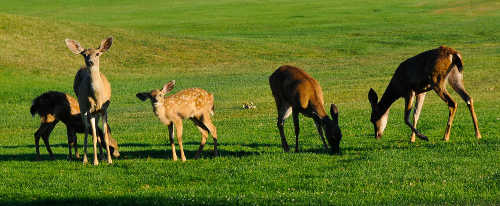
Subdivision-deer, however, find plenty to eat as they move through their home range, which is about one kilometer wide, seeking the most nutritious foods.
Feeding wild deer can harm them, Forrester said, as they can’t digest foods like alfalfa or bread.
Deer are highly selective feeders. They don’t graze, but pluck small flowering plants in the grass. And as gardeners know, they choose the best leaves.
In spring and summer, they prefer forbs and shrubs. Fall is the season for munching acorns. In winter, they dine on the leaves of shrubs.
Blacktails form family groups, rather than herds, Forrester said.
At this time of year, the deer cluster together in what are mostly mother-daughter groups.
In their first year, fawns stay with the mother. When the next baby is born, the mother kicks them off. The yearlings then return to the area where they were born.
As residents of Lake County subdivisions know, that might be their own backyard.
Sheila Pell is a freelance correspondent for Lake County News. She lives in Hidden Valley Lake, Calif.
Follow Lake County News on Twitter at http://twitter.com/LakeCoNews, on Tumblr at www.lakeconews.tumblr.com, on Google+, on Facebook at www.facebook.com/pages/Lake-County-News/143156775604?ref=mf and on YouTube at www.youtube.com/user/LakeCoNews .
The Westside Sacramento Integrated Regional Water Management (IRWM) Plan will detail water supply, flood management, stormwater runoff, and environmental concerns and opportunities for the Cache Creek and Putah Creek Watersheds.
A meeting will be held from 5 p.m. to 7 p.m. Monday, Feb. 6, in the council chambers at Clearlake City Hall, 14050 Olympic Drive.
County residents are encouraged to attend the meeting to learn more about the planning process and how to help shape the plan.
The Westside Integrated Regional Water Management Plan is being developed through a partnership between the Solano County Water Agency, the Napa County Flood Control and Water Conservation District, the Water Resources Association of Yolo County, the Lake County Watershed Protection District and the Colusa County Resource Conservation District.
The project is being funded in large part by a $1 million grant from the California Department of Water Resources, with Proposition 84 funds being used.
Collectively, the planning area includes all or portions of Lake, Solano, Napa, Yolo and Colusa counties. In that area there are nine cities, more than 70 special service districts and key water sources such as Clear Lake, Lake Berryessa, Indian Valley Reservoir, Putah Creek and Cache Creek.
The planning area is subdivided into three areas for planning purposes: Upper Cache Creek, Lower Putah Creek and Lower Valley Floor.
The IRWM Plan will be used to secure grant funding for regional projects that promote effective and sustainable water resources management in the following areas: water supply reliability, water conservation, water quality improvement, stormwater management, flood management, invasive species abatement, mercury contamination cleanup, wetlands enhancement protections, and environmental and habitat improvements and protections.
The plan is expected to be completed by the end of this year.
For more information visit www.westsideirwm.com or call the hotline at 530-661-8115.
Follow Lake County News on Twitter at http://twitter.com/LakeCoNews, on Tumblr at www.lakeconews.tumblr.com, on Google+, on Facebook at www.facebook.com/pages/Lake-County-News/143156775604?ref=mf and on YouTube at www.youtube.com/user/LakeCoNews .
A classic black cat and a tuxedo cat all been cleared for happier times.
Cats that are adopted from Lake County Animal Care and Control are either neutered or spayed and microchipped before being released to their new owner. License fees do not apply to residents of the cities of Lakeport or Clearlake .
If you're looking for a new companion, visit the shelter. There are many great pets there, hoping you'll choose them.
The following cats at the Lake County Animal Care and Control shelter have been cleared for adoption (other cats pictured on the animal control Web site that are not listed here are still “on hold”).

Tuxedo kitty deluxe
With his black and white tuxedo-type markings, this male domestic short hair mix looks like he’s always dressed for dinner.
He has gold eyes and is not yet altered.
Animal shelter staff reports that he has received his rabies shot and is microchipped.
He’s waiting for you in cat room kennel No. 95, ID No. 31538.

Tall, dark and handsome
This all-black male domestic short hair mix is about 5 months old.
He has gold eyes. So far he has not been neutered, but has been tested for feline leukemia.
Look for him in kennel No. 12 in the cat room, reference No. 31307.
Adoptable cats also can be seen at http://www.co.lake.ca.us/Government/Directory/Animal_Care_And_Control/Adopt/Cats_and_Kittens.htm or at www.petfinder.com.
Please note: Cats listed at the shelter's Web page that are said to be “on hold” are not yet cleared for adoption.
To fill out an adoption application online visit http://www.co.lake.ca.us/Government/Directory/Animal_Care_And_Control/Adopt/Dog___Cat_Adoption_Application.htm.
Lake County Animal Care and Control is located at 4949 Helbush in Lakeport, next to the Hill Road Correctional Facility.
Office hours are Monday through Friday, 8 a.m. to 5 p.m., and 1 p.m. to 3 p.m., Saturday. The shelter is open from 10:30 a.m. to 4:30 p.m. Monday through Friday and on Saturday from 1 p.m. to 3 p.m.
Visit the shelter online at http://www.co.lake.ca.us/Government/Directory/Animal_Care_And_Control.htm.
For more information call Lake County Animal Care and Control at 707-263-0278.
Follow Lake County News on Twitter at http://twitter.com/LakeCoNews, on Tumblr at www.lakeconews.tumblr.com, on Google+, on Facebook at www.facebook.com/pages/Lake-County-News/143156775604?ref=mf and on YouTube at www.youtube.com/user/LakeCoNews .
THIS STORY HAS BEEN UPDATED DUE TO ADJUSTED MAGNITUDE ON THE SECOND QUAKE, WHICH WAS CHANGED FROM 3.2 TO 3.0 BY THE U.S. GEOLOGICAL SURVEY.
COBB, Calif. – Two quakes measuring 3.0 and above were reported near The Geysers Geothermal steamfield Sunday evening.
The U.S. Geological Survey said the first quake, a 3.1 on the Richter Scale, occurred at 7:56 p.m., to be followed at 7:57 p.m. by a 3.0-magnitude quake.
The reports on the quakes were computer-generated, so their magnitudes could be adjusted by a seismologist on Monday.
The 3.1-magnitude quake was centered two miles north northeast of The Geysers, four miles west of Cobb and seven miles west northwest of Anderson Springs, at a depth of 2.4 miles, the U.S. Geological Survey reported.
The second, slightly smaller quake occurred at a depth of 2.1 miles and was centered two miles north northeast of The Geysers, four miles west southwest of Cobb and six miles west northwest of Anderson Springs, according to the agency.
Several local residents posted messages on Lake County News’ Facebook page, reporting that they felt the two temblors.
Only one shake report, from Middletown, was reported by 1 a.m. Monday on the 3.1-magnitude quake, and 17 shake reports had been made by the same time on the 3.0-magnitude quake.
E-mail Elizabeth Larson at
The event was a great success, with more than 50 people participating in the count, according to Darlene Hecomovich, the Christmas Bird Count coordinator for Lake County.
The count was held on Dec. 17, and was part of a nationwide effort to tally birds, an event that is held every year from December to early January by Audubon societies all over the country.
Hecomovich thanked everyone who participated in the count.
“It was your work and dedication that made it all possible,” she said.
A total of 143 species were seen, she reported, down somewhat from the 153 species seen in 2007.
“Fifty-five matches our all-time highest number of participants of two years ago and this year included four birders from St. Helena, one from Santa Rosa, and three Lower Lake High School students plus all the good dedicated birders of Lake County,” Hecomovich said.
Some species of particular interest include several Barrows’ Goldeneye, both bald and golden eagles, Canyon Wren, Townsend’s Solitaire, Blue-gray Gnatcatcher, Black-throated Gray Warbler and Lawrence’s Goldfinch, which made its sixth appearance on the Christmas Bird Count with an all-time high of 47 birds.
The Ruddy Duck garnered the highest number of individuals with an all-time high count of 14,823.
“One of the species we were sorry to miss was the Yellow-billed Magpie. The numbers of magpies on the count have been declining for the past half-dozen years, and this year’s miss is the second year in a row that we’ve had no magpie,” Hecomovich reported.
The Redbud Audubon Society is a local conservation organization affiliated with the National Audubon Society. The group holds monthly educational programs and hosts field trips. It also sponsors the annual Heron Festival which will be held this year at Redbud Park in Clearlake on May 5. Visitors will have a chance to go into Anderson Marsh by pontoon boat to view the Heron Rookery there on Slater Island.
For more information, go to www.redbudaudubon.org.
Follow Lake County News on Twitter at http://twitter.com/LakeCoNews, on Tumblr at www.lakeconews.tumblr.com, on Google+, on Facebook at www.facebook.com/pages/Lake-County-News/143156775604?ref=mf and on YouTube at www.youtube.com/user/LakeCoNews .
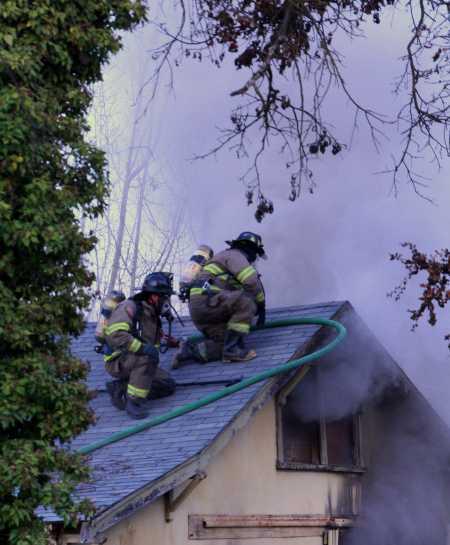
LAKEPORT, Calif. – A Saturday afternoon fire damaged a house in Lakeport.
The house, located on Pool St., was reported to be on fire at about 4:40 p.m., according to reports from the scene.
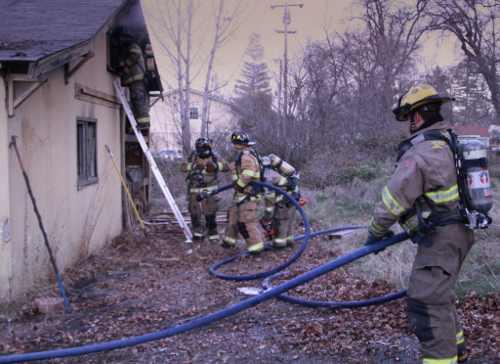
Lakeport Fire Protection District and Kelseyville Fire Protection District both sent firefighters to the home, which was reported to have been unoccupied.
Witnesses said 11th Street near Safeway was closed temporarily due to the fire.
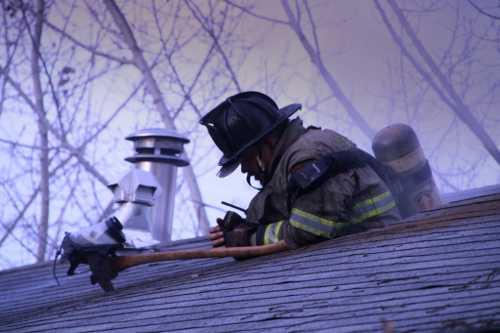
A roof operation team cut a hole in the roof as part of the firefighting effort.
Reports from the scene indicated that the fire may have resulted from someone who had broken into the home and was staying in it, according to evidence the owner reportedly found in the structure.
Follow Lake County News on Twitter at http://twitter.com/LakeCoNews, on Tumblr at www.lakeconews.tumblr.com, on Google+, on Facebook at www.facebook.com/pages/Lake-County-News/143156775604?ref=mf and on YouTube at www.youtube.com/user/LakeCoNews .