 How to resolve AdBlock issue?
News
NORTHERN CALIFORNIA – In its latest phase of funding, the California Transportation Commission has allocated nearly $1 billion to 135 transportation projects statewide, including efforts around Northern California to improve highways, bike paths and pedestrian areas.
Approximately $600 million in funding was provided by Proposition 1B, a transportation bond approved by voters in 2006, the commission reported Thursday. The remaining allocations came from assorted state and federal transportation accounts.
The state reported that about $13.8 billion in Proposition 1B funds have been distributed statewide from the bond.
“Proposition 1B continues to fund key transportation projects, which translates into a strengthened economy,” said Caltrans Director Malcolm Dougherty in a written statement. “Investing in our infrastructure will improve mobility and create a better future for Californians.”
The largest funding award in this most recent round of funding went to the Stockton area, where $123.7 million was committed to widening four to six lanes of Highway 99.
The Lake County/City Area Planning Council received $65,000 for planning, programming and monitoring, funding which was contingent on passage of the state’s 2012 Budget Act.
Neighboring Colusa County received $9.2 million for a highway rehabilitation project. The project runs from the Lake County line to 6.8 miles east of Highway 16.
In all, the project will rehabilitate 20.4 lane miles of roadway to improve ride quality, prevent further deterioration of the traveling surface, minimize costly roadway repairs and extend the pavement’s service life, according to the project list.
Sonoma County received the most funding in the region to support various projects, including more than $400,000 in planning, programming and monitoring funds and $400,000 for drainage replacements near Fort Ross.
The Marin-Sonoma Narrows project received $4.7 million to add a southbound carpool lane and wide the Novato Creek Bridge, another $17.2 million to construct carpool lanes from just north of Atherton Avenue to just over a mile south of Redwood Landfill Road, and $32.8 million for modifications to the Highway 101 and Highway 116 interchange in Petaluma.
In Mendocino County, the Mendocino Council of Governments received $140,000 in planning, programming and monitoring funds.
Mendocino County also received $3.3 million to clean and paint the steel structures of the Salmon Creek and Albion River Bridges on Highway 1, and $600,000 to improve the Pacific Coast Bike Route along Highway 1 by widening shoulders at various locations from Point Arena to Manchester.
The commission also allocated $1.4 million for a native planting project along the Interstate 5 corridor, from Glenn County to the Shasta County line.
Neighboring Glenn County received another $308,000 for pedestrian improvements in various locations of Hamilton City.
Napa County received nearly $1.4 million to stabilize and reconstruct the roadway and replace a drainage culvert that had been damaged by heavy rainfall that is located near Lake Hennessey, 2.8 miles east of Silverado Trail, as well as $13,000 in planning, programming and monitoring funds.
Farther up the North Coast, Humboldt County was awarded $14.2 million to rehabilitate nine miles of Highway 101 between Eureka and Arcata, $2.2 million to rehabilitate the bridge decks on all three Samoa Bridges on Highway 255 near Eureka.
Humboldt County also was allocated $54,000 for a sidewalk and bike lane project in McKinleyville; $10,000 for downtown pedestrian and streetscape improvements in Rio Dell; $5,000 for sidewalk construction at Redway School; and $155,000 for Trinidad pier and harbor enhancements.
The city of Arcata received $243,000 for the Samoa Gateway project’s phase two, which includes landscaping, irrigation, sidewalks, crosswalks and color treatment for bike lanes.
The city of Eureka received $372,000 for bike lanes and sidewalks along Waterfront Drive and $60,000 for the construction of a 1.38-mile section of the Eureka Waterfront Coastal Trail.
Email Elizabeth Larson at
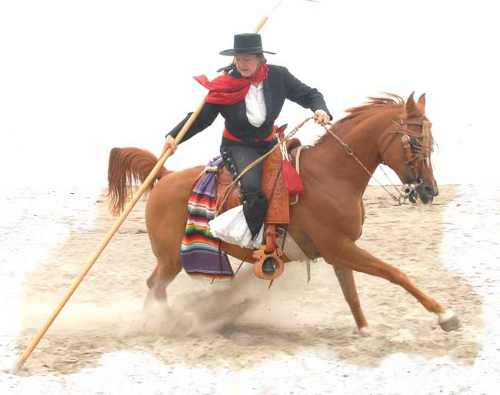
LAKEPORT, Calif. – The Lake County Horse Council will present the inaugural Fiesta of the Horse on Sunday, July 1.
The event, which starts at 3 p.m., will be held at Rancho de la Fuente, 2290 Soda Bay Road, between Lakeport and Kelseyville.
This is an entertainment put on by your horsey friends and neighbors, unlike anything else you've seen in Lake County.
There will be musical acts involving dancing horses performing individually or in groups (and even a horse dancing with a human!), the Clear Lake Junior Horsemen Drill Team, a Grand Entry with the National Anthem sung from horseback, exciting equestrian sports such as jousting and "La Garrocha" (think of it as "horse pole dancing"), exotic breed demos, colorful costumes and a Wild West comedy act featuring legendary sharp-shooter Annie Oakley, all packed into 90 exciting minutes.
There is no admission charge for this fun, family-oriented event.
Beginning at 2 p.m., the public is invited to visit to the vendor and information booth area, and start getting settled into see the show which starts at 3 p.m.
Some chairs and awnings are provided to shade the audience, but since the crowd might be large, consider bringing your own lawn chairs or umbrellas for shade.
Please do not bring dogs (or other animals).
Food and drink will be available for purchase, but there will be no alcohol consumption outside of the Rancho de la Fuente's bar area.
LAKEPORT, Calif. – Amateur winemakers from near and far went home with a wide range of ribbons from the 10th annual Lake County Home Wine Makers Festival, which took place on Saturday, June 23, at Library Park in Lakeport.
An estimated 400 attendees strolled through the numerous vendor booths, sipping both amateur and professional wines along the way.
The event was sponsored by nonprofit Clear Lake Performing Arts (CLPA) with all proceeds going to support the group’s music activities, including the CLPA Youth Orchestra, scholarships and concerts, and the Lake County Symphony Orchestra.
Major sponsors were Cathy Fowler Chevrolet, WestAmerica Bank and Re-Coop Corp. of Ukiah, a company that restores used wine barrels.
Big winner for the day was Kelseyville’s Scott Simkover, whose “Smiling Dogs” ranch took three golds, a silver and a Best in Show.
The first-place winners were for a 2009 “Backyard Zin” Zinfandel, a 2011 Cabernet Sauvignon and a 2010 version of the same varietal
His silver award was for a dry-farmed Merlot, while the “Best in Show” was for the “Backyard Zin.”
Other multiple winners were David Pretari of Foster City who won gold with his 2010 Zinfandel and Silver, also for a Zinfandel, but this time a 2011, and Connel Murray, of Kelseyville, who was awarded two silvers for his Muritage labeled 2010 Italian Blend – a blend of three Italian varietals – and a 2009 Semillion white wine.
Jamie Celozzi, with a gold for his 2011 Zinfandel and a bronze for a 2011 Syrah.
Another gold award winner was Mike Howell, of Philo for his 2010 Harpe Trust Pinot Noir. John McKillip took home a silver for his 2005 Port.
Additional winners in the bronze category were Scott Knickmeyer for a 2007 Syrah and Michelle Shultz, for her Syrah-based 2010 Port. Both were members of the Remembrance Group of Finley Neil Peaty of Windsor, won for his “Whimsical Wines” CCG & Pomegranate Dry Red.
The always popular “Peoples Choice” ribbons – voted on by the visiting public – went to Murray for best white wine, David Pretari for best red wine, the Remembrance Vineyard Group of Finley for best wine label and Jamie Celozzi for best decorated booth.
Commercial wineries were able to introduce new products and services – along with tastes – but were ineligible for awards, because they were restricted to just the home winemakers, whose efforts were rated by a panel of professional judges made up of Stephen Dilley, Lavender Blue Wines; Pietro Buttitta, Rosa d’Oro; Stephanie Cruz-Green of Focused on Wine; Jack Vos, Thorn Hill Winery; Bonnie Sears, Snows Lake Winery and Vineyard; and Valerie Ramirez, representing Wildhurst Winery and Vineyard.
A major silent auction, featuring weeklong and weekend getaways in Hawaii, San Francisco and other destinations, was held by the CLPA Auxiliary, CLPA’s official fundraising arm. They also offered dozens of raffle prizes, including wine and gift baskets contributed by local businesses.
David Neft and Steve DuBois made up the “David Neft Duo” providing keyboard and percussion entertainment. They were joined by Lakeport guitarist Stephen Holland. Local classical guitarist Travis Rinker also took the stage, as well as the “Black Forest Trio” three Symphony musicians who presented a brief program of classical favorites. They were violinists Lynne Bruner and Marta Fuller, and cellist John Weeks.
Home brewers, who have played a major role in past winefests, were represented this year by only Bruce Lightfoot of Cobb, who poured tastes of both wine and beer. Other home brewers were reluctant to participate because of confusion over state laws covering such events.
The offices of state Sen. Noreen Evans and also the Senate Select Committee on California’s Wine Industry have both promised to seek clarification from the local office of the California ABC in order to permit future exhibitions, competitions and tastings of homemade beers and ales at county and state Fairs, as well as events like the Lake County Winefest.
Next year’s winefest is tentatively scheduled for Saturday, June 22, 2012, again at Library Park.
The state Legislature on Wednesday passed a proposal to save dozens of state parks slated for closure on July 1, and reduce the closure of still more parks in 2013.
The “Sustainable Parks Proposal” put forward by state Sen. Noreen Evans (D-Santa Rosa) and state Sen. Joe Simitian (D-Palo Alto), included in Senate Bill 1018, would build on the nonprofit partnerships established through the California Parks Foundation and their nonprofit partners.
It also would implement “new ways of working” in the parks, including encouraging parks to become more entrepreneurial and allowing more personnel flexibility.
Further, the bill would allocate up to $41 million in existing funding to parks that may be appropriately used for park purposes.
“Our state parks are integral to the economy, health and history of California,” said Evans, who has 20 of the 70 state parks slated for closure in her Second Senate District including the beloved Standish-Hickey State Park in Mendocino County and Anderson Marsh State Historic Park in Lake County.
“This proposal will provide the funds needed to keep our parks open and our legacy intact while laying a foundation for our park’s economic sustainability,” Evans added.
“Closing state parks has always been, in my mind, an unacceptable option, and I’m very pleased that this proposal is moving forward,” said Simitian. “These parks are precious public resources and extraordinary economic assets. They are part of our heritage as Californians. They are places that hold great meaning for all of us. While this budget proposal by no means puts an end to our effort to keep parks open, it is an encouraging start with long-term potential.”
The proposal, included in a package of bills that follow the budget, called “budget trailer bills”, is now headed to Governor Jerry Brown’s desk. Governor Brown has the power to veto, or ‘blue pencil,’ items in budget bills.
These additional, existing funding sources include $10 million annually in long-term loans from the Clean Water Revolving Loan Fund to fix water and septic system problems that plague many aging park facilities; shifting $10 million from existing vehicle registration fees for park road repair, maintenance and law enforcement; and giving the Department of Parks and Recreation more flexibility in the use of funds, by giving them the option to use up to $21 million of gas tax funds before they’re deposited into the Off-Highway Vehicle Trust Fund.
The last funding source would sunset after three years.
In total, the proposal secures up to $109.34 million for state parks.
Absent the governor’s veto, the bill would take effect on July 1, the start of the new fiscal year.
Originally, as many as 70 state parks had been slated for closure on July 1.
Anderson Marsh Interpretive Association, which is in negotiations with the state to run Anderson Marsh State Historic Park, said over the weekend that the park will remain open past the July 1 closure date as it continues to work out details of the agreement.
The governor has until July 9 to act on the bill or it becomes law without his signature.
Attorney General Kamala D. Harris on Wednesday announced the passage of two central elements of the California Homeowner Bill of Rights through a special two-house conference committee.
The 4-1 vote sends the bills to an expected vote next week in both the Assembly and Senate.
The two bills approved by the conference committee are the Foreclosure Reduction Act, which restricts the process of “dual-tracked” foreclosures and the Due Process Rights Act, which guarantees a reliable contact for struggling homeowners to discuss their loan with and which for the first time imposes civil penalties on the practice of fraudulently signing foreclosure documents without verifying their accuracy, a practice commonly known as “robo-signing.”
The proposed legislation also includes meaningful enforcement for borrowers whose rights are violated.
The full Homeowner Bill of Rights includes additional provisions to reduce blight, ensure appropriate law enforcement response to mortgage fraud and crime, and protect tenants.
The bills containing these protections are also advancing through the Legislature.
“I am gratified by this vote, which represents one more step toward our goal of achieving a Homeowner Bill of Rights for California,” said Harris. “The mortgage and foreclosure crisis in our state demands urgent efforts to help Californians keep their homes. The legislature will now have the opportunity to cast a vote on behalf of California’s struggling homeowners.”
The California Homeowner Bill of Rights was introduced February 29, 2012 at a press conference featuring Assembly Speaker John A. Perez and Senate President pro Tem Darrell Steinberg and bill authors from the Assembly and Senate.
The goal of the Homeowner Bill of Rights is to take many of the mortgage reforms extracted from banks in a national mortgage settlement and write them into California law so they could apply to all mortgage-holders in the state.
“The mortgage and foreclosure abuse in California ends here,” said Noreen Evans (D-Santa Rosa), co-chair of the Joint Conference Committee. “This committee has passed historic legislation that codifies the protections eligible homeowners deserve, while helping to stabilize the foreclosure crisis that has thwarted California’s economic recovery. The Legislature has studied, listened and engaged Californians and industry to find a solution that is fair and effective to mitigate this crisis. I look forward to the full support of the Legislature and Governor in implementing this package.”
“This bill is the result of a long and difficult process in which we received input from all interested parties; including homeowners and the banks and found that foreclosures benefit no one,” said Assemblymember Mike Eng (D-Alhambra). “We ended such dubious practices as having a bank foreclose while a homeowner is in the process of modifying a loan and cut through confusion by making sure that there is a ‘single point of contact’ with mortgage servicers. With half a million California homes at risk of foreclosure, this action was urgently needed.”
The California Homeowner Bill of Rights extends Attorney General Harris’ response to the state’s foreclosure and mortgage crisis. Attorney General Harris created a Mortgage Fraud Strike Force in March, 2011 to investigate and prosecute misconduct related to mortgages and foreclosures.
In February 2012 Attorney General Harris extracted a commitment from the nation’s five largest banks of an estimated $18 billion for California borrowers.
To learn more about how the bills impact California homeowners, review the slideshow at www.oag.ca.gov .
CLEARLAKE, Calif. – The Clearlake Police Department said two people were injured as the result of a pickup crashing into a city grocery store Wednesday morning.
The crash occurred at Rays Food Place, located at 15930 Dam Road, according to Sgt. Rodd Joseph.
At approximately 9:44 a.m. Clearlake Police officers responded to a report of a vehicle which had crashed into the building and had gone through into the store’s interior. Joseph said two people were reported down and possibly injured inside the business.
When officers arrived they discovered a 2005 Toyota Tundra, driven by 32-year-old Consuelo Castro, had crashed through the south side of the building and was now in the middle of the store, Joseph said.
Two persons – one a customer and the other an employee – had both been injured in the crash, he said.
Both injured persons were transported to St. Helena Hospital Clearlake for medical treatment for non life threatening injuries.
Castro was not injured, according to Joseph.
Initially it was believed that the building was on fire as large amounts of smoke were billowing out of the building, Joseph said.
The smoke was determined to be tire burn smoke from the vehicle’s spinning tires. Joseph said Lake County Fire Protection District officials used large fans to clear the building of smoke.
A Clearlake building department official responded and determined the building had not suffered any significant structural damage, according to Joseph’s report.
The Lake County Health Department also responded to the scene. The business suffered damage to the building itself, property damage inside the business and to food products, Joseph said.
Joseph said the crash is still under investigation but drugs and alcohol are not suspected.