 How to resolve AdBlock issue?
News
NORTH COAST, Calif. – A two-fire complex burning for the last three weeks in northern Mendocino County are nearing full containment.
The North Pass Fire, caused by lightning in the Williams Valley 10 miles northeast of Covelo on Saturday, Aug. 18, remained at a total of 41,983 acres on Friday, with containment at 76 percent.
Based on updated damage assessments, eight residences and 18 outbuildings have been destroyed to date, according to a report from the unified command of Cal Fire and the US Forest Service. Nine injuries also have occurred.
Assigned personnel were reduced to 685 on Friday, with 11 engines, 11 fire crews, one airtanker, six helicopters, five bulldozers and 24 water tenders also remaining on scene.
Officials said fire suppression repair has been ongoing for several days and will continue after full containment, which is expected on Monday, Sept. 10.
The repair work includes water bars within constructed fire line to prevent soil erosion, chipping of brush piles, repair of drainages and roads, and removal of hazardous trees.
The Forest Service said new fire starts have occurred on state land south of the main incident and smoke is still settling in the Covelo area.
Closures still remain in effect for areas of Indian Dick Road (Forest Road M-1) and Mendocino Pass Road (Forest Highway 7), with roads in the area to remain closed until hazards are removed and fire crews leave, officials reported.
The US Forest Service said the Covelo Ranger District north of Mendocino Pass Road to the Six Rivers and Shasta-Trinity National Forest boundaries also remains under a closure order.
Email Elizabeth Larson at
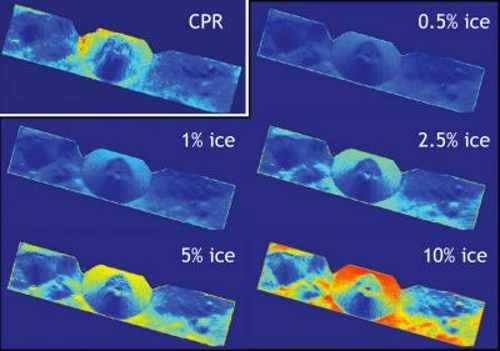
Small patches of ice could make up at most five to ten percent of material in walls of Shackleton crater. Scientists using the Mini-RF radar on NASA’s Lunar Reconnaissance Orbiter (LRO) have estimated the maximum amount of ice likely to be found inside a permanently shadowed lunar crater located near the moon’s South Pole.
As much as five to ten percent of material, by weight, could be patchy ice, according to the team of researchers led by Bradley Thomson at Boston University’s Center for Remote Sensing, in Mass.
“These terrific results from the Mini-RF team contribute to the evolving story of water on the moon,” said LRO’s deputy project scientist, John Keller of NASA’s Goddard Space Flight Center in Greenbelt, Md. “Several of the instruments on LRO have made unique contributions to this story, but only the radar penetrates beneath the surface to look for signatures of blocky ice deposits.”
These are the first orbital radar measurements of Shackleton crater, a high-priority target for future exploration.
The observations indicate an enhanced radar polarization signature, which is consistent with the presence of small amounts of ice in the rough inner wall slopes of the crater.
Thomson and his colleagues reported the findings in a paper recently published in the journal Geophysical Research Letters.
“The interior of this crater lies in permanent shadow and is a ‘cold trap’ – a place cold enough to permit ice to accumulate,” said Mini-RF’s principal investigator, Ben Bussey of the Johns Hopkins University Applied Physics Laboratory in Laurel, Md. “The radar results are consistent with the interior of Shackleton containing a few percent ice mixed into the dry lunar soil.”
These findings support the long-recognized possibility that areas of permanent shadow inside polar impact craters are sites of the potential accumulation of water.
Numerous lines of evidence from recent spacecraft observations have revised the view that the lunar surface is a completely dry, inhospitable landscape.
Thin films of water and hydroxyl have been detected across the lunar surface using several space-borne near-infrared spectrometers.
Additionally, orbital neutron measurements indicate elevated levels of near‐surface hydrogen in the polar regions; if in the form of water, this hydrogen would represent an average ice concentration of about 1.5 percent by weight in the polar regions.
The Shackleton findings are also consistent with those of the recent LCROSS spacecraft’s controlled collision with a nearby permanently shadowed polar region near the lunar South Pole, which revealed evidence for water in the plume kicked up by its impact.
A radar instrument flown on India’s Chandrayaan-1 spacecraft in 2009 found evidence for ice deposits in craters at the lunar North Pole. Measurements of the albedo (surface reflectance) inside Shackleton crater using LRO’s laser altimeter and far‐ultraviolet detector are also consistent with the presence of a small amount of ice.
“Inside the crater, we don’t see evidence for glaciers like on Earth,” said Thomson. “Glacial ice has a whopping radar signal, and these measurements reveal a much weaker signal consistent with rugged terrain and limited ice.”
The radar measurements of Shackleton crater were made during three separate observations between December 2009 and June 2010.
Radar illuminates shadowed regions and can detect deposits of water or ice, which have a distinctive radar polarization signature compared to the surrounding material.
In addition, radar penetrates the terrain to depths of a meter or two and can measure water or ice buried beneath the surface.
Radar measurements of Shackleton crater place an upper bound on the ice content of the uppermost meter of loose material of the crater’s walls at between five and ten percent ice by weight.
“We are following up these tantalizing results with additional observations,” said Bussey. “Mini-RF is currently acquiring new bistatic radar images of the moon using a signal transmitted by the Arecibo radio telescope in Puerto Rico. These bistatic images will help us distinguish between surface roughness and ice, providing further unique insights into the locations of volatile deposits.”
The Mini-RF instrument, operated at the Johns Hopkins Applied Physics Laboratory in Laurel, Md., is one of seven instruments on board NASA’s LRO spacecraft.
NASA Goddard developed and manages the LRO mission. LRO’s current Science Mission is implemented for NASA’s Science Mission Directorate. NASA’s Exploration Systems Mission Directorate sponsored LRO’s initial one-year Exploration Mission that concluded in September 2010.
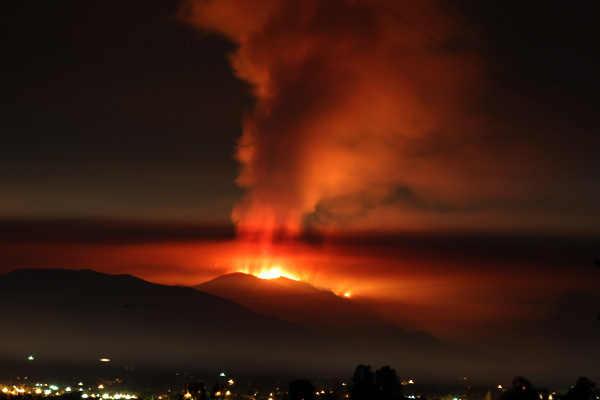
LAKE COUNTY, Calif. – Evacuations have been lifted for residents near a wildland fire burning northwest of Lakeport.
Shortly before 8:30 p.m. fire officials lifted the evacuations they had called for about three and a half hours earlier due to the Scotts Fire, which began burning earlier in the day Friday.
Lake County officials said the evacuations took place in the Blue Lakes area and down Highway 20 to Scotts Valley Road.
The fire had burned an estimated 1,600 acres with no containment by Friday night, county officials reported.
Red Cross and Lake County Social Services had set up an evacuation center at Upper Lake High School.
District 3 Supervisor Denise Rushing said the Habematolel Pomo brought sandwiches and pizza to the shelter Friday evening.
Lake County Animal Care and Control and its Lake Evacuation & Animal Protection (LEAP) volunteers had been activated to evacuate animals. Animal Care and Control and LEAP had assisted with evacuating animals from the Spring Valley area during the Wye Fire last month.
Incident command was ordering resources for Saturday, and was having three air tankers loaded in Sonoma County since the Ukiah airbase was low on retardant, according to radio reports.
Email Elizabeth Larson at
THIS STORY HAS BEEN UPDATED.
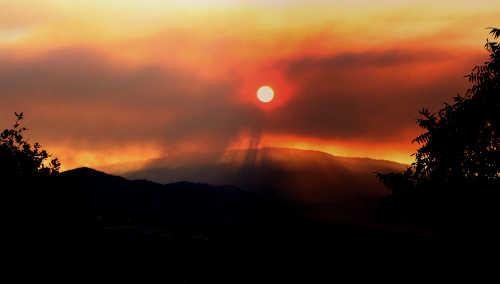
UPPER LAKE, Calif. – An evacuation shelter is being set up for Lake County residents forced to leave their homes due to a wildland fire burning northwest of Lakeport.
Late Friday afternoon local officials ordered mandatory evacuations for the Blue Lakes area along Highway 20 to Scotts Valley Road as a result of the Scotts Fire, which was first reported shortly after 1 p.m.
By 7 p.m. the fire had burned an estimated 1,600 acres, with no containment, according to Lake County Deputy Administrative Officer Debra Sommerfield.
Sommerfield told Lake County News that Red Cross and Lake County Social Services were setting up a shelter for evacuees at Upper Lake High School, 675 Clover Valley Road.
Local officials had been briefly staging at the nearby county park while the shelter location was being decided, she said.
Sommerfield said the shelter was expected to be open by 7:15 p.m.
California Highway Patrol officers from Mendocino and Lake County, along with the Lake County Sheriff’s Office and California State Parks were assisting with the evacuations, Sommerfield said.
Sommerfield said an estimate of how many people had been evacuated was not immediately available from the sheriff’s office.
CHP reported that a security detail had been placed on Scotts Valley Road in the wake of the evacuations.
Email Elizabeth Larson at
THIS STORY HAS BEEN UPDATED.
LAKE COUNTY, Calif. – Officials are calling for evacuations in the Blue Lakes area, which is in the path of a wildland fire that began Friday afternoon.
The Scotts Fire, located west of Scotts Valley Road on Cow Mountain, was first reported just after 1 p.m., and had burned 450 acres by 5:30 p.m., according to Cal Fire.
Early Friday evening the fire’s incident command called for mandatory evacuations from Scotts Valley Road to Blue Lakes, Cal Fire reported.
Red Cross, in conjunction with Lake County Social Services, was setting up an evacuation shelter at Upper Lake High School, 675 Clover Valley Road, according to Lake County Deputy Administrative Officer Debra Sommerfield.
Immediate need strike teams also were being requested to respond to the area to assist with the fire, according to reports from the scene.
Additional information on the evacuation order will be posted as it becomes available.
Email Elizabeth Larson at
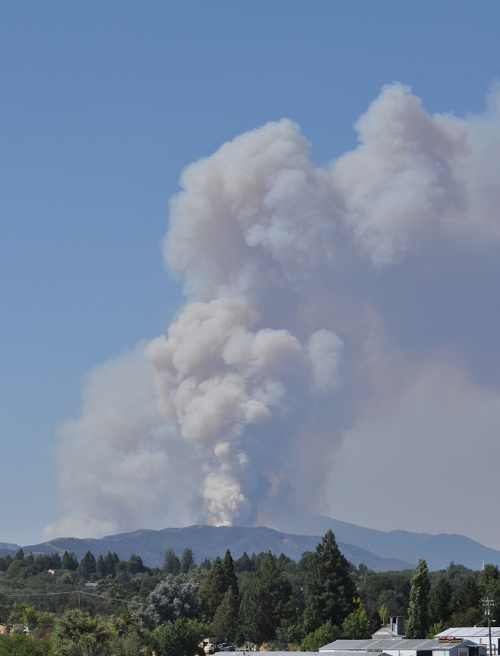
LAKE COUNTY, Calif. – A fire that began early Friday afternoon in the Cow Mountain area had scorched several hundred acres within just a few hours.
The Scotts Fire was reported at about 1:10 p.m. west of Scotts Valley Road on Cow Mountain, east of Ukiah.
The incident initially was believed by Cal Fire to be in Mendocino County. Later in the afternoon, however, Cal Fire said the incident was located in Lake County, which Lakeport Fire Chief Ken Wells, who was monitoring the fire, confirmed.
At about 4 p.m. Wells said the fire was estimated to have burned 450 acres. Within the hour the size was believed to have gone as high as 500 acres, based on reports from the air.
The fire is located in a remote area west of Lakeport, where it was reported to be was running up drainages and ridgetops, and spotting frequently.
Firefighters were accessing the fire up through the Hendricks Ranch, Wells said.
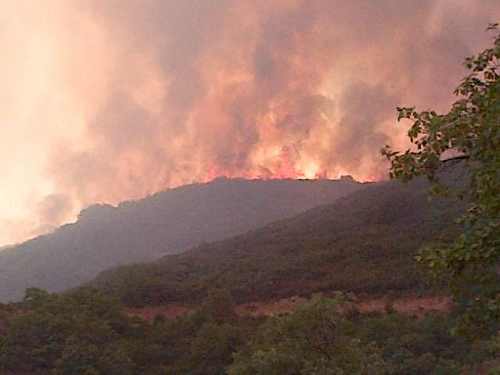
Wells said a local strike team hadn’t been called, with the fire located in the State Responsibility Area covered by Cal Fire.
Radio traffic indicated the US Forest Service also had send firefighters to the incident.
Wells said there were no structures threatened at that point, adding, “They’re making pretty good progress on it.
Air resources worked the fire aggressively throughout the afternoon, with five tankers and a helicopter assigned, and more resources ordered, according to radio reports.
Visibility had been an issue for pilots, and radio reports also indicated that the Ukiah airbase was down to 5,000 gallons of retardant.
The green arrow on the map below shows the coordinates for the head of the Scotts Fire.
Additional details will be posted as they become available.
Email Elizabeth Larson at