 How to resolve AdBlock issue?
News
LAKEPORT, Calif. – Last Friday, a special afternoon ceremony honored one of Lake County’s retired judges.
Judge Arthur Mann, who still hears cases for the Lake County Superior Court on a part-time basis, was on hand for the unveiling of his new portrait in his former Department 3 courtroom.
Mann retired in November 2009. He was succeeded in 2010 by Judge Andrew Blum.
Blum, along with Judge Richard Martin and retired Judge Robert Crone Jr., led the Friday ceremony honoring Mann, recognizing him for his service and for his fair treatment of who came to his courtroom.
Lake County Bar Association President Mary Heare Amodio unveiled the portrait, which was presented by the association to the Lake County Superior Court.
“I’m still enjoying being a judge. I look forward to assignments whenever they come around,” Mann told the group.
Mann’s longtime bailiff, Cliff Swetnam – now also a retiree – was on hand to do the honors of hanging the portrait above the jury box.
“There’s something appropriate about hanging Art on the wall,” quipped Blum.
The ceremony can be viewed in its entirety in the video above, shot by John Jensen of Lake County News.
Email Elizabeth Larson at
LAKEPORT, Calif. – A new group of mixed breed dogs – big and little – are the featured pets at the shelter this week.
Labrador Retrievers and a husky, shepherds and Shih Tzu mixes are waiting for new homes.
Thanks to Lake County Animal Care and Control’s new veterinary clinic, many of the animals offered for adoption already are spayed or neutered and ready to go home with their new families.
Dogs that are adopted from Lake County Animal Care and Control are either neutered or spayed, microchipped and, if old enough, given a rabies shot and county license before being released to their new owner. License fees do not apply to residents of the cities of Lakeport or Clearlake.
If you're looking for a new companion, visit the shelter. There are many great pets hoping you'll choose them.
The following dogs at the Lake County Animal Care and Control shelter have been cleared for adoption (additional dogs on the animal control Web site not listed are still “on hold”).
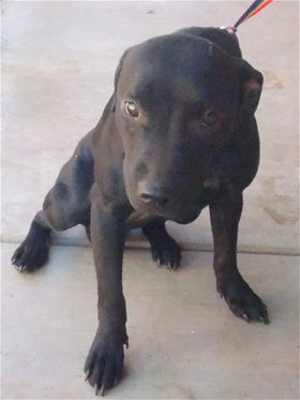
Labrador Retriever-beagle
This female Labrador Retriever-beagle mix is of undetermined age.
She weighs nearly 37 pounds, has a short black coat and is not yet spayed.
Find her in kennel No. 5a, ID No. 34314.
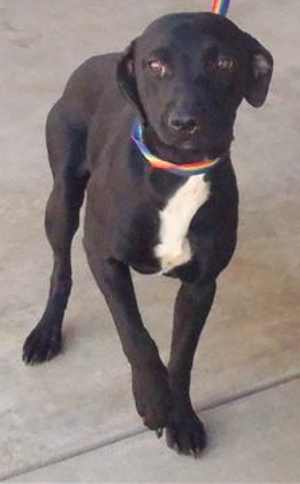
Labrador Retriever-Beagle
Shelter staff has not given an age for this female Labrador Retriever-beagle mix.
She weighs 28 pounds, has a short black coat and has not yet been altered.
She’s in kennel No. 5b, ID No. 34315.
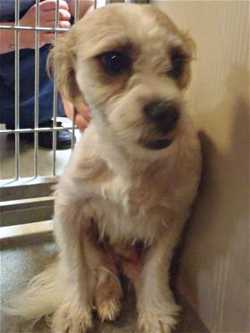
‘Augie’
“Augie” is a 1-year-old male Shih Tzu-Chihuahua mix.
He has a short fawn-colored coat and is not yet neutered.
He’s in kennel No. 12, ID No. 34207.

‘Girlie’
“Girlie” is a 2-year-old Shih Tzu-Chihuahua mix.
She has a short fawn coat, weighs 12 pounds and is not yet spayed.
She’s in kennel No. 16a, ID No. 34209.
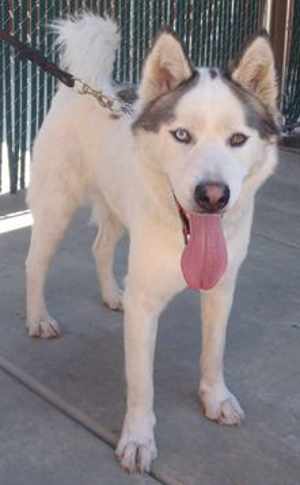
Husky mix
This male husky mix is 2 years old.
He has a long white coat with black markings.
He’s in kennel No. 18, ID No. 34251.

Pit bull mix
This female pit bull terrier mix is 9 months old.
She has a short tan coat, weighs 38 pounds and is spayed.
She’s in kennel No. 19, ID No. 34363.
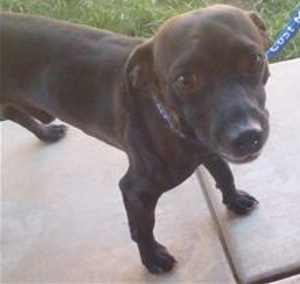
Dachshund-Chihuahua mix
This male dachshund-Chihuahua mix is 2 years old.
He has a short black coat and floppy ears.
He’s in kennel No. 20, ID No. 34206.
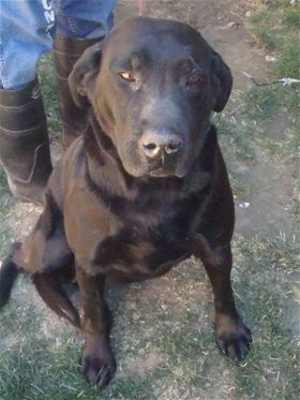
Labrador Retriever mix
This female Labrador Retriever mix is 7 years old.
She has a short black coat.
Find her in kennel No. 25, ID No. 34318.
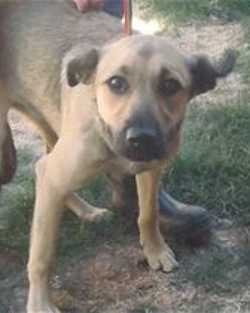
Shepherd-Rottweiler mix
This female shepherd-Rottweiler is 8 months old.
She has a short tan and black coat, weighs nearly 47 pounds and has been spayed.
Find her in kennel No. 26, ID No. 34311.
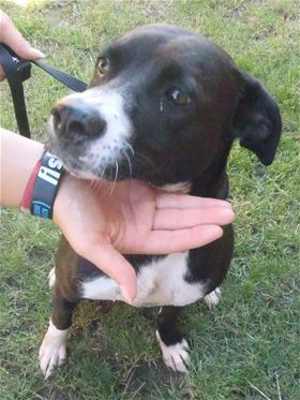
Border collie-Labrador Retriever mix
This female border collie-Labrador Retriever mix is 3 years old.
She’s got a short black and white coat, weighs 50 pounds and has not yet been spayed.
Find her in kennel No. 28, ID No. 34365.
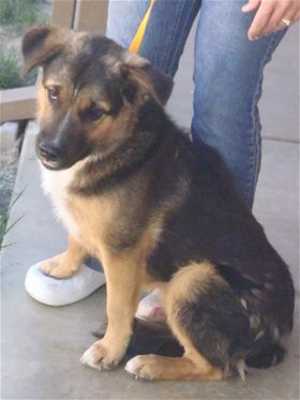
Shepherd-basset hound mix
This female shepherd-basset hound mix is 3 years old.
She is nearly 38 pounds and has a short black and tan coat. She has been spayed.
She’s in kennel No. 31, ID No. 34156.
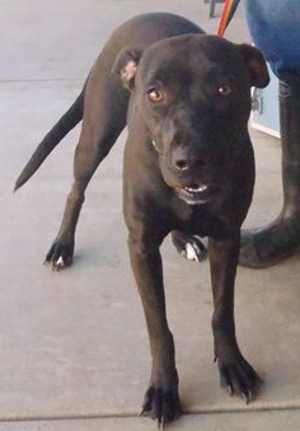
Labrador Retriever mix
This female Labrador Retriever mix is one and a half years old.
She weighs 50 pounds, has black coloring and is not yet spayed.
She’s in kennel No. 32, ID No. 34269.
Adoptable dogs also can be seen at http://www.co.lake.ca.us/Government/Directory/Animal_Care_And_Control/Adopt/Dogs_and_Puppies.htm or at www.petfinder.com .
Please note: Dogs listed at the shelter's Web page that are said to be “on hold” are not yet cleared for adoption.
To fill out an adoption application online visit http://www.co.lake.ca.us/Government/Directory/Animal_Care_And_Control/Adopt/Dog___Cat_Adoption_Application.htm .
Lake County Animal Care and Control is located at 4949 Helbush in Lakeport, next to the Hill Road Correctional Facility.
Office hours are Monday through Friday, 8 a.m. to 5 p.m., and 1 p.m. to 3 p.m., Saturday. The shelter is open from 10:30 a.m. to 4:30 p.m. Monday through Friday and on Saturday from 1 p.m. to 3 p.m.
Visit the shelter online at http://www.co.lake.ca.us/Government/Directory/Animal_Care_And_Control.htm .
For more information call Lake County Animal Care and Control at 707-263-0278.
Email Elizabeth Larson at
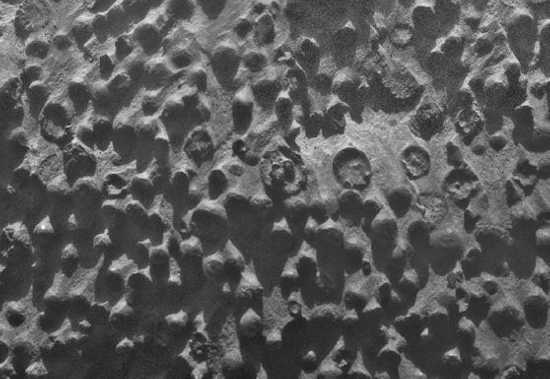
The National Aeronautics and Space Administration's long-lived rover Opportunity has returned an image of the Martian surface that is puzzling researchers.
Spherical objects concentrated at an outcrop called Kirkwood on the western rim of Endeavour Crater differ in several ways from iron-rich spherules nicknamed “blueberries” the rover found at its landing site in early 2004.
“This is one of the most extraordinary pictures from the whole mission,” said Opportunity's principal investigator, Steve Squyres of Cornell University in Ithaca, N.Y. “Kirkwood is chock full of a dense accumulation of these small spherical objects. Of course, we immediately thought of the blueberries, but this is something different. We never have seen such a dense accumulation of spherules in a rock outcrop on Mars.”
The spheres measure as much as one-eighth of an inch in diameter. The analysis is still preliminary, but it indicates that these spheres do not have the high iron content of Martian blueberries.
The Martian blueberries found elsewhere by Opportunity are concretions formed by action of mineral-laden water inside rocks, evidence of a wet environment on early Mars. Concretions result when minerals precipitate out of water to become hard masses inside sedimentary rocks.
Many of the Kirkwood spheres are broken and eroded by the wind. Where wind has partially etched them away, a concentric structure is evident.
Opportunity used the microscopic imager on its arm to look closely at Kirkwood. Researchers checked the spheres' composition by using an instrument called the Alpha Particle X-Ray Spectrometer on Opportunity's arm.
“They seem to be crunchy on the outside, and softer in the middle,” Squyres said. “They are different in concentration. They are different in structure. They are different in composition. They are different in distribution. So, we have a wonderful geological puzzle in front of us. We have multiple working hypotheses, and we have no favorite hypothesis at this time. It's going to take a while to work this out, so the thing to do now is keep an open mind and let the rocks do the talking.”
Just past Kirkwood lies another science target area for Opportunity. The location is an extensive pale-toned outcrop in an area of Cape York where observations from orbit have detected signs of clay minerals. That may be the rover's next study site after Kirkwood.
Four years ago, Opportunity departed Victoria Crater, which it had investigated for two years, to reach different types of geological evidence at the rim of the much larger Endeavour Crater.
The rover's energy levels are favorable for the investigations. Spring equinox comes this month to Mars' southern hemisphere, so the amount of sunshine for solar power will continue increasing for months. Indeed, Opportunity is on the verge of completing the first Martian Marathon.
“The rover is in very good health considering its eight and a half years of hard work on the surface of Mars,” said Mars Exploration Rover Project Manager John Callas of NASA's Jet Propulsion Laboratory in Pasadena, Calif. “Energy production levels are comparable to what they were a full Martian year ago, and we are looking forward to productive spring and summer seasons of exploration.”
Dr. Tony Phillips works for the National Aeronautics and Space Administration.
My mother-in-law has a charming, if unusual, hobby: redecorating her home each month to reflect one of twelve rotating themes she’s determined should be celebrated at that particular time of year.
Some months are obvious (Christmas in December or Halloween in October), others not so much.
On the first day of September she took down knickknacks and pictures representing travel, August’s theme, and filled the house with all manner of apple-related items.
Faux apples of all shapes and sizes covered surfaces everywhere. This, combined with the chill that was hovering in the air that day, made me want to draw all things autumn around me like a mantle.
The fall frame of mind brought with it a pretty severe case of apple nostalgia, overwhelming me with memories of harvesting apples with my father in Upstate New York, of baking my first apple pie, of sweet-tart baked apple desserts pulled out of the oven by my mother.
There was only one cure, and I happily took it; that afternoon I trekked out to our lone surviving apple tree with bucket in hand and ripe apples on my mind.
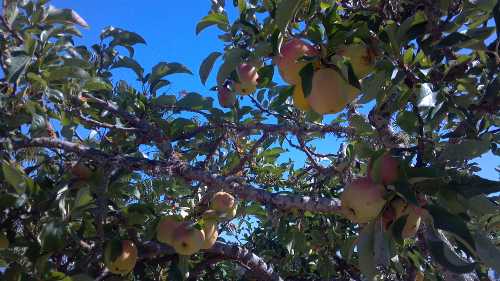
The little tree had gnarled limbs on which grayish-green patches of lichen had made its home. Unlike last year’s harvest, which was mostly small and misshapen, plump, yellow-red apples beckoned from nearly every branch in fully developed glory, belying the tree’s age and size.
Apples filled the onetime egg basket as I picked them from the tree, and it didn’t take long to clear it of fruit, save for those I left for the yellow jackets and birds.
Nearly an hour later, my trusty knife and I had peeled, cored and chopped the whole batch.
Aside from some I froze for baking, most of the apples ended up in a big pot on the stove for applesauce.
Alchemy occurred with the addition of heat and just a little bit of water. The apples softened into a chunky sauce, to which the smallest touch of agave nectar was added. A light dusting of cinnamon and lemon zest followed.
The result was truly magical. A highly flavored, not-too-sweet, fresh-tasting, soft but chunky sauce had been formed from the humble fruit.
It isn’t me, however, who deserves the credit; it was the pure taste of one of the best cooking apples on the planet, the Gravenstein. If you’ve never made sauce with them or baked them into a pie, it’s well worth seeking them out for your first experience.
This apple variety is native to Denmark, where it was discovered as a chance seedling in 1669. It was introduced to western North America in the early 1800s by Russian sea traders, who planted a tree at their Fort Ross, California settlement.
Renowned botanist and agricultural pioneer Luther Burbank was particularly fond of the sweet-tart Gravenstein apple. Of it he said, “If the Gravenstein could be had throughout the year, no other apple need be grown.”
I’m not sure I agree with his assessment of doing away with other apples (there are so many kinds to love!), but it reflects the respect the Gravenstein commanded at the time.
The U.S. Gravenstein apple crop is concentrated in western Sonoma County, specifically near the town of Sebastopol.
This amazing apple is a difficult commercial crop. They don’t store well, making them available only in season, and short stems and variable ripening times make harvesting and selling difficult.
Sadly, most commercial Gravenstein orchards have disappeared due to suburban sprawl, grape vineyards, and bad economic conditions. Few growers are left.
In 2005, Slow Food USA declared the Sebastopol Gravenstein apple a heritage food and included it in their Ark of Taste, an international catalog of heritage foods in danger of extinction. I feel grateful whenever I see Gravensteins in a store or on a tree. It’s good to know some still exist, even if in smaller quantities than in the past when they were shipped to World War II troops in the form of dried apples and applesauce.
We are in the midst of apple season, and the Gravenstein is but one of more than 7,500 known cultivars of apples. Most are harvested between August and November.
Apples are divided into three groups: dessert or table apples, which are bred for eating; cooking apples, such as the Gravenstein, which are bred for baking, drying, and making into applesauce; and cider apples, which are typically too tart and astringent to eat fresh, but impart a rich flavor to cider.
Lake County is home to a small handful of commercial apple growers, and their crop may be found at farmers’ markets or in CSA (Community Supported Agriculture) boxes.
Apples are members of the large rose family. Wild ancestors of apples known today still grow in remote mountainous regions of central Asia, such as in southern Kazakhstan and surrounding countries.
Almaty, Kazakhstan’s capital and largest city, derives its name from the Kazak word for apple, “alma.”
I particularly enjoy apples in savory applications. My mother has developed a new favorite dish inspired by Alice Waters. Made with sweet potatoes, apples, and onions sautéed together in a skillet until the apples become caramelized, it’s absolutely delicious as an unusual side dish.
Another favorite of mine is sautéed apples and purple cabbage flavored with fennel or sage. White wine vinegar and currants or raisins add acidity and sweetness, respectively, for a balanced dish. As you can imagine, this is a nice accompaniment to pork or sausages.
Apples may be cored and stuffed with a bit of butter, brown sugar, and cinnamon and then baked until soft and sweet for a dessert reminiscent of apple pie, though a bit healthier. This was something that was often served in my otherwise dessert deprived childhood (and that’s not a complaint).
“An apple a day keeps the doctor away” is a phrase that’s said to have been coined in 19th century Wales, and it’s proven to be true to some extent. Research indicates that apples contribute to good health by reducing the risk of colon, prostate and lung cancer.
They may also help with heart disease, weight loss, and controlling cholesterol. Compared to many other fruits and veggies, apples are relatively low in Vitamin C; however, they’re rich in other antioxidant compounds.
If an apple a day doesn’t keep the doctor away, it will at least delay him or her.
There are so many wonderful ways to use apples: in a rustic tart, for example, or baked into bread or added to butternut squash soup. Today I’ve chosen a twist on baked apples, one of my favorite apple dishes.
This version is made in a crock pot, wonderful for warmer days when ovens are eschewed. And it brings with it another boon: it has the same flavors as apple pie, but comes without the guilt of a fattening crust.
I love that walnuts are included in the recipe, a perfect choice for Lake County locavores. Use your favorite apples in the recipe, either sweet or somewhat tart.
Enjoy!
Crockpot baked apples
1/4 cup brown sugar
1/4 cup walnuts, chopped
2 tablespoons butter
1 teaspoon cinnamon
6 apples, cored
1/2 cup apple juice or apple cider
2 tablespoons orange liquor (optional)
Preheat a large crock-pot on high heat and preset it for three hours.
In a large bowl, mix brown sugar, walnuts, butter, and cinnamon. Fill the apples with the filling and place them in the crock-pot.
Pour in the apple juice or cider and the liquor, if using.
Cover and cook 2 1/2 to 3 hours on high heat until the apples are soft and begin to collapse.
Recipe adapted from www.skinnychef.com .
Esther Oertel, a freelance writer, cooking teacher, and speaker, is passionate about local produce and all foods in the vegetable kingdom. She welcomes your questions and comments and may be reached at
THIS STORY HAS BEEN UPDATED WITH A CORRECTED FINAL SCORE FOR UPPER LAKE.
LAKE COUNTY, Calif. – Three Clear Lake running backs combined for 298 yards rushing as the Cardinals overcame a sloppy first quarter and went on to defeat South Fork, 38-7, Friday night at Lakeport.
“We came out and shot ourselves in the foot,” Cardinal assistant coach Mike Hansen said, referring to three early turnovers, including a pair of Kenny Henninger interceptions – one in the South Fork end zone and another inside the 30-yard line. Penalties, which totaled 105 yards by night’s end, also stymied the Cards.
But the Clear Lake defense, as is its custom of late, shut down South Fork’s spread offense – at least until the Cardinal offense got into gear.
Andre Buendia gained 103 yards on 19 carries, Vince Rave had 99 yards on 13 carries and Luke Punzalan added 96 yards on 12 carries and scored three second-half touchdowns as Clear Lake took a 38-0 lead in the fourth quarter before South Fork got on the board with a 67-yard touchdown pass from Joey Wittlake to brother Keith Wittlake.
Henninger had an off-night – at least compared to his marvelously efficient outing the previous week, when he connected on 4 of 5 passes for 57 yards and three touchdowns in a 48-0 win over Stellar Prep.
On Friday the junior quarterback recovered from the two early interceptions and finished with 7 completions in 14 attempts for 63 yards and a touchdown on a 2-yard pass to Zuhuri Manley, who had 3 catches on the night, as did David Mansell.
Clear Lake, 0-3 at this time last season, takes a 2-1 record into its league opener Friday at Fort Bragg.
Portola, 29; Upper Lake, 26
Upper Lake, which made a statement in its early games last season that included a win over Middletown, took a 3-0 record into its league opener – then contended for the NCL II title and made the NCS playoffs.
The Cougars aren’t wielding that kind of momentum this time around.
Portola High, avenging a 47-14 loss at Upper Lake last year, survived the Cougars’ fourth-quarter rally for a 29-26 non-league victory Friday night at Portola.
It was the second straight loss for the Cougars, who’ll take a 1-2 record into their NCL II/Bay Football opener Friday against an undefeated California School for the Deaf team. Upper Lake, trailing 29-14 going into the fourth quarter, scored on Travis Coleman’s 15-yard pass to Ward Beecher with 4:46 remaining that, after a failed conversion run, cut Portola’s lead to 29-20.
The Cougars scored again with 27 seconds left on a 33-yard run by Coleman that made it 29-26, but any hope for an amazing comeback victory was dashed when Portola recovered UL’s onside kick. (The score reported in an earlier version of the Upper Lake-Portola game story was incorrect.)
Kelseyville, 38; Esparto, 0
There’s nothing quite like a winning streak to lift the spirits of a team – especially if it’s been a couple of years since it experienced one.
But the thrill of Kelseyville’s second straight win, a 36-0 non-league victory over Esparto Friday night at Kelseyville, was tempered by injuries to quarterback John Mark Reagan and fullback Dasan Vasquez.
Robert McLean rushed for 119 yards and scored three touchdowns and the Knights’ defense played its best game of the season in their final tune-up before opening NCL I play Friday at Willits.
McLean and Kevin Duty scored two touchdowns apiece in the first half as Kelseyville (2-1) took a 29-0 lead, McLean scoring on runs of 17 and 3 yards and Duty scoring on a 70-yard scamper and a 5-yard run. The loss dropped Esparto’s record to 0-4.
Reagan suffered a shoulder injury in the first quarter and then Vasquez went down with an ankle injury. Kelseyville coach Rob Ishihara said Reagan, who led the Knights in rushing, passing and scoring going into the game, could miss “at least two weeks.” Vasquez’s injury, at least initially, didn’t appear as serious.
McLean added a touchdown on a 3-yard run in the third quarter and also had a pair of two-point conversions. Duty rushed for 94 yards on the night.
Ishihara said reserve QB Jacob Martinez did a good job filling in for Reagan.
Middletown, 38; El Molino, 0
Middletown High (2-1) jumped to a 32-0 halftime lead and went on to defeat El Molino, 38-0, Friday night at Forestville.
Austin Benson, who rushed for 192 yards and four touchdowns in Monday’s 28-8 victory over Upper Lake, finished with 116 yards on only seven carries, including touchdown runs of 57 and 5 yards. Benson also scored on a 63-yard pass from quarterback Ben Pike.
Pike hit 6 of 8 passes for 144 yards and two touchdowns, the second one on a 20-yard pass to Jared Carrillo.
Javier Otero, up from the JV team to fill in for Tyler Drew, who hurt his ankle in the Upper Lake game, also scored on a 5-yard run in the Mustangs’ final game before opening league at home against Lower Lake on Friday.
The Mustang defense forced four turnovers, including a pair of Anthonie Gusman interceptions, as El Molino (0-4) remained scoreless on the season.
Valley Christian, 49; Lower Lake, 0
Valley Christian of Dublin, the No. 2-ranked Div. V team in the North Coast Section, jumped to a 28-0 halftime lead and went on to a 49-0 victory Friday at Lower Lake.
Email Rich Mellott at
LAKEPORT, Calif. – After being grounded for a week due to mechanical issues, a helicopter used in fighting a wildland fire northwest of Lakeport was flown out of the Scotts Valley area.
The California National Guard Black Hawk helicopter – which had been brought in to fight the Scotts Fire – was grounded on Friday, Sept. 7.
The helicopter was removed this past Thursday with the help of a larger Chinook helicopter.
Officials said a truck couldn't be brought in to move the helicopter, which was attached to a cable and lifted out of the area.
The removal operation can be viewed above in video shot by John Jensen of Lake County News.