 How to resolve AdBlock issue?
News
HIDDEN VALLEY LAKE, Calif. – The students and staff at Coyote Valley Elementary took time this past week to show their appreciation for a very special member of the school.
Cindy Wildt is Coyote Valley Elementary School's kind-hearted and generous “lunch lady.”
On a day-to-day basis, she keeps an eye on the children as part of her job, but her concern and care go even further.
Those who know her say she gathers cans after sporting events, turns them in at the recycling center and puts the money onto the lunch accounts of children who she knows can't afford the meals.
She regularly buys Girl Scout cookies to help the students and also supports other fundraisers in which the children are taking part.
For Valentine's Day, Wildt wanted to make sure every one of the school's children felt loved and appreciated, so she bought each of them a Valentine gram.
At the same time, Wildt made an extra donation to help send sixth graders to science camp.
In return, on Valentine's Day students came prepared with Valentines and words of appreciation for Wildt and what she does for the school.
John Jensen of Lake County News visited Coyote Valley Elementary to meet the students and staff and learn more about the school's beloved lunch lady.
His video report can be seen above.
Email Elizabeth Larson at
LAKEPORT, Calif. – A big group of dogs of all sizes and breeds is waiting to meet you at Lake County Animal Care and Control this week, while Clearlake Animal Control is offering three friendly dogs needing homes.
Terriers, labs, shepherds, border collies, Chihuahuas and more are looking for loving, forever homes.
For the first time this week, dogs from Clearlake Animal Control are featured here, with three dogs – “Harley,” “Bruiser” and “Missy” – awaiting adoption.
CLEARLAKE ANIMAL CONTROL

'Bruiser'
“Bruiser” is a 1-year-old pit bull/lab mix.
He is a big boy but a gentle giant who, despite his size, thinks he is a lap dog.
Animal control staff reported that is great on a leash, and loves every person and animal he meets.

'Harley'
“Harley” is a male Dalmatian.
He is 6 years old and has been neutered.
Clearlake animal control staff said he loves playing with toys, loves people and does well with other dogs.

'Missy'
“Missy” is a 1-year-old female Basenji mix.
She is great on leash and excellent with other dogs. She is a little shy, but once she knows you she will shower you with love and affection. Missy would make a great agility dog.
If interested in any of the dogs from Clearlake Animal Control, please contact Officer Blavet at 707-994-8201, Extension 118, or visit the kennels at 6820 Old Highway 53 from 1 p.m. to 2 p.m. Monday through Friday.
Visit Clearlake Animal Control on Facebook at https://www.facebook.com/CityOfClearlakeAnimalControl .
LAKE COUNTY ANIMAL CARE AND CONTROL
Dogs that are adopted from Lake County Animal Care and Control are either neutered or spayed, microchipped and, if old enough, given a rabies shot and county license before being released to their new owner. License fees do not apply to residents of the cities of Lakeport or Clearlake.
If you're looking for a new companion, visit the shelter. There are many great pets hoping you'll choose them.
The following dogs at the Lake County Animal Care and Control shelter have been cleared for adoption (additional dogs on the animal control Web site not listed are still “on hold”).

Terrier mix pup
This cute terrier mix puppy is 15 weeks old.
He has a short coat with black markings, weighs nearly 9 pounds and has been altered.
Find him in kennel No. 3b, ID No. 35492.

Female terrier mix
This female terrier mix is 2 years old.
She has a short tricolor coat, a short tail, weighs 12 pounds and has been spayed.
Find her in kennel No. 4b, ID No. 35483.

Male cocker spaniel
This male cocker spaniel mix is 2 years old.
He has floppy ears, a long black coat with white markings and he's been neutered.
Visit with him in kennel No. 7, ID No. 35509.

Male Chihuahua mix
This male Chihuahua mix is 1 year old.
He has a short brown and black coat, weighs 10 pounds and has been neutered.
He's in kennel No. 8, ID No. 35467.
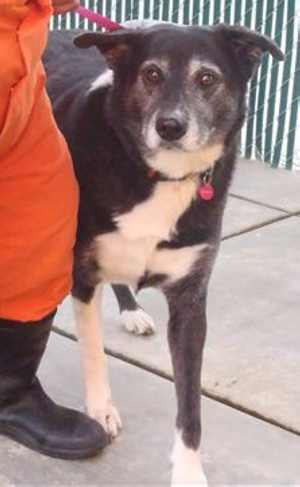
‘Sasha’
“Sasha” is a 10 year old border collie mix.
She has a short black and tan coat, weighs 81 pounds and has been spayed.
She's in kennel No. 12, ID No. 35388.
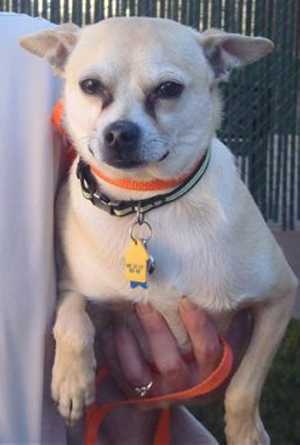
'Milo'
“Milo” is a 1 year old male Chihuahua mix.
He has a short tan coat and has been altered.
He's in kennel No. 13, ID No. 35533.
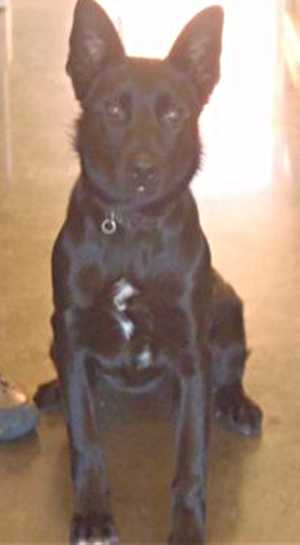
'Max'
“Max” is a 7 month old border collie-German Shepherd mix.
He has a short black coat and a docked tail, weighs nearly 52 pounds and has been neutered.
Find him in kennel No. 14, ID No. 35501.
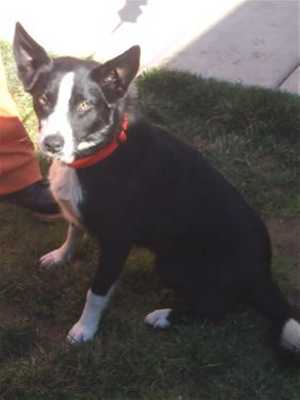
Border collie mix
This female border collie mix is 7 months old.
She has a medium length black and white coat, weighs nearly 33 pounds and has been altered.
She's in kennel No. 20, ID No. 35507.
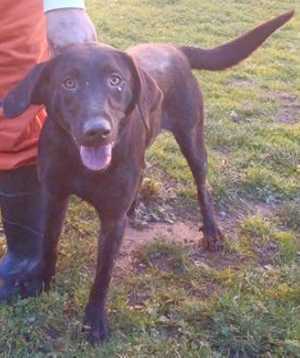
‘Jitsue’
“Jitsue” is a 10 month old female Labrador Retriever mix.
She has a short chocolate-colored coat, weighs 62 pounds and has been spayed.
She's in kennel No. 21, ID No. 35408.

Male terrier mix
This male terrier mix is 3 years old.
He has a short black and white coat, and has not yet been neutered.
He’s in kennel No. 23a, ID No. 35472.

Chihuahua-terrier mix
This male Chihuahua-terrier is 2 years old.
He has a short black and brown coat, and has been altered.
Find him in kennel No. 23b, ID No. 35473.
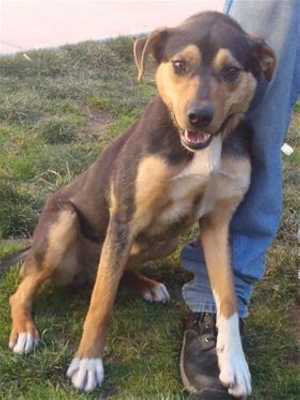
Male shepherd mix
This male shepherd mix is 1 year old.
He has a short black and brown coat, and has been neutered.
Visit with him in kennel No. 31, ID No. 35511.
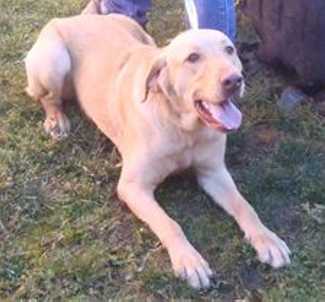
‘Leo’
“Leo” is a 10 month old male Labrador Retriever mix.
He has a short buff-colored coat, weighs 70 pounds and has been neutered.
Find him in kennel No. 32, ID No. 35407.
Please note: Dogs listed at the county shelter's Web page that are said to be “on hold” are not yet cleared for adoption.
To fill out an adoption application online visit http://www.co.lake.ca.us/Government/Directory/Animal_Care_And_Control/Adopt/Dog___Cat_Adoption_Application.htm .
Lake County Animal Care and Control is located at 4949 Helbush in Lakeport, next to the Hill Road Correctional Facility.
Office hours are Monday through Friday, 8 a.m. to 5 p.m., and 1 p.m. to 3 p.m., Saturday. The shelter is open from 10:30 a.m. to 4:30 p.m. Monday through Friday and on Saturday from 1 p.m. to 3 p.m.
Visit the shelter online at http://www.co.lake.ca.us/Government/Directory/Animal_Care_And_Control.htm .
For more information call Lake County Animal Care and Control at 707-263-0278.
Email Elizabeth Larson at
LOWER LAKE, Calif. – Lower Lake Elementary is inviting the community to come out and enjoy a fun and informative night of learning at the annual Family Science Night on Thursday, Feb. 28.
The event will take place from 5:30 p.m. to 7:30 p.m. in the cafeteria at the school, located at 9240 Lake St.
Science teacher Lisa Rogers has organized a great night of scientific learning, including demonstrations by the Robotics Club and student-guided activities, such as a display of their new class pet millipedes.
Taylor Observatory will be there with telescopes and a presentation in the library and Lake County Vector Control will have organisms from the lake along with microscopes.
A bake sale offering delicious treats will take place to help raise funds for science field trip transportation. Those who attend also can purchase a reusable grocery bag to support the seventh and eighth grade Environmental Outdoor Club.
For more information call Lisa Rogers at 707-994-5787, Extension 2638, or email
The demise of the dinosaurs is the world’s ultimate whodunit. Was it a comet or asteroid impact? Volcanic eruptions? Climate change?
In an attempt to resolve the issue, scientists at the Berkeley Geochronology Center (BGC), the University of California, Berkeley, and universities in the Netherlands and the United Kingdom have now determined the most precise dates yet for the dinosaur extinction 66 million years ago and for the well-known impact that occurred around the same time.
The dates are so close, the researchers say, that they now believe the comet or asteroid, if not wholly responsible for the global extinction, at least dealt the dinosaurs their death blow.
“The impact was clearly the final straw that pushed Earth past the tipping point,” said Paul Renne, BGC director and UC Berkeley professor in residence of earth and planetary science. “We have shown that these events are synchronous to within a gnat’s eyebrow, and therefore the impact clearly played a major role in extinctions, but it probably wasn’t just the impact.”
The revised dates clear up lingering confusion over whether the impact actually occurred before or after the extinction, which was characterized by the almost overnight disappearance from the fossil record of land-based dinosaurs and many ocean creatures.
The new date for the impact – 66,038,000 years ago – is the same within error limits as the date of the extinction, said Renne, making the events simultaneous.
He and his colleagues will report their findings in the Feb. 8 issue of the journal Science.
The crater of doom
The extinction of the dinosaurs was first linked to a comet or asteroid impact in 1980 by the late UC Berkeley Nobel Laureate Luis Alvarez and his son, Walter, who is a UC Berkeley professor emeritus of earth and planetary science.
A 110-mile-wide crater in the Caribbean off the Yucatan coast of Mexico is thought to be the result of that impact. Called Chicxulub (cheek’-she-loob), the crater is thought to have been excavated by an object six miles across that threw into the atmosphere debris still be found around the globe as glassy spheres or tektites, shocked quartz and a layer of iridium-enriched dust.
Renne’s quest for a more accurate dating of the extinction began three years ago when he noticed that the existing date conflicted with other estimates of the timing of the extinction and that the existing dates for the impact and the extinction did not line up within error margins.
Renne and his BGC colleagues first went to work recalibrating and improving the existing dating method, known as the argon-argon technique.
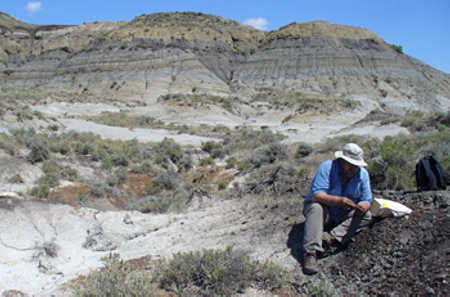
They then collected volcanic ash from the Hell Creek area in Montana and analyzed them with the recalibrated argon-argon technique to determine the date of the extinction.
The formation below the extinction horizon is the source of many dinosaur fossils and one of the best sites to study the change in fossils from before and after the extinction.
They also gathered previously dated tektites from Haiti and analyzed them using the same technique to determine how long ago the impact had occurred. The new extinction and impact dates are precise to within 11,000 years, the researchers said.
“When I got started in the field, the error bars on these events were plus or minus a million years,” said paleontologist William Clemens, a UC Berkeley professor emeritus of integrative biology who has led research in the Hell Creek area for more than 30 years, but was not directly involved in the study.
“It’s an exciting time right now, a lot of which we can attribute to the work that Paul and his colleagues are doing in refining the precision of the time scale with which we work,” said Clemens. “This allows us to integrate what we see from the fossil record with data on climate change and changes in flora and fauna that we see around us today.”
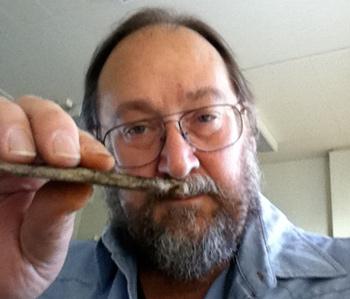
Dinosaurs at the tipping point
Despite the synchronous impact and extinction, Renne cautions that this doesn’t mean that the impact was the sole cause.
Dramatic climate variation over the previous million years, including long cold snaps amidst a general Cretaceous hothouse environment, probably brought many creatures to the brink of extinction, and the impact kicked them over the edge.
“These precursory phenomena made the global ecosystem much more sensitive to even relatively small triggers, so that what otherwise might have been a fairly minor effect shifted the ecosystem into a new state,” he said. “The impact was the coup de grace.”
One cause of the climate variability could have been a sustained series of volcanic eruptions in India that produced the extensive Deccan Traps.
Renne plans to re-date those volcanic rocks to get a more precise measure of their duration and onset relative to the dinosaur extinction.
“This study shows the power of high precision geochronology,” said coauthor Darren F. Mark of the Scottish Universities Environmental Research Center, who conducted independent argon-argon analyses on samples provided by Renne. “Many people think precision is just about adding another decimal place to a number. But it’s far more exciting than that. It’s more like getting a sharper lens on a camera. It allows us to dissect the geological record at greater resolution and piece together the sequence of Earth history.”
Renne’s colleagues, in addition to Mark, are UC Berkeley graduate student William S. Mitchell III; BGC scientists Alan L. Deino and Roland Mundil; Leah E. Morgan of the Scottish Universities Environmental Research Center in Kilbride, Scotland; Frederik J Hilgen of Utrecht University; and Klaudia F. Kuiper and Jan Smit of Vrije University in Amsterdam.
Robert Sanders writes for the University of California, Berkeley's News Center.
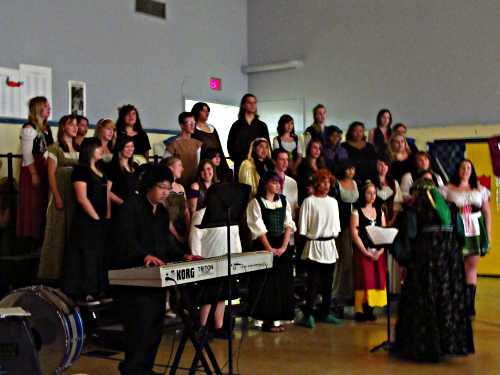
LOWER LAKE, Calif. – Lower Lake High School will host the fifth annual “Medieval Dinner” Friday, Feb. 22, and Saturday, Feb. 23.
The dinner will begin at 7 p.m. Friday and 6 p.m. Saturday in the multipurpose room at the school, located at 9430 Lake St.
All proceeds from the event go toward supporting the Lower Lake High School Music program.
The evening will begin with the drawbridge being lowered, with guests greeted by the herald who will announce them as they cross the drawbridge to a brass fanfare.
The audience will then be entertained by poets, singers, musicians and actors while served a feast of chicken, soup, rolls, sausage, potatoes, carrots, green beans and dessert. “Gold coins” also can be purchased once inside the event to tip the entertainers and actors.
After dinner they will be treated to this year’s play, “May the Farce Be With Thee,” by Paul Brandvik. The audience has a small part so that they can join the fun.
The play will be followed by a concert by the Lower Lake High School Concert Choir, Concert Band, Blue Notes and Jazz Band.
This event is always a lot of fun and space is limited. Tickets are $25 in advance and $35 at the door – cash or check only.
You can get your tickets by calling 707-994-6471, Extension 2779.


Rewind to the late 1950s. The Soviet Union had just launched the first artificial satellite, Sputnik. The United States, caught short, was scrambling to catch up, kick-starting a Cold War space race that would last for decades.
Space was up for grabs, and it seemed like anything could happen.
Into this void stepped the United Nations.
In 1958, the General Assembly “recognizing the common interest of mankind in furthering the peaceful use of outer space ... and desiring to avoid the extension of present national rivalries into this new field,” established the Committee on the Peaceful Uses of Outer Space (COPUOS).
COPUOS became a forum for development of laws and treaties governing space-related activities. Moreover, it set the stage for international cooperation on problems that no one nation could handle alone.
As the years went by, COPUOS membership ballooned from 18 to 74 nations, while items such as space debris, near-Earth asteroids, space-based disaster management, and global navigation were added to the committee's regular agenda.
At each annual meeting in Vienna, Austria, COPUOS members confer about these issues, which present some key challenge or peril to the whole planet.
This year, a new item is on the agenda: space weather.
“This is a significant development,” said Lika Guhathakurta of NASA Headquarters in Washington. “By adding space weather to the regular agenda of the COPUOS Science and Technical Subcommittee, the UN is recognizing solar activity as a concern on par with orbital debris and close-approaching asteroids.”
Space weather is the outer-space equivalent of weather on Earth. Instead of wind, rain and snow, however, space has radiation storms, the solar wind, flares and coronal mass ejections.
The source of space weather is the sun, and although solar storms are launched 93 million miles from Earth, they can make themselves felt on our planet.
“Strong solar storms can knock out power, disable satellites, and scramble GPS,” said Guhathakurta. “It's a global problem made worse by increasing worldwide reliance on sensitive electronic technologies.”
This week, members of the Science and Technical Subcommittee heard about some of the potential economic impacts of space weather.
For instance, modern oil and gas drilling frequently involve directional drilling to tap oil and gas reservoirs deep in the Earth. This drilling technique depends on accurate positioning using global navigation systems. Drill heads could go awry, however, if the sun interferes with GPS reception.
Solar energetic particles at the magnetic poles can force the re-routing of international airline flights resulting in delays and increased fuel consumption. Ground induced currents generated by magnetic storms can damage transformers and increase corrosion in critical energy pipelines.
“Space weather is a significant natural hazard that requires global preparedness,” says Prof. Hans Haubold of the UN Office for Outer Space Affairs. “This new agenda item links space science and space technology for the benefit of all humankind.”
The elevation of space weather on COPUOS’s agenda coincides with the 10th anniversary of the International Living With a Star Program, which took place on Thursday, Feb. 14.
The program is an ad hoc group of nations that got together in 2003 to lay the groundwork for worldwide cooperation in the study of space weather. The UN will help take their efforts to the next level.
A key problem that the UN can help solve is a gap – many gaps, actually – in storm coverage around our planet.
When a solar storm sweeps past Earth, waves of ionization ripple through Earth’s upper atmosphere, electric currents flow through the topsoil, and the whole planet's magnetic field begins to shake.
“These are global phenomena,” said Guhathakurta, “so we need to be able to monitor them all around the world.”
Industrialized countries tend to have an abundance of monitoring stations. They can keep track of local magnetism, ground currents, and ionization, and provide the data to researchers.
Developing countries are where the gaps are, particularly at low latitudes around Earth's magnetic equator. With assistance from the UN, researchers may be able to extend sensor networks into regions where it was once politically unfeasible.
Space weather might play a role in Earth’s climate, too. For example, the Maunder minimum, a 70-year period almost devoid of sunspots in the late 17th to early 18th century, coincided with prolonged, very cold winters in the northern hemisphere.
Researchers are increasingly convinced that variations in solar activity have regional effects on climate and weather that pay no attention to national boundaries, and thus can only be studied in meaningful detail by international consortia.
“The new permanent agenda item of the Science and Technology Subcommittee is an important opportunity to harness the effort of all Members to ensure coordinated global action,” said Terry Onsager of the United States’ National Oceanic and Atmospheric Administration (NOAA).
Now that space weather has been elevated to a permanent place on the COPUOS agenda, it will be a matter of regular conversation among UN diplomats, scientists and emergency planners. This is important because, while space is no longer up for grabs, it is still true that in the realm of space weather almost anything can happen.
Learn more about the Committee on Peaceful Uses of Outer Space at: http://www.oosa.unvienna.org/oosa/COPUOS/copuos.html .
Dr. Tony Phillips works for the National Aeronautics and Space Administration.