 How to resolve AdBlock issue?
News
LAKE COUNTY, Calif. – A Lakeport skilled nursing facility has received the most severe penalty and highest fine under state law for the 2011 death of a woman who was given the wrong medication and not transported to the hospital for acute care.
Dr. Ron Chapman, director and state health officer of the California Department of Public Health, said Evergreen Lakeport Healthcare received a Class “AA” citation and a $100,000 fine from the state of California.
Chapman said a CDPH investigation found facility deficiencies resulted in the death of the resident, whose name was not released in the report.
Evergreen Lakeport Healthcare – part of Evergreen California Healthcare and EmpRes Healthcare – is a 99-bed skilled nursing facility located on Craig Avenue that offers both short- and long-term care.
Neither Evergreen Lakeport nor any of its associated entities have so far issued a statement in response to the penalty.
The citation packet – including corrective action items to prevent similar occurrences in the future was delivered to the facility's executive director on May 16, state documents showed.
The woman whose death resulted in the penalty was admitted to Evergreen with a coronary artery bypass graft, pacemaker for sick sinus syndrome and atrial fibrillation, the report said. She lived with her daughter and was said to be alert, independent and spry.
According to the investigation, at around 1:30 a.m. Aug. 8, 2011, a nurse incorrectly administered an oral dose of 30 milligrams of methodone for pain to the female resident in question instead of another patient.
The state investigation said that methodone was not in the physician's orders for the woman.
In addition, the state faulted Evergreen for not transporting the patient to a hospital for treatment.
The investigation found that a physician's order for life-sustaining treatment dated Aug. 1, 2011, which the woman had signed, called for full treatment and transfer to a hospital if indicated, including intensive care.
Evergreen's medical staff also didn't administer a reversal agent, Narcan, to the patient, according to the report.
“These failures resulted in delay in treatment of acute methadone toxicity,” and resulted in the woman's death, the investigation report stated.
After giving the woman the dose of methadone, Evergreen staff kept her at the facility, giving her oxygen and monitoring her vital signs, according to the investigation.
Her oxygen saturation levels went down; eight hours later, her blood pressure dropped and she stopped breathing. The report said staff called 911 and cardiopulmonary resuscitation was performed on the woman, who was pronounced dead shortly thereafter.
According to the Lake County Coroner's report, dated Aug. 10, 2011, the nurse practitioner told officials that she did not give the reversal agent for methadone “as we usually don't do that.”
The nurse practitioner went on to tell officials that she should have sent the woman to the hospital immediately but decided to watch her and take her vitals to see how she would progress.
She told coroner's staff that she sees many advanced age residents at the facility all year around that are sent to the hospital and then sent right back to Evergreen, which offers comfort care.
The coroner's office determined the woman's cause of death to be acute methadone toxicity, based on the autopsy and toxicological investigation, the state reported.
State officials concluded that Evergreen's protocol violations “presented an imminent danger to the Resident and were a direct proximate cause of the death of the Resident.”
CDPH said all nursing facilities in California are required to be in compliance with applicable state and federal laws and regulations governing health care facilities. Facilities are required to comply with these standards to ensure quality of care.
California has the statutory authority to impose fines against nursing facilities it licenses as part of enforcement remedies for poor care, CDPH officials reported.
State citations that require a civil monetary penalty be imposed are categorized as Class B, A or AA. The associated fines range from $100 to $2,000 for Class B, $2,000 to $20,000 for Class A and $25,000 to $100,000 for Class AA.
The citation class and amount of the fine depend upon the significance and severity of the substantiated violation, as prescribed and defined in California law.
By providing nursing facilities it licenses with consequences for substantiated violations, CDPH said it strives to protect the health and safety of vulnerable individuals.
The citation process is part of CDPH’s ongoing enforcement efforts in improving the quality of care provided to residents of the state’s approximately 1,400 skilled nursing facilities.
Email Elizabeth Larson at
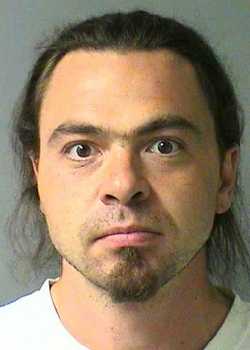
LAKE COUNTY, Calif. – A Middletown man who allegedly was involved in a fight with a deputy and a California Highway Patrol officer on Thursday, leading to the discharge of one of the officers' weapons, was booked into the Lake County Jail on Thursday night.
Yolpaqui Hernandez, 34, was booked into the Lake County Jail on felony charges of obstructing or resisting a peace officer, assault with a deadly weapon other than a firearm on a peace officer, battery with serious bodily injury and removing a peace officer's firearm, according to Lake County Jail records.
Hernandez's bail is set at $150,000 and he remained in custody on Friday evening.
District Attorney Don Anderson, whose agency is leading the criminal investigation into the incident, said Hernandez is expected to be arraigned on Monday afternoon.
Anderson said Hernandez's girlfriend had called law enforcement for a civil standby on Thursday morning at her Rose Anderson Road home in Anderson Springs as Hernandez was moving out.
There had not been any violence between the two, however, “The girlfriend was getting concerned over him,” said Anderson.
The deputy who eventually would arrest Hernandez – and was listed on the booking sheet as Scott Lewis – arrived at the scene and began talking to Hernandez, said Anderson.
Anderson said Hernandez began arguing with Lewis inside the home. Lewis noticed a machete and a sheath on a nearby table and went to move it, at which point Hernandez grabbed him.
At that point the two men began to physically fight, said Anderson, with Hernandez allegedly trying to take the deputy's gun away from him.
Anderson said a CHP officer arrived – a CHP official had said Thursday that the officer was called as a cover unit – and as the struggle continued Hernandez allegedly attempted to grab the CHP officer's AR-15 rifle.
During the struggle the rifle went off, but no one was hit, Anderson said.
Hernandez subsequently was hit with a Taser three times and continued to fight while being taken into custody, Anderson said.
Neither Lewis nor the CHP officer – Anderson did not have the CHP officer's name – were harmed, and Anderson said Hernandez was treated for a minor cut at Sutter Lakeside Hospital.
Hernandez was booked into the Lake County Jail shortly after 11 p.m. Thursday, according to jail records.
Anderson said the investigation into the fight “will probably go pretty quick.” Such investigations are part of the critical incident protocol followed for officer-involved shootings, he said.
Anderson was not aware if Hernandez had undergone testing for drugs or alcohol at the hospital on Thursday. However, he said both the deputy and CHP officer were tested for drugs and alcohol as part of the investigative protocol.
“That's just standard procedure,” Anderson said.
Email Elizabeth Larson at
MENDOCINO NATIONAL FOREST, Calif. – An area of the Mendocino National Forest ravaged by a massive wildlife last summer has reopened to recreational uses.
Forest officials said the Mill Fire Closure, formally referenced as Order Number 08-13-03, expired at midnight Friday.
Beginning last July 7, the Mill Fire burned more than 29,500 acres between the Letts Lake area and the community of Stonyford on the Grindstone Ranger District of the Mendocino National Forest.
With the closure order's expiration, forest officials said the area is officially reopened for recreation, including off-highway vehicles under designated roads and trails.
Forest officials reopened the Mill Fire area to hiking and walking in January, as Lake County News has reported.
While many recreational uses have been reinstated in the fire area, forest officials said visitors should be aware that Old Mill Campground remains closed.
For more information, contact the Mendocino National Forest at 530-934-3316, the Stonyford Work Center at 530-963-3128 or visit www.fs.usda.gov/mendocino .
Email Elizabeth Larson at

Astronomers using data from NASA's Wide-field Infrared Survey Explorer (WISE) have identified 28 new families of asteroids.
The findings are a critical step in understanding the origins of asteroid families, and the collisions thought to have created these rocky clans.
“We're separating zebras from the gazelles,” said Joseph Masiero of NASA's Jet Propulsion Laboratory in Pasadena, Calif., who is lead author of a report on the new study that appears in the Astrophysical Journal. “Before, asteroid family members were harder to tell apart because they were traveling in nearby packs. But now we have a better idea of which asteroid belongs to which family.”
An asteroid family is formed when a collision breaks apart a large parent body into fragments of various sizes. Some collisions leave giant craters.
For example, the asteroid Vesta's southern hemisphere was excavated by two large impacts. Other smashups are catastrophic, shattering an object into numerous fragments, as was the case with the Eos asteroid family.
The castoff pieces move together in packs, traveling on the same path around the sun, but over time the pieces become more and more spread out.
The new families were found in millions of infrared snapshots from the asteroid-hunting portion of the WISE all-sky survey, called NEOWISE.
The NEOWISE team looked at about 120,000 main belt asteroids out of the approximately 600,000 known.
They found that about 38,000 of these objects, roughly one third of the observed population, could be assigned to 76 families, 28 of which are new. In addition, some asteroids thought to belong to a particular family were reclassified.
“NEOWISE has given us the data for a much more detailed look at the evolution of asteroids throughout the solar system,” said Lindley Johnson, the program executive for the Near-Earth Object Observation Program at NASA Headquarters in Washington. “This will help us trace [near-Earth asteroids] back to their sources and understand how some of them have migrated to orbits hazardous to the Earth.”
Previous knowledge of asteroid family lineages comes from observations of their orbits. NEOWISE also looked at the asteroids' reflectivity to identify family members.
Asteroids in the same family generally have similar mineral composition and reflect similar amounts of light. Some families consist of darker-colored, or duller, asteroids, while others are made up of lighter-colored, or shinier, rocks.
It is difficult to distinguish between dark and light asteroids in visible light. A large, dull asteroid can appear the same as a small, shiny one. The dark asteroid reflects less light but has more total surface area, so it appears brighter.
NEOWISE could distinguish between the dark and light asteroids because it could detect infrared light, which reveals the heat of an object. The larger the object, the more heat it gives off.
When the size of an asteroid can be measured, its true reflective properties can be determined, and a group of asteroids once thought to belong to a single family circling the sun in a similar orbit can be sorted into distinct families.
The next step for the team is to learn more about the original parent bodies that spawned the families.
“It's as if you have shards from a broken vase, and you want to put it back together to find out what happened,” said Amy Mainzer, the NEOWISE principal investigator at JPL. “Why did the asteroid belt form in the first place and fail to become a planet? We are piecing together our asteroids' history.”
More information about the mission is online at: http://www.nasa.gov/wise .
Dr. Tony Phillips works for the National Aeronautics and Space Administration.
LAKE COUNTY, Calif. – With dry winds forecast for many parts of Northern California, Cal Fire has increased its staffing and is urging the public to be extra cautious due to the heightened fire danger.
The National Weather Service has issued a red flag warning stretching form Shasta County down through the Sacramento Valley to San Joaquin County starting Friday morning for high winds and low humidity lasting through Saturday evening.
Parts of Lake County also have been included in the red flag warning, officials reported. Winds in the county are forecast to top out at 13 miles per hour on Saturday evening, with winds expected to be the highest in the Lakeport area.
“Even with some recent rain in Northern California, conditions remain much drier than normal for this time of year,” said Chief Ken Pimlott, Cal Fire director. “We have extra firefighters and equipment available to respond to new wildfires, but now especially is when we need the public’s help in preventing accidental wildfires.”
Since Jan. 1 Cal Fire has responded to nearly 1,900 wildfires across California that have burned approximately 45,000 acres.
In an average year for the same time period, Cal Fire typically responds to about 990 fires that burn around 7,700 acres.
The significantly dry conditions are a major factor in the 90 percent increase in fire activity, Cal Fire officials said.
During the Red Flag Warning Cal Fire urges all Californians to exercise extreme caution outdoors in order to prevent a wildfires.
A few helpful reminders and fire prevention tips include:
- Don’t mow or weed eat dry grass on windy days;
- Ensure campfires are allowed, and if so, be sure to extinguish them completely;
- Target shoot only in approved areas, use lead ammunition only, and never at metal targets;
- Be extra careful with all powered equipment outdoors including chainsaws, tractors and weld ers;
- Never burn landscape debris like leaves or branches on NO Burn Days or when its windy.
The public also is encouraged to review “Ready, Set, Go” procedures when it comes to preparing for a wildfire at www.ReadyForWildfire.org .
For more ways to help prevent and prepare for wildfires visit www.fire.ca.gov .
LAKE COUNTY, Calif. – Over the next two weeks, hundreds of high school seniors around Lake County will cross the stage to receive their diplomas.
Beginning on Friday, graduations are set to take place at three schools with events continuing through Friday, June 14.
On Friday, graduations will take place at Clear Lake High School in Lakeport, Middletown High School and Upper Lake High School, according to the Lake County Office of Education.
Clear Lake High School's graduation will begin at 7:30 p.m. at Don Owens Field, 350 Lange St.
In Middletown, the graduation ceremony will be held on Bill Foltmer Field, 20932 Big Canyon Road, at 7:45 p.m. Gates will open at 6:45 p.m.
Upper Lake High School's graduation ceremony will begin at 7 p.m. at the school stadium, 675 Clover Valley Road.
Graduation for ASPIRE/Court and Community School takes place on Wednesday, June 5, according to the Lake County Office of Education.
Lower Lake high school's graduation will be held on Friday, June 7. The ceremony will begin at 7:30 p.m. at Gordon Sadler Field, 9430 Lake St.
On Friday, June 14, Kelseyville High School will host its commencement ceremonies at the football field, located at 5480 Main St.
School officials reported that the ceremony will include a fireworks display at the end of the celebration at around 9:20 p.m.
The display will take place over a five-minute period, but area residents are advised to take the necessary precautions with pets that might be sensitive to the noise.