How to resolve AdBlock issue?
News
LAKE COUNTY, Calif. – With the student loan default rates spiking among its former students, the Yuba Community College District has taken the step of suspending its participation in the federal student loan program, a move that’s making it tougher for some students to continue with their studies.
The Yuba Community College District Board of Trustees made the decision to suspend the federal student loan program at its June 13 meeting, according to district Chancellor Douglas Houston. The district formally announced the decision last week.
Houston said the decision’s goal was to protect other types of student aid for students at the Yuba College and Woodland Community College campuses, as the district faced losing eligibility for participation due to the high default rates of former students.
“This was absolutely an appropriate step to take because of the risk,” Houston said.
However, Houston said the decision is having an impact on students preparing to enter the fall semester, and is a particular challenge for students in such disciplines as nursing, where they often have to take time off from work to pursue their studies.
The data presented to the Yuba College trustees last month included a two-year snapshot of default data for former students – called a “cohort default rate” – after they leave school and enter loan repayment. The two-year rate in 2009 was at 13.2 percent, up from 9.1 percent in 2008.
Expanding that data out to a three-year snapshot, draft numbers showed the default rate beginning to rapidly trend upward.
The three-year rate for 2009 was 18.6 percent. The numbers for 2010 show defaults at 22.1 percent for two years, the official number, and the draft number for three years at 31 percent.
Looking still further out to 2011, the two-year draft default number is estimated to be 29.4 percent. There is not yet an estimate of three-year data.
“It’s been a very alarming climb,” Houston said.
Those rising numbers were within a threshold that could have jeopardized eligibility for the loan program, according to Jane Glickman, a spokesperson for the United States Department of Education.
“A school can lose eligibility to participate in the program if they have three years of default rates that are 25 percent or higher, three years in a row,” Glickman told Lake County News.
However, schools must now switch from a two-year cohort default rate to a three-year measurement as required by the Higher Education Opportunity Act of 2008, the US Department of Education reported.
Federal officials began extending the window of data because there are more borrowers who default beyond the two-year window.
The three-year rate is believed to offer a more accurate picture of how many borrowers ultimately default on their federal student loans. The numbers are decidedly higher than the two-year rates.
The first year of that three years of data for the default cohort rate was released last September, Glickman said, with the next round set to be released this fall.
When the third year is released next year, schools will be held to those numbers and sanctions will begin to be imposed, according to a US Department of Education.
At that point, the cohort default rate in which eligibility can be lost will rise to 30 percent, Glickman said.
The US Department of Education said any school with a three-year cohort default rate of 30 percent or more must establish a default prevention task force and submit a default management plan to the department.
Last fall there were 218 schools that had three-year default rates over 30 percent, and 37 schools had three-year default rates in excess of 40 percent, the agency reported. Those numbers will be updated this September.
Growing concerns
Houston said the Yuba Community College District has been considering the student loan default issue more closely since last year, when he first took the matter to the board. Last year, he wasn’t recommending action be taken, but said he wanted the board to be informed of what was ahead.
He said the rate was climbing then, and the concern was that it was getting close to the threshold where the district would lose eligibility. Since then, that disqualification threshold has been passed.
As to the underlying causes, “I assume it’s the economy. and we may well see this turn around if the economy continues to recover,” Houston said.
In its initial report on the decision last week, the district said only 236 Yuba College students and 39 Woodland Community College students participated in the Federal Student Loan program in 2012-13.
At the same time, 5,270 Yuba College students and 1,560 Woodland Community College students received other forms of federal and state financial aid that totaled more than $33 million.
Other forms of student aid would be in jeopardy if the district continued in the student loan program and lost federal eligibility, the district said.
Houston said he doesn’t believe Yuba’s default rates have any connection to the fact that earlier this year Yuba College and the Clear Lake Campus were placed on probation by the Accrediting Commission for Community and Junior Colleges, as Lake County News reported in February.
“Many institutions are seeing the same increases,” he said, and some have taken the same route as the district in addressing them.
For comparison, Mendocino College’s three-year official cohort default rate was 17.8 percent for 2009, with 56 students in repayment and 10 in default, according to US Department of Education numbers.
Mendocino’s two-year default rates for 2008, 2009 and 2010 were 9.5, 14.5 and 15.1 percent, respectively, the agency reported.
For Marymount California University, which is locating its third four-year campus at the Lucerne Hotel, the three-year default rate for fiscal year 2009 was 11.9 percent, with 167 students in repayment and 20 defaulting, according to the US Department of Education.
The agency reported that Marymount’s two-year default rates for 2008, 2009 and 2010 were much lower, totaling 5.3, 6.6 and 5.7 percent, respectively, for those years.
Default rates rising across the state, nation
Default rates are going up nationwide, according to US Department of Education data.
The national two-year rate rose to 9.1 percent for the fiscal year 2010 cohort, from 8.8 percent in fiscal year 2009.
Federal officials explained that the two-year data for fiscal year 2010 was based on a cohort consisting of borrowers whose first loan repayments came due between Oct. 1, 2009, and Sept. 30, 2010, and who defaulted before Sept. 30, 2011.
During that time window, more than 4.1 million borrowers from nearly 6,000 schools entered repayment during this window, and almost 375,000 defaulted for an average of 9.1 percent.
Compare those numbers with the three-year rates for fiscal year 2009, which followed the cohort of borrowers whose loans entered repayment between Oct. 1, 2008, and Sept. 30, 2009, and who defaulted before Sept. 30, 2011. More than 3.6 million borrowers from over 5,900 schools entered repayment during this window of time, and approximately 489,000 of them defaulted.
The agency said for-profit institutions had the highest average three-year default rates at 22.7 percent, with public institutions following at 11 percent and private non-profit institutions at 7.5 percent.
Paige Marlatt Dorr, director of communications for the California Community Colleges Chancellor’s Office, told Lake County News that there is not an official calculated cohort default rate for state’s community colleges system.
However, based on Lake County News’ information request, a system specialist calculated an average of all California community colleges from the three-year 2009 cohort default rates, with the average at 18 percent.
“Default rates are on the rise the last couple of years and are considered a lagging indicator of economic conditions,” Dorr said. “So, we expect rates to continue at the current trajectory for a few more years.”
She said the California Community Colleges Chancellor’s Office has initiated a Loan Default Prevention Initiative that will provide consultative services to colleges regarding their rates and activities related to managing cohort default rates, as well direct student interventions for delinquent borrowers.
Next steps for Yuba College
When the Yuba Community College District Board made its decision last month to withdraw from the student loan program, the board also directed a specially formed committee to work with Houston and his administration to bring back a report by the end of this year on next steps.
That report is meant to help the board decide if it should reconsider suspending the loan program if default rates decline or if sufficient controls can be put in place to help improve the situation, Houston said.
However, Houston noted that the district already has controls in place for current students, including establishing better financial literacy and more closely scrutinizing the finances of those who apply for aid.
Addressing issues with former students, Houston added, is much more of a challenge.
“We don’t have the resources to chase down former students,” he said, adding that he’s not sure that would be a successful strategy anyway.
He said the district will continue to look for alternative solutions for students who use loans to complete their education.
A dilemma for the district is that students who present a low-risk of default – such as those nursing students who are among those likely to be most affected, and who pursue careers that will allow them to pay back their loans – are being impacted. He said federal policies don’t allow the schools to give loans to students in some disciplines and not others.
“We’ve only heard from a few students” who are struggling to find a means of continuing with their education this coming year, he said.
“We’re working with them but we don’t have a whole lot of brilliant solutions either, other than to refer them to local banks,” Houston said.
While the district’s colleges have foundations that provide scholarships, “Right now those scholarships are all pretty well spoken for” for the coming year, Houston said.
Looking ahead, Houston said the district anticipates that it may be able to establish an emergency loan program for students, but they don’t have that option at this time.
Email Elizabeth Larson at

LAKE COUNTY, Calif. – The Lake County Land Trust is presenting a Children’s Nature Education Program on Saturday, July 20, starting at 9 a.m. at the trust’s Rodman Preserve near Upper Lake.
The program is designed for children ages 7 to 12, but all ages are welcome, if younger children are accompanied by an adult.
This month’s program will focus on raptors and part of the fun will include dissecting “owl pellets,” to learn about what these interesting creatures of the night are eating
The program is presented by nature education specialist Elaine Mansell, who coordinated the Junior Ranger programs at Clear Lake State Park for many years.
Children enjoy a one and a half to two hour program that includes fun nature games, a walk, and viewing specimens through microscopes.
The Rodman Preserve is located at 6350 Westlake Road near Upper Lake. Take the Nice-Lucerne Cut-off off of Highway 29, between Lakeport and Upper Lake. Turn east onto the Nice-Lucerne Cut-off, then left on to Westlake Road. The preserve entry is to the immediate right after turning on to Westlake.
The preserve is owned and operated by the Lake County Land Trust.
For more information, go to www.lakecountylandtrust.org , or call 707-994-2024 or 707-263-1637. Reservations are encouraged but not required.
LAKE COUNTY, Calif. – The Lake County Registrar of Voters office said community members interested in filing for candidacy for a number of elective college, board of education, school district governing board member or special district board of director offices have until next month to get their paperwork in order.
Registrar of Voters Diane Fridley said the filing period for the offices ends at 5 p.m. Friday, Aug. 9, for the offices on the upcoming Nov. 5 General District Election.
The following offices are up for election this fall:
Mendocino-Lake Community College District
- Trustee Area No. 2, one vacancy – file in Mendocino County
- Trustee Area No. 5, one vacancy – file in Mendocino County or Lake County
- Trustee Area No. 6, one vacancy – file in Lake County
Kelseyville Unified School District
- Two vacancies
Lake County Board of Education
- Trustee Area No. 3, one vacancy
- Trustee Area No. 4, one vacancy
- Trustee Area No. 5, one vacancy
Lakeport Unified School District
- Two vacancies
Lucerne Elementary School District
- Two vacancies
Upper Lake Union Elementary School District
- Three vacancies
Upper Lake Union High School District
- Three vacancies
Kelseyville Fire Protection District
- Three vacancies
Lake County Fire Protection District
- Four full terms
- One two-year unexpired term
South Lake County Fire Protection District
- Two vacancies
Anderson Springs Community Services District
- Three vacancies
Butler-Keys Community Services District
- Two vacancies
Hidden Valley Lake Community Services District
- Two vacancies
Adams Springs Water District
- Three full terms
- One two-year unexpired term
Buckingham Park Water District
- Three vacancies
Callayomi County Water District
- Three vacancies
Clearlake Oaks County Water District
- Two full terms
- One two-year unexpired term
Cobb Area County Water District
- Three vacancies
Konocti County Water District
- Three vacancies
Scotts Valley Water Conservation District, Division II
- One vacancy
Upper Lake County Water District
- Two full terms
- One two-year unexpired term
Villa Blue Estates Water District
- Three vacancies – four-year terms
- Three vacancies – two-year terms
For more information call the Lake County Registrar of Voters at 707-263-2372.

LAKE COUNTY, Calif. – A vehicle stop conducted Saturday evening by a Lake County Sheriff’s patrol deputy has resulted in one arrest and the seizure of methamphetamine, marijuana and drug paraphernalia.
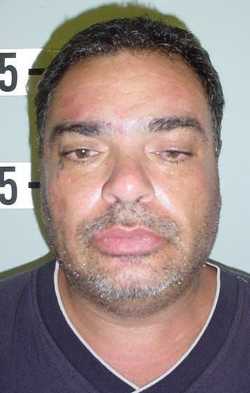
Jade Lee Perry, 45, of El Cerrito was arrested during the stop, according to Lt. Steve Brooks.
At approximately 7:45 p.m. Saturday, deputies responded to the 8000 block of Orchard Drive in Kelseyville to conduct a followup investigation on an unrelated case, Brooks said.
As deputies were walking up to the residence to conduct the followup, they noticed a vehicle pull up into the driveway. Brooks said that as soon as the driver of the vehicle noticed the deputies, he quickly backed out of the driveway and left the area.
A few minutes later a deputy was able to relocate the vehicle and noticed the registration was expired. The deputy also noticed additional vehicle code violations, Brooks said.
Based on the aforementioned violations, an enforcement stop was conducted on the vehicle. The deputy contacted the driver of the vehicle, identified as Perry, Brooks said.
Central Dispatch conducted a records check of Perry and advised he had a felony warrant out of Contra Costa County. Brooks said the warrant was for driving while under the influence, causing injury and the transportation of marijuana.
Brooks said Central Dispatch also advised that Perry was on searchable felony probation out of Contra Costa County and his license was suspended. Perry told the deputy that there was nothing illegal in the vehicle.
The deputy searched Perry’s vehicle and located a large plastic bag containing marijuana. Perry said the marijuana was for his personal use although he did not have a medical recommendation to possess it, Brooks said.
As the deputy was speaking to Perry, he noticed that Perry was exhibiting signs of being under the influence of central nervous system stimulant, Brooks said.
At first Perry denied using or possessing methamphetamine, Brooks said. Perry eventually reached into the waistband of his underwear and provided the deputy with a glass “meth” pipe and a clear plastic bag containing methamphetamine.
Perry was arrested for the felony warrant, transportation of a controlled substance, possession of a controlled substance, possession of marijuana for sales, possession of controlled substance paraphernalia, under the influence of a controlled substance, driving on a suspended license and for violating the terms of his probations, Brooks said. He was transported to the Lake County Hill Road Correctional Facility and booked.
Jail records showed that Perry remained in the jail on Tuesday on a no-bail hold.
The Sheriff’s Narcotics Task Force can be reached through its anonymous tip line at 707-263-3663.
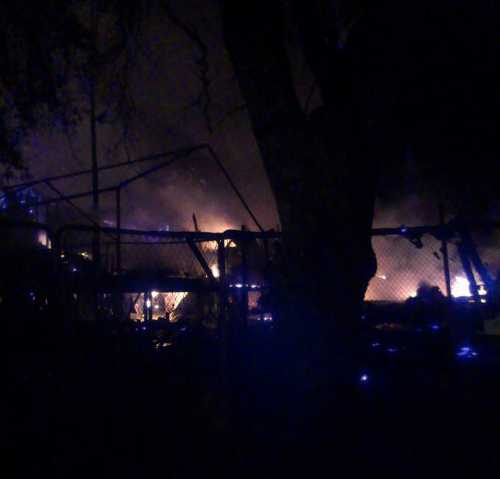
CLEARLAKE, Calif. – The cause of a late night fire on Sunday that destroyed a Clearlake home and damaged another one nearby remains under investigation, according to a fire official.
The fire was reported at 11:15 p.m. at 16214 31st Ave., on the corner of 31st and Konocti avenues, according to Lake County Fire Protection District Battalion Chief George Murch.
He said the property had a doublewide mobile home with a two-car garage. “The doublewide was fully involved upon our arrival,” he said.
There also was a large amount of debris in the yard that was on fire, Murch said.
He said the home appeared to have been occupied but everyone in it was able to get out.
A man who was trying to get his things out of the home suffered a superficial burn to his arm, Murch said. No other injuries were reported.
The fire destroyed the doublewide mobile and damaged another residence nearby, as well as a boat and a vehicle parked at that second home, Murch said. A third residence was threatened but undamaged.
A power line to the home also was damaged, Murch added.
“It took us about 30 minutes to contain it,” Murch said of the fire.
Firefighters remained on scene for about three hours after the fire was out to work on the extensive mop up Murch said was required due to the doublewide’s roof collapsing.
“The cause is still under investigation,” Murch said of the incident.
Resources responding to the scene included 20 firefighters and nine volunteers, as well as two engines, a water tender and a heavy rescue unit from Lake County Fire Protection, with Murch and Chief Willie Sapeta also at the scene, he said.
Cal Fire sent two engines and a battalion chief, and a mutual aid engine came from Northshore Fire Protection District’s Clearlake Oaks station, Murch said.
Email Elizabeth Larson at
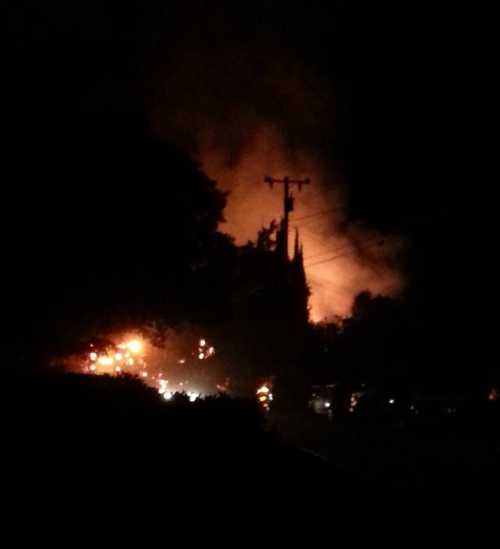
CLEARLAKE, Calif. – A late night fire in Clearlake burned a structure and was reported to have threatened other buildings nearby.
The fire was reported about 11:15 p.m. in the vicinity of 31st and Boyles avenues, according to radio reports.
The first firefighters on scene reported a fully involved structure with other nearby structures threatened, based on reports from the scene.
Lake County Fire and Cal Fire were dispatched to the fire, with firefighters responding in warned of possible power lines down.
Radio reports indicated firefighters were posted near a structure to the west of the fire to protect it from the main blaze.
After the fire was contained shortly before midnight it was reported that firefighters would be committed until close to 2 a.m. for mop up operations.
Additional details about the fire weren't immediately available early Monday.
Email Elizabeth Larson at