 How to resolve AdBlock issue?
News
LAKE COUNTY, Calif. – This week five dogs are cleared and ready to leave Lake County's animal shelter for new homes.
The dogs range in age from 2 to 3 years old, and most have been altered and had their shots.
Dogs that are adopted from Lake County Animal Care and Control are either neutered or spayed, microchipped and, if old enough, given a rabies shot and county license before being released to their new owner. License fees do not apply to residents of the cities of Lakeport or Clearlake.
If you're looking for a new companion, visit the shelter. There are many great pets hoping you'll choose them.
In addition to the animals featured here, all adoptable animals in Lake County can be seen here: http://bit.ly/Z6xHMb .
The following dogs at the Lake County Animal Care and Control shelter have been cleared for adoption (additional dogs on the animal control Web site not listed are still “on hold”).
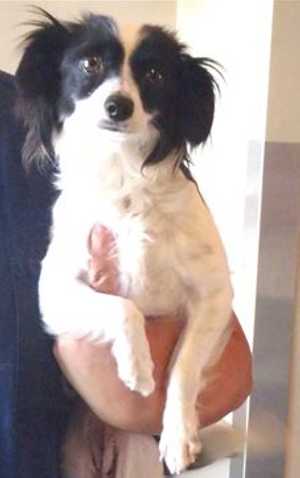
'Bella'
“Bella” is a 2-year-old Pomeranian-dachshund mix.
She has a long black and white coat, weighs 11 pounds and has been altered.
Shelter staff said Bella is great with women and children but needs a home with no men.
Find her in kennel No. 4, ID No. 36294.

Pit bull terrier mix
This male pit bull terrier mix is 3 years old.
He has a short blue coat and has been neutered.
Shelter staff said he's an outstanding, calm and charming dog that was attacked by another dog before entering the shelter.
He has no food aggression. A cat-free home would be best for him.
He’s in kennel No. 10, ID No. 36931.

Female Chihuahua mix
This female Chihuahua mix is 3 and a half years old.
She has a short black and white coat, weighs almost 11 pounds and has been spayed.
She's in kennel No. 18, ID No. 35315.
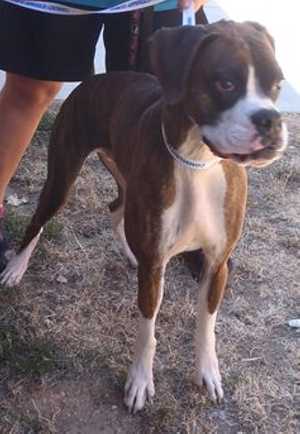
'Oden'
“Oden” is a 2-year-old male boxer mix.
He's got a short brown brindle and white coat, a docked tail, weighs 53 pounds and has been neutered.
He's in kennel No. 27, ID No. 37136.

Male terrier mix
This male terrier mix is 3 years old.
He has a medium-length tan and white coat, and has not yet been neutered.
He's in kennel No. 29, ID No. 37185.
To fill out an adoption application online visit http://www.co.lake.ca.us/Government/Directory/Animal_Care_And_Control/Adopt/Dog___Cat_Adoption_Application.htm .
Lake County Animal Care and Control is located at 4949 Helbush in Lakeport, next to the Hill Road Correctional Facility.
Office hours are Monday through Friday, 8 a.m. to 5 p.m., and 1 p.m. to 3 p.m., Saturday. The shelter is open from 10:30 a.m. to 4:30 p.m. Monday through Friday and on Saturday from 1 p.m. to 3 p.m.
Visit the shelter online at http://www.co.lake.ca.us/Government/Directory/Animal_Care_And_Control.htm .
For more information call Lake County Animal Care and Control at 707-263-0278.
Email Elizabeth Larson at

Color and black-and-white images of Earth taken by two NASA interplanetary spacecraft on July 19 show our planet and its moon as bright beacons from millions of miles away in space.
NASA's Cassini spacecraft captured the color images of Earth and the moon from its perch in the Saturn system nearly 900 million miles away.
MESSENGER, the first probe to orbit Mercury, took a black-and-white image from a distance of 61 million miles as part of a campaign to search for natural satellites of the planet.
In the Cassini images Earth and the moon appear as mere dots – Earth a pale blue and the moon a stark white, visible between Saturn's rings.
It was the first time Cassini's highest-resolution camera captured Earth and its moon as two distinct objects.
It also marked the first time people on Earth had advance notice their planet's portrait was being taken from interplanetary distances.
NASA invited the public to celebrate by finding Saturn in their part of the sky, waving at the ringed planet and sharing pictures over the Internet. More than 20,000 people around the world participated.
“We can't see individual continents or people in this portrait of Earth, but this pale blue dot is a succinct summary of who we were on July 19,” said Linda Spilker, Cassini project scientist, at NASA's Jet Propulsion Laboratory in Pasadena, Calif.
“Cassini's picture reminds us how tiny our home planet is in the vastness of space, and also testifies to the ingenuity of the citizens of this tiny planet to send a robotic spacecraft so far away from home to study Saturn and take a look-back photo of Earth,” Spilker said.
Pictures of Earth from the outer solar system are rare because from that distance, Earth appears very close to our sun.
A camera's sensitive detectors can be damaged by looking directly at the sun, just as a human being can damage his or her retina by doing the same.
Cassini was able to take this image because the sun had temporarily moved behind Saturn from the spacecraft's point of view and most of the light was blocked.
A wide-angle image of Earth will become part of a multi-image picture, or mosaic, of Saturn's rings, which scientists are assembling.
This image is not expected to be available for several weeks because of the time-consuming challenges involved in blending images taken in changing geometry and at vastly different light levels, with faint and extraordinarily bright targets side by side.
“It thrills me to no end that people all over the world took a break from their normal activities to go outside and celebrate the interplanetary salute between robot and maker that these images represent,” said Carolyn Porco, Cassini imaging team lead at the Space Science Institute in Boulder, Colo. “The whole event underscores for me our 'coming of age' as planetary explorers.”
In the MESSENGER image, Earth and the moon are less than a pixel, but appear very large because they are overexposed.
Long exposures are required to capture as much light as possible from potentially dim objects. Consequently, bright objects in the field of view become saturated and appear artificially large. (To view the MESSENGER images, visit: http://go.nasa.gov/16Vnt5G .)
“That images of our planet have been acquired on a single day from two distant solar system outposts reminds us of this nation's stunning technical accomplishments in planetary exploration,” said MESSENGER Principal Investigator Sean Solomon of Columbia University's Lamont-Doherty Earth Observatory in Palisades, N.Y. “And because Mercury and Saturn are such different outcomes of planetary formation and evolution, these two images also highlight what is special about Earth. There's no place like home.”
Dr. Tony Phillips works for the National Aeronautics and Space Administration.

LAKE COUNTY, Calif. – Less than a month after they went out on a two-day strike, Lake Transit employees are set to vote on whether they will walk out indefinitely on Monday, only returning to work after a new contract is reached.
On Saturday, Paratransit Services – the Washington state-based nonprofit that operates Lake Transit Authority – reported that reduced bus services may be in effect beginning on Monday.
That's in response to Teamsters Local 665, which represents the Lake Transit workers, reporting that employees are considering an indefinite walkout.
It's the latest in an ongoing contract negotiation that, despite involving federal mediators, appears to be stalling.
Teamsters Local 665 representative Ralph Miranda said the union will meet with its membership at 11 a.m. Sunday in Lower Lake regarding the strike proposal. “That's when the determination will be made.”
He said the union is recommending that the strike begin at midnight Sunday.
Miranda said 35 of the Paratransit employees who work for Lake Transit – drivers, dispatchers, maintenance and other job categories – are represented by the union.
Paratransit Services has indicated it will hire replacement workers to keep Lake Transit buses rolling, but there will be service reductions.
Routes from Lakeport to Clearlake, Kelseyville to Middletown, Clearlake to Deer Park, Soda Bay Road at Kit's Corner to Lakeport, Lakeport to Ukiah and an intercity Lakeport route all will be canceled while the strike is under way, according to Paratransit Services.
Remaining routes, including Dial-a-Ride in both Clearlake and Lakeport, will run on more limited hours than normal, Paratransit Services said.
Lake Transit's ridership has shown steady increases in recent years as county residents, struggling with the economy, have sought affordable alternatives to higher gas prices.
As such, the extended strike could have a significant impact on those community members who have come to rely on Lake Transit's services.
“Paratransit Services has presented a very reasonable proposal that seeks to sustain transit service for the community, while also sustaining current staffing levels and working conditions during an economic period that has transit providers across the State cutting wages, services and staffing,” Randy Grove, director of Operations and Human Resources, said in a statement released on Saturday to Lake County News.
Grove also said the union is demanding wage rate increases and changes to benefits that could cost the Lake Transit system almost $500,000 in increased operations costs.
However, Miranda said the issues – including a requested wage increase – haven't changed since employees conducted a strike July 1-2.
Responding to the Paratransit Services claim that workers are asking for a wage increase of $500,000 – or 67 percent – over three years, Miranda said, “There's just no truth to that whatsoever.”
Instead, he said the union is seeking a wage increase that would total $95,000 over three years, which includes step increases for all employees – not just the drivers, who get them after reaching 10 years of service.
The two sides also are dealing with what Miranda called “a misinterpretation” of the cost of living index used for determining worker wage increases.
He said Paratransit is using a 2.2-percent COLA for transportation, while the union is using a 2.4-percent index for clerical employees and urban wage earners.
Miranda said the union has withdrawn other proposals that relate to vacation and sick leave.
Grove said Paratransit Services proposed a 2.2-percent wage rate increase following a 2.6-percent wage increase provided last year.
He said the proposal represents a cumulative 23.1 percent in wage rate increases over the six-year period of Paratransit Services’ administration of transit services for Lake Transit Authority.
The two sides met on July 17 with a federal mediator to try to a reach an agreement on a new three-year contract.
According to Grove, both parties had agreed to pick up negotiations again in September to work out the details of an employee health care plan, “given the evolving changes with Obamacare.”
However, Miranda said that, from the union perspective, the meeting only produced an extension request for an additional year from Paratransit Services. “To extend it another year puts membership at a greater disadvantage.”
Miranda believes the local union membership will do as the negotiating committee recommends.
“We'll probably walk out on strike on Monday,” he said, adding that the strike will be indefinite until a settlement is reached.
Grove said that if a strike takes place, the following services will operate Monday through Friday:
- Clearlake / Lakeport Dial-a-Ride will operate from 7 a.m. to 5 p.m.;
- Routes 5 and 6, Clearlake intercity routes, will run from 7 a.m. to 5 p.m.;
- Route 4 Westbound will operate at 7:05 a.m. and 1 p.m.;
- Route 1 Eastbound from Lakeport to Clearlake will operate at 8:31 a.m. and 2:21 p.m. only;
- All other services would be canceled until further notice.
Grove said it's Lake Transit's intent to resume regular services as soon as possible, with bulletins notifying riders of changes to be released through the media and at www.laketransit.org .
Email Elizabeth Larson at
LAKE COUNTY, Calif. – The Lake County Office of Education and Lake County Child Care Planning Council is hosting a Back to School 5k Run For Fun.
The event takes place on Saturday, Aug. 17, at 8:30 a.m. at Lake Side County Park, 1985 Park Drive in Lakeport.
Participants are encouraged to bring new school supplies to donate to Lake County foster children and others who need help purchasing supplies to start their school year.
Proceeds from the event registration will benefit the annual Early Childhood Educator of the Year Award program.
Walk, run, dance, skip or roll to the finish line. All ages are welcome to participate. Register by Aug. 1 to receive a race T-shirt.
Adult registration fees are $20 each or $30 for two. Children under age 10 are $10 each or $15 for two. Children age 3 and under may attend for free.
Registration begins at 8:30 a.m. and the race starts at 9 a.m. Times will not be recorded but finish standings will be posted.
To register go to www.lakecoe.org and click on “Calendar,” click on the event and complete the form.
Volunteers and sponsors are needed. To become an event sponsor call Laurie at 707-262-4162.
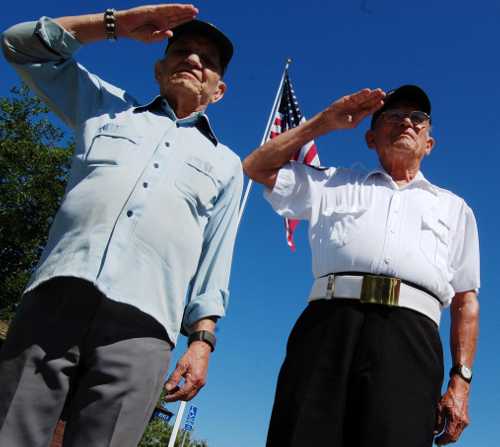
LAKE COUNTY, Calif. – Think Dodge City, Kansas, and Shady Point, Oklahoma. And then think U.S. Navy.
Get the connection? No?
But these two places are the originating points of two of Lake County's surviving veterans of the Korean War.
Saturday will be commemorated as the 60th anniversary of the signing of the armistice that ended the three-year-long conflict, which according to the Department of Defense claimed the lives of more than 54,000 American service men and women.
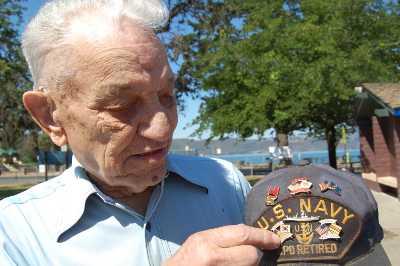
The sailor from Dodge City is 87-year-old Harry Graves. Griff Ratterree is the veteran from Shady Point, population 1,000.
That's not all that makes the two men, both residents of Clearlake, unique. Graves is one of the last individuals on the planet who served in three wars – World War II, Korea and Vietnam.
As a member of the Lake County Military Funeral Honors Team, Ratterree has fired 21-gun salutes in ceremonies honoring the fallen military in nearly 1,000 funerals.
“Sometimes we did three funerals in a day,” he said.
In addition to their work with the honor guard – Graves also is a member – both men today remain very involved in local veterans organizations that seek to assist veterans of all ages.
They also take part in ceremonies such as the annual Pearl Harbor commemorations and the Christmastime laying of wreaths at local cemeteries as part of the Wreaths Across America event.
Graves has been a faithful supporter of Operation Tango Mike – which sends care packages to troops overseas – and recently retired as commander of the local chapter of Disabled American Veterans, an organization he's served since 1979. In 2010, Graves won a Stars of Lake County Award in the “Spirit of Lake County” category,
Ratterree, who has a granddaughter in the military, has been a repeat Stars nominee himself, and has served as commander of the Veterans of Foreign Wars Post 2015 in Lakeport. In 2011 Ratterree was honored with the “Veteran of the Year Award” by the United Veterans Council.
Graves, a chief petty officer when he was honorably discharged from the Navy in 1968, has the rare distinction of never having been in a vessel that was fired upon in his 18-year career.
His career began with a two-year hitch from 1944-46. After earning a degree at Oklahoma A&M in electronic engineering, he went back into the Navy in 1950 and remained there until 1968, when the Vietnam War ended, attaining the rank of CPO carpenter's mate.
Regarding his last four years in the Navy, which were shore duty, he said, “I worked in a carpenter's shop rebuilding a captain’s office. It was almost like a civilian job.”
But he understates his experience. He served on a destroyer with guided-missile capacity and during Vietnam was in a ship's company that was among the first U.S. ships in Vietnamese waters shooting photos of the area.
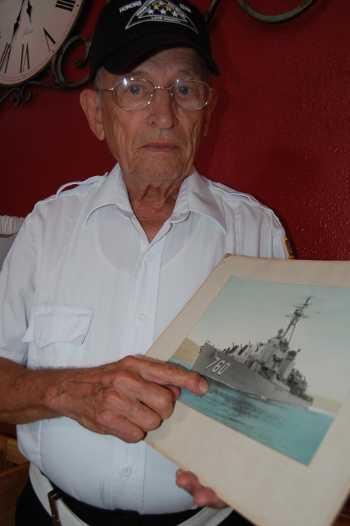
Ratterree, a fire controlman, served four years, from 1947 to 1951. Promotions being hard to come by in that era, he had the same rank when he left the Navy – seaman – as he did when he enlisted.
“I went into the Air Force Reserve when I got out and achieved a sergeant's rating,” Ratterree, who ended his active duty with the Navy, said bemusingly.
Ratterree's ship, the destroyer John W. Thomason, was bombarded at Yangyang Harbor and Wonsan Harbor, for which it was awarded the Korean Service Medal. Which was not much of an honor for getting in harm's way.
The writer of this article was awarded the same medal even though he served his four years after the Korean War was over.
Still another irony to the two veterans' stories is that they had never seen an ocean until they entered the Navy.
Graves, whose father was a machinist and blacksmith, moved the family 200 miles away from Dodge City to Wichita, the furthest he ever traveled before his enlistment.
He glimpsed ocean waters for the first time when he was billeted to the Naval Air Station in Jacksonville, Fla.
Graves moved to Clearlake in 1968 following several fishing expeditions to the region with his workmates in the Vallejo shipyards; Ratterree came in 2006 after becoming acquainted with the area while living in Napa County.
Ratterree, whose father, a Choctaw Indian, was a merchant in Oklahoma's coal-mining towns, had never traveled more than the 40 miles' distance from Shady Point, Okla., to Ft. Smith, Ark.
“The Navy was a new thing for me and a chance to see the world. We saw a lot of it,” said Ratterree, who got his first glimpse of the Pacific when he was whisked off to San Diego for basic training.
“I really enjoyed the Navy; it was so different,” said Graves.
“I got into the Navy when I was 17,” he added.
Is he happy he didn't serve in the Army?
“Oh, definitely,” he said. “I had an uncle who served during World War I. He said don't you ever go into the Infantry.”
Email John Lindblom at
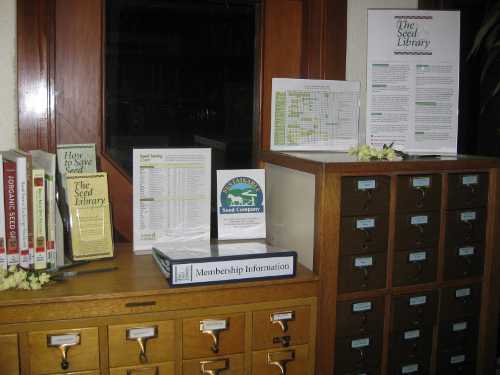
NORTH COAST, Calif. – The first seed library in Mendocino County has just opened at the Round Valley Public Library in the small, remote town of Covelo, population 1,255.
It's one of several seed libraries to open this year in Northern California.
Seed libraries are a fairly new phenomenon. The concept is simple: patrons “check out” seeds, take them home to grow tasty and nutritious food for their families, let a portion of the crop go to seed, save some of that seed for planting next season and return some to the library.
Why seeds? With high food prices gardening has come back into style.
“Growing your own food is like printing your own money,” according to food activist Ron Finley.
Combine that with the fact that people from all walks of life are rediscovering that fruits and vegetables grown in their own backyards have a flavor that just isn’t found in supermarket produce and you have a new generation of Victory Gardens sprouting up all over the country.
There are benefits to growing and saving seed of heirloom and other open pollinated varieties of food plants besides saving money.
One is that after several seasons the plants grown become acclimatized to local conditions. The plants become better suited to the area than the plants grown from seed raised in other parts of the country.
And by selecting for desirable traits, the gardener can develop strains that mature earlier, or taste sweeter, or tolerate higher temperatures.
People also are attracted to seed saving for philosophical reasons.
According to many estimates, we’ve lost more than 90 percent of the food plant varieties that existed a century ago. Big agricultural corporations rely on monocultures, and the ensuing loss of genetic diversity reduces food crops’ ability to adapt to pests, plant disease, and changes in climate.
A large percentage of seed savers are motivated to save seeds in response to corporations who quietly bought up seed companies over the last few decades only to “discontinue” production of old time varieties in favor of hybrid or GMO varieties that need to be purchased from the company every growing season.
“By reclaiming the tradition of seed saving, we are taking seeds out of the hands of big corporations and putting them back into the hands of backyard gardeners,” said Pat Sobrero, seed librarian at the Covelo Seed Library.
People can become members of The Seed Library and withdraw seeds by promising to return some open-pollinated seed at the end of the growing season, either seed they’ve saved or commercially grown seed, preferably seed grown close to “home.”
Anyone is welcome to check out any type of seed they want to plant, although The Seed Library discourages its patrons from returning “advanced difficulty” seed until the gardener has the knowledge, time and skill to do it correctly. This ensures that the next person to check out seed will grow out what they intend.
The library offers brochures and handouts on basic seed saving, has many books on seed saving available for checkout, and plans to offer classes on gardening and seed saving in the future.
The Seed Library is open during the Round Valley Public Library’s regular hours, Tuesday through Saturday, 10 a.m. to 5 p.m.
You can find out more about The Seed Library by visiting its Facebook page, www.facebook.com/TheSeedLibrary .