 How to resolve AdBlock issue?
News
LAKE COUNTY, Calif. – Lake County Animal Care and Control has several new terriers, Chihuahua mixes, a pointer and a Labrador Retriever mix waiting for new homes this week.
The dogs range in age from 15 weeks to five years, and come in all sizes.
Dogs that are adopted from Lake County Animal Care and Control are either neutered or spayed, microchipped and, if old enough, given a rabies shot and county license before being released to their new owner. License fees do not apply to residents of the cities of Lakeport or Clearlake.
If you're looking for a new companion, visit the shelter. There are many great pets hoping you'll choose them.
In addition to the animals featured here, all adoptable animals in Lake County can be seen here: http://bit.ly/Z6xHMb .
The following dogs at the Lake County Animal Care and Control shelter have been cleared for adoption (additional dogs on the animal control Web site not listed are still “on hold”).
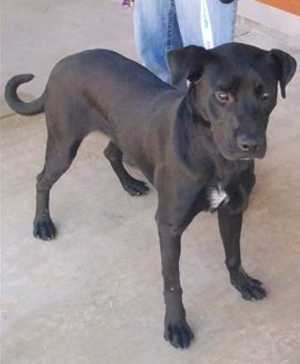
'Bear'
“Bear” is a 1-year-old Labrador Retriever mix.
He has a short black coat, weighs 66 pounds and has been altered.
Shelter staff said Bear is very friendly, gentle and mellow, and would make a great family pet, as he's good with kids. He's also scared of cats.
He's currently in foster care, ID No. 37345.

'Daisey'
“Daisey” is a 1-year-old terrier mix.
She has a short black and white coat, and cropped ears. Shelter staff did not report her weight or if she had been spayed.
She's in kennel No. 5, ID No. 37723.
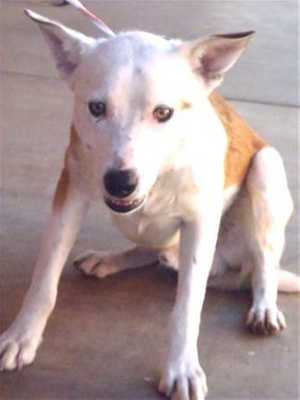
Male border collie mix
This male border collie mix is 1 year old.
He has a curly coat, has been neutered and has cropped ears.
Find him in kennel No. 10, ID No. 37744.
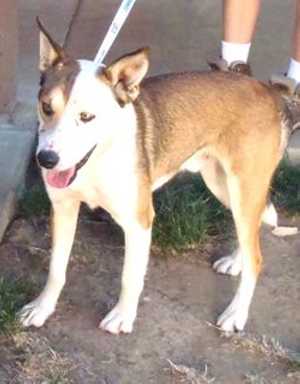
Male border collie mix
This male border collie mix is 1 year old.
He has a curly coat, has been neutered and has cropped ears.
Find him in kennel No. 11, ID No. 37745.
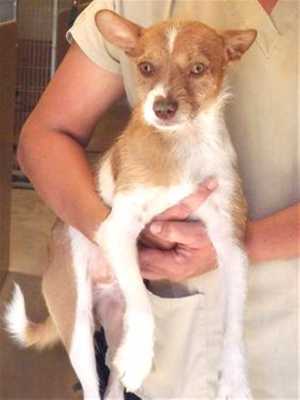
Jack Russell Terrier mix
This male Jack Russell Terrier mix is 5 years old.
He has a short brown and white coat, and weighs nearly 17 pounds. Shelter staff did not report if he had been neutered.
Find him in kennel No. 13, ID No. 37657.

German Short-haired Pointer mix
This male German Short-haired Pointer mix is 15 weeks old.
He has a short black and white coat, weighs 20 pounds and has been neutered.
He's in kennel No. 16, ID No. 37710.
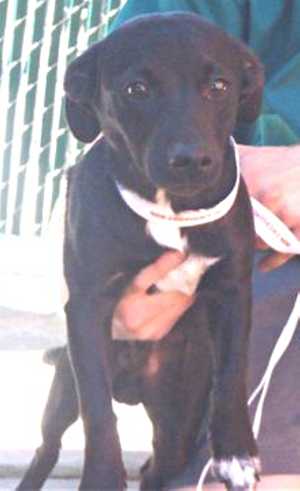
Male terrier mix
This male terrier mix is 4 years old.
He has a short black and white coat, weighs 11 pounds and has been neutered.
Find him in kennel No. 29, ID No. 37679.

Female terrier mix
This female terrier mix is 3 years old.
She has a short brown and white coat, and weighs 16 pounds. Shelter staff did not report if she had been altered.
She's in kennel No. 30a, ID No. 37678.
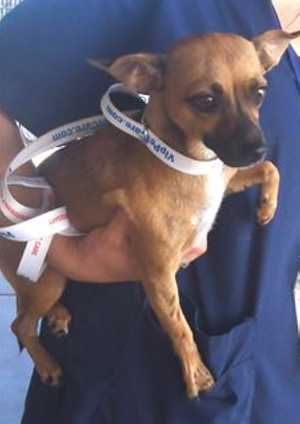
Female Chihuahua mix
This female Chihuahua mix is 2 years old.
She has a short brown coat and weighs 8 pounds. Shelter staff did not report if she had been spayed.
Find her in kennel No. 30b, ID No. 37753.
To fill out an adoption application online visit http://www.co.lake.ca.us/Government/Directory/Animal_Care_And_Control/Adopt/Dog___Cat_Adoption_Application.htm .
Lake County Animal Care and Control is located at 4949 Helbush in Lakeport, next to the Hill Road Correctional Facility.
Office hours are Monday through Friday, 8 a.m. to 5 p.m., and 1 p.m. to 3 p.m., Saturday. The shelter is open from 10:30 a.m. to 4:30 p.m. Monday through Friday and on Saturday from 1 p.m. to 3 p.m.
Visit the shelter online at http://www.co.lake.ca.us/Government/Directory/Animal_Care_And_Control.htm .
For more information call Lake County Animal Care and Control at 707-263-0278.
Email Elizabeth Larson at

LAKE COUNTY, Calif. – The stars of September represent the transition from the brilliance of the summer skies to the more sedate, but nonetheless beautiful fall skies.
September is derived from the Latin word septem, which means seven.
The old Roman calendar originally had only 10 months and September was the seventh month, hence the name.
For calendar trivia fans, September and December always begin on the same day each year.
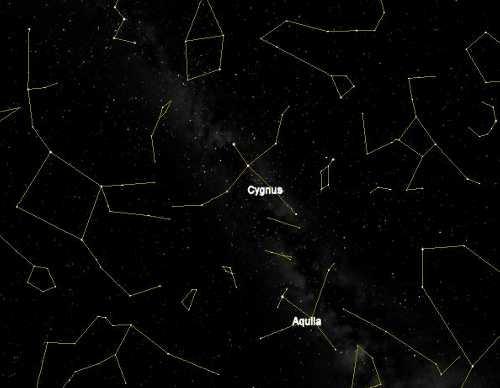
The Summer Triangle, which we mentioned in last month’s column, still shines brightly overhead, with the constellations Cygnus, Lyra and Aquila dominant.
The Milky Way is especially prominent this time of the year, running north and south through Cygnus and Aquila.
The Milky Way looks like a large cloud. In reality it is made up of millions of stars.
When you look at the Milky Way, you are looking toward the center of our galaxy, which is named The Milky Way.
We do not know exactly what our galaxy looks like, since we do not have space craft able to travel far enough away it take a picture. But we can infer that it may look very similar to our nearest neighbor, the Andromeda Galaxy.
The Milky Way is estimated to have up to 400 million stars! Our galaxy is only one of an estimated 200 billion or more in the universe.
Hidden among the brilliance of the Milky Way and the constellations Cygnus and Aquila are four small constellations: Sagitta, Vulpecula, Delphinus and Equuleus.
Sagitta is an arrow, possibly one shot by Sagittarius the Archer, another summer constellation.

Vulpecula is a fox, and is a newer constellation, identified in 1690 by Johannes Hevelius, a famous Polish asronomer.
Vulpecula has a remarkable object in it that can be seen with a small telescope. This is M27, the Dumbell Nebula.
Delphinus represents a dolphin. Equuleus is a little horse. Both constellations were known to the ancient Greeks.
John Zimmerman is a resident of Lake County, Calif., and has been an amateur astronomer for more than 50 years. For more information about astronomy and local resources, visit his Web site at www.lakecountyskies.com .


A NASA-led team of scientists has uncovered strong evidence that soot from a rapidly industrializing Europe caused the abrupt retreat of mountain glaciers in the European Alps that began in the 1860s, a period often thought of as the end of the Little Ice Age.
The research, published Sept. 3 in the Proceedings of the National Academy of Sciences, may help resolve a longstanding scientific debate.
In the decades following the 1850s, Europe underwent an economic and atmospheric transformation spurred by industrialization.
The use of coal to heat homes and power transportation and industry in Western Europe began in earnest, spewing huge quantities of black carbon and other dark particles into the atmosphere.
Black carbon is the strongest sunlight-absorbing atmospheric particle. When these particles settle on the snow blanketing glaciers, they darken the snow surface, speeding its melting and exposing the underlying glacier ice to sunlight and warmer spring and summer air earlier in the year. This diminishing of the snow cover earlier in each year causes the glacier ice to melt faster and retreat.
The Little Ice Age, loosely defined as a cooler period between the 14th and 19th centuries, was marked by an expansion of mountain glaciers and a drop in temperatures in Europe of nearly 1.8 degrees Fahrenheit (1 degree Celsius).
But glacier records show that between 1860 and 1930, while temperatures continued to drop, large valley glaciers in the Alps abruptly retreated by an average of nearly 0.6 mile (1 kilometer) to lengths not seen in the previous few hundred years.
Glaciologists and climatologists have struggled to reconcile this apparent conflict between climate and glacier records.
“Something was missing from the equation,” said Thomas Painter, a snow and ice scientist at NASA's Jet Propulsion Laboratory in Pasadena, Calif., who led the study. “Before now, most glaciologists believed the end of the Little Ice Age came in the mid-1800s when these glaciers retreated, and that the retreat was due to a natural climatic shift, distinct from the carbon dioxide-induced warming that came later in the 20th century. This result suggests that human influence on glaciers extends back to well before the industrial temperature increases.”
To help the scientists understand what was driving the glacier retreat, Painter and his colleagues turned to history. The researchers studied data from ice cores drilled from high up on several European mountain glaciers to determine how much black carbon was in the atmosphere and snow when the Alps glaciers began to retreat.
Using the levels of carbon particles trapped in the ice core layers, and taking into consideration modern observations of how pollutants are distributed in the Alps, they were able to estimate how much black carbon was deposited on glacial surfaces at lower elevations, where levels of black carbon tend to be highest.
The team then ran computer models of glacier behavior, starting with recorded weather conditions and adding the impact of the lower-elevation pollution.
When this impact was included, the simulated glacier mass loss and timing finally were consistent with the historic record of glacial retreat, despite the cooling temperatures at that time.
“We must now look more closely at other regions on Earth, such as the Himalaya, to study the present-day impacts of black carbon on glaciers in these regions,” said Georg Kaser, a study co-author from the University of Innsbruck, Austria, and lead author of the Working Group I Cryosphere chapter of the Intergovernmental Panel on Climate Change's upcoming Fifth Assessment Report.
“This study uncovers likely human fingerprints on our changing environment,” said co-author Waleed Abdalati, director of the Cooperative Institute for Research and Environmental Sciences (CIRES) at the University of Colorado Boulder. “It's a reminder that the actions we take have far-reaching impacts on the environment in which we live.”
Dr. Tony Phillips works for the National Aeronautics and Space Administration.
SACRAMENTO – The California State Board of Food and Agriculture and the California Water Commission will hold a joint meeting concerning the state's water supply on Tuesday, Sept. 10, in Sacramento.
The meeting will be held from 10 a.m. to 3 p.m. at the California Department of Food and Agriculture, 1220 N St., Main Auditorium, Sacramento.
“California's current water situation spells uncertainty for agricultural interests throughout this state,” said CDFA Secretary Karen Ross. “We need to work proactively with farmers and ranchers to address groundwater overdraft and water transfers – providing a level of reliability over the next few years.”
On May 20, Gov. Edmund G. Brown, Jr. issued an executive order to streamline approvals for water transfers to protect California's farms. The order was in response to the very dry conditions occurring within the state.
Currently, water allocations for this year remain low with 35 percent of requested amounts through the State Water Project and 20 percent of requested amounts through the federal Central Valley Project.
Even if this winter provides a normal wet year, growers throughout the state are preparing for a reduced water supply as nine of the state's major reservoirs are below historic average levels, and six of these are below 50 percent total capacity.
This meeting provides a forum for agricultural stakeholders, water representatives, and government officials to discuss California's water situation and make recommendations to the state board.
Invited speakers include Director Mark Cowin, California Department of Water Resources, Randy Record, chair of the Association of California Water Agencies (ACWA); Mike Wade, California Farm Water Coalition; Chris White, Central California Irrigation District; Victoria Whitney, State Water Resources Control Board; Karla Nemeth; California Natural Resources Agency; Marvin Meyers, Meyers Farming; Joe MacIlvaine, Paramount Farming; John Sweigard, Merced Irrigation District; and Kris Beal, Vineyard Team.
“With the strong potential for drought conditions next year, flexibility within the statewide water system is needed” said Craig McNamara, president of the California State Board of Food and Agriculture. “I'm hopeful that this meeting can help inform policy discussions and encourage action by state and federal agencies.”
The California State Board of Food and Agriculture advises the governor and the CDFA secretary on agricultural issues and consumer needs.
The state board conducts forums that bring together local, state and federal government officials, agricultural representative and citizens to discuss current issues of concern to California agriculture.
The California Water Commission consists of nine members appointed by the Governor and subject to Senate confirmation. Its historical role includes advising the director of the Department of Water Resources on matters within the Department's jurisdiction, approving rules and regulations, and monitoring and reporting on the construction of the State Water Project.
Follow the board on Twitter at www.twitter.com/Cafood_agboard .
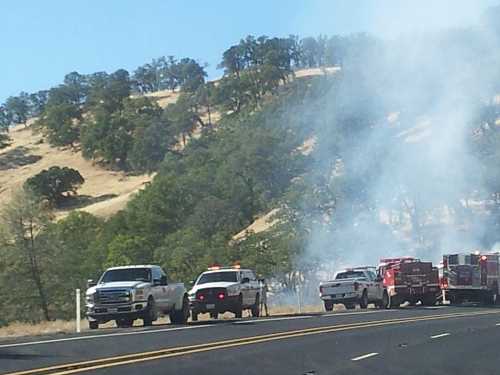
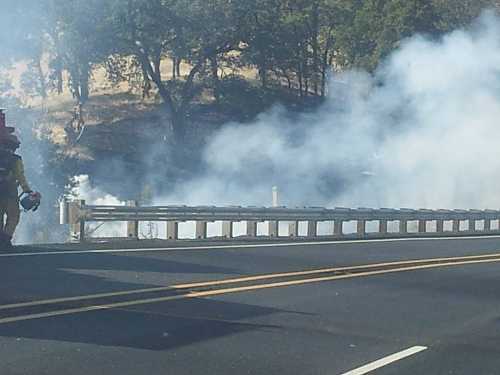
HIDDEN VALLEY LAKE, Calif. – A small wildland fire burned along Highway 29 Saturday afternoon.
The fire, reported to be off the highway about a mile north of Spruce Grove Road near the Hidden Valley Lake golf course, was first dispatched shortly after 4 p.m.
Witnesses at the scene said Cal Fire air resources – including helicopters – worked the fire, along with ground units.
Cal Fire Battalion Chief Greg Bertelli said South Lake County Fire and Cal Fire responded.
“We had a full wildland response,” he said.
The fire was contained by 5:30 p.m. thanks to aggressive firefighting, he said.
Bertelli said the fire was contained at one acre.
He said the cause is under investigation.
There are no power lines in the area and “nothing obvious jumping out at us right now” as to a potential fire source, Bertelli said.
Email Elizabeth Larson at
LAKEPORT, Calif. – A Lake County Superior Court judge on Friday denied motions to set aside and dismiss felony charges against three Sonoma County Chapter Hells Angels members charged for their alleged part in a June 2011 fight.
After having heard arguments on the motions in July, Judge Michael Lunas returned on Friday to deliver his ruling in the case against Josh Johnson, Nicolas Carrillo and Timothy Bianchi.
Tentatively scheduled to go to trial in October, the men are facing charges for a fight with Michael Burns, a validated Vagos motorcycle gang member, and Kristopher Perkin on June 4, 2011, at a tattoo convention at Konocti Vista Casino in Lakeport.
Charges against the three men include felony participation in a criminal street gang, and misdemeanor disturbing the peace and battery. In addition, Bianchi faces felony assault with a deadly weapon other than a firearm, and Johnson and Carrillo each are charged with an additional misdemeanor battery count.
Motions filed on behalf of the men by their attorneys – Patrick Ciocca for Johnson, Michael Clough for Carrillo and Jai Gohel for Bianchi – alleged that the Lake County District Attorney's Office failed to turn over discovery in the case that could have changed the outcome of the March 2012 preliminary hearing.
Specifically, the discovery in question related to Sheriff Frank Rivero, who was involved in the case because he collected surveillance video from the casino in the days after the fight and testified at the preliminary hearing.
The defense argued that the prosecution failed to disclose key details about District Attorney Don Anderson's investigation into allegations that Rivero lied about his actions in shooting at an unarmed man in February 2008, while he was a deputy sheriff.
This past February, Anderson concluded that Rivero had lied and placed him on a “Brady list” of officers with credibility issues.
The Brady list is so named for the 1963 US Supreme Court case that requires the prosecution to disclose to defendants in criminal cases any potentially exculpatory material, including information about the credibility of officers involved in their cases.
The defense argued that Anderson's office violated that key tenet, and also didn't disclose important information about the “county line incident” in May of 2012, when Rivero sent sheriff's deputies to the south county to block a contingent of Hells Angels reportedly on their way to fight with a group of Vagos who had camped out in downtown Lakeport that day. However, no Hells Angels appeared.
Lunas, after having reviewed extensive case law, said the defense's motion to dismiss under Penal Code 995 was not the correct procedure to challenge the alleged procedural errors.
In order to find there were Brady violations that justified dismissal, Lunas said he had to conclude that disclosing the information would have changed the outcome of the preliminary hearing. However, that was not his finding.
The preliminary hearing was held before Judge Andrew Blum, who ordered the three defendants to be held to answer on the charges.
Lunas pointed out that, based on his review of the case documents, it appeared that the defense did have information about the Brady investigation and the county line incident in hand at the time of the preliminary hearing. He said the prosecution had disclosed the Brady investigation to the defense around March 2012.
He also noted that the defense made no objection at the time of the preliminary hearing about those incidents.
“I do not find that it's reasonably probable that it would have changed the outcome,” he said of the information disclosure the defense was seeking.
If he excluded Rivero's testimony entirely, “It's clear to me that the remaining testimony before Judge Blum was more than significant evidence to raise a strong suspicion necessary for a holding order.”
It was noted in court on Friday that at the preliminary hearing Rivero had been asked about the Brady investigation and had denied that he lied about the 2008 shooting, which Lunas said was “collateral impeachment.”
Lunas said the defense had asked to simply declare a false start and start over again. “There was some appeal to that,” he said, adding, “The court has seriously considered those arguments.”
He went on to explain that he did not find any bad faith or misconduct at the preliminary hearing, adding that it appeared there were advantages to the defense in Rivero being called.
Following Lunas' ruling, Clough asked the judge to reconsider. Clough said the defense did know about the county line incident but argued that it's important to separate the types of charges in the case.
Lunas said he had read Clough's argument and made his ruling. Clough said he was entitled to make a record of his concerns.
Lunas replied that he was going to require that those concerns be made in writing, according to court rules, and wasn't going to have an open-ended, freewheeling argument. He said it sounded like Clough was trying to reargue the case.
Clough asked if Lunas was issuing a written opinion. Lunas said no, and Clough responded by asking that a written opinion be prepared. Lunas directed the court clerk to prepare a transcript, which he said would constitute the written opinion Clough requested.
The attorneys noted there is a pending motion for discovery materials that hasn't yet received a response or been placed on the court calendar, and likely will cause an issue with the scheduled October trial date.
Email Elizabeth Larson at