 How to resolve AdBlock issue?
News
Everyone knows that space is cold. In the vast gulf between stars and galaxies, the temperature of gaseous matter routinely drops to 3 degrees K, or 454 degrees below zero Fahrenheit.
It’s about to get even colder.
NASA researchers are planning to create the coldest spot in the known universe inside the International Space Station.
“We’re going to study matter at temperatures far colder than are found naturally,” said Rob Thompson of JPL.
He’s the project scientist for NASA’s Cold Atom Lab, an atomic “refrigerator” slated for launch to the ISS in 2016.
“We aim to push effective temperatures down to 100 pico-Kelvin,” he said, noting that 100 pico-Kelvin is just one ten billionth of a degree above absolute zero, where all the thermal activity of atoms theoretically stops.
At such low temperatures, ordinary concepts of solid, liquid and gas are no longer relevant. Atoms interacting just above the threshold of zero energy create new forms of matter that are essentially ... quantum.
Quantum mechanics is a branch of physics that describes the bizarre rules of light and matter on atomic scales. In that realm, matter can be in two places at once; objects behave as both particles and waves; and nothing is certain: the quantum world runs on probability.
It is into this strange realm that researchers using the Cold Atom Lab will plunge.
“We’ll begin,” said Thompson, “by studying Bose-Einstein Condensates.”
In 1995, researchers discovered that if you took a few million rubidium atoms and cooled them near absolute zero, they would merge into a single wave of matter. The trick worked with sodium, too.
In 2001, Eric Cornell of the National Institute of Standards & Technology and Carl Wieman of University of Colorado shared the Nobel Prize with Wolfgang Ketterle of MIT for their independent discovery of these condensates, which Albert Einstein and Satyendra Bose had predicted in the early 20th century.
If you create two BECs and put them together, they don't mix like an ordinary gas. Instead, they can “interfere” like waves: thin, parallel layers of matter are separated by thin layers of empty space. An atom in one BEC can add itself to an atom in another BEC and produce – no atom at all.
“The Cold Atom Lab will allow us to study these objects at perhaps the lowest temperatures ever,” said Thompson.
The lab is also a place where researchers can mix super-cool atomic gasses and see what happens.
“Mixtures of different types of atoms can float together almost completely free of perturbations,” explained Thompson, “allowing us to make sensitive measurements of very weak interactions. This could lead to the discovery of interesting and novel quantum phenomena.”
The space station is the best place to do this research. Microgravity allows researchers to cool materials to temperatures much colder than are possible on the ground.
Thompson explained why: “It’s a basic principle of thermodynamics that when a gas expands, it cools. Most of us have hands-on experience with this. If you spray a can of aerosols, the can gets cold.”
Quantum gases are cooled in much the same way. In place of an aerosol can, however, we have a “magnetic trap.”
“On the ISS, these traps can be made very weak because they do not have to support the atoms against the pull of gravity,” said Thompson. “Weak traps allow gases to expand and cool to lower temperatures than are possible on the ground.”
No one knows where this fundamental research will lead. Even the “practical” applications listed by Thompson – quantum sensors, matter wave interferometers, and atomic lasers, just to name a few – sound like science fiction.
“We’re entering the unknown,” Thompson said.
Researchers like Thompson think of the Cold Atom Lab as a doorway into the quantum world.
Could the door swing both ways? If the temperature drops low enough, “We’ll be able to assemble atomic wave packets as wide as a human hair--that is, big enough for the human eye to see,” Thompson said.
A creature of quantum physics will have entered the macroscopic world.
And then the real excitement begins.
For more information about the Cold Atom Lab, visit www.coldatomlab.jpl.nasa.gov .
Dr. Tony Phillips works for the National Aeronautics and Space Administration.
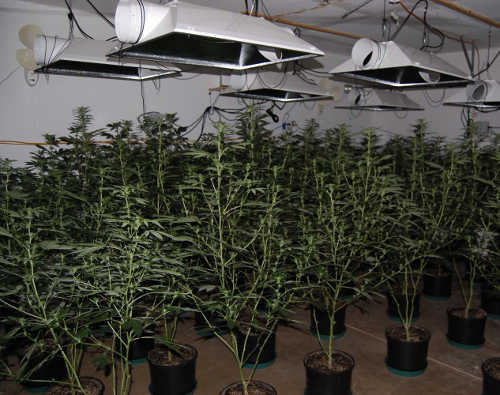
LAKE COUNTY, Calif. – The service of five search warrants has resulted in one arrest, the seizure of marijuana and several residences being red-tagged by Lake County Code Enforcement.
Lt. Steve Brooks said Juvenal Polvos Garcia, 24, was arrested in the case.
It was Garcia who led detectives on a foot chase near Riviera Elementary School, which resulted in the school being locked down briefly on Wednesday morning, as Lake County News has reported.
On Tuesday narcotics detectives secured a search warrant for a residence located in the 5000 block of Bel Air East Drive in Kelseyville, serving the warrant at 11:10 a.m. the following day, Brooks said.
Brooks said detectives knocked on the front door, announced their presence and the fact they had a search warrant no less than three times.
They noticed a Hispanic male adult, later identified as Garcia, walking toward the front door. When Garcia looked through the window and noticed law enforcement, he turned and ran towards the back of the house, Brooks said.
Narcotics detectives forced entry into the residence and pursued Garcia, who ran out the back door. They chased Garcia over a 6-foot fence as he ran toward the Riviera Elementary School. Brooks said Garcia was apprehended behind the school as he attempted to conceal himself in the brush.
During a search of Garcia’s residence, detectives located 51 flowering marijuana plants growing in the garage. The garage was set up with two air conditioners and eight 1,000-watt grow lights hanging from the ceiling. Brooks said the lights were set to turn on and off automatically every 12 hours.
In a bedroom located on the south side of the residence, detectives located 100 small marijuana plants which were determined to be clones. Brooks said these plants were being grown under eight grow lights and the room also had an air conditioner which was dedicated to the room.
During a search of the kitchen area, detectives located approximately two ounces of processed marijuana and a marijuana recommendation belonging to Garcia, Brooks said.
Garcia told detectives that he only smokes one marijuana cigarette per day. Brooks said Garcia explained that this was his second grow cycle he has conducted at the residence. He explained that after the first grow cycle he ended up with approximately 6 pounds of processed marijuana.
Brooks said detectives did not believe Garcia was being truthful, and determined that someone who consumes one marijuana cigarette a day could not possibly consume 6 pounds of marijuana in one year.
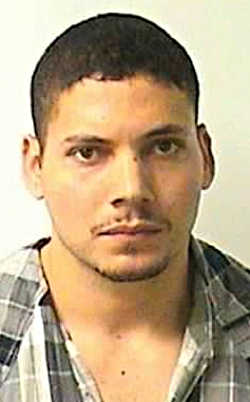
Garcia was arrested for cultivating marijuana, possession of marijuana for sale and resisting arrest. He was transported to the Lake County Hill Road Correctional Facility and booked, Brooks said.
Jail records indicated that Garcia remained in custody on Friday on a no-bail immigration hold.
Detectives conducted a search of Garcia’s wallet and located a piece of paper with an address written on it. The address was for a residence located in the 16000 block of 35th Avenue in Clearlake. Brooks said detectives also located $770 in Garcia’s wallet.
Detectives eradicated 151 marijuana plants from the residence and seized the processed marijuana located in the kitchen. Detectives also seized the $770 pending asset forfeiture proceedings. Brooks said Lake County Code Enforcement red-tagged the residence for illegal electrical wiring.
Narcotics detectives responded to the address located in the 16000 block of 35th Avenue in Clearlake. Brooks said the detectives contacted people parked in front of the house, who said they were there to see Garcia, who lives at the residence. Detectives also located items at the residence containing Garcia’s name.
Brooks said detectives secured a search warrant for the residence and served it at approximately 3:15 p.m. Wednesday.
The detectives entered the residence and were unable to locate anyone inside. During the search, detectives located utility bills for three separate residences located in the 4000 block of Foothill Drive and the 6000 block of Second Avenue, both in Lucerne, and a residence located in the 4000 block of Wilder Avenue in Clearlake. Brooks said detectives had also located a handwritten note in Garcia’s property, which had the same addresses listed.
On Wednesday, narcotics detectives secured a search warrant for the three addresses listed on the utility bills, which corresponded with addresses contained in Garcia’s handwritten note, according to Brooks.
At 6:45 p.m. Wednesday, detectives served the search warrant for the residence located in the 4000 block of Wilder Avenue in Clearlake. Brooks said detectives entered the residence and were unable to locate anyone inside.
During the search detectives located 50 small marijuana clones and 50 mature marijuana plants growing in separate rooms inside the residence. Brooks said the marijuana was growing under several lights which were controlled by automatic timers. All of the marijuana was eradicated from the residence.
On Thursday at approximately 9:20 a.m., narcotics detectives served the search warrant for the residence located in the 6000 block of Second Avenue in Lucerne, where Brooks said detectives were unable to locate anyone. The house appeared that it was only being used to grow marijuana, as it did not contain any furniture.
In one of the bedrooms detectives located 11 marijuana plants which were not flowering growing under lights controlled by timers that were set to be on for 19 hours a day. In another bedroom Brooks said detectives located 30 flowering marijuana plants which were also growing under lights timed to go on and off on 12-hour intervals.
In the garage, detectives locate an additional 30 marijuana plants which were just starting to flower. The timers in the garage were also set to go on and off in 12-hour intervals, Brooks said.
All of the marijuana was eradicated from the residence, Brooks said, with Lake County Code Enforcement also red-tagging the residence for illegal wiring.
On Thursday at 10:10 a.m. detectives served the search warrant for the residence located in the 4000 block of Foothill Drive in Lucerne. Detectives entered the residence and were unable to locate anyone, Brooks said.
During the search detectives located 46 flowering marijuana growing under lights controlled by timers set to go on and off in 12-hour intervals. They located evidence which indicated someone may be staying at the residence periodically to care for the plants, Brooks said.
Detectives located items at the residence belonging to Garcia, Brooks said, along with 8 eight ounces of processed marijuana in the same room as the plants. The marijuana plants were eradicated and the processed marijuana seized as evidence.
The Sheriff’s Narcotics Task Force can be reached through its anonymous tip line at 707-263-3663.
The number of flu deaths caused by influenza this winter season has shown another large increase.
Dr. Ron Chapman, director of the California Department of Public Health and state health officer, said Friday that the number of confirmed influenza related deaths in the state has increased by 52, to a total of 147 confirmed deaths for the season. Four of the 147 are pediatric deaths.
There are an additional 44 deaths under investigation that have not yet been confirmed, Chapman said.
Officials said no deaths so far have occurred in Lake County.
The 147 confirmed influenza-associated deaths this season have been reported by the following jurisdictions: Alameda (4), Contra Costa (5), El Dorado (1), Fresno (6), Glenn (1), Humboldt (1), Imperial (1), Kern (6), Kings (3), Lassen (1), Long Beach City (3), Los Angeles (17), Madera (2), Marin (2), Mendocino (1), Merced (3), Monterey (2), Nevada (1), Orange (5), Riverside (5), Sacramento (15), San Bernardino (13), San Diego (7), San Francisco (2), San Joaquin (4), San Mateo (4), Santa Barbara (1), Santa Clara (8), Santa Cruz (1), Shasta (1), Siskiyou (3), Solano (1), Sonoma (4), Stanislaus (11), Tulare (1), and Ventura (1).
The total number of deaths reported for the entire 2012-13 influenza season was 106, Chapman's office reported.
Those at highest risk – the elderly, pregnant women, infants, or those with other health conditions – who show flu symptoms should contact their physician immediately in order to get the most effective treatment, Chapman said.
He said symptoms include fever, cough, sore throat, runny or stuffy nose, muscle or body aches, headaches and fatigue.
“This influenza season continues to be a severe one as the increasing number of influenza-related deaths indicates,” said Dr. Chapman. “Once again I urge all Californians to get vaccinated, because it is the best defense against influenza.”
Influenza vaccine remains available and there is no widespread shortage of antivirals for treatment, officials reported.
Lake County Public Health, located at 922 Bevins Court in Lakeport, offers vaccinations for $2 from 9 to 11 a.m. Tuesdays, 11 a.m. to 1 p.m. Wednesdays and 2 p.m. to 4 p.m. Thursdays.
For information on local flu vaccinations, call Lake County Public Health at 800-794-9291 or 707-263-1090, or visit the agency online at http://health.co.lake.ca.us/ .
CDPH continues to closely monitor influenza activity statewide and related resources.
More information on influenza and other respiratory disease surveillance reports can be found on the CDPH Web site, www.cdph.ca.gov .
To protect Californians’ health and safety from more severe water shortages in the months ahead, the California Department of Water Resources on Friday took actions to conserve the state’s water resources.
As a result, everyone – farmers, fish, and people in cities and towns – will get less water, the agency said.
Except for a small amount of carryover water from 2013, customers of the State Water Project will get no deliveries in 2014 if current dry conditions persist and deliveries to agricultural districts with longstanding water rights in the Sacramento Valley may be cut 50 percent – the maximum permitted by contract – depending upon future snow survey results.
“Today’s action is a stark reminder that California’s drought is real,” said Gov. Jerry Brown. “We’re taking every possible step to prepare the state for the continuing dry conditions we face.”
The Department of Water Resources said its actions are in direct response to Brown's drought state of emergency, in which the governor directed the agency and the State Water Resources Control Board to act to modify requirements that hinder conservation of currently stored water and allow flexibility within the state’s water system to maintain operations and meet environmental needs.
“The harsh weather leaves us little choice,” said Department of Water Resources Director Mark Cowin. “If we are to have any hope of coping with continued dry weather and balancing multiple needs, we must act now to preserve what water remains in our reservoirs.”
The agency pointed out that almost all areas served by the State Water Project have other sources of water, such as groundwater, local reservoirs and other supplies.
Never before in the 54-year history of the State Water Project has the Department of Water Resources announced a zero allocation to all 29 public water agencies that buy from the State Water Project. These deliveries help supply water to 25 million Californians and roughly 750,000 acres of irrigated farmland.
Deliveries to senior water rights holders in the Sacramento Valley – all agricultural irrigation districts – were last cut in 1992.
The only previous State Water Project zero percent allocation was in 1991 for agriculture, but cities that year received 30 percent of requested allocations.
“Carryover” water stored by local agencies and water transferred from willing sellers to buyers in critically short areas still will be delivered, as will emergency supplies for drinking, sanitation and fire protection.
“It is our duty to give State Water Project customers a realistic understanding of how much water they will receive from the Project,” said Director Cowin. “Simply put, there’s not enough water in the system right now for customers to expect any water this season from the project.”
The Department of Water Resources also has asked the State Water Resources Control Board to adjust water permit terms that control State Water Project and federal Central Valley Project operations in order to preserve dwindling supplies in upstream reservoirs for farms, fisheries, and cities and towns as the drought continues.
While additional winter storms may provide a limited boost to reservoir storage and water deliveries, it would need to rain and snow heavily every other day from now until May to get the state back to average annual rain and snowfall. Even then, California still would be in a drought, because normally wet December and January have been critically dry – and follow a record dry 2013 and a dry 2012.
This historic announcement reflects the severity of California's drought. After two previous dry years, 2014 is shaping up as the driest in state history.
Storage in key reservoirs now is lower than at this time in 1977, one of the two previous driest water years on record. Thursday's Sierra snow survey found the snowpack’s statewide water content at only 12 percent of average for this time of year.
Regulatory actions sought
In a formal petition delivered earlier this week, the Department of Water Resources and the U.S. Bureau of Reclamation asked the State Water Resources Control Board to adjust requirements for freshwater outflow in the Sacramento-San Joaquin Delta in order to preserve stored water that may be needed later in the year for health and safety needs and to provide cold water upstream for protection of salmon and other species.
Water from Clear Lake flows into the Bay Delta through Cache Creek.
The state maintains that the existing Bay Delta water quality standards, contained in Water Rights Decision 1641, were not written with these extraordinarily dry conditions in mind.
The Department of Water Resources and the Bureau of Reclamation petition seeks adjustment to the water quality and flow requirements for February, along with a request to establish a framework to make further requests and adjustments as the drought evolves.
The petitioners note that they do not believe there is an adequate water supply to meet all obligations under the State Water Resources Control Board's Water Rights Decision 1641.
Without adjustment, “there exists a substantial risk that by late spring 2014 and into 2015 the Projects' major reservoirs will be drafted to dead pool or near dead pool levels at which point reservoir release capacities will be substantially diminished.” Dead pool level refers to the condition when water can no longer be released from a reservoir using gravity.
The petition seeks to minimize adverse impacts to the cold water stored in reservoirs for downstream fisheries and to allow for some level of salinity control later in the season. Otherwise, water project operators risk losing entirely the ability to control salinity in the Delta.
“As Gov. Brown has directed, we will work closely with our state, federal and local partners to meet health and safety needs and deliver what water is available to critically dry areas,” said Cowin. “Even though it’s dry everywhere, California agencies have traditionally been willing to transfer any water they can spare to more needy areas. Today is a stark reminder that we all have to save every drop we can in our homes and places of work. Conservation is always important, but today it’s an absolute necessity.”
In addition to the actions announced Friday, the Bureau of Reclamation on Thursday decided to preserve rescheduled water supplies that Central Valley Project farmers had banked as a hedge against dry conditions.
Cowin praised the decision, saying: “In an increasingly complex situation, affirming the ability of water districts to preserve water supplies as a hedge against drought is good water management.”
The federal Central Valley Project, which supplies much of the state’s agricultural water, is expected to announce its initial allocation next month. It also will be dismal, especially for irrigation-dependent farms on the west side of the San Joaquin Valley.
Water-short valley farmers are expected to fallow thousands of acres, sending negative economic ripples through communities dependent on the agricultural economy. Farmers also will pump increasing amounts of groundwater, further depleting overtapped aquifers.
Gov. Brown directed the Department of Water Resources to monitor groundwater levels, land subsidence and land fallowing as the drought persists.
”We need everyone in every part of the state to conserve water,” said Gov. Brown in his Jan. 22 State of the State address.
To learn easy, practical ways to save water, visit http://www.saveourh2o.org/ .

LAKEPORT, Calif. – One of three suspects alleged to have been involved with two homicides that occurred near Lakeport earlier this week has made her first appearance in court.
Dahnna Phyllis Burrows, 26, of Lakeport was arraigned on Thursday afternoon in Lake County Superior Court, according to Chief Deputy District Attorney Richard Hinchcliff.
The Lake County Sheriff's Office said it arrested Burrows, along with 41-year-old Conrad Joseph Velez of Lakeport and his son, 19-year-old Dakota Joseph Velez of Kelseyville, in connection to the murder on Monday of 54-year-old William Frank Busch of Lakeport and the Tuesday death of Edward Harry Morgan, 46, of Kelseyville.
Of the three, Burrows is the only one to be charged so far, said Hinchcliff, adding that not all of the reports have yet been submitted to his office.
He said he anticipated making another filing in the case on Friday.
Hinchcliff said Burrows has been charged with murder, robbery, carjacking, assault with a deadly weapon and being an accessory after the fact in the death of Morgan, who was thrown from an SUV, run over and said to have been assaulted with an unknown weapon on Robin Hill Drive Tuesday afternoon.
So far, Hinchcliff said no charges have been filed against any of the three suspects in the death of Busch, whose body was found in his burned home on Highland Springs Road late Monday night.
“There's still an ongoing investigation and I don't have any reports on it yet,” Hinchcliff said of Busch's homicide.
Burrows and Conrad Velez initially were picked up by Napa Police on an unrelated family disturbance on Tuesday, with the white Chevy Tahoe identified as the vehicle Morgan had been thrown from also located at that time. They were later transported to Lake County by sheriff's personnel, as Lake County News has reported.
Dakota Velez was taken into custody in Hopland on Wednesday afternoon after Mendocino County Sheriff's detectives learned he was hiding in a residence in the 4000 block of Feliz Creek Road, according to Mendocino County Sheriff's Capt. Greg Van Patten.
Van Patten said detectives, patrol deputies, and multiple K-9 units – including one K-9 team from the Willits Police Department – responded and surrounded the residence. They established communication with Dakota Velez, who surrendered to deputies shortly afterward.
Dakota Velez was booked into the Lake County Jail Wednesday night on charges of murder, first degree robbery, carjacking and assault with a deadly weapon. Jail records indicate he is being held on $1 million bail.
Conrad Velez is being held without bail for an assault with a deadly weapon charge, and Burrows' bail remains at $1 million, according to their booking sheets.
Hinchcliff said Conrad Velez has served a prison term for felony assault, while his son has no prior local convictions. Burrows' criminal record locally includes two misdemeanor cases – one for driving under the influence in 2010 and the second for petty theft in 2013.
As for the parts each of the three are alleged to have played in the deaths of Morgan and Busch, that is still being investigated, Hinchcliff said.
The sheriff's office hasn't yet given causes of death for the victims, with autopsies set to take place on Friday.
Law enforcement officials also have not yet suggested a motive for the killings or how the two victims were connected – if they were at all.
“It's going to take a while to figure it out,” Hinchcliff said.
Email Elizabeth Larson at
NORTHERN CALIFORNIA – Freshly fallen snow from late-arriving storms brightened the scenery but have not ended California’s drought, with the winter’s second snow survey on Thursday finding far too little water in the still-scant snowpack.
“This winter remains dry, making it very unlikely our record drought will be broken this year,” said California Department of Water Resources Director Mark Cowin. “Now more than ever, we all need to save every drop we can in our homes and places of work.”
Manual and electronic readings Thursday record the snowpack’s statewide water content at only 12 percent of average for this time of year.
That is a mere 7 percent of the average April 1 measurement when the snowpack normally is at its peak before melting into streams and reservoirs to provide about a third of the water used by California’s cities and farms.
Prior to Thursday, the lowest snowpack water content readings for this time of year were 21 percent of average for the date in 1991 and 1963, 22 percent in 1976, 25 percent in 1977 and 35 percent in 2012, the first year of the drought now pushing its way into a third consecutive year. These statewide records go back to 1960.
Thursday's electronic readings indicate that water content in the northern mountains is 6 percent of normal for the date and 4 percent of the April 1 average.
Electronic readings in the central Sierra show 15 percent of normal for the date and 9 percent of the April 1 average. The numbers for the southern Sierra are 14 percent of average for the date and 8 percent of the April 1 average.
The Department of Water Resources and cooperating agencies conduct manual surveys on or about the first of the month from January to May. The manual measurements supplement and check the accuracy of real-time electronic readings.
Not only is water content in the mountain snowpack – often referred to California’s largest reservoir – low, but so are the state’s major water supply reservoirs.
The reservoir storage from winter 2012 storms that got most of California through last year’s (calendar year 2013) record dry weather is depleted, with each day reducing the odds rain and spring snowpack runoff will replenish supplies before summer.
Lake Oroville in Butte County, the State Water Project’s (SWP) principal reservoir, is only at 36 percent of its 3.5 million acre-foot capacity (54 percent of its historical average for the date).
Shasta Lake north of Redding, California’s and the federal Central Valley Project’s (CVP) largest reservoir, is at 36 percent of its 4.5 million acre-foot capacity and 53 percent of its historical average for this time of year.
San Luis Reservoir, a critical south-of-Delta pool for both the SWP and CVP, is at a mere 31 percent of its 2 million acre-foot capacity (39 percent of normal for the date).
Not only was 2013 California’s driest calendar year on records going back to 1895, but this month may go into the records as the driest ever January.
State Climatologist Michael Anderson noted that statewide, only 1.53 inches of rain was recorded from October through December, also the lowest aggregate total in records going back to 1895. The aggregate average for the period is 7.87 inches.
California’s average aggregate rainfall for the entire Water Year (October 1-September 30) is 22.90 inches, meaning the state needs more than 21 inches added to the October-December total just to get back to normal.
“We are in record dry territory and this needs to be stressed,” said Anderson.
With California facing its driest year on record, Gov. Brown declared a drought state of emergency earlier this month and directed state officials to take all necessary actions to prepare for water shortages.
Gov. Brown has called on all Californians to voluntarily reduce their water usage by 20 percent and last week, the Save Our Water campaign announced four new public service announcements that encourage residents to conserve.
Last December, the governor formed a Drought Task Force to review expected water allocations and California’s preparedness for water scarcity.
In May 2013, Gov. Brown issued an executive order to direct state water officials to expedite the review and processing of voluntary transfers of water and water rights.