 How to resolve AdBlock issue?
News
Last month (April 8-11), scientists, government officials, emergency planners and others converged on Boulder, Colorado, for NOAA's Space Weather Workshop – an annual gathering to discuss the perils and probabilities of solar storms.
The current solar cycle is weaker than usual, so you might expect a correspondingly low-key meeting. On the contrary, the halls and meeting rooms were abuzz with excitement about an intense solar storm that narrowly missed Earth.
“If it had hit, we would still be picking up the pieces,” says Daniel Baker of the University of Colorado, who presented a talk entitled The Major Solar Eruptive Event in July 2012: Defining Extreme Space Weather Scenarios.
The close shave happened almost two years ago.
On July 23, 2012, a plasma cloud or “CME” rocketed away from the sun as fast as 3000 km/s, more than four times faster than a typical eruption.
The storm tore through Earth orbit, but fortunately Earth wasn't there. Instead it hit the STEREO-A spacecraft.
Researchers have been analyzing the data ever since, and they have concluded that the storm was one of the strongest in recorded history.
“It might have been stronger than the Carrington Event itself,” said Baker.
The Carrington Event of Sept. 1859 was a series of powerful CMEs that hit Earth head-on, sparking Northern Lights as far south as Tahiti. Intense geomagnetic storms caused global telegraph lines to spark, setting fire to some telegraph offices and disabling the “Victorian Internet.”
A similar storm today could have a catastrophic effect on modern power grids and telecommunication networks.
According to a study by the National Academy of Sciences, the total economic impact could exceed $2 trillion or 20 times greater than the costs of a Hurricane Katrina. Multi-ton transformers fried by such a storm could take years to repair and impact national security.
A recent paper in Nature Communications authored by UC Berkeley space physicist Janet G. Luhmann and former postdoc Ying D. Liu describes what gave the July 2012 storm Carrington-like potency.
For one thing, the CME was actually two CMEs separated by only 10 to 15 minutes. This double storm cloud traveled through a region of space that had been cleared out by another CME only four days earlier. As a result, the CMEs were not decelerated as much as usual by their transit through the interplanetary medium.
Had the eruption occurred just one week earlier, the blast site would have been facing Earth, rather than off to the side, so it was a relatively narrow escape.
When the Carrington Event enveloped Earth in the 19th century, technologies of the day were hardly sensitive to electromagnetic disturbances. Modern society, on the other hand, is deeply dependent on sun-sensitive technologies such as GPS, satellite communications and the Internet.
“The effect of such a storm on our modern technologies would be tremendous,” said Luhmann.
During informal discussions at the workshop, Nat Gopalswamy of the Goddard Space Flight Center noted that “without NASA's STEREO probes, we might never have known the severity of the 2012 superstorm. This shows the value of having 'space weather buoys' located all around the sun.”
It also highlights the potency of the sun even during so-called “quiet times.” Many observers have noted that the current solar cycle is weak, perhaps the weakest in 100 years. Clearly, even a weak solar cycle can produce a very strong storm.
Says Baker, “We need to be prepared.”
Dr. Tony Phillips works for the National Aeronautics and Space Administration.

LAKE COUNTY, Calif. – A vehicle stop conducted Thursday night has resulted in one arrest and the seizure of nearly 8 ounces of methamphetamine.
Jose Eugenio Cabrera, 23, of West Sacramento was arrested following the stop, according to Lt. Steve Brooks.
On Thursday at 11:15 p.m. a patrol deputy noticed a vehicle traveling westbound on Highway 20 in Nice, which had a defective brake light. Brooks said the deputy conducted an enforcement stop of the vehicle, which pulled into the parking lot of the Robinson Casino.
The deputy contacted the driver, who was identified as 25-year-old Tory Patrick Hogan of Nice. While talking to Hogan, the deputy smelled the odor of marijuana emitting from inside the vehicle, Brooks said.
Brooks said the deputy contacted the front passenger, who was identified as Cabrera, and a rear passenger, who was identified as 19-year-old Gregory Lee Symon, both of West Sacramento. The deputy had all three subjects exit the vehicle and step back to his patrol car.
The deputy explained that he could smell marijuana and asked if he would find any illegal drugs inside the vehicle. Cabrera said the only thing inside the vehicle was a small amount of marijuana. The deputy obtained consent to search all three subjects and did not find any weapons or contraband, Brooks said.
Brooks said Cabrera said the vehicle belonged to him and provided the deputy with consent to search the vehicle.
A K-9 unit arrived on scene to assist with the enforcement stop. Brooks said the K-9 deputy deployed his partner to conduct a sniff of the vehicle. The canine provided a positive alert to the area under the front passenger seat, indicating that the odor of a controlled substance was present.
Deputies searched the vehicle and noticed a lock box under the front passenger seat, which was locked. When the deputy searched all three subjects, he remembered that Cabrera was wearing a lanyard around his neck containing keys, Brooks said. He removed the keys from Cabrera and used them to open the box under the seat.
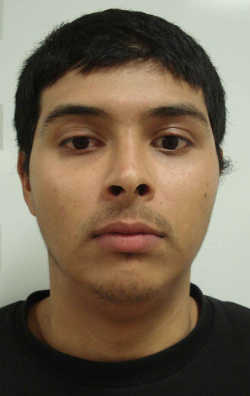
Inside the box, the deputy located two plastic bags containing a large amount of a white crystalline substance which was determined to be methamphetamine, Brooks said. Also inside the box was a glass methamphetamine pipe. A small amount of marijuana was also located inside the vehicle.
Cabrera was arrested for possession of a controlled substance, possession of a controlled substance for sale, transportation of a controlled substance, being under the influence of a controlled substance and possession of controlled substance paraphernalia, according to Brooks.
Brooks said Cabrera was transported to the Lake County Hill Road Correctional Facility and booked. Jail records indicated he remained in custody on Friday, with bail set at $35,000.
Hogan and Symon were released at the scene, Brooks said.
The methamphetamine was later weighed and determined to have a combined gross weight of 7.75 ounces. If sold at the street level, the methamphetamine would be worth approximately $22,000.
The Sheriff’s Narcotics Task Force can be reached through its anonymous tip line at 707-263-3663.

CLEARLAKE, Calif. – On Feb. 21 of this year, 6-year-old Ellie Swanson, a rare little girl, was diagnosed with a rare form of cancer.
Its clinical name is ganglioneuroblastoma, and it develops from nerve cells.
Ellie is among the five children out of one million children each year that experts say are stricken with the condition.
On Saturday, May 3, the city of Clearlake where the Swanson family lives and people from throughout Lake County will have an opportunity to come to her aid in a fundraising dinner at the Clearlake Senior Community Center at 3245 Bowers Ave.
Funds from the dinner, which will include a silent and live auction will help pay the costs of four rounds of chemotherapy for Ellie.
The dinner begins at 5:30 p.m. Doors open a half-hour earlier. Costs are $20 for adults and $10 for children under 12 years old.
Melissa Swanson, Ellie’s mother, said she was told by doctors that her daughter’s condition is usually diagnosed in newborn to 2-year-old infants.
“Her doctor told me Ellie probably contracted it right after she was born and has been there all along,” said Melissa, who is the clerk for the city of Clearlake.
Ellie’s cancerous tumor was discovered in her left lung during an examination for what was thought to be a severe cold and possibly pneumonia.
The tumor was is 10 millimeters, or about the size of two adult male fists.
Since the diagnosis, Ellie’s parents, Thomas and Melissa, have needed to ensure that she doesn’t exert herself, because she quickly runs out of breath as a result of the tumor.
Otherwise, said Melissa, “Ellie is a little ball of sunshine, wonderment and energy,” who loves to play with her 18-year-old brother Christopher, who is a freshman at the University of Hawaii.
Tommy, a second brother, is a 13-year freshman at Lower Lake High School.
“Ellie is very smart,” Melissa added. “She is a first-grader who reads at a fourth-grade level. Her teacher is amazed at how quickly she learns and takes on projects that are higher than her grade level.”
The Swanson family lives in the Pomo Elementary School District, but at present Ellie is being taught at home.
The cost for treating Ellie, Melissa says, is in the seven-figure range.
“If we didn’t have insurance,” she added, “we would be in debt for hundreds of thousands of dollars.”
Anyone who would like to contribute to the Swanson Family Benefit Fund in behalf of Ellie or learn more about her may obtain additional information by logging on to http://www.gofundme.com/Team-Ellie .
Email John Lindblom at
On Thursday, the final snow survey of the year found more bare ground than snow as California faces another long, hot summer after a near-record dry winter.
The manual and electronic readings recorded the statewide snowpack’s water content – which normally provides about a third of the water for California’s farms and cities – at a mere 18 percent of average for the date.
Just as telling was the April 1 survey that found water content at only 32 percent of average at the time of year it normally is at its peak before it begins to melt into streams and reservoirs with warming weather.
“Anyone who doesn’t think conservation is important should drive up the hill and take a look,” said DWR Director Mark Cowin. “Coupled with half our normal rainfall and low reservoir storage, our practically nonexistent snowpack reinforces the message that we need to save every drop we can just to meet basic needs.”
Most dramatically, Thursday's electronic readings show a dismal 7 percent of average water content in the northern Sierra snowpack that helps fill the state’s major reservoirs which currently are only half full.
Electronic water content readings for the central and southern Sierra are 24 and 18 percent of normal, respectively.
Snow surveyors from DWR and cooperating agencies manually measure snowpack water content on or about the first of the month from January through May to supplement and check the accuracy of real-time electronic readings from remote sensors up and down the mountain ranges.
California’s reservoirs obviously will not be significantly replenished by a melting snowpack this spring and summer.
Lake Oroville in Butte County, the State Water Project’s (SWP) principal reservoir, today is at only 53 percent of its 3.5 million acre-foot capacity (65 percent of its historical average for the date).
Shasta Lake north of Redding, California’s and the federal Central Valley Project’s (CVP) largest reservoir, also is at 53 percent of its 4.5 million acre-foot capacity (61 percent of its historical average).
San Luis Reservoir, a critical south-of-Delta reservoir for both the SWP and CVP, is at 47 percent of its 2 million acre-foot capacity (52 percent of average for this time of year).
With most of the wet season already past, it is highly unlikely late-season storms will significantly dampen the effects of the three-year drought on parched farms or communities struggling to provide drinking water.
On Jan. 31, with no relief from the three-year drought in sight, DWR set its allocation of State Water Project (SWP) water at zero.
The only previous zero allocation was for agriculture in the drought year of 1991, but cities and others that year received 30 percent of requested amounts.
After late season storms, DWR on April 18 increased this year’s allocation to 5 percent of requested SWP amounts. If it stands, this will be the lowest across-the-board allocation in the 54-year history of the SWP.
Collectively, the 29 public agencies that deliver SWP water to more than 25 million Californians and nearly a million acres of irrigated agriculture requested 4,172,536 acre-feet of water this calendar year.
The final SWP allocation for calendar year 2013 was 35 percent of the 4.1 million acre-feet requested. In 2012, the final allocation was 65 percent of the requested 4.1 million acre-feet. It was 80 percent in 2011, up dramatically from an initial allocation of 25 percent. The final allocation was 50 percent in 2010, 40 percent in 2009, 35 percent in 2008, and 60 percent in 2007.
The last 100 percent allocation – difficult to achieve even in wet years because of Delta pumping restrictions to protect threatened and endangered fish – was in 2006.
The Department of Water Resources on Wednesday released a report on groundwater showing that throughout California groundwater resources are at historically low levels.
Directed by Gov. Edmund G Brown Jr.’s emergency drought declaration in January, the report details basins with potential water shortages and gaps in groundwater monitoring.
This report will form the basis for future actions to address current gaps in monitoring and oversight of groundwater resources.
“Millions of Californians rely on groundwater every day,” said DWR Director Mark Cowin. “Being good stewards of our groundwater basins is essential for ensuring that we can turn to them during dry years when these resources are critically needed.”
Since spring 2008, groundwater levels have experienced record historical lows in most areas of the state and especially in the northern portion of the San Francisco Bay Hydrologic region, the southern San Joaquin Valley, and also the South Lahontan and South Coast hydrologic regions.
In many areas of the San Joaquin Valley, recent groundwater levels are more than 100 feet below previous historical lows.
Thirty-six alluvial groundwater basins throughout the state have a high degree of groundwater use and reliance may possess greater potential to incur water shortages as a result of drought.
The basins exist in the North Coast, Central Coast, Sacramento River, Tulare Lake and South Coast hydrologic regions.
Key findings of the report include:
- Groundwater levels have decreased in nearly all areas of the state since spring 2013, and more notably since spring 2010.
- The greatest concentration of recently deepened wells is in the fractured bedrock foothill areas of Nevada, Placer and El Dorado counties.
- The Kaweah and Kings sub basins have the greatest numbers of deepened wells in an alluvial groundwater basin.
- Of California’s 515 alluvial groundwater basins, 169 are fully or partially monitored under the California Statewide Groundwater Elevation Monitoring (CASGEM) program as of April 15, 2014.
- Forty of 126 High and Medium priority basins are not monitored under CASGEM as of April 15, 2014. There are significant CASGEM groundwater monitoring data gaps in the Sacramento, San Joaquin River, Tulare Lake, Central Coast, and South Lahontan hydrologic regions.
- Several areas of the state lack a current groundwater management plan that addresses all related requirements of the California Water Code.
The report is available at www.water.ca.gov/waterconditions , and as directed by Gov. Brown’s April 25th Executive Order, DWR will update this report later this year.
The report is a compilation of information available from existing sources, such as DWR’s draft California Water Plan Update 2013, and from existing groundwater monitoring programs.
Presented together, these data provide a compelling picture of the status of California groundwater and groundwater monitoring conditions.
In an average water year, groundwater supports about 40 percent of the state’s urban and agricultural water uses. Reliance on groundwater increases dramatically when drought causes shortages in surface water supplies.
Present dry conditions have exacerbated long-standing management issues in basins having a high reliance on groundwater, highlighting the need for long-term sustainable management of California’s groundwater.
The California Water Action Plan developed by the Natural Resources Agency, California Environmental Protection Agency and Department of Food and Agriculture identifies improving groundwater management as a key priority.
The plan expresses the governor’s commitment to work with the Legislature and ensure that local agencies have the tools and authority needed for sustainable management of groundwater resources.
The Governor’s 2014-15 budget proposed $618.7 million for funding various actions in the plan, including support for improved groundwater management.
Much of that funding as well as additional funding for drought response and groundwater assistance was accelerated as part of the emergency drought legislation signed by the governor in March.
“We must work together to control groundwater overdraft to avoid impacts such as land subsidence, seawater intrusion, and migration of poor quality water,” said Director Cowin.
As directed by the January drought emergency declaration, DWR is working to update monitoring of land subsidence in the Central Valley.
DWR has also been working with county agencies to ensure that water well drillers submit required well logs for newly constructed and deepened wells in a timely manner to facilitate tracking of areas that are experiencing drought-related groundwater problems.
Additional groundwater information is available at the DWR Groundwater Information Center at http://www.water.ca.gov/groundwater/ .
To learn more about the state’s efforts to improve groundwater management, visit www.Groundwater.CA.Gov .
LAKE COUNTY, Calif. – For the second year in a row, Lake County's has earned the distinction of having the cleanest air in the United States.
The news comes in the American Lung Association's latest State of the Air 2014 Report, released annually.
The report grades state and local area air quality on an A through F scale by comparing local ozone and small-particulate concentrations with the federal air quality standards.
Although many areas, especially within California, were given failing grades, Lake County passed with flying colors.
Lake County received an “B” grade for ozone, an “A” grade for short term particulate pollution, and is ranked the Cleanest County in the Nation for annual particulate average concentrations for the second consecutive year.
Out of California’s 58 counties, Lake County is one of only 12 counties in California that did not have any days of particulate matter exceeds from 2010 through 2012, according to the report.
This impressive record has been documented by continuous air quality monitoring, which showed that fine particulate in the air never exceeded allowable levels during that time, according to Air Pollution Control Officer Douglas Gearhart of the Lake County Air Quality Management District.
The report presents data showing what the residents of Lake County actually are breathing on a daily basis.
It does not exclude wildfire impacts or other natural events that may be excluded when determining Lake County's attainment status. This shows that despite the Wye, Walker, and Scotts fires, the residents of Lake County overall still enjoy the cleanest air in the nation.
The American Lung Association grades are the latest recognition of a long history of air quality accomplishments in Lake County, Gearhart said.
Strong local support for clean air measures has enabled the county to comply in full with not only the federal clean air standards, but also with the more rigorous California standards for ozone and other air pollutants for the past 24 consecutive years, Gearhart said.
No other air district in California can match that record, Gearhart added.
Gearhart attributes the success of the program to strong community support, cooperation of local agencies, fire protection districts, Cal Fire, the agricultural community, industry, the district board of directors and to the Lake County Air Quality Management District staff.
“It is great to have our local community efforts nationally recognized,” he said. “To be ranked number one for two consecutive years is a testament the the community in which we live. ”