How to resolve AdBlock issue?
News
LAKEPORT, Calif. – The Northshore Dive Team has begun a search in Lakeport for a man who went missing at a city dock Saturday afternoon.
The dive team was dispatched to the Lakeport Yacht Club, located at 15 Fifth St., shortly before 3:30 p.m., according to radio traffic.
Lakeport Fire Chief Doug Hutchison said the person who is the focus of the search is a man who was loading up his boat.
Witnesses reported that the man went to retrieve something and then disappeared, Hutchison said.
The search was under way shortly before 4 p.m., Hutchison said.
The Fifth Street boat ramp is closed while the search takes place.
Additional information will be posted as it becomes available.
Email Elizabeth Larson at
LAKE COUNTY, Calif. – A Willits man has been charged with vehicular manslaughter for the crash that killed a young husband and father of three last December.
The District Attorney's Office filed charges against Wayne Leroy Caldwell in the case on June 13, according to Chief Deputy District Attorney Richard Hinchcliff.
Caldwell is charged with two misdemeanors – vehicular manslaughter and driving on a suspended license – for the crash on Dec. 7, 2013, that killed 26-year-old Brandon Helmer of Kelseyville.
The California Highway Patrol said that Caldwell, driving a 1994 Dodge Ram pickup northbound on Highway 29 south of Cruickshank Road outside of Kelseyville, crossed the double-yellow lines and drifted into the path of Helmer's 1992 Acura Integra, hitting it head-on.
Helmer died at the scene, while Caldwell suffered minor injuries, according to the original report.
The Clear Lake Area office of the CHP confirmed to Lake County News this week that Caldwell was driving on a suspended license at the time of the crash.
Two tests of Caldwell's blood showed he was not impaired by alcohol or any substances, the CHP said.
Hinchcliff said Caldwell has not yet made a court appearance in the case, and no arraignment has yet been scheduled.
Helmer left behind wife Kate, three young daughters and a baby to be born this summer.
A Go Fund Me page for the Helmer family, http://www.gofundme.com/HelmerFamily , was started in December and remains active. It has raised more than $45,000 to help the young family make ends meet.
Email Elizabeth Larson at
California saw a slight decrease in vehicle theft in 2013, the California Highway Patrol reported this week, with that trend also holding true locally.
The CHP said the 2-percent decline is a positive sign for the state, following an 11 percent surge in vehicle theft in 2012.
According to statistics compiled by the CHP, more than 171,000 vehicles were stolen statewide in 2013, which is an estimated value of $1 billion.
“A combination of advances in technology, aggressive police work by all law enforcement agencies involved in joint auto theft task forces, and preventative measures by the public are making it more difficult for thieves to steal a vehicle,” said CHP Commissioner Joe Farrow.
Among the vehicles stolen last year in California, 58.9 percent were automobiles, 25.8 percent were personal trucks and vans, 4.5 percent were commercial trucks and trailers, and 4.4 percent were motorcycles.
All other vehicles – recreational, construction and farm equipment, and special construction – accounted for 6.4 percent of vehicles stolen.
The CHP statistics showed that Lake County had a 1.8-percent decrease in thefts in 2013. That year, thefts totaled 168, down slightly from the 171 thefts reported in 2012.
Recoveries of stolen vehicles in Lake County went down in 2013. Last year, 125 stolen vehicles were recovered, as opposed to 144 the previous year.
The CHP reported that Southern California continues to be a hotbed for car thieves, with nearly half of all vehicle thefts occurring in Los Angeles, Orange, Riverside, San Bernardino and San Diego counties. In fact, Los Angeles County accounted for nearly one quarter of all vehicle thefts.
Car thieves in Northern California, specifically the San Francisco Bay Area, accounted for 18.9 percent of all thefts, the CHP said.
The Honda Accord continues to be the car that thieves most love to steal, ranking as the No. 1 stolen vehicle statewide, according to the CHP statistics. Toyota pickup trucks are also popular with thieves and have consistently, since 1984, been the most frequently stolen pickup truck.
“Vehicle theft is a crime of opportunity,” added Commissioner Farrow. “The last thing anyone should do is make it easier for or enable criminals. The public can take a few extra precautions with their vehicles and decrease the odds of becoming a victim.”
These simple deterrents can be used to prevent vehicle thefts:
- Park in a secure or highly visible location.
- Lock vehicle doors.
- Use an alarm system.
- Do not leave a car running unattended.
California Gov. Edmund G. Brown Jr. on Friday signed a balanced, on-time state budget that pays down debt, shores up the teachers’ retirement system, builds a solid Rainy Day Fund and directs additional funding for local schools and health care.
“This on-time budget provides for today and saves for the future,” said Brown. “We’re paying off the state’s credit card, saving for the next rainy day and fixing the broken teachers’ retirement system.”
The budget includes a plan of shared responsibility among the state, school districts and teachers to shore up the State Teachers’ Retirement System (STRS).
The first year’s contributions from all three entities total approximately $276 million, growing in subsequent years to more than $5 billion annually. This is projected to eliminate the unfunded liability in the system by 2046.
The budget also directs $1.6 billion into the state Rainy Day Fund – the first deposit into the fund since 2007.
The fund is expected to grow to $4.6 billion by 2017-18, if voters approve of the measure on the November ballot that was proposed by the Governor and passed by the Legislature.
When Brown took office, the state faced a massive $26.6 billion budget deficit and estimated annual shortfalls of roughly $20 billion. These deficits, built up over a decade, have now been eliminated by a combination of budget cuts, temporary taxes approved by voters and the recovering economy.
Significant details of the 2014-15 budget:
Paying down debts and liabilities
The budget reduces the Wall of Debt by more than $10 billion by paying down $5 billion in deferred payments to schools, paying off the Economic Recovery Bonds one year ahead of schedule, repaying various special fund loans and reimbursing $100 million in mandate claims that have been owed to local governments since at least 2004. Under the budget plan, the Wall of Debt would be completely eliminated by 2017-18.
Investing in education and health care
The budget continues the state’s reinvestment in local schools, providing more than $10 billion this year alone in new Proposition 98 funding. This includes $4.7 billion for the second year of implementation for the Local Control Funding Formula, which directs new education revenues to districts serving English language learners, students from low-income families and foster youth.
The budget also expands the number of low-income preschool students served, increases the rates paid to preschool providers and provides grants to improve the quality of these programs.
In health care, last year the state adopted the optional expansion of Medi-Cal under the Affordable Care Act, providing millions of Californians with affordable health coverage.
Enrollment is now expected to rise from 7.9 million in 2012-13 to 11.5 million in 2014-15, for a total cost increase of $2.4 billion.
Addressing climate change
The budget includes $872 million of Cap-and-Trade auction proceeds – authorized by AB 32 – for greenhouse gas reduction, with an emphasis on assisting disadvantaged communities.
The plan will modernize the state’s rail system, including high-speed rail and public transit, and encourage local communities to develop in a sustainable manner.
It also will increase energy, water and agricultural efficiency, restore forests in both urban and rural settings and create incentives for improved recycling.
The budget permanently allocates 60 percent of future auction proceeds to sustainable communities, public transit and high-speed rail. The remaining proceeds will be allocated in future budgets.
Additional details on the 2014-15 budget, including line-item vetoes, can be found at www.ebudget.ca.gov .
The first two human infections with West Nile virus in California this season have been reported by Contra Costa and San Joaquin counties, announced Dr. Ron Chapman, director of the California Department of Public Health and state health officer.
The patient from Contra Costa County has since recovered and been released from the hospital, and the patient from San Joaquin County has tested positive for the virus but is not showing symptoms at this time.
“These reported West Nile virus cases remind us that taking a few minutes to protect ourselves and our families from mosquito bites can make a big difference,” said Chapman. “West Nile virus activity is greatest during the summer.”
West Nile virus is transmitted to humans and animals by the bite of an infected mosquito. The risk of serious illness to most people is low. However, some individuals – less than 1 percent – can develop a serious neurologic illness such as encephalitis or meningitis.
People 50 years of age and older have a higher chance of getting sick and are more likely to develop complications. Recent data also indicate that those with diabetes and/or hypertension are at greatest risk for serious illness.
To date in 2014, West Nile virus has been detected in mosquitoes and birds in 19 California counties.
So far this season, Lake County has had three cases of dead birds and two mosquito samples that tested positive for West Nile, according to the state.
CDPH recommends that individuals prevent exposure to mosquito bites and West Nile virus by practicing the “Three Ds”:
- DEET – Apply insect repellent containing DEET, picaradin, oil of lemon eucalyptus or IR3535 according to label instructions. Repellents keep the mosquitoes from biting you. DEET can be used safely on infants and children 2 months of age and older.
- DAWN AND DUSK – Mosquitoes bite in the early morning and evening so it is important to wear proper clothing and repellent if outside during these times. Make sure that your doors and windows have tight-fitting screens to keep out mosquitoes. Repair or replace screens with tears or holes.
- DRAIN – Mosquitoes lay their eggs on standing water. Eliminate or drain all sources of standing water on your property, including buckets, old car tires, rain gutters, birdbaths, and pet bowls. If you know of a swimming pool that is not being properly maintained, please contact your local mosquito and vector control agency.
California’s West Nile virus Web site, http://www.westnile.ca.gov/ , includes the latest information on West Nile virus activity in the state.
Californians are encouraged to report all dead birds on the Web site or by calling toll-free 1-877-WNV-BIRD (968-2473).
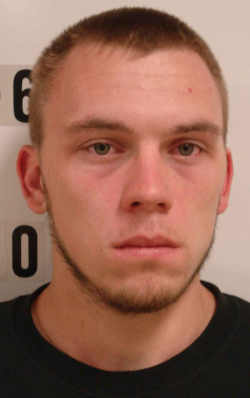
LAKE COUNTY, Calif. – A Colorado man was arrested Monday night for having four out of state arrest warrants and being in possession of a stolen travel trailer.
John David Heston, 20, of Longmont, Colo., was taken into custody in the case, according to Lt. Steve Brooks of the Lake County Sheriff's Office.
On Monday a patrol deputy received information that Heston was living in Kelseyville and had four out of state arrest warrants, Brooks reported.
Brooks said the deputy contacted the Boulder County Sheriff’s Office in Colorado and confirmed they had four arrest warrants for Heston. They also confirmed that they would extradite Heston if he was located.
The Boulder County Sheriff’s Office provided the deputy with their most recent booking photograph of Heston to assist with identifying him, Brooks said.
Shortly before 8:30 p.m. Monday, deputies located Heston in Kelseyville, riding as a passenger inside a vehicle. Brooks said the vehicle pulled up to the fuel pumps at Mount Konocti Gas and as Heston was exiting the vehicle, he was detained by the deputies.
Heston attempted to identify himself multiple times as John Mcninch, Brooks said. The deputies showed Heston the booking photograph provided by the Boulder County Sheriff’s Office and he continued to identify himself as Mcninch.
The deputies noticed that Heston had a California license plate in his possession. Central Dispatch conducted a records check of the license plate and advised it was from a Coleman RV trailer which was reported stolen, Brooks reported.
A witness told the deputies that Heston was currently living in a new trailer which was parked at an address on Clark Drive in Kelseyville. Brooks said the witness also reported that Heston was looking for someone to help him tow his trailer to another location.
Deputies responded to an address located in the 4000 block of Clark Drive in Kelseyville and located the stolen trailer Heston was living in, Brooks said.
Brooks said Heston was arrested for possession of a stolen vehicle, providing false identification to a peace officer and the four out-of-state arrest warrants.
During the booking process Heston continued to identify himself as Mcninch, Brooks said.
Correctional officers obtained Heston’s fingerprints and sent them electronically to a law enforcement data base. A short time later the results came back, confirming Heston’s identity. Brooks said Heston admitted he lied about his identity because he is facing 15 to 25 years in prison when he is transported back to Colorado.