 How to resolve AdBlock issue?
News
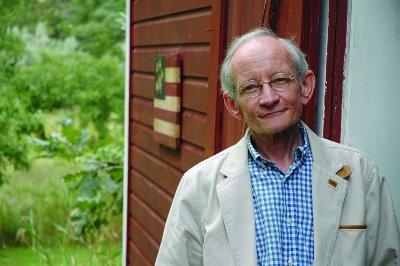
Someone told about a blind man who stood at a busy intersection, waving toward all the passing cars. When asked why he did that, he said that there might be someone in one of those cars whom he knew and he didn't want to miss the opportunity.
Peter Everwine, a California poet, here gives us another such waver, from his book Listening Long and Late, from the University of Pittsburgh Press.
The Girl on the Bullard Overpass
The girl on the Bullard overpass
looks happy to be there, getting soaked
in a light rain but waving her hands
to the four o'clock freeway traffic
in which I'm anything but happy.
You might think she's too dumb
to come in out of the rain, but rain
or shine, it doesn't seem to matter.
She's there most every afternoon,
as if she does this for a living.
Some living, I'd say. Doesn't she ever
get bored, or wish someone would stop
and say, "Where to?" and her life would change?
That's how I'd be, hating the noise,
the stink of exhaust, the press of people.
I can't imagine what her life is;
mine is confused and often fretful.
But there's something brave about standing alone
in the rain, waving wild semaphores
of gladness to impatient passersby
too tired or preoccupied to care.
Seeing her at her familiar station
I suddenly grin like a fool, wave back,
and forgive the driver to my right,
who is sullen and staring as I pass.
I find her in my rear-view mirror,
then head for a needed drink and supper.
I don't know where she goes, but I hope
it's to a place she loves. I hope the rain
lets up. I hope she's there tomorrow.
American Life in Poetry is made possible by The Poetry Foundation ( www.poetryfoundation.org ), publisher of Poetry magazine. It is also supported by the Department of English at the University of Nebraska-Lincoln. They do not accept unsolicited submissions. Poem copyright ©2004 by Peter Everwine, “The Girl on the Bullard Overpass,” from Listening Long and Late (University of Pittsburgh Press, 2013). Poem reprinted by permission of Peter Everwine and the publisher. Introduction copyright © 2016 by The Poetry Foundation. The introduction's author, Ted Kooser, served as United States Poet Laureate Consultant in Poetry to the Library of Congress from 2004-2006.
As a proud member of the LBGTQ family I wish to send a heartfelt thanks to the citizens of Lake County who attended the vigil for the victims and their families regarding the Pulse massacre in Orlando.
I am 73 years old and am still waiting for the world to become as one.
When will hate take a back seat to love? When will the hate mongers realize they are misguided and are setting a bad example for our children? Children raised to hate will hate, that is a given. But what is there about the LBGTQ family that fosters hate so ugly innocent people had to die?
I say to the religious right, if your God is a just God, if Jesus welcomed anyone into his flock then why are you so afraid of us and why do you push hate not love?
Orlando is now another scar on America. And still we can't seem to silence the guns.
Here is an interesting statistic, if for one day all of the LBGTQ community in all of the helping professions stayed home from work, this county would not be able to function.
Teachers, doctors, nurses, social workers, counselors, mental health workers – just to mention a few professions – are made up of not just straight people.
You know the olive branch is not that hard to extend, just try it sometime, you may be surprised to find out despite differences in sexual preferences, we are all human beings. Why is my loving someone diminished by ignorance?
I am proud to say I am a member of the Lake County community, let's move forward in love and bury hate 100 feet under.
Sue Williams lives in Kelseyville, Calif.
LAKEPORT, Calif – The Lake County First 5 Lake Commission will meet on Wednesday, June 29.
The meeting will begin with a closed session at 9 a.m. at the county Department of Health.
From 9 a.m. to 1 p.m. the commission will hold two interviews for the First 5 executive director position, with the public portion of the meeting beginning at 2:30 p.m. at Legacy Court, 1950 Parallel Drive in Lakeport.
Agenda items include a discussion and update on succession planning for the executive director position, review and approval of the 2016-17 First 5 Budget, consideration of a proposal to fund four baby changing tables at the Lake County Fairgrounds in an amount not to exceed $1,000, a program presentation on the DHS Home Visitation Program and a program presentation on AmeriCorps.
There also will be reports from the executive director and commissioners, and public comment and announcements.
Commissioners include Jim Brown, Laurie Daly, Brock Falkenberg, Kathy Maes, Susan Jen, Pam Klier, Ana Santana and Jeff Smith.
For more information call the Lake County First 5 Lake Commission at 707-263-6169 or visit www.firstfivelake.org .
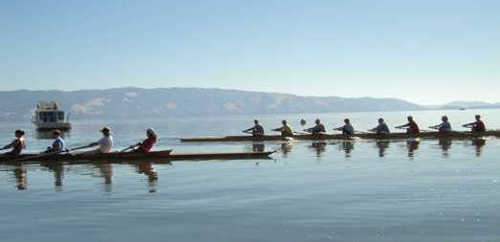
LAKEPORT, Calif. – The Clear Lake Scullers rowing club is hosting its annual summer youth and adult rowing camps in July.
The camps will take place at the Clear Lake Scullers boatyard by the lake at Main and Seventh streets, at the old Natural High School property, in Lakeport.
The youth and high school camp will take place from 8 a.m. to noon Tuesday, July 5, through Friday, July 8, and will include instruction in paddling, rowing and water safety.
The adult camp will take place from 5:30 to 7 p.m. Tuesday, July 5, through Friday, July 8.
Rowing, as done in the Olympics, could be considered the ultimate team sport and Clear Lake is a great venue for it.
Coach Mike Sullivan will be teaching the basics necessary to be part of an eight-person team boat.
He will start with how to get in and out of the boat, understanding the commands, stopping and turning the boat, and after the basics are mastered, rowing with power – power that comes from your legs, back and arms in one smooth motion.
People at any level of fitness can participate in this sport and work out at their comfort level, so don’t be shy about not being in the shape you might like to be in, as current club members report that some of them aren't, either.
“My favorite moment happens when the oars dip into the water and the boat surges out onto the lake, that moment when my body is moving this boat through this water. It feels extraordinary; I'm no longer shorebound,” said Lily, a 72-year-old Clear Lake Scullers members.
The cost is $100 per person, which will be applied to summer membership. The annual membership cost is $200, and includes sweep rowing camp and additional instruction in sculling and the use of a large array of club equipment.
Visit www.clearlakescullers.org , or contact Mike Sullivan at 707-349-9779 or
LAKE COUNTY, Calif. – Firefighters are working to control a wildland fire that broke out in a remote part of Lake County on Sunday.
The Reservoir fire was first spotted by the volunteers in the Mount Konocti lookout tower late Sunday afternoon, according to radio reports.
Cal Fire said the incident is located near Indian Valley Reservoir, seven miles southwest of Leesville. It is reported to be located on state and federal lands.
Ground crews have had to access the fire from Bartlett Springs Road while a large number of air resources also were dispatched from bases in Ukiah and Vina, radio reports indicated.
Just before 8 p.m. the fire was reported to have burned 30 acres, and by 10 p.m. had burned a total of 250 acres, with no containment, Cal Fire said.
As of 11 p.m., incident command reported that the fire was up to 325 acres and continuing to advance.
Incident command requested an air attack, two tankers, two fixed wing planes, three copters – two with crews – as well as 25 engines and crews, four water tenders and a fuel tender, a total of six dozers, 14 crews and three chief officers to join the resources at scene on Monday, according to radio reports.
Sunday saw numerous reports of others fires in Lake County and around the region.
Firefighters in Lake County contained a small roadside fire near the Blue Lakes Lodge west of Upper Lake and a quarter-acre fire near the Lakeport Cinema early Sunday evening.
In neighboring Yolo County, the Creek fire was reported on Sunday near the Cache Creek Casino, four miles south of Brooks off of Highway 16.
As of the last report on Sunday night, the Creek fire had burned 300 acres and was 50-percent contained, Cal Fire said.
There also was a report of a small wildland fire – the “Calpine” fire – on Big Geysers Road in Cloverdale reported Sunday evening, according to radio reports.
Email Elizabeth Larson at
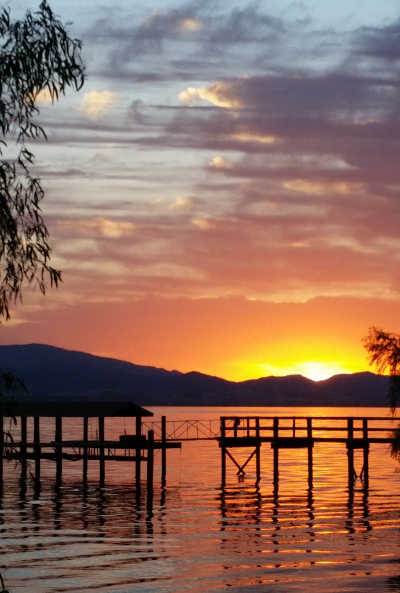
LAKE COUNTY, Calif. – Clear Lake, long a favorite of bass fisherman, has been ranked as the best bass fishing lake in the Western United States and the third-best nationwide in the latest Bassmaster’s 100 Best Bass Lakes rankings.
Clear Lake “continues to produce trophy largemouth, which makes it a premier destination,” Bassmaster Magazine Editor James Hall told Lake County News.
Other California water bodies on the top 10 list included the Sacramento-San Joaquin Delta, ranked No. 5, and Lake Berryessa, No. 7.
Toledo Bend Reservoir, which straddles the Texas and Louisiana border, ranked No. 1 nationwide and is the only lake to earn the title more than once, according to the Bassmaster Magazine ranking.
Based on the list, Texas earned bragging rights for the state with the most ranked lakes, boasting eight fisheries on the list. Florida and California tied for the second most with seven ranked lakes, while New York and Michigan each have six lakes in the Top 100.
There is one big difference in the rankings this year. The Top 10 lakes in the nation are ranked regardless of location, but instead of ranking the remaining lakes through 100, as has been done in the past, Bassmaster reported that it divided the nation into four regions: Northeast, Southeast, Central and Western.
Hall said more than three months of research went into this year’s rankings, which will be published in full in the Bassmaster Magazine July/August issue. It also can be found online at http://www.bassmaster.com/best-bass-lakes .
The majority of the data comes from January through May, but can go back as far as May 2015, Hall said.
“We start off every year by sending out a survey to the fisheries departments for every state in the nation,” Hall said.
Those agencies are simply asked to rank the top 15 to 20 lakes in their region for superior bass fisheries, he said.
The initial pool of top fisheries also is developed with input from B.A.S.S. Nation members across the country, the 3,500-member B.A.S.S. Council and some of the 650,000 Facebook fans of B.A.S.S., the worldwide authority on bass fishing and keeper of the culture of the sport which has been dedicated to access, conservation and youth fishing for more than 45 years.
“After we do those surveys, we kind of squeeze them all together and see what kind of cream rises to the top,” Hall said.
Once they identify all the lakes that should be considered, the supporting research begins. Hall said they scoured the Internet for current catch-rate data, using the results of more than two dozen tournament organizations and several state “lunker” programs to narrow the field to 100.
“It’s a brutal process, but the results give bass anglers the ultimate bucket list of lakes for 2016,” Hall said.
One of the statistics they look at is the average winning weight in fishing tournaments and how deep that goes in the big field events. Hall explained that means not just the winners are catching big fish, but other fishermen further down in the rankings.
Clear Lake has been a standout for the last several years based on the number of really big fish being recorded in those tournaments, he said.
“They're catching fish in the 7- to 10-pound range with incredible frequency,” he said.
“Just the sheer numbers of big fish in that lake make it a dream destination for an angler,” Hall said, adding that anglers who go out to fish on Clear Lake have the opportunity to catch the biggest bass of their lives.
Lakes also are prioritized based on the number of fish caught, Hall said.
Some fisheries this past year have been hit with algae blooms, fish kills or drought, and in the case of some southern lakes, flooding has impacted them particularly hard, according to Hall.
Despite having had its own issues in recent years with drought and algae blooms, Clear Lake nonetheless came out with a top ranking thanks to the list parameters.
“Clear Lake seems to be in a very good spot right now,” Hall said. “The water quality and clarity has been very good.”
The bass population also is thriving and the lake is kept at a very consistent level, which Hall said is always a very good thing for bass recruitment or spawning.
“All of those things are lining up very, very well for Clear Lake right now,” he added.
Aesthetics of the fishery also is important, said Hall.
He said he fished Clear Lake a few years ago, noting the lake's launch ramps are fantastic and the lake is “really easy on the eyes.”
Plus, he said it doesn't hurt to be able to go do some wine tasting to celebrate a good catch.
As for the impact of the rankings on the communities where the top lakes are located, Hall said Toledo Bend – also ranked No. 1 last year – reported a 23-percent increase in tourism.
Other top lake areas reported high visitor numbers. In some cases, he said there were even complaints about too many visitors.
“It evidently really drives a lot of tourism, which is our ultimate goal,” he said.
Hall said the communities that maintain healthy lakes and fisheries should be rewarded for their efforts.
That reward in this case comes through tourism dollars, with Hall noting that fisherman spend a lot of money to pursue their passion.
“I think it's kind of a neat way to give back to the communities,” he said.
The top 10 list of nation's lakes and the lists of regional lakes that were ranked are printed below.
The Top 10 In The Nation
1. Toledo Bend, Texas/Louisiana [185,000 acres]
2. Santee Cooper lakes, Marion and Moultrie, South Carolina [110,000 acres and 60,000 acres, respectively]
3. Clear Lake, California [43,785 acres]
4. Lake Erie, New York [30-mile radius from Buffalo]
5. Sacramento-San Joaquin Delta, California [1,100 square miles]
6. Mille Lacs Lake, Minnesota [132,000 acres]
7. Lake Berryessa, California [20,700 acres]
8. Rodman Reservoir, Florida [13,000 acres]
9. Falcon Lake, Texas [83,654 acres]
10. Lake St. Clair, Michigan [430 square miles]
Central Division
1. Toledo Bend, Texas/Louisiana
2. Mille Lacs Lake, Minnesota
3. Falcon Lake, Texas
4. Sam Rayburn Reservoir, Texas [114,000 acres]
5. Sturgeon Bay, Wisconsin [from Little Sturgeon Bay to Fish Creek]
6. Lake Palestine, Texas [25,560 acres]
7. Caddo Lake, Louisiana [25,400 acres]
8. Grand Lake O’ the Cherokees, Oklahoma [46,500 acres]
9. Lake Ray Roberts, Texas [29,350 acres]
10. Newton Lake, Illinois [1,775 acres]
11. Rainy Lake, Minnesota [360 square miles]
12. Lake of the Ozarks, Missouri [54,000 acres]
13. Green Bay, Wisconsin [up to Little Sturgeon Bay]
14. Lake Fork, Texas [27,690 acres]
15. Lake Minnetonka, Minnesota [14,528 acres]
16. Lake Bistineau, Louisiana [15,500 acres]
17. Minocqua Chain of lakes, Wisconsin [six small lakes up to 3,600 acres]
18. Squaw Creek Reservoir, Texas [3,275 acres]
19. Mississippi River, Pools 4-8, Minnesota/Wisconsin [from Lake City past La Crosse]
20. Lake Hudson, Oklahoma [12,000 acres]
21. Leech Lake, Minnesota [103,000 acres]
22. Lake Dardanelle, Arkansas [40,000 acres]
23. Lake Texoma, Texas/Oklahoma [89,000 acres]
24. Table Rock Lake, Missouri [43,100 acres]
25. Brushy Creek Lake, Iowa [690 acres]
Northeastern Division
1. Lake Erie, New York
2. Lake St. Clair, Michigan
3. Lake Erie, Ohio [30-mile radius from Sandusky]
4. Thousand Islands (St. Lawrence River), New York [50-mile stretch]
5. Saginaw Bay, Michigan [1,143 square miles]
6. Lake Charlevoix, Michigan [17,200 acres]
7. Bays de Noc, Michigan [Escanaba to Little Summer Island]
8. Lake Champlain, New York/Vermont [490 square miles]
9. Grand Traverse Bay, Michigan [32 miles long, 10 miles wide]
10. Presque Isle Bay, Pennsylvania [5.8 square miles]
11. Oneida Lake, New York [79.8 square miles]
12. Cayuga Lake, New York [43,000 acres]
13. Burt/Mullett lakes, Michigan [17,120 acres and 16,630 acres, respectively]
14. Lake Winnipesaukee, New Hampshire [20 miles long, 9 miles wide]
15. Cobbosseecontee Lake, Maine [5,540 acres]
16. Candlewood Lake, Connecticut [5,420 acres]
17. Smith Mountain Lake, Virginia [20,600 acres
18. China Lake, Maine [3,845 acres]
19. Lake Cumberland, Kentucky [65,530 acres]
20. Chautauqua Lake, New York [13,156 acres]
21. Upper Chesapeake Bay, Maryland [The entire bay is more than 64,000 square miles, but the best fishing is in the top one-third.]
22. Pymatuning Reservoir, Pennsylvania/Ohio [17,088 acres]
23. Stonewall Jackson Lake, West Virginia [2,630 acres]
24. Squam Lake, New Hampshire [6,791 acres]
25. Kezar Lake, Maine [2,510 acres]
Southeast Division
1. Santee Cooper lakes, Marion and Moultrie, South Carolina
2. Rodman Reservoir, Florida
3. Chickamauga Lake, Tennessee [36,240 acres]
4. Kentucky/Barkley lakes, Tennessee/Kentucky [160,309 and 58,000, acres respectively]
5. Lake Guntersville, Alabama [70,000 acres]
6. Lake Istokpoga, Florida [26,762 acres]
7. Pickwick Lake, Alabama/Mississippi/Tennessee [43,100 acres]
8. Falls of the Neuse Reservoir (Falls Lake), North Carolina [12,410 acres]
9. Ross Barnett Reservoir, Mississippi [33,000 acres]
10. Lake Murray, South Carolina [50,000 acres]
11. Lake Tohopekaliga, Florida [22,700 acres]
12. Dale Hollow Reservoir, Tennessee/Kentucky [27,700 acres]
13. St. Johns River, Florida [310 miles long]
14. Randleman Lake, North Carolina [3,007 acres]
15. Watauga Lake, Tennessee [6,430 acres]
16. Okatibbee Lake, Mississippi [4,000 acres]
17. Lake Okeechobee, Florida [730 square miles]
18. South Holston Lake, Tennessee/Virginia [7,580 acres]
19. Clarks Hill Lake (Lake Strom Thurmond), Georgia [71,000 acres]
20. Lake Rousseau, Florida [3,700 acres]
21. Lake Eufaula (Walter F. George Reservoir), Alabama/Georgia [46,000 acres]
22. Lake Hartwell, Georgia/South Carolina [56,000 acres]
23. Smith Lake, Alabama [21,000 acres]
24. Lake Seminole, Georgia/Florida [37,500 acres]
25. Lay Lake, Alabama [12,000 acres]
Western Region
1. Clear Lake, California
2. Sacramento-San Joaquin Delta, California
3. Lake Berryessa, California
4. Lake Havasu, Arizona/California [19,300 acres]
5. Dworshak Reservoir, Idaho [17,090 acres]
6. Lake Casitas, California [1,100 acres]
7. Tenmile Lake, Oregon [1,626 acres]
8. Lake Washington, Washington [21,747 acres]
9. Don Pedro Reservoir, California [13,000 acres]
10. Saguaro Lake, Arizona [1,267 acres]
11. Snake River, Idaho/Oregon [100 mile Hells Canyon Wilderness reach]
12. Potholes Reservoir, Washington [14,281 acres]
13. Lake Coeur d’Alene, Idaho [25,000 acres]
14. Roosevelt Lake, Arizona [21,493 acres]
15. C.J. Strike Reservoir, Idaho [7,500 acres]
16. Lake Mohave, Nevada/Arizona [26,500 acres]
17. Banks Lake, Washington [26,886 acres]
18. Columbia River, Oregon/Washington [191 miles from Portland to McNary Dam]
19. Brownlee Reservoir, Idaho/Oregon [15,000 acres]
20. Lake Mead, Nevada/Arizona [158,080 acres]
21. Lake Powell, Utah/Arizona [108,335 acres]
22. Shasta Lake, California [30,000 acres]
23. Flaming Gorge Reservoir, Utah/Wyoming [42,020 acres]
24. Apache Lake, Arizona [2,568 acres]
25. Sand Hollow Reservoir, Utah [1,300 acres]
Email Elizabeth Larson at